
Best Oral Care Products for Every Need
You're standing in the oral-care aisle with a whitening paste in one hand and a sensitivity formula in the other. The boxes promise brighter teeth, stronger enamel, and fresher breath, but they don't tell you which claim matters most for your mouth. The best oral care products aren't necessarily the most expensive or the most prominently packaged. They're the ones that address your main concern and fit a routine you'll stick with.
A practical way to choose is to start with your goal, then check the active ingredients and instructions on the label. That means looking past cosmetic claims and asking what a product can realistically do, and when a symptom needs a dentist rather than another purchase.
Why Your Oral Goal Should Come Before the Brand
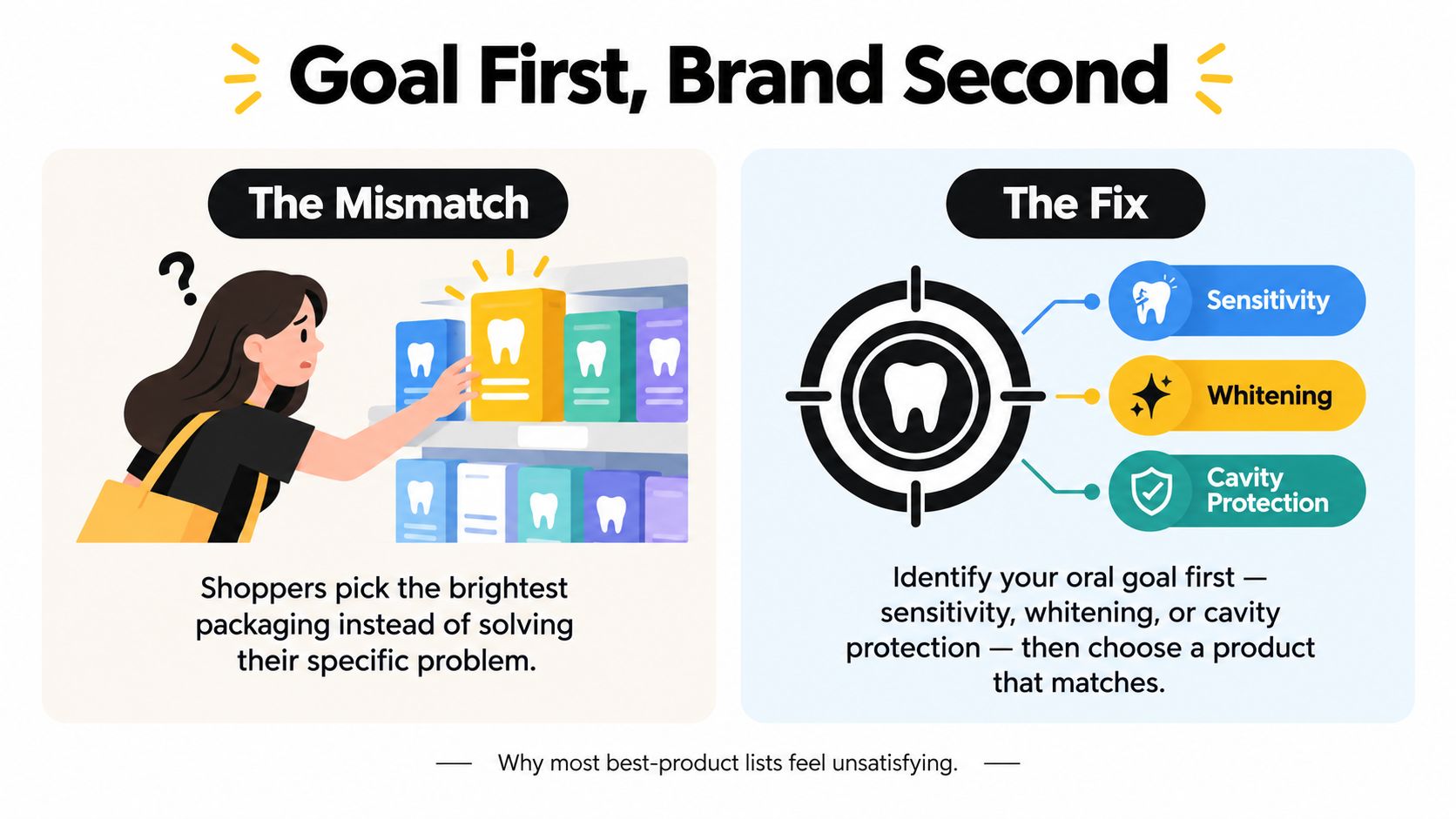
A shopper worried about cavities needs different label signals from someone who wants to manage sensitivity or lift surface stains. Yet those needs are easy to blur together on a shelf where nearly every package promises a healthier-looking smile. Choose the product class before you compare brands. That simple change makes it easier to ignore features that don't address your concern.
Dentists typically consider factors such as cavity risk, gum condition, existing sensitivity, restorations, and how someone brushes. At home, you can use the same basic logic: identify what you want to improve, check the active ingredient, and read the use instructions. A whitening claim, for example, doesn't tell you whether a toothpaste contains fluoride or whether a whitening gel is likely to aggravate sensitivity.
Match Your Goal to the Right Product Class
| Your Primary Goal | Product Class to Prioritize | Key Label Signal |
|---|---|---|
| Cavity prevention | Fluoride toothpaste | Fluoride listed as an active ingredient |
| Tooth sensitivity | Desensitizing toothpaste | An active such as potassium nitrate or stannous fluoride |
| Surface stains | Whitening toothpaste or a whitening treatment | Abrasive stain-removal ingredients or a peroxide active |
| Enamel support | Fluoride or another dentist-recommended remineralizing product | Clear active ingredients and directions, not just “repair” language |
| Breath maintenance | Targeted rinse or breath-care product | An active ingredient suited to the cause, not fragrance alone |
The table is a starting point, not a diagnosis. Persistent sensitivity, bleeding gums, or a tooth that hurts when you bite may call for a dental exam. A product can support daily care, but it can't identify why a symptom is happening or repair every kind of damage.
Shelf-side rule: Decide what problem you're solving before you compare flavors, packaging, or brand names.
Once you've picked the goal, give priority to the label's active ingredients, instructions, and any relevant dental advice. Those details are more useful than a front-of-package promise that combines several benefits without explaining what the product is designed to do.
What Makes a Toothpaste Worth Buying
Start with the active ingredient, not the flavor or foam. Fluoride toothpaste remains the everyday benchmark for cavity prevention because fluoride supports remineralization of early enamel damage and helps teeth resist acid produced by plaque bacteria. The CDC states that brushing with fluoride toothpaste reduces dental-caries risk by approximately 15% to 30%, and recommends brushing twice daily for people aged two and older; for children ages three to six, it recommends a pea-sized amount of about 0.25 grams (CDC guidance on fluoride toothpaste).
Fluoride doesn't make teeth invulnerable. It can support the repair of early enamel changes, but it won't fill a cavity or treat a cracked tooth. The product only helps as part of consistent use, with an age-appropriate amount and brushing routine.
Read the claim through the ingredient
For sensitivity, look for a formula built around a desensitizing active, such as potassium nitrate or stannous fluoride, and use it as directed. These products are intended to reduce discomfort, not determine its cause. If pain is new, localized, worsening, or persistent, a dental assessment is more useful than switching tubes repeatedly.
Whitening toothpastes generally focus on removing surface stains with polishing ingredients, rather than changing the natural shade of teeth. A stronger whitening claim doesn't tell you whether a formula is appropriate for someone with sensitivity or exposed roots. If enamel wear is a concern, ask a dentist which product and brushing technique make sense rather than assuming every “whitening” paste is equally gentle.
Treat “enamel repair” as a claim to examine
Remineralizing formulas may use fluoride or other ingredients, including calcium-phosphate systems. But labels can use similar language for products with different ingredients and purposes. Check what the formula contains and what its instructions say. Don't assume that “repair” means it can rebuild lost tooth structure or reverse established decay.
The American Dental Association explains fluoride's role in caries prevention and enamel remineralization, and describes additional toothpaste ingredients as targeting concerns such as sensitivity, gingivitis, tartar, erosion, whitening, or bad breath. Those are distinct goals, not interchangeable benefits (ADA guidance on toothpastes). When a claim is vague, the active ingredient and the intended use are better guides than premium positioning.
Comparing Fluoride, Sensitivity, Whitening, and Remineralizing Pastes
A toothpaste choice is a trade-off between the concern you want to address and the job the formula is designed to do. No single category wins for every mouth. Compare products by purpose, active ingredient, limits, and fit with your routine.
| Product class | Intended purpose | What to check | Main limitation |
|---|---|---|---|
| Fluoride toothpaste | Daily cavity prevention | Fluoride active and clear directions | Won't treat an established cavity |
| Sensitivity toothpaste | Help reduce sensitivity | Desensitizing active, such as potassium nitrate or stannous fluoride | Persistent pain needs assessment |
| Whitening toothpaste | Help remove surface staining | Stain-removal ingredients and suitability for your teeth | Usually targets surface stains, not natural tooth color |
| Remineralizing paste | Support enamel care, depending on formulation | Specific actives and directions | “Repair” language alone doesn't establish what it can do |
| Hydroxyapatite toothpaste | A fluoride-free or alternative remineralizing approach for some shoppers | Ingredient list and the claim being made | Don't treat it as equivalent to a dentist's treatment plan |
Fluoride toothpaste is the most broadly applicable starting point for everyday cavity prevention. If you're choosing a fluoride-free or hydroxyapatite formula, be clear about why: preference, professional advice, or another specific consideration. If your main concern is cavity risk, don't let a cosmetic benefit distract from the fluoride question.
Sensitivity formulas make sense when discomfort is the issue, but a toothpaste won't diagnose decay, a crack, recession, or another cause of pain. Whitening pastes suit people focused on surface stains, but scrubbing harder or choosing a more abrasive-feeling product isn't a shortcut to safe whitening. For a more detailed discussion of options and trade-offs, see this guide to remineralizing toothpaste without fluoride.
Choose one main objective first. If you're managing sensitivity while also considering whitening, get the sensitivity evaluated when appropriate and avoid starting several new products at once. That makes it easier to notice irritation and decide what's helping. For a product selected to support everyday cavity prevention, use the label directions consistently rather than treating a toothpaste switch as a quick fix.
Whitening Gels Kits and What Strength Actually Means
A high peroxide concentration can look persuasive on a box, but strength is only one part of a whitening product's use and tolerability. The active agent, how long the product stays on the teeth, how well a tray fits, and the user's existing sensitivity all matter. A poorly fitting tray can expose the gums to gel, while a stronger formula may be uncomfortable for someone whose teeth are already sensitive.
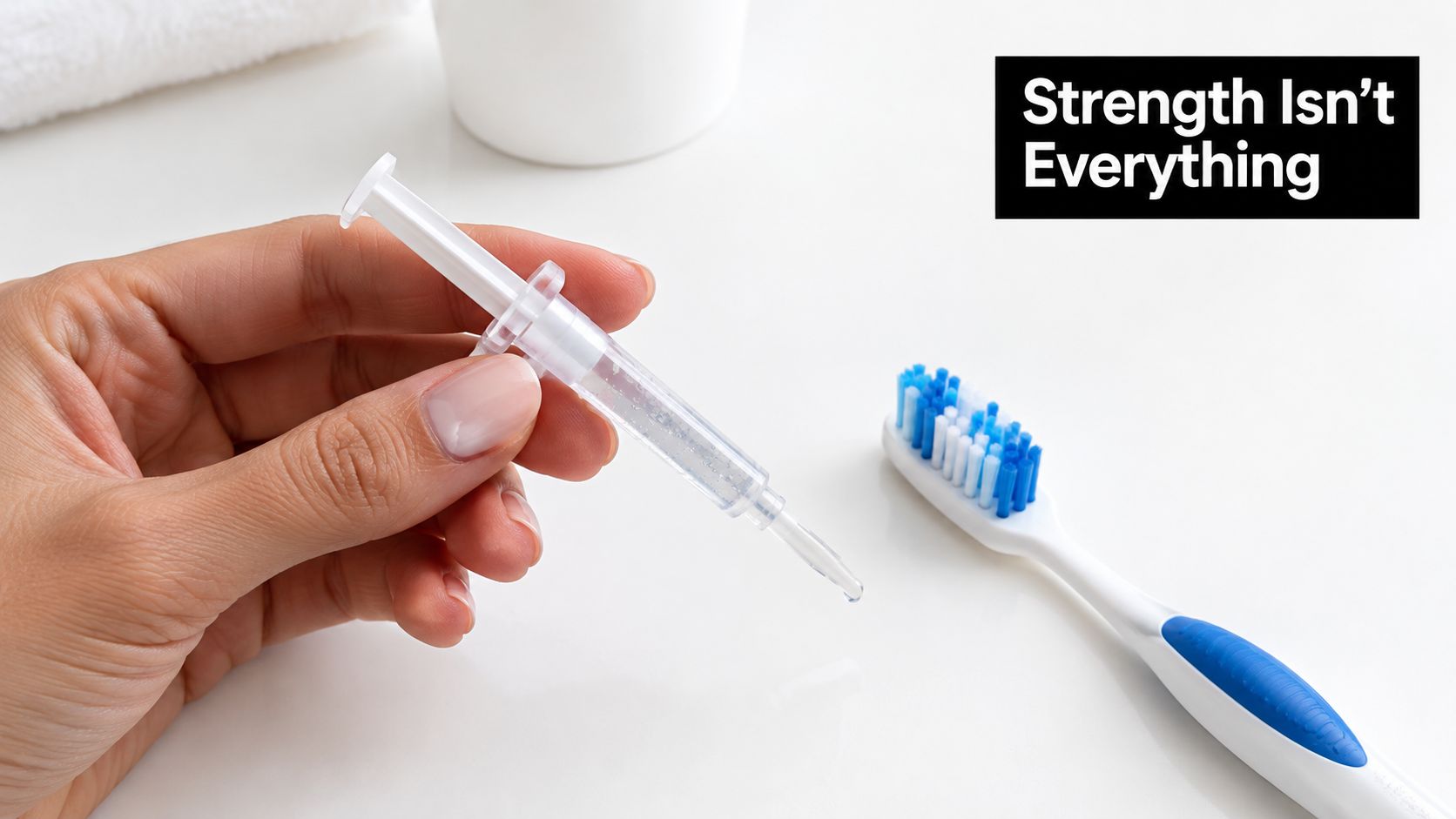
Carbamide peroxide and hydrogen peroxide are both used in whitening products, but they aren't interchangeable label numbers. Follow the product's own wear-time and application instructions rather than guessing that a longer session or extra gel will work better. If you're comparing formulas, this overview of carbamide peroxide for teeth can help explain the ingredient category.
Choose the format you can tolerate
Whitening toothpaste is typically intended to address surface staining. Strips and tray-based gels use whitening actives and require more attention to fit and instructions. A dentist can help assess whether whitening is appropriate if you have sensitivity, gum irritation, visible restorations, or another concern that could affect the result.
The American Dental Association identifies sensitivity and gingival inflammation as the most common adverse effects of vital whitening. It notes that sensitivity can affect up to two-thirds of users early in treatment and is more likely with higher active-agent concentrations (ADA guidance on tooth whitening). If discomfort develops, don't push through by extending wear time. Stop or pause as the product directions advise, and seek dental guidance if symptoms are severe or don't settle.
For a comfort-first approach, screen for existing sensitivity before starting, follow the labeled schedule, and consider a sensitivity toothpaste as part of your usual care. Avoid applying extra gel or whitening more often than directed. Whitening products can change tooth appearance, but they don't replace examination or treatment when pain has another cause.
A short demonstration may help you understand how a product is applied, but the label and dental advice should guide your own use.
Building a Routine Around Your Primary Concern
A good routine isn't a pile of products. It's a few compatible steps you can repeat without irritating your mouth or losing track of what's working. Keep twice-daily fluoride brushing as the baseline for routine cavity prevention, then add a targeted product only when it addresses a clear need.
If cavity prevention is your priority
Brush morning and night with fluoride toothpaste, using the label directions. Choose a soft-bristled brush and use a gentle technique rather than pressing harder. Clean between teeth with a method you can use consistently, and ask a dentist whether your personal cavity risk calls for additional measures.
If sensitivity comes first
Use a toothpaste with a desensitizing active and give it a fair, consistent trial according to its instructions. Don't layer multiple sensitivity products just because one doesn't provide instant relief. If the discomfort is isolated, worsening, or triggered by biting, temperature, or sweets, arrange an assessment instead of treating it as a product-selection problem.
Comfort matters: A routine you can tolerate and repeat is more useful than a stronger product you stop using.
If whitening is the goal
Start with healthy teeth and gums, then choose a product with instructions that fit your comfort level. Avoid starting whitening at the same time as several new oral-care products. If sensitivity appears, stop or reduce use only as the product directions allow, and ask a dentist what to do if symptoms persist.
A remineralizing product may have a role when a dentist recommends it or when its ingredients suit your needs, but it doesn't replace brushing with fluoride when cavity prevention is the priority. Likewise, whitening and sensitivity products aren't automatically a matched set. Introduce changes one at a time, so you can tell which one helps or irritates you.
For any routine, check the directions and avoid using a product more often or in greater quantity than directed. If you're unsure whether a symptom needs targeted care or a dental visit, contact a dentist before buying another specialized formula.
Rinses Breath Care and Retainer Maintenance
A rinse can complement brushing, but it shouldn't be treated as a substitute for cleaning your teeth. Choose a mouthwash for a specific purpose. A fluoride rinse may suit someone whose dentist recommends extra fluoride support; a cosmetic rinse may freshen breath temporarily without addressing the cause of an ongoing odor.
If you're comparing fluoride rinses, this All Stars Dental fluoride rinse guide offers a focused way to consider how the category fits into daily care. Follow the product label and professional advice, especially when choosing products for children. Don't add a rinse just because it promises multiple benefits if it doesn't meet a need you have.
Use tools that support your habits
Powered brushes can help some people maintain technique and consistency, particularly if they benefit from a timer or pressure sensor. A Cochrane review of 56 randomized studies involving 5,068 participants found that powered brushes reduced plaque by about 11% after one to three months and 21% after longer use compared with manual brushes; gingivitis reductions were roughly 6% and 11% over those same periods (Cochrane review of powered and manual toothbrushes). The review characterizes the advantage as modest, so a powered brush is an option, not a requirement. A soft manual brush used well can still be a reasonable choice.
For retainers and aligners, use cleaning products intended for the specific appliance and follow the manufacturer's directions. Harsh or unsuitable cleaners can damage some materials. If you're weighing options, this retainer cleaner review guide can help you compare products by their intended use rather than by packaging alone.
Breath sprays and strongly flavored rinses may cover odor briefly. Persistent bad breath deserves attention to oral hygiene and possible dental causes, rather than repeated masking.
A Dentist-Inspired Buying Checklist You Can Use Today
At the shelf, don't ask which package looks most advanced. Ask whether the product fits your main concern, contains an active ingredient suited to it, and has directions you can follow. A label-first approach keeps function ahead of branding and reduces the temptation to buy multiple products that make overlapping promises.
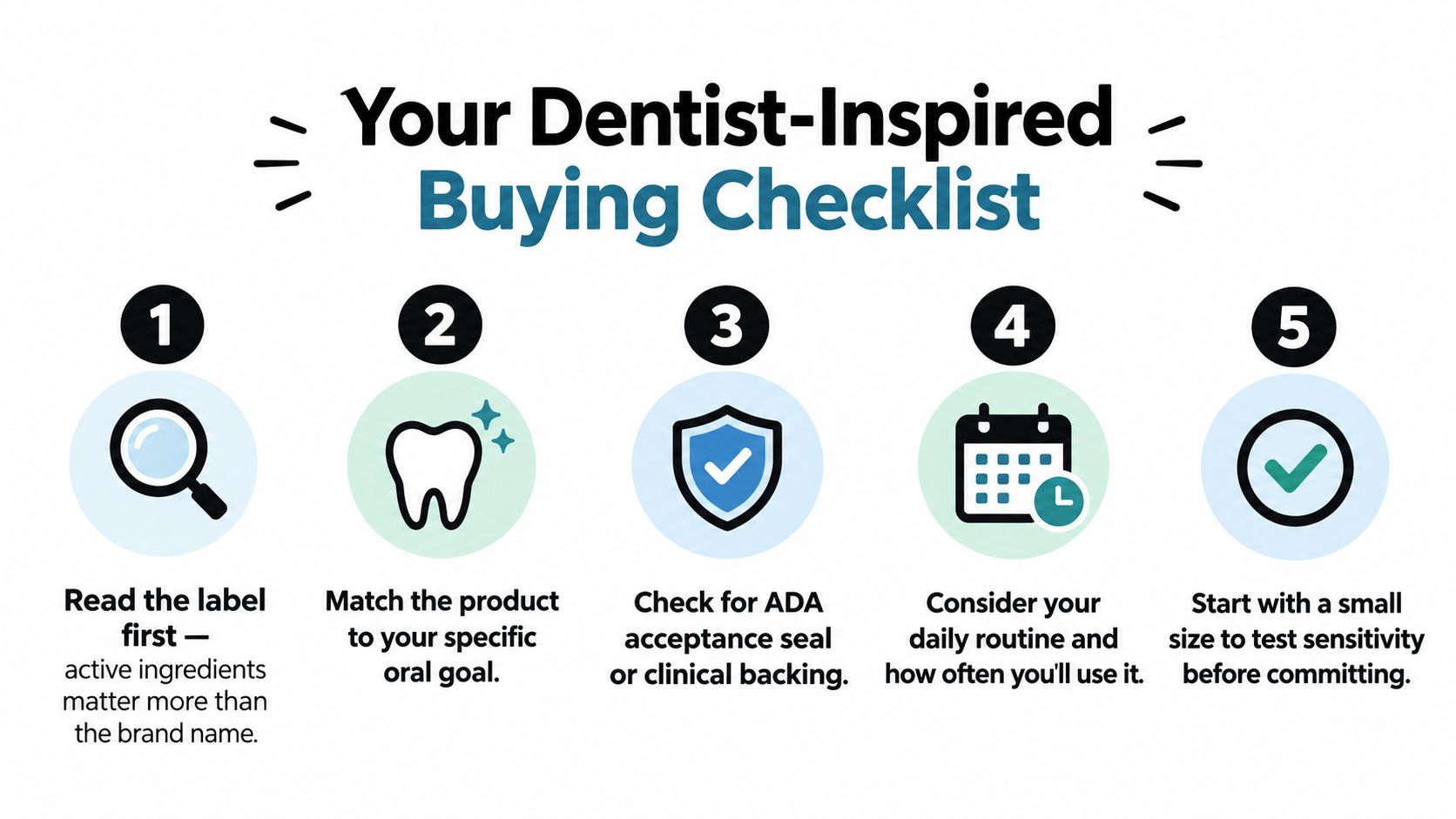
Use this checklist before you add something to your basket:
- Read the active ingredients: Check what the product contains, not just what the front label promises.
- Match it to your goal: Choose a category for cavity prevention, sensitivity, surface staining, or another specific concern.
- Look for credible support: Check for an ADA Seal when relevant, and ask a dentist about claims you can't evaluate from the label.
- Consider your routine: A product only helps if you can use it correctly and consistently.
- Test carefully: Follow the directions, and don't commit to a stronger or more complicated routine if a gentler option better suits your needs.
If you're comparing professional-grade options, evaluate them by the same standards as everyday products: intended purpose, active ingredient, use instructions, and fit with your dental advice. A higher price or stronger-sounding claim doesn't automatically make a product more suitable.
When an over-the-counter product doesn't help, the next step isn't always a different brand. Recheck whether the product matches the problem, whether you used it as directed, and whether a dentist should examine the symptom. That's a more useful buying decision than adding another tube to the bathroom shelf.
What Readers Still Ask After Comparing Products
Does remineralizing toothpaste rebuild enamel? A toothpaste may support remineralization of early enamel changes, but “repair” on a package doesn't mean it can replace lost tooth structure or treat a cavity. Check the active ingredients and ask a dentist what's appropriate for your situation.
When should sensitivity be checked? See a dentist if pain is persistent, worsening, focused on one tooth, or accompanied by discomfort when biting. A new product can't rule out decay, a crack, gum recession, or another cause.
How long should I try a toothpaste? Use it consistently and according to the label rather than judging it after one brushing. If the concern doesn't improve, or symptoms get worse, seek dental advice instead of extending the trial indefinitely.
The most reliable choice is the one that matches your oral goal, has a clear purpose, and fits a routine you'll maintain. If a symptom is driving the purchase, make sure the product is appropriate for that symptom before assuming a new formula is the answer.
DentalHealth.com offers professional-grade at-home oral-care products, including toothpaste, sensitivity care, whitening products, rinses, and retainer cleaners. Visit DentalHealth.com to compare options by your oral-care goal and review product details before choosing what fits your routine.