
BleachBright Teeth Whitening: What to Expect
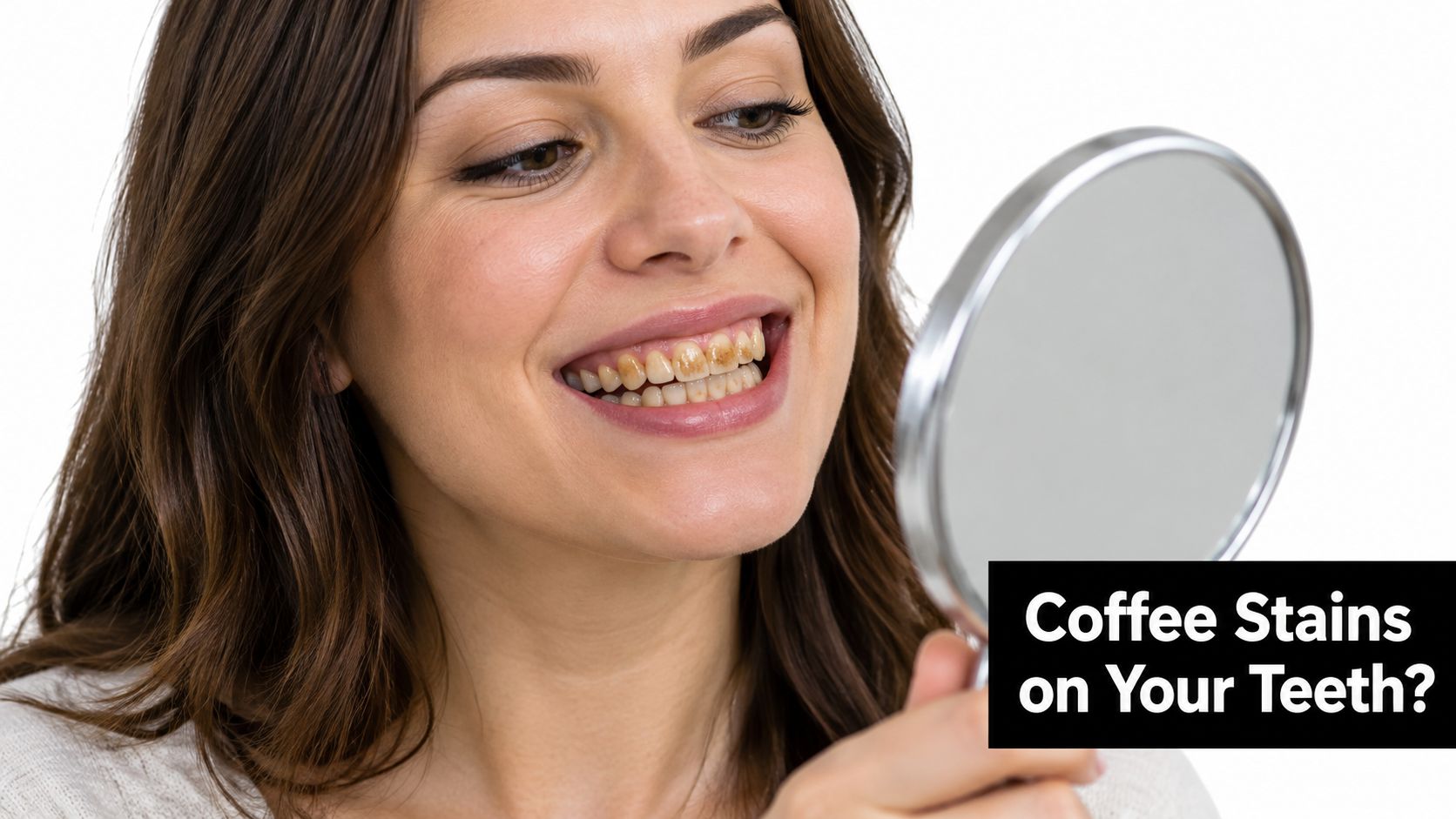
You notice the change gradually. Coffee stains look more obvious in photographs, your teeth seem darker than they did a few years ago, and an upcoming event makes you want a brighter smile without arranging an immediate in-office appointment. A product such as BleachBright teeth whitening can sound like a straightforward answer, but the important questions aren't only about how white your teeth may become.
You also need to know what the gel can change, how its strength affects comfort, and whether crowns, fillings, veneers, or gum recession could alter the result. BleachBright has professional roots, yet a salon-grade product still needs realistic expectations and careful use. This practical guide explains how the system works, where it fits, and when whitening should wait for a dental assessment.
Why Teeth Whitening Seems Simple Until It Isn't
A person with coffee discoloration often expects a whitening kit to work like a stronger toothpaste. That comparison misses the central distinction. Toothpaste may help remove some surface deposits, while peroxide-based whitening acts within natural tooth structure and changes the appearance of stain molecules.
Before choosing a kit, it helps to understand how teeth whitening kits work. The result depends on the type of discoloration, the condition of the teeth, the gel concentration, the tray fit, and how closely the user follows the wear instructions.
BleachBright is best viewed as an established professional-oriented option, not a guaranteed shortcut to a particular shade. The company says it has manufactured whitening gel in a Louisiana FDA-registered facility since 2006, and it reports that professionals order its gel for use in more than 5,000 salons. Those are company-reported historical and customer-use claims, not independently audited industry measurements, so they show positioning and operating history rather than proof that every user will obtain the same result. BleachBright describes its professional and iBright history.
Practical rule: A whitening kit can brighten natural teeth, but it can't correct every cause of a dark smile.
The person most likely to benefit is someone with generally healthy natural teeth who wants to reduce discoloration from everyday habits or age-related darkening. The person who needs more caution may have unexplained pain, untreated decay, exposed roots, cracked teeth, or substantial dental work. Those differences matter more than the product name.
What Is the BleachBright Teeth Whitening System
BleachBright presents its consumer iBright system as an at-home option connected to its professional salon and spa background. The brand says its consumer system uses the same formulation supplied to its professional customers, rather than a separate lower-strength retail gel. That claim helps explain why the product is marketed as professional-grade, but it doesn't remove the need to use the gel according to its instructions.
A typical routine involves placing a controlled amount of gel in a tray, positioning the tray over the teeth, and following the prescribed wear schedule. The tray should sit securely without forcing gel onto the gumline. After use, remove the tray, clean it as directed, and avoid extending the session because a longer exposure seems likely to produce a faster result.
A practical way to assess the system
Use the product history as context, then assess your own mouth separately.
- Check your starting teeth: Natural enamel and dentin can respond to peroxide, but restorations generally won't change at the same rate.
- Inspect the tray fit: A close fit helps keep gel on the teeth rather than on the soft tissues.
- Follow the schedule: More gel or longer wear increases exposure and may increase irritation.
- Monitor the response: Mild, temporary sensitivity can occur, but persistent pain or gum irritation is a reason to pause.
The iBright name may draw attention to smartphone-based guidance or a convenient home format. The clinically meaningful question remains the same: how does the gel contact the teeth, for how long, and under what conditions? A familiar interface can make a routine easier to follow, but it doesn't change peroxide chemistry or make untreated dental disease safe to whiten.
How BleachBright Works and What It Contains
A common point of confusion with salon-branded whitening products is that the label can sound stronger or more dramatic than the result feels at home. BleachBright's refill gel is marketed as containing 30% carbamide peroxide, which breaks down into hydrogen peroxide and urea. Using the commonly cited approximate conversion, that works out to about 10% hydrogen peroxide equivalent. If you want the ingredient basics explained in plain language, our guide to what is in teeth whitening products covers the same chemistry. BleachBright also lists the refill gel ingredients and concentration on its product page. BleachBright lists the refill gel ingredients and concentration
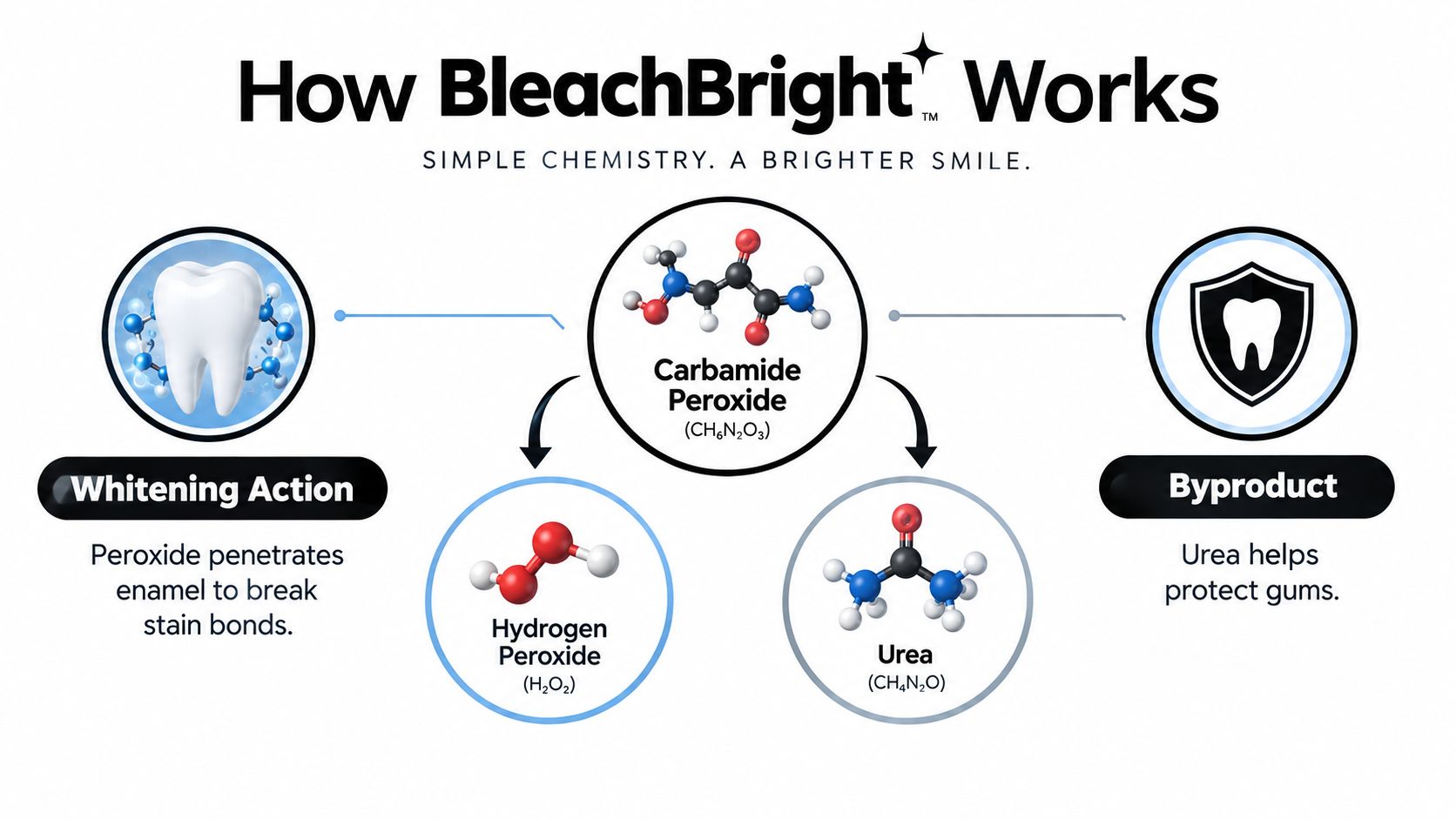
Once hydrogen peroxide is released, it can pass through enamel and dentin and oxidize the organic compounds that make teeth look darker. That matters because the product is working on stain chemistry inside natural tooth structure, not just polishing the surface the way a whitening toothpaste does.
Potassium nitrate is included as a desensitizing ingredient. It may reduce the sensitivity some users feel during whitening, but it does not cancel out the possibility of irritation, and it does not make every mouth a good candidate.
Why application changes the experience
In practice, concentration, contact time, frequency, and fit matter as much as the gel itself. A higher-strength formula can still perform poorly if the tray does not seat well, and a reasonable formula can still irritate gums if excess gel escapes onto the soft tissue.
That gap between product history and consumer expectation is where disappointment often starts. Peroxide can brighten natural teeth to a degree, but it does not change a crown, veneer, or filling to match. A patient may see lighter enamel and still feel the smile looks uneven because the restorations stayed the same shade.
What Results to Expect and When to Pause
Whitening changes the color of natural tooth structure. It generally doesn't lighten crowns, veneers, fillings, implants, or other restorations in the same way. That difference may not be obvious before treatment, especially when a restoration already blends with the surrounding teeth.
Once natural teeth become brighter, an older crown or filling can look darker by comparison. This is particularly important if you're considering cosmetic dental work, because whitening after a restoration is placed may leave the restoration at its original shade while the adjacent teeth change.
The American Dental Association advises treating cavities or gum disease before whitening and warns that restorations don't lighten like natural teeth, which can create an uneven shade. The ADA's guidance on whitening and dental restorations is especially relevant if you have extensive restorative work, a history of orthodontic treatment, gum recession, or one tooth that's noticeably darker than the others.
A brighter natural tooth isn't automatically a more even-looking smile.
Compare the goal with the condition
| Situation | What peroxide whitening may do | Sensible response |
|---|---|---|
| Natural teeth with external or internal discoloration | Brighten the natural tooth structure to some degree | Follow the product schedule and assess comfort |
| Crowns, veneers, fillings, or implants | Usually remain near their existing shade | Discuss shade matching before treatment |
| Gum recession or exposed roots | May cause irritation or sensitivity in exposed areas | Seek dental advice before whitening |
| Untreated decay, cracks, or unexplained pain | Doesn't repair the underlying problem | Postpone whitening and arrange an examination |
Don't try to solve a restoration mismatch by adding sessions or wearing the tray longer. Excessive or prolonged use can irritate soft tissues and may harm enamel, while the restoration will still not bleach at the same rate. If sensitivity persists, or if the gums remain sore or visibly irritated, stop the routine rather than pushing through it.
Sensitivity and Safety Considerations
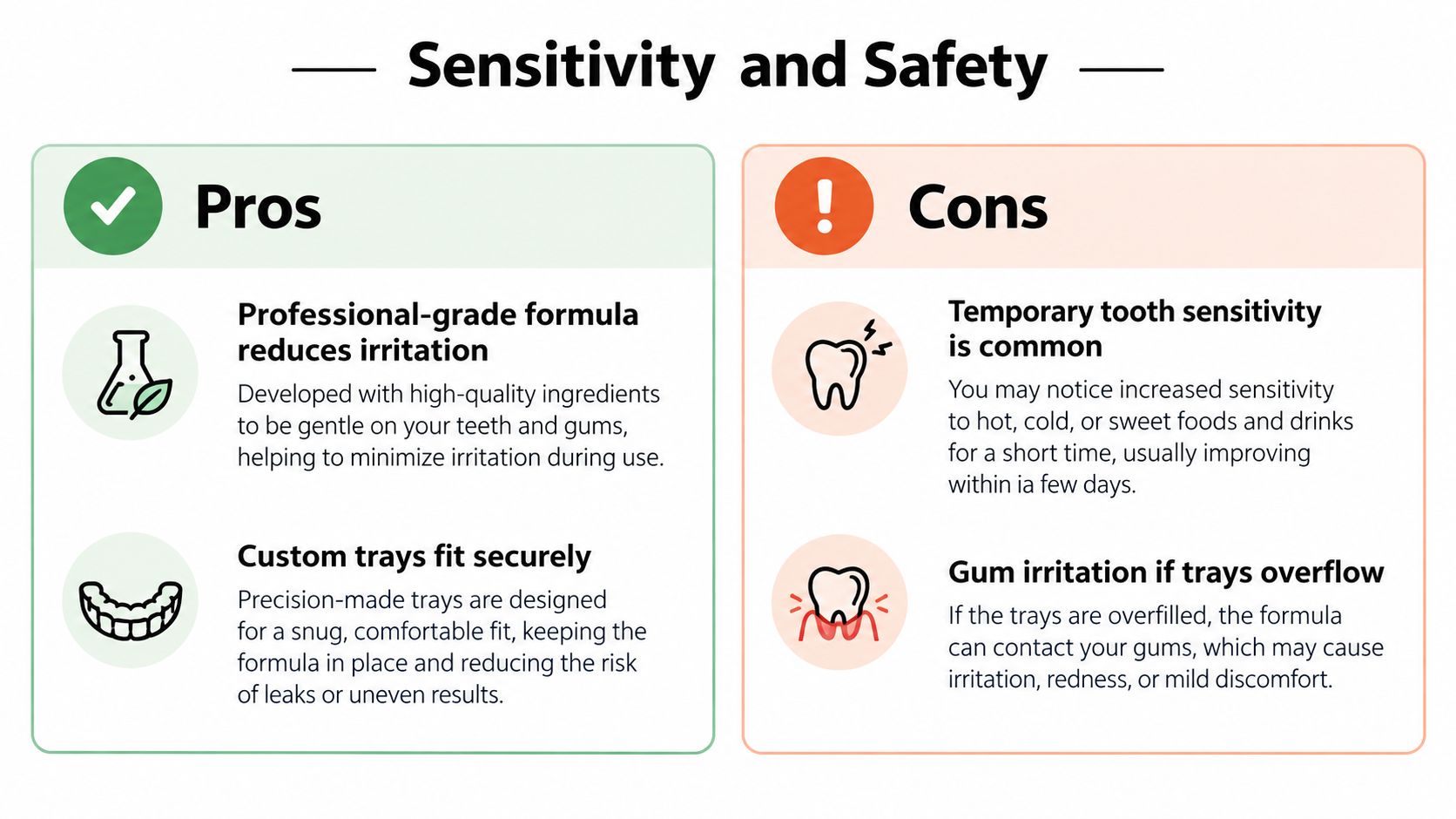
Temporary sensitivity and gum irritation are the main trade-offs in peroxide whitening. Peroxide can stimulate the tooth through enamel and dentin, while excess gel on the gingiva may cause localized irritation or blanching. Higher concentrations tend to produce these effects more often, although individual response varies.
Evidence summarized by the American Dental Association indicates that lower-to-medium peroxide concentrations can achieve comparable whitening with less sensitivity in some protocols. Potassium nitrate and sodium fluoride may also reduce sensitivity without compromising whitening efficacy. The ADA's overview of whitening safety and side effects provides the relevant clinical context.
Reduce avoidable exposure
- Use less gel: Fill the tray carefully rather than allowing material to overflow toward the gums.
- Protect the gumline: Wipe away visible excess before starting the session.
- Space treatments: If teeth become sensitive, take a break instead of extending wear time or repeating sessions immediately.
- Support comfort: A potassium-nitrate or fluoride desensitizing product may help before and during a whitening routine. Practical guidance on reducing sensitivity after whitening can help you choose a gentler approach.
- Stop for persistent symptoms: Ongoing pain, gum irritation, or unexplained discomfort warrants dental advice.
A tray that fits well can improve control, but no tray can diagnose a cavity, cracked tooth, leaking restoration, or exposed root. If those conditions are possible, an examination is safer than experimenting with longer sessions.
Smart Next Steps for Safer Whitening Results
Start by deciding whether your teeth are suitable for home whitening, not whether the kit sounds powerful. If you have untreated cavities, gum disease, cracked teeth, exposed roots, or unexplained pain, arrange a dental examination first. Whitening won't correct those problems and may make symptoms more noticeable.
If your teeth and gums are healthy, use the product conservatively. Apply only the recommended amount, keep gel away from the gingival margin, and follow the prescribed wear schedule. A well-fitting tray and a sensitivity-friendly toothpaste or desensitizing routine are more useful than adding extra gel.
Before treatment, look closely at crowns, veneers, fillings, and implants. If a front-tooth restoration is already slightly different from the surrounding enamel, whitening may make that contrast easier to see. Anyone planning new cosmetic work should discuss whitening timing with a dental professional, because the final restoration shade needs to account for the intended tooth color.
The sensible benchmark is controlled improvement with acceptable comfort, not the strongest possible routine. If sensitivity continues, your gums become irritated, or the result looks uneven, pause and seek advice rather than increasing exposure.
DentalHealth.com offers professional-grade at-home whitening gels, kits, and sensitivity-focused dental products from established brands, along with practical guidance for choosing a routine. Visit DentalHealth.com to compare whitening options and find products that better match your teeth, restorations, and comfort needs.