
Coconut Teeth Whitening Strips: Science vs. Hype
Coconut can make a whitening strip sound gentler, but the packaging story isn't the chemistry. If a strip changes tooth shade, the label has to point to a real bleaching agent, not just coconut imagery, fragrance, or a “natural” promise. Otherwise, you may be looking at a product that freshens the mouth or lifts surface residue, while leaving intrinsic tooth color unchanged.
Why Coconut Teeth Whitening Strips Confuse Buyers
The confusion starts with a simple marketing trick. A box can say coconut teeth whitening strips even when coconut is only part of the flavor, carrier, or texture, while the actual whitening comes from peroxide. It can also lean hard on coconut branding and never make the active ingredient obvious enough for a buyer to judge the claim.
That matters because the active ingredient, not the coconut theme, decides whether a strip can change shade. Independent in-vitro research found that coconut oil produced no measurable change in tooth shade and that oil alone doesn't provide the oxidation mechanism needed to break down intrinsic chromogens inside enamel and dentin (source study). In plain terms, coconut may help with taste or surface feel, but it doesn't behave like a bleaching agent.
Read the label before you read the brand story
If peroxide is present, the product is being sold as a whitening strip with coconut as a supporting ingredient. If peroxide isn't present, the claim needs far more scrutiny. A coconut-only formula may make teeth feel cleaner after use, but that isn't the same as true bleaching.
Practical rule: scan for hydrogen peroxide or carbamide peroxide first. If those aren't listed, don't assume the strip will lighten deeper discoloration.
That distinction is why coconut whitening can sound more effective than it is. Buyers often see a cleaner mouthfeel, a fresher taste, or less visible surface residue and conclude the shade changed. Those are different outcomes. A tooth can look a little brighter because deposits were removed, while the underlying enamel color stays the same.
For a plain-language breakdown of how peroxide strips work, the mechanism is covered in this guide from DentalHealth.com's whitening strip explainer. The key point is unchanged, though. If the label doesn't identify a proven bleaching agent, the coconut branding should be treated as packaging, not proof.
How Coconut Oil Compares to Peroxide Whitening
Peroxide and coconut oil do two very different jobs. Peroxide can enter the tooth structure and oxidize stain molecules, which is why concentration and contact time matter so much. Coconut oil mainly works on the surface environment, so any benefit is more likely to involve residue, coating, or a temporary cleaner feel rather than a real shade shift.
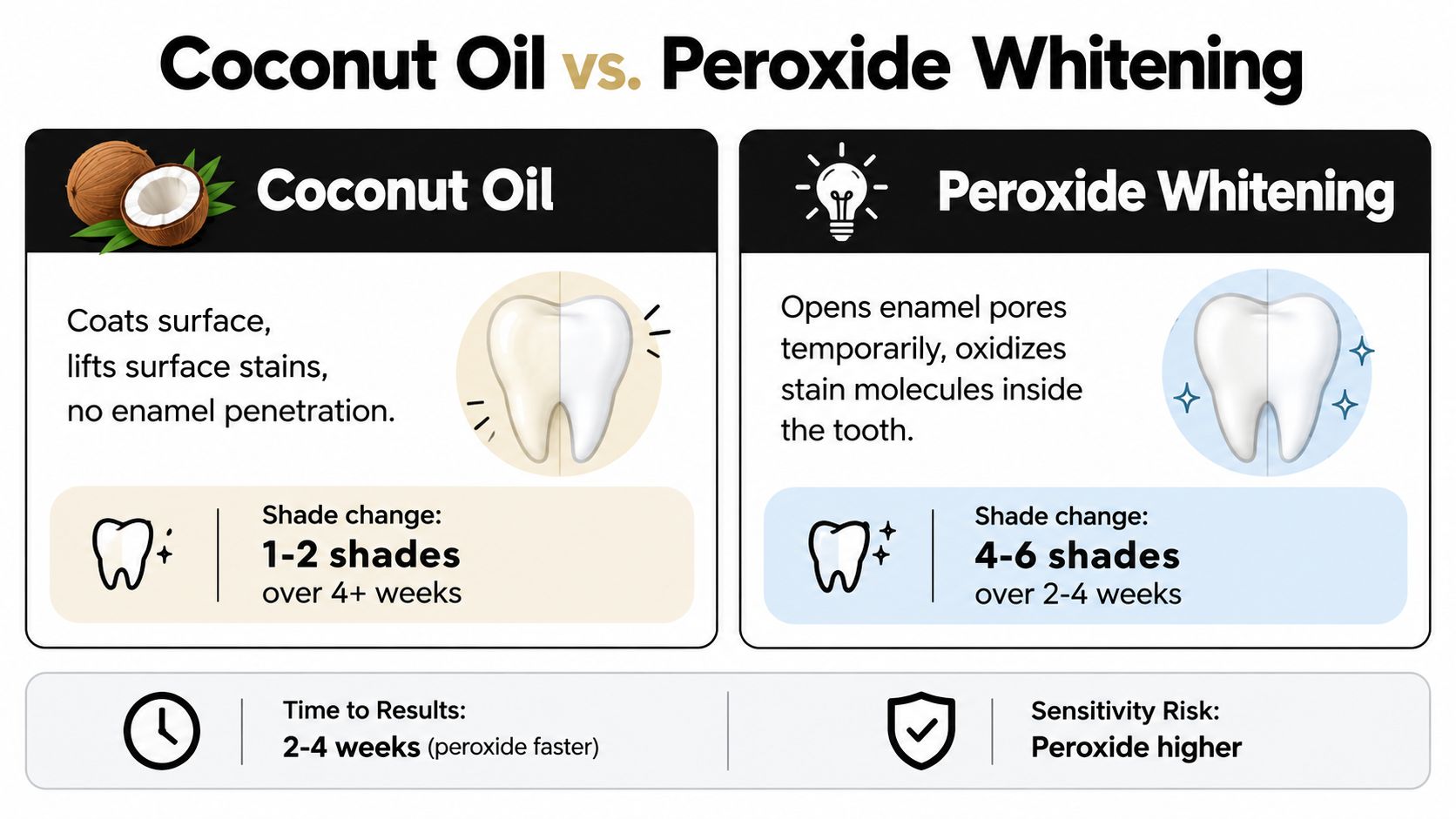
A useful way to think about it is this. Surface cleaning can make teeth look a bit fresher, but true whitening means changing the color of the tooth itself. That's why a strip can leave someone feeling polished without making the enamel lighter.
Cosmetic cleaning is not the same as bleaching
Oil-based formulations may loosen some superficial debris. They can help the mouth feel less coated, and they may support the sensation of freshness. But that doesn't equal the kind of color change patients usually mean when they ask for whitening.
The difference matters for stubborn discoloration too. Oil-based products can't be assumed to lighten intrinsic discoloration, including tetracycline staining, fluorosis, or age-related dentin darkening, unless controlled clinical evidence shows otherwise (source study). If the goal is a lighter shade, the label needs to name the chemistry that can do that work.
What the chemistry means in practice
Peroxide-based whitening strips are designed to reach beyond the surface. That's why they're effective on many stains that brushing alone doesn't touch. Coconut oil, by contrast, may play a supporting role in a formula, but it doesn't replace the active oxidizer.
If a strip feels gentler but doesn't name a bleaching agent, that gentleness may simply mean it's doing less.
The most honest buying question is not whether a strip contains coconut. It's whether the product can show a credible path from ingredient to shade change. If it can't, the marketing is doing more work than the chemistry.
What the Evidence Shows About Coconut Strips
Coconut-based oral care gets used to support whitening claims, but the research does not justify that jump. A systematic review found only a small set of randomized trials, with short follow-up and a high risk of bias, so the evidence does not support broad confidence in coconut as a whitening agent (source review). Some plaque findings looked suggestive, yet bacterial results were inconsistent.
That distinction matters because plaque control and whitening are different outcomes. A product can change the oral environment a little and still leave tooth shade untouched. Treating those two claims as the same gives buyers a misleading picture.
Surface cleanliness can be real without being whitening
Coconut-oil pulling research mostly addresses hygiene, not shade. If a product loosens residue or makes the mouth feel cleaner, users may notice a better finish even when the tooth color has not changed.
The evidence also does not support replacing brushing or flossing with oil-based routines. Doing that can leave people exposed to plaque, cavities, gum disease, and bad breath (source review). That is a serious trade-off for a benefit that has not been shown to match peroxide-driven whitening.
The claim needs to match the outcome
If the claim is about a cleaner mouth, that is one conversation. If the claim is about whiter teeth, the product needs evidence of real shade change. Coconut oil alone has not met that standard, including in earlier in-vitro testing that did not show it could lighten shade on its own.
A buyer should also be cautious with “natural whitening” language. Natural does not mean effective, and it does not mean the product can bleach intrinsic discoloration. A coconut strip may feel pleasant to use, but pleasant is not proof.
Safety, Sensitivity, and Who Should Skip Coconut Whitening Strips
The word coconut doesn't make a whitening strip safer by itself. Safety depends on the full formula, especially whether the strip contains peroxide, how well it fits, how long it stays on, and whether it touches the gums. The American Dental Association notes that sensitivity and oral irritation are the most common side effects of home whitening, and that they're more frequent at higher concentrations (ADA whitening overview).
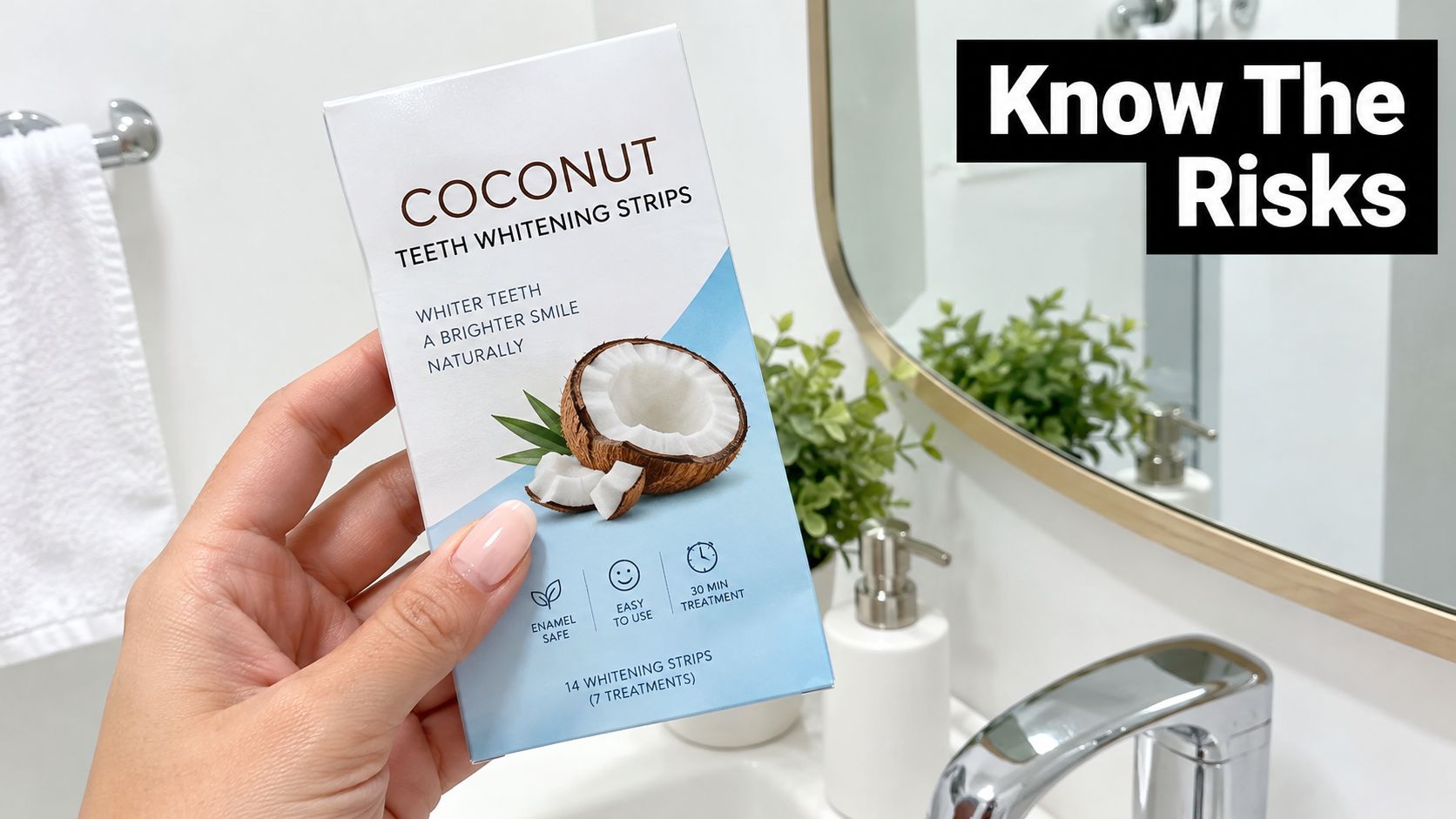
The same ADA guidance warns that overuse of whitening strips, pens, and gels can damage enamel and gums, raise sensitivity, and make translucent teeth show more of the yellower dentin underneath (ADA whitening overview). That's why “natural” branding should never override the ingredient panel.
Who should pause and get a dental check first
People with untreated cavities, enamel defects, recession, existing sensitivity, or extensive restorations should not treat a whitening strip like a casual beauty product. Peroxide changes the appearance of natural tooth structure, but it doesn't whiten fillings, crowns, veneers, or bonding (European safety evaluation).
Practical rule: if the gums are inflamed, the teeth already sting with cold, or you have visible dental work, get assessed before whitening.
The other red flags are immediate and easy to recognize. Sharp sensitivity, gum burning, or irritation that gets worse instead of settling down means the strip should come off. Whitening should never feel like an endurance test.
For people trying to sort out post-whitening discomfort, this sensitivity guide is the right kind of next step, because it focuses on symptom control instead of marketing claims.
A quick screen before you buy
- Check the active ingredient: look for hydrogen peroxide or carbamide peroxide.
- Check your mouth first: don't whiten over active decay, irritated gums, or exposed roots.
- Check your restorations: crowns, veneers, sealants, and bonding won't reliably whiten.
- Check the wear time: longer isn't better if the label says stop.
- Check your symptoms: pain, burning, or sharp zaps mean stop, not push through.
That's the decision tree that matters, not the coconut label.
How to Use Coconut Teeth Whitening Strips Correctly
Start with the chemistry on the label. Coconut oil can support a fresher feel, but it does not do the oxidation that changes tooth shade. If a strip does not list peroxide as the active ingredient, expect surface-cleaning claims, not true bleaching.
Use the strip on clean teeth, with the gums calm and the fit limited to the tooth line. The product should sit where it was designed to sit, not spill onto soft tissue. If the strip shifts, wrinkles, or pools gel at the gumline, the problem is fit and placement, and forcing it usually makes the mouth more irritated.
The European safety review reported tooth sensitivity in 44% of users of 6% hydrogen-peroxide strips and 59% of users of 9.5% strips, with oral soft-tissue effects in 6% of subjects in both groups (European safety evaluation). The reported effects generally resolved after discontinuation. In practice, that means higher peroxide strength can increase whitening potential, but it can also increase temporary irritation.
Use the strip exactly as directed
Keep it on for the labeled wear time only. Do not overlap applications, do not stack another whitening product on top, and do not stretch the session to make up for a previous missed day. Whitening is controlled contact chemistry, not a test of endurance.
Placement matters just as much. A strip should stay off inflamed or ulcerated gingiva, because peroxide on already irritated tissue predictably feels worse. If the strip lifts, slides, or traps gel against the gumline, stop and correct the fit rather than trying to push through.
Stop when the mouth gives a warning
Mild tingling can happen. Sharp sensitivity or soft-tissue burning is a different signal. End the session and reassess the routine.
Discomfort is not proof that the product is working.
The ADA notes that evidence for DIY or natural whitening methods remains limited in both efficacy and safety (ADA whitening overview). That keeps the focus where it belongs, on realistic results and careful use.
Choosing Evidence-Backed Whitening Options That Fit Your Needs
A patient at the counter usually wants one of two outcomes, a real shade change or a cleaner-looking smile. Coconut branding can blur that difference if the label does not say what the product does.
The chemistry should come first. If shade change is the goal, look for an active bleaching agent, a concentration that matches the wear time, and a product that fits your dental condition. If the goal is mainly surface freshness, a coconut-based strip may feel pleasant, but that does not make it an intrinsic whitener.
A quick chairside comparison helps.
A patient asks, “What is in it?” If peroxide is missing, true bleaching is unlikely. The next question is, “How is it worn?” Contact time has to match the chemistry. Then comes, “What is already going on in the mouth?” Sensitivity, recession, decay, and restorations all change the answer. The last question is, “What result is promised?” Cleaner-looking teeth and lighter teeth are different claims.
That final point is where coconut products often overreach. They can promise freshness, comfort, or a cleaner feel without showing that they can shift tooth shade. DentalHealth.com's whitening options guide is useful here because it helps compare approaches without pretending every whitening label means the same thing.
A practical chairside example makes the trade-off obvious. A person with healthy natural teeth and mild coffee stain may do well with a standard peroxide strip if the label is followed closely. A person with bonded front teeth, a few crowns, and daily cold sensitivity needs a different recommendation. In that second case, the wrong strip can leave uneven color, irritate tissue, or create a result that looks worse than the starting point.
The best choice is the one that matches the tooth, the tissue, and the goal. Ingredient transparency matters more than coconut flavor, coconut oil, or coconut-colored packaging. A product that only improves surface appearance should not be marketed to yourself as proof of bleaching.
The safest whitening decision matches the chemistry to the mouth in front of you.