
Crest Whitening Sensitivity Relief Guide
You're halfway through a Crest whitening course when a sip of cold water sends a sharp zing through several teeth. The discomfort may last only moments, but it can make every planned strip feel like a bad decision. Crest whitening sensitivity is common and usually temporary, yet the right response depends on more than just taking a break.
Peroxide exposure, wear time, enamel condition, gum recession, cavities, and existing dentin sensitivity all affect how your teeth respond. A routine that works comfortably for one person may be too aggressive for another. The practical aim is to lower nerve irritation without abandoning whitening altogether, while recognizing when sensitivity points to a dental problem that strips can't fix.
Why Crest Whitening Triggers Tooth Sensitivity
Peroxide whitening works by moving through the tooth's outer structure and breaking apart stain molecules. That process doesn't usually “burn” enamel, but it can temporarily make the microscopic channels in dentin more responsive. Think of those channels as narrow tubes leading toward the nerve. When fluid moves inside them in response to cold, heat, air, or pressure, the nerve can send the sudden electrical signal you feel as a zing.
That reaction is a predictable biological response, not automatically evidence of permanent damage. The American Dental Association identifies sensitivity as one of the most common adverse effects of peroxide whitening, and reports that transient mild-to-moderate sensitivity can affect up to two-thirds of users during the early stages of bleaching (American Dental Association guidance on whitening).
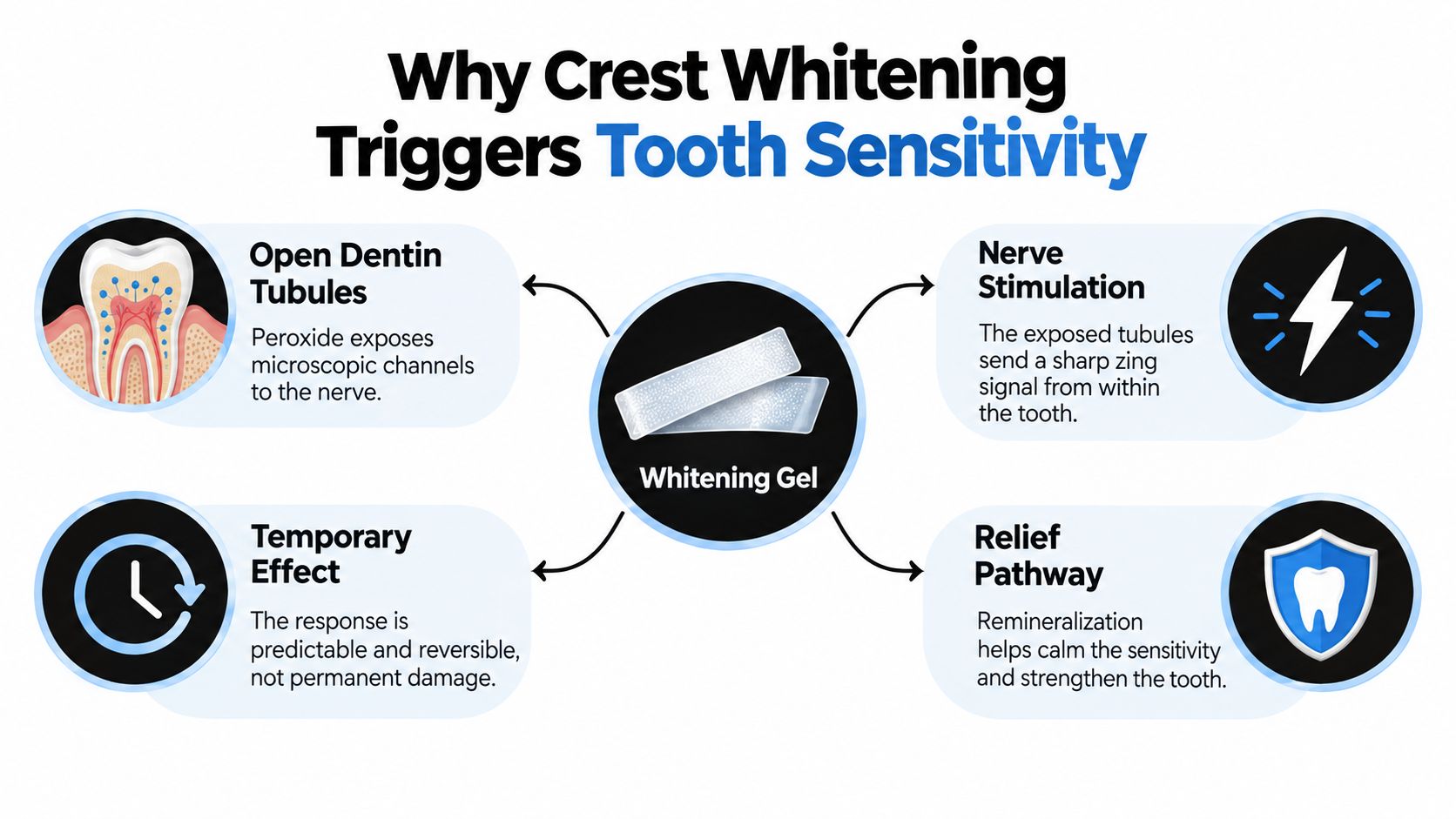
What the nerve is reacting to
With strip- or tray-based treatment, symptoms can begin within 2–3 days after whitening starts and commonly resolve by approximately the fourth day after treatment, according to the ADA source above. A Cochrane review of home-based whitening products also identified tooth sensitivity and oral irritation as the most frequent adverse effects, generally mild and temporary, with greater frequency at higher peroxide concentrations.
The mechanism explains why two variables matter so much:
- Concentration: More available peroxide can create a stronger whitening effect, but it can also increase the likelihood of nerve irritation.
- Contact time: Keeping a strip against the teeth longer gives the active ingredient more time to diffuse through the tooth.
- Tooth condition: Recession, enamel erosion, exposed dentin, cracks, or untreated decay can reduce the protective barrier before whitening even begins.
- Application technique: A strip that overlaps onto the gumline can irritate soft tissue as well as teeth.
Hydrogen-peroxide products and tray-delivered carbamide-peroxide gels show broadly similar levels of tooth sensitivity and gingival irritation in comparative evidence summarized by the ADA. That means the label matters less than the combined dose, exposure time, fit, and condition of your mouth. For a plain-language discussion of why whitening may hurt, the Winn Smiles whitening guide is a useful companion resource.
A related explanation of peroxide formulations and whitening chemistry is available in this guide to whitening gel ingredients. The important takeaway is simple: temporary sensitivity generally reflects fluid movement and nerve stimulation, not proof that your tooth has been structurally ruined.
Comparing Sensitivity Risks Across Crest Products
Crest whitening products shouldn't be treated as interchangeable. A standard strip used for a longer course creates a different exposure pattern from an express product designed to produce visible change quickly. Product names can suggest intensity, but the more useful questions are how much peroxide is present, how long the strip stays in contact, and how often you apply it.
Clinical evidence supports a dose-related pattern. In hydrogen-peroxide strip trials, 44% of users reported sensitivity with 6% hydrogen peroxide, compared with 59% using 9.5% (Canadian Dental Association review). Those figures don't predict exactly what will happen with a particular Crest product, because formulation, fit, saliva, treatment duration, and personal risk all differ. They do show why a stronger or faster formula can be a poor match for someone who already reacts to cold drinks.
A practical comparison
The table below uses relative risk rather than assigning unsupported peroxide concentrations to specific retail products. Crest formulas and packaging can change, so check the current label before use.
| Product Type | Daily Wear Time | Relative Sensitivity Risk |
|---|---|---|
| Standard 3D White strips | Follow the current package directions | Lower to moderate when used as directed |
| Professional Effects strips | Follow the current package directions | Moderate to higher, depending on exposure and individual sensitivity |
| 1-Hour Express strips | Approximately one extended daily session according to the product format | Higher, because a concentrated session may create a stronger short-term challenge |
| Any strip used beyond its label | Longer than directed or with extra applications | Highest avoidable risk |
The fastest product isn't automatically the most efficient choice. If an express session causes intense discomfort, you may stop treatment, skip applications, or struggle to eat and drink normally. A slower course that you can complete may produce a better practical result than an aggressive course abandoned early.
Choosing rule: If cold sensitivity already affects daily life, prioritize the least aggressive product format and the shortest labeled exposure that still fits your goals.
Don't stack products to chase a faster shade change. Avoid applying another strip because yesterday's result looked subtle, and don't assume a professional-sounding product label makes it suitable for teeth with recession or untreated pain. The safest comparison is not “which one whitens fastest?” It's “which exposure can my teeth tolerate while I follow the directions exactly?”
Proven Strategies to Prevent and Reduce Discomfort
The most useful sensitivity plan starts before the next strip. You want to reduce the amount of irritation reaching the nerve, then give the tooth time to settle between applications. A practical routine can be adjusted without turning whitening into an all-or-nothing decision.
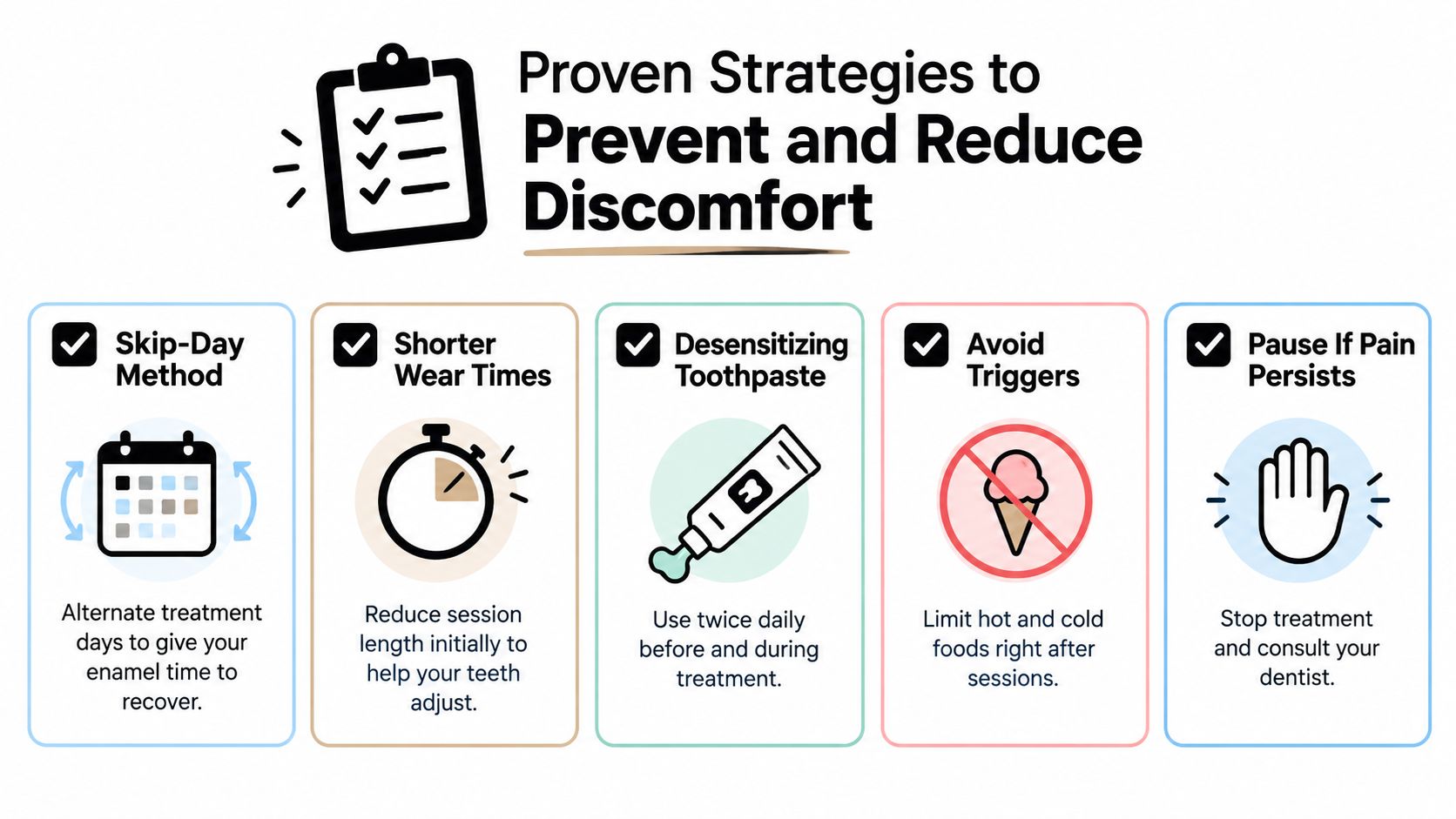
Build a lower-irritation routine
- Start with sensitivity toothpaste. Use a formula containing potassium nitrate, and follow the product directions consistently before and during the whitening course. Potassium nitrate helps reduce the nerve's ability to fire repeatedly when exposed to triggers, while fluoride supports a less permeable tooth surface.
- Apply rather than immediately rinse. After brushing, you can place a small amount of the desensitizing toothpaste over the sensitive tooth surfaces and gumline, then allow it to remain according to the product's instructions. This gives the active ingredients contact with the areas that react, but it isn't a substitute for checking a painful tooth.
- Use the skip-day method. If daily applications cause zings, alternate treatment days instead of adding extra strips. The pause gives the pulp and surrounding tooth structure time to recover while keeping the overall course moving.
- Shorten exposure cautiously. If the product allows flexibility, begin with a shorter session rather than wearing the strip for longer than directed. Don't compensate with extra applications, and don't cut a strip in a way that leaves peroxide concentrated against one area.
- Remove immediate triggers. Choose room-temperature drinks and foods after treatment. Cold air, ice, and acidic drinks can make an already reactive tooth feel worse, even though avoiding them doesn't treat the underlying cause.
A systematic review found that potassium nitrate and sodium fluoride desensitizing protocols reduced whitening-related sensitivity compared with placebo. The pooled odds ratio for experiencing sensitivity was 0.45, with a 95% confidence interval of 0.28–0.73 (systematic review and meta-analysis indexed by PubMed). The evidence supports symptom reduction, not a guarantee that every user will remain comfortable.
The sequence matters. Brush gently with a soft brush, allow the teeth to settle, and apply the strips only to clean, dry teeth as the package directs. If discomfort rises during the session, remove the strips rather than trying to “push through” sharp pain.
For a broader patient-focused perspective on treatment planning, see this resource on teeth whitening for Liverpool patients. You can also review practical steps for reducing tooth sensitivity after whitening.
If symptoms improve on skip days and return after each application, that pattern suggests the exposure is the trigger. If pain continues when you aren't whitening, the next step isn't more toothpaste. It's an examination.
Advanced Relief Options for Stubborn Sensitivity
Some people need more than a conventional sensitivity toothpaste, especially when whitening exposes an already vulnerable dentin surface. Professional-grade products can support the barrier around the tubules, but they should complement a carefully controlled Crest routine, not justify longer wear times.
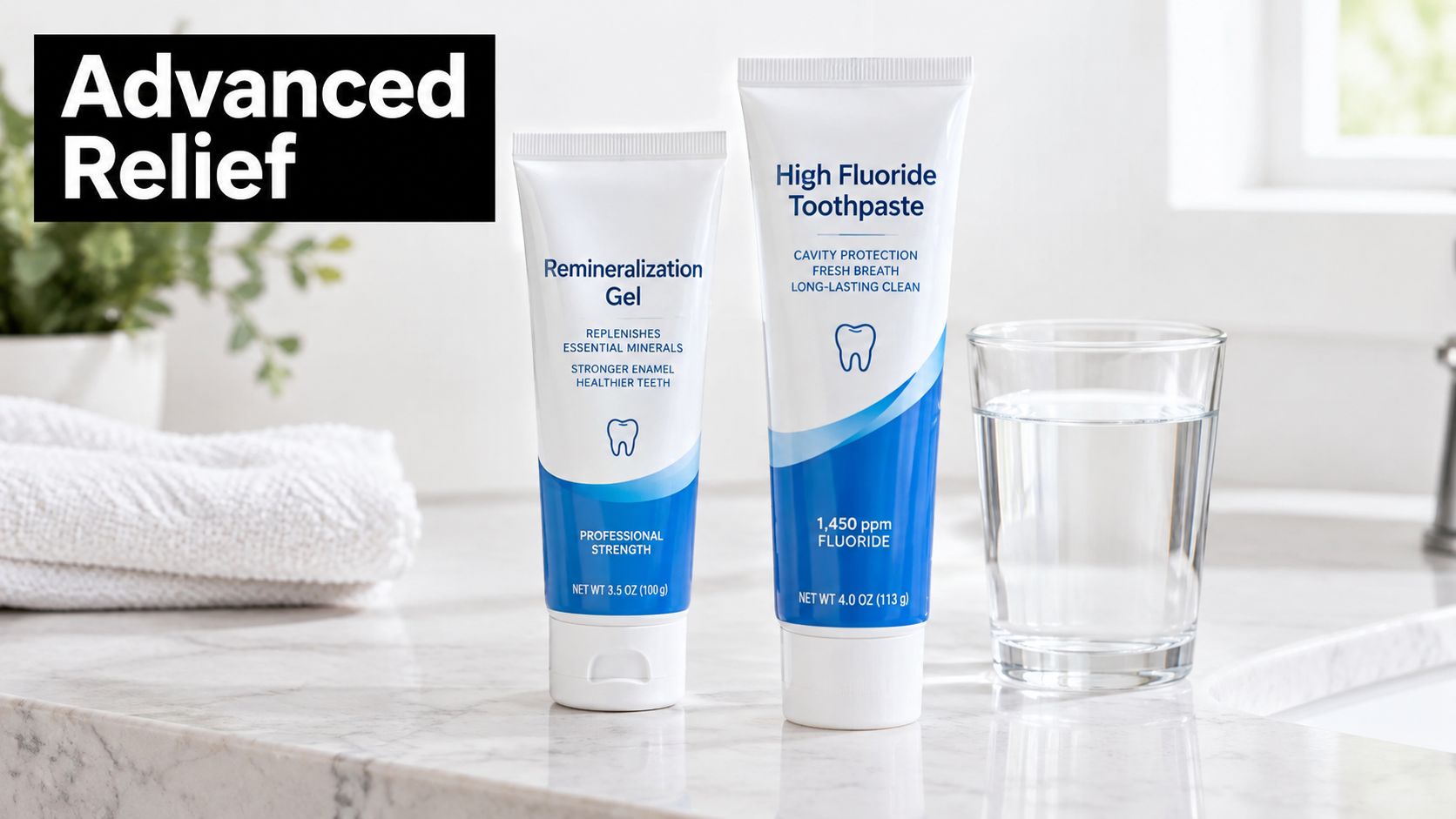
MI Paste and the tooth surface
MI Paste is a remineralizing paste built around RECALDENT technology. It is used to support mineral availability at the tooth surface and may be considered when enamel feels vulnerable or dentin sensitivity remains difficult to control. Some formulations contain milk-derived ingredients, so anyone with a relevant milk-protein allergy should check the product information and ask a dental professional before use.
MI Paste isn't a whitening product and won't repair a cavity, crack, or active infection. Its role is supportive. Apply it to clean teeth as directed, especially after the whitening session has ended, rather than mixing it with peroxide or placing it beneath a strip unless a dentist has specifically instructed you to do so.
Fluoridex for a stronger fluoride routine
Fluoridex products commonly use 1.1% neutral sodium fluoride. High-fluoride toothpaste is not just a stronger version of ordinary toothpaste, and it should be used according to dental or product instructions. Fluoride helps promote a more mineral-rich surface and can reduce the movement of fluid through exposed dentin tubules, which may lower the stimulus reaching the nerve.
A simple arrangement is to use the Crest strip at the scheduled time, remove it thoroughly, rinse as directed, and use the prescribed or recommended fluoride product at a separate brushing session. If your dentist has given you a specific schedule, follow that instead of combining products independently.
Where professional products fit
A dentist or dental retailer may recommend a desensitizing gel, remineralizing paste, or high-fluoride toothpaste based on your enamel, gums, restorations, and history. This guide to desensitizing gel for teeth can help you understand the product category, but product selection shouldn't replace diagnosis.
Barrier first: Professional-grade relief products can support a calmer tooth surface. They can't make an unsafe dose, untreated decay, or exposed root safe to whiten.
DentalHealth.com carries professional-grade at-home products, including MI Paste and Fluoridex, alongside whitening and sensitivity-care options. Whether you choose those products or another dentist-recommended alternative, use one active whitening system at a time and keep the wear schedule conservative.
When to Pause Treatment and Consult a Dentist
Not every whitening ache is routine. Mild, generalized sensitivity that appears during a course and settles after you stop is different from severe pain in one tooth, pain that lingers after the trigger is gone, or discomfort that starts before whitening.
Cavities, active infections, and gum recession can increase irritation during whitening, and people with established sensitivity should discuss the risks and benefits with a dentist beforehand, according to ADA News guidance on when to whiten teeth. A strip can cover a weak area without revealing why that area hurts. Peroxide may then intensify the symptom while the underlying condition remains untreated.
Stop and arrange an examination if
- Pain is localized: One tooth hurts much more than the others, especially if biting also causes discomfort.
- Sensitivity persists: Symptoms continue after you stop whitening instead of gradually settling.
- Gums react: You notice significant irritation, swelling, bleeding, or a strip repeatedly contacts the gumline.
- A tooth has a known defect: Cracks, enamel erosion, recession, exposed roots, or a recent dental procedure change the risk profile.
- You can't eat or drink normally: Functional disruption is a reason to stop self-treatment, not a challenge to tolerate.
Whitening also has a cosmetic limitation that often leads people to overuse strips. It changes the color of natural tooth structure, but it doesn't lighten most fillings, crowns, or similar restorations. If a front tooth contains a restoration, continued whitening may brighten neighboring teeth while leaving that restoration unchanged, producing an uneven result and unnecessary peroxide exposure.
A dental assessment can identify whether the discomfort comes from generalized peroxide sensitivity, exposed dentin, decay, gum disease, or another problem. Once the cause is known, your dentist can decide whether to modify the product, protect a root surface, treat the tooth first, or recommend a different cosmetic approach.
Building a Safe Long-Term Whitening Routine
A sustainable routine is less dramatic than repeated intensive whitening. Start with a dental baseline if you have a history of sensitivity, recession, enamel wear, fillings in the visible smile, or pain that predates the strips. Whitening natural teeth without considering restorations can create a color mismatch, while whitening over untreated disease can make a manageable problem harder to ignore.
For many people, the most comfortable pattern is to complete one carefully directed course, then stop and maintain the result with ordinary brushing and professional advice. Do not begin another course just because the original shade has started to soften. Repeated peroxide exposure without a clear plan can keep the nerves reactive and make each later session harder to tolerate.
A maintenance pattern that protects comfort
- Before whitening: Check the label, inspect the fit, and use a sensitivity toothpaste if you already react to cold. Ask a dentist about recession, cavities, restorations, or persistent sensitivity.
- During the course: Follow the exact wear schedule. If daily use causes discomfort, use skip days or a shorter permitted session rather than adding extra strips later.
- After each application: Remove the strip carefully, avoid immediate temperature extremes, and use your recommended sensitivity or fluoride product at the appropriate time.
- After the course: Stop bleaching when you reach the desired result. Maintain oral hygiene, reassess any recurring pain, and seek professional advice before restarting.
Consider a person whose teeth feel fine with occasional whitening but become sensitive after consecutive sessions. The sensible adjustment isn't to switch randomly among stronger products. It's to reduce exposure, add a desensitizing routine, check for gum recession or exposed dentin, and reserve professional-grade products for a defined purpose.
Your smile should be brighter without making normal eating and drinking uncomfortable. If a conservative routine still produces recurring pain, pause the cosmetic goal and have the teeth assessed before continuing.
DentalHealth.com offers professional-grade at-home dental care products, including Crest sensitivity relief options, MI Paste, Fluoridex, and whitening supplies. Visit DentalHealth.com to compare sensitivity-care and whitening products, read practical guidance, and choose a routine that supports comfort as well as a brighter smile.