
Dentist Recommended Teeth Whitening That Actually Works
When you hear a dentist talk about "dentist recommended teeth whitening," they're not pushing a single, secret product. Instead, they're talking about a professional approach that puts safety and real results first. This usually means one of two things: a powerful in-office treatment or custom-made at-home kits that they supervise.
Unpacking Professional Teeth Whitening
The desire for a brighter smile isn't just a fleeting trend—it's become a huge part of modern self-care. Professional teeth whitening is actually the single most requested cosmetic dental procedure out there.
The global market for teeth whitening was valued somewhere between $6.9–$8.5 billion just a few years ago, which shows just how many people are investing in a whiter smile.
This massive demand really shines a light on the crucial difference between grabbing a box off the shelf at the store and following a dentist-guided strategy. A professional recommendation isn't about a specific brand name; it's about a personalized, safe, and effective process designed just for you.
What A Dentist Is Really Looking For
A dentist's first priority is always your overall oral health. Before any whitening gel ever touches your teeth, they need to do a thorough check-up. This is a non-negotiable step, because not all tooth stains are created equal, and not every whitening treatment is right for every person.
The philosophy behind dentist recommended teeth whitening always includes:
- A Full Oral Health Exam: First things first, your dentist will check for any underlying issues like cavities, gum disease, or worn-down enamel. These problems have to be addressed before you can even think about whitening.
- Finding the Source of Stains: They’ll figure out if your stains are on the surface (extrinsic), from things like coffee and tea, or if they're deeper inside the tooth (intrinsic), which can be caused by medication or an old injury. This diagnosis determines the entire treatment plan.
- Creating a Custom Plan: Based on your goals, your budget, and the health of your teeth, they’ll recommend the best path forward—whether it's a fast-acting in-office session or a take-home kit with trays made to fit your mouth perfectly.
At the end of the day, a dentist’s goal is to give you predictable, even results without damaging your enamel or causing a ton of sensitivity. That professional oversight is what separates a safe, brilliant outcome from the hit-or-miss (and sometimes risky) world of DIY methods.
Understanding these key differences is the first real step toward getting the smile you’ve always wanted. To dive deeper, check out our guide on the 10 things you should know about teeth whitening for more essential facts.
The Science Behind a Whiter Smile
Ever wondered how a professional whitening treatment manages to roll back the clock on years of stains? It's not some kind of dental magic—it's just smart chemistry. The whole process hinges on a couple of key active ingredients that dentists have trusted for years because they're safe and, most importantly, they work.
At the core of every professional-grade whitening gel, you'll find one of two powerhouse ingredients: hydrogen peroxide or carbamide peroxide. Think of these as highly specialized cleaners, engineered to do one job exceptionally well: dissolving stubborn, set-in stains.
How Peroxide Lifts Stains
When you apply a peroxide-based gel, a chemical process called oxidation kicks into gear. It’s a lot like using a stain remover on a white shirt after spilling coffee. You wouldn't just scrub it with water, right? You’d use something that can get deep into the fabric to break the stain apart. Whitening gel works the same way, gently seeping into the microscopic pores of your tooth enamel.
Once it's in there, the peroxide gets to work, targeting the discolored molecules left behind by things like coffee, tea, and red wine. It breaks the chemical bonds that hold these stain molecules together, effectively making them dissolve into tiny, colorless particles. This is how your teeth’s natural, lighter shade is revealed, all without harming the actual tooth structure.
This is the fundamental principle behind any dentist-recommended teeth whitening. It’s not about scrubbing or bleaching the enamel itself. It's about safely escorting out the stain molecules that have become trapped inside over time.
Why Concentration Is Everything
The concentration of peroxide is the single biggest factor that dictates how strong and fast a treatment will be. This is exactly why having a dentist involved is so important.
-
In-Office Treatments: When you want to see a dramatic change fast, dentists use high-concentration hydrogen peroxide gels, often ranging from 25% to 40%. These are powerful formulas that work quickly, but they need to be applied with precision. Your dentist will place a special barrier over your gums and soft tissues to prevent any irritation, making sure that potent gel only touches your teeth.
-
At-Home Kits: For the at-home kits you get from your dentist, the gels use a lower concentration, usually between 10% to 22% carbamide peroxide. Carbamide peroxide is a more stable compound that breaks down into hydrogen peroxide slowly, which is perfect for whitening your teeth gradually and safely over a few days or weeks.
The custom-molded trays your dentist provides are a crucial part of the puzzle. They ensure this lower-strength gel is applied evenly and stays exactly where it needs to be, preventing gum irritation while delivering beautiful, consistent results. This controlled, professional approach is what makes these kits so much more effective than the one-size-fits-all options you find in stores. When you understand the science, it's easy to see why a dentist's guidance is the safest path to a brilliant smile.
Choosing Your Path: In-Office vs. At-Home Kits
When your dentist brings up teeth whitening, they're really laying out two different paths to get you to a brighter smile. Each one is built for different needs, lifestyles, and timelines. Getting to know the real differences between a fast in-office session and a more gradual at-home kit is the first step to choosing with confidence.
Think of in-office whitening as the express lane. It’s designed for the biggest impact in the shortest amount of time—perfect if you've got a wedding, reunion, or big event on the calendar.
On the other hand, a dentist-supervised at-home kit is more like taking the scenic route. This approach gives you all the flexibility and control, letting you whiten your teeth on your own schedule, right from your couch.
This decision tree gives you a quick visual breakdown of which path might be a better fit, depending on what matters most to you: speed, convenience, or professional oversight.
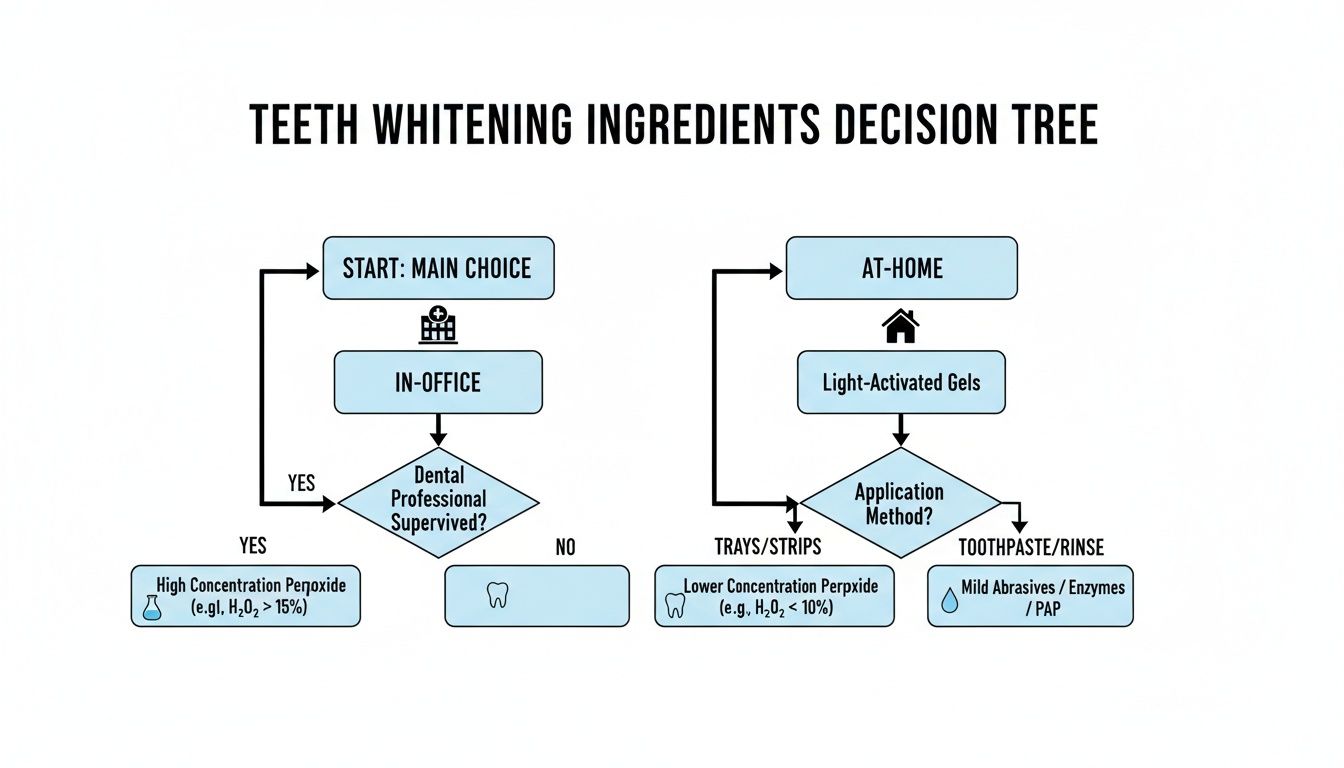
As you can see, the choice boils down to the immediate, high-impact nature of in-office treatments versus the steady, flexible approach of professionally supervised kits.
The In-Office Experience
During an in-office treatment, your dentist is in the driver's seat. They start by carefully putting a protective barrier over your gums and lips. This is a crucial step that makes sure the powerful whitening gel only makes contact with your teeth.
Next, they'll apply a high-concentration hydrogen peroxide gel. This professional-grade stuff is often kicked into high gear with a special light or laser, which speeds up the chemical reaction to lift away deep, stubborn stains. You can see a dramatic improvement of 5–8 shades in as little as one hour.
The main draw here is speed. You walk out of the dentist’s office with a noticeably whiter smile after just one appointment. Of course, that convenience comes with a higher price tag and might lead to some temporary sensitivity for some people.
Dentist-Supervised At-Home Whitening
If you'd rather go for a more gradual and budget-friendly option, a dentist-supervised at-home kit is a fantastic choice. The process still starts at the dental office, where your dentist takes molds of your teeth to create custom-fit whitening trays.
These custom trays are the secret weapon for professional at-home kits. Unlike the one-size-fits-all strips you see at the store, they guarantee the whitening gel covers every tooth surface evenly and keeps it from seeping onto your gums.
Your dentist will send you home with a lower-concentration carbamide peroxide gel and crystal-clear instructions on how to use it. You'll typically wear the trays for a set amount of time each day, usually for one to two weeks. While the results aren't instant, this method can achieve stunning, long-lasting results with consistent use. Many even consider it one of the best ways to whiten teeth at home fast while still having a professional guiding you.
Comparing Professional Whitening Methods
To make things even clearer, let's break down the key differences between these two fantastic, dentist-approved options.
| Attribute | In-Office Treatment | Dentist-Supervised At-Home Kit |
|---|---|---|
| Treatment Time | 1-2 hours in a single visit. | 1-2 weeks with daily applications at home. |
| Active Ingredient | High-concentration hydrogen peroxide (25%-40%). | Lower-concentration carbamide peroxide (10%-22%). |
| Speed of Results | Immediate, dramatic results after one session. | Gradual whitening over the course of the treatment. |
| Cost | Typically higher due to professional time and materials. | More affordable and budget-friendly. |
| Convenience | Fast and done for you, but requires a dental appointment. | Flexible, done on your own schedule at home. |
| Sensitivity Risk | Higher potential for temporary sensitivity due to gel strength. | Lower risk of sensitivity due to milder gel concentration. |
| Best For | Upcoming special events or those wanting immediate results. | Those who prefer a gradual approach, have sensitive teeth, or are on a budget. |
Ultimately, both paths lead to a brighter smile. It’s all about choosing the one that fits your life and goals.
The best dentist recommended teeth whitening path really depends on what you're looking for. Are you after immediate, show-stopping results for a big day? Or do you prefer the flexibility and affordability of whitening gradually on your own terms? Talking these options over with your dentist will help you land on the perfect treatment for your smile.
How Dentists Manage Whitening Sensitivity
Let's be honest: the fear of those sharp, sudden “zingers” is one of the top reasons people put off getting the whiter smile they want. It’s a totally valid concern. But while tooth sensitivity can be a side effect of whitening, it’s almost always temporary and completely manageable—especially when you have a pro in your corner.
Understanding why it happens is the first step. Think of your enamel as having tiny, microscopic channels called dentinal tubules. These are direct pathways to the tooth's nerve center. The active ingredients in whitening gels temporarily open up these channels to lift stains, and that temporary exposure is what can cause a reaction to hot or cold.
The good news? This isn't some random, unpredictable side effect. Dentists expect it, and they have a whole playbook of strategies to keep you comfortable.
Proactive Steps to Prevent Discomfort
A good dentist doesn't just wait for sensitivity to happen; they work to prevent it from the very beginning. A key part of any dentist recommended teeth whitening plan is prepping your teeth before the gel even touches them.
Here are a few common strategies they use:
- Using Desensitizing Toothpaste: Your dentist will likely have you switch to a toothpaste for sensitive teeth a week or two before your treatment. Ingredients like potassium nitrate or stannous fluoride work by blocking those little pathways to the nerve, calming things down ahead of time.
- Adjusting Gel Concentration: Stronger isn't always better. A dentist can tailor the peroxide concentration of your whitening gel based on your history with sensitivity, ensuring the treatment is effective without causing unnecessary irritation.
- Applying a Protective Sealant: In some situations, a dentist might apply a professional-grade desensitizing agent directly to your teeth right before the whitening session. It acts like a shield, calming the nerves before the whitening process even starts.
Professional oversight means your comfort is always the top priority. Instead of a one-size-fits-all product, your dentist customizes the entire process to your specific needs, turning sensitivity from a major roadblock into a minor, manageable hurdle.
For anyone with a history of sensitivity, dentists often lean towards supervised at-home kits. These use lower-concentration gels for a gentler, more gradual whitening experience that puts you in control.
If you're looking for more guidance, our article on the best teeth whitening for sensitive teeth dives deep into products designed for maximum comfort. A dentist-led approach means you can get a stunningly white smile without having to grit your teeth to get there.
When You Must See a Dentist Before Whitening
Getting a brilliant smile should never come at the expense of your actual oral health. It’s tempting to jump right into whitening, but applying powerful bleaching agents to an unhealthy mouth is like painting over a cracked wall—you're just hiding the real problem, and you could even make things worse. A quick exam with your dentist is easily the most important first step you can take.
Think about it: whitening gel is a potent cleaner. If you have a small, untreated cavity, that cleaner can seep deep inside the tooth and get way too close to the nerve, causing some serious pain. The same goes for your gums. Applying peroxide to inflamed or diseased gums is a recipe for major discomfort and irritation. A check-up makes sure your foundation is solid before you start building that brighter smile.
Addressing Pre-Existing Conditions First
Your dentist is going to screen for a few key issues that are absolute deal-breakers for starting a whitening treatment. If you try to whiten your teeth while dealing with any of these, you could compromise your health and end up with a smile you're not happy with.
These are the non-negotiables your dentist will check for:
- Untreated Cavities: A whitening agent can easily get through the decayed part of a tooth and reach the inner pulp, which can be incredibly painful. Cavities have to be filled before you even think about whitening.
- Gum Disease (Gingivitis or Periodontitis): Inflamed, swollen, or bleeding gums are already irritated. Adding peroxide gel to the mix will only make them feel worse. Healthy gums are a must for a safe, comfortable whitening experience.
- Worn or Damaged Enamel: If your enamel is thin, there's less of a barrier between the whitening gel and the sensitive dentin layer underneath. This is a fast track to heightened, and often painful, sensitivity.
A pre-whitening exam isn't just a friendly suggestion; it's a fundamental safety measure. It’s the only way to know for sure that your mouth is healthy enough for the procedure and that you’ll get the beautiful, even results you want without any painful surprises.
The Mismatched Smile Problem
There's another huge reason to see your dentist first, and it’s one that catches a lot of people off guard: existing dental work. Crowns, veneers, and fillings are all meticulously color-matched to your teeth at the time they are placed.
Here's the catch: those materials are completely immune to whitening agents. If you whiten all the natural teeth around them, your dental work will stick out, staying the exact same color it was before. This creates a really noticeable, uneven look. Your dentist can spot this issue from a mile away and help you come up with a plan to make sure your final result is uniform, seamless, and natural-looking.
Maintaining Your Results for a Lasting Bright Smile
You’ve put in the time and effort to get that brilliantly white smile. So, how do you make it last? Professional whitening results can look great for anywhere from one to three years, but that timeline really depends on your daily habits.
Think of your newly whitened teeth like a fresh coat of white paint—it’s much easier to prevent new stains from setting in than it is to remove them down the road.
The key isn't giving up everything you enjoy. It’s about being smart. The usual suspects—coffee, tea, red wine, and dark sodas—are loaded with powerful color pigments called chromogens that cling to tooth enamel. An easy defense? Use a straw. This simple trick minimizes the contact between the liquid and the front surfaces of your teeth.
And if you do indulge, try to rinse your mouth with water right after. This quick swish helps wash away those staining compounds before they have a chance to get comfortable and take up permanent residence on your enamel.
Building a Stain-Resistant Daily Routine
Keeping your smile bright is all about combining good habits with the right products. Consistency is your best friend here. A few small tweaks to your daily routine can make a huge difference in how long your whitening treatment lasts, ensuring your investment keeps paying off.
Your dentist will probably suggest a maintenance plan, which usually involves periodic touch-ups. These aren't full-blown whitening sessions. Instead, they are short, occasional applications to knock out new surface stains as they crop up. Using your custom at-home trays with a professional gel for a night or two every few months is often all you need to keep things looking fresh.
To keep your smile looking its best between those touch-ups, work these habits into your life:
- Choose the Right Toothpaste: Look for a gentle whitening toothpaste that lifts surface stains without being too abrasive. Products with mild polishing agents are great for maintaining your shade without harming your enamel.
- Commit to Oral Hygiene: This is non-negotiable. Brushing twice a day and flossing daily removes the plaque that stains love to stick to, keeping your teeth’s surface smooth, clean, and bright.
- Schedule Regular Cleanings: Don't skip your professional cleanings every six months. Your hygienist can polish away surface stains that your toothbrush just can't handle, giving you a clean slate and a serious boost to your smile’s vibrancy.
The most effective strategy for lasting results is proactive prevention. Combining mindful consumption of staining foods with diligent oral hygiene and periodic professional touch-ups creates a powerful defense against discoloration.
Smart Choices for Long-Term Brightness
At the end of the day, how long your dentist recommended teeth whitening lasts is really in your hands. You don’t have to live in a bubble, dodging every colorful food that comes your way. It's more about building smart habits that become second nature.
For example, when you eat dark-colored foods, try pairing them with crunchy vegetables like celery or apples. They act as natural scrubbers for your teeth while you eat. It’s these small, consistent efforts that really add up. By adopting a maintenance mindset from day one, you can make sure your radiant smile stays a stunning feature for years to come.
Common Questions About Teeth Whitening
Let's clear up some of the most common questions and myths that pop up around professional whitening. Getting straight, simple answers helps you move forward with confidence, knowing exactly what to expect from any dentist-recommended teeth whitening treatment.
How Long Do Professional Whitening Results Last?
You can generally expect your bright new smile to last anywhere from one to three years. But this isn't set in stone. The biggest factor, by far, is your daily habits.
If you frequently enjoy staining culprits like coffee, tea, or red wine, you'll probably notice the brightness fading a bit sooner. The best way to keep that smile vibrant for years is with a simple maintenance plan, which usually just means occasional at-home touch-ups using a professional-grade gel.
Will Whitening Damage My Tooth Enamel?
When you follow the guidance of a dental professional, teeth whitening is completely safe and won't harm your enamel. The active ingredients are designed to gently open the microscopic pores in your enamel to lift out the stains that have settled there over time.
The key thing to remember is that these pores naturally re-seal themselves after the treatment. The real risk of enamel damage comes from misusing or overusing over-the-counter products without any professional guidance. That’s why a dentist's oversight is so crucial for getting a safe, amazing result.
Why Are My Teeth Not Whitening Evenly?
It can happen! Uneven results usually come down to a few common reasons. First off, any existing dental work you have—like crowns, fillings, or veneers—won't respond to whitening agents. This can create a noticeable color difference between your natural teeth and your dental restorations.
Also, some types of stains are internal, meaning they're inside the tooth itself. These are often caused by certain medications or a past injury to the tooth, and they just won't lift with traditional bleaching. A pre-whitening consultation is the best way to spot these potential issues ahead of time and set realistic expectations for your final look.
Ready to find the perfect professional-grade products to get—and keep—your brightest smile? DentalHealth.com offers a curated selection of dentist-trusted brands like Opalescence and PolaDay, delivered right to your door. Explore our teeth whitening solutions today.