
Learn how does fluoride strengthen teeth: the science of enamel protection
Fluoride is like a multi-tool for your teeth, working in three critical ways. It actively rebuilds weakened enamel, makes that enamel tougher against acid attacks from sugar, and even goes on the offensive to disrupt the bacteria that cause cavities in the first place.
Think of it as having a dedicated repair crew that also upgrades your teeth's long-term defenses.
The Three Core Actions Of Fluoride
To really get how fluoride strengthens teeth, it helps to picture your mouth as a constant battlefield. On one side, you have the attackers: acids from the sugary foods and drinks we all enjoy. These acids strip essential minerals from your tooth enamel in a process called demineralization.
On the other side is your body's natural defense system—your saliva—which works around the clock to put those minerals back. This repair process is called remineralization. Fluoride is the ultimate reinforcement that tips the scales in your favor.
It doesn’t just help; it supercharges this natural repair process. When fluoride is present, it helps your enamel pull in more calcium and phosphate from your saliva, rebuilding weak spots faster and stronger than your body could on its own. The result is a more durable tooth surface, better equipped to handle the next acid attack.
A Multi-Pronged Dental Defense
The benefits of fluoride don’t stop at simple repairs. It also plays an offensive role by getting in the way of harmful oral bacteria. It messes with their metabolism, meaning they can't produce as much enamel-eating acid. This significantly reduces the overall threat to your teeth.
Let's break down its three main jobs.
Fluoride's Three Core Strengthening Actions
Here’s a quick overview of the three-front battle fluoride wages to keep your enamel strong.
| Mechanism | What It Does | The Result |
|---|---|---|
| Enhanced Remineralization | Speeds up the deposit of calcium and phosphate back into the enamel. | Repairs microscopic weak spots before they can turn into full-blown cavities. |
| Acid Resistance | Integrates into the enamel structure to form a new, stronger mineral called fluorapatite. | The new enamel surface is significantly more resistant to being dissolved by acids. |
| Bacterial Inhibition | Interferes with the enzymes that bacteria use to produce acid. | Reduces the amount of harmful acid produced by plaque bacteria, weakening their attack. |
This powerful, combined approach is what makes fluoride such an indispensable ally in maintaining a healthy smile for a lifetime.
For those looking to maximize their enamel's strength, you can learn more about other ways to strengthen tooth enamel in our related guide.
Rebuilding Enamel With Remineralization
Think of your tooth enamel like a brick wall. Every day, acids from the food you eat and the bacteria in your mouth are like a constant, corrosive rain trying to dissolve the mineral "mortar" holding that wall together. This process is called demineralization.
When this breakdown happens faster than your body can repair it, weak spots start to form. Over time, those weak spots become cavities. This is where fluoride comes in, acting like a master mason for your teeth. It doesn't just patch up the damage; it actually upgrades the entire structure to make it tougher for the long haul.
The Power of Fluorapatite
Fluoride's main job is to kick remineralization—your body's natural enamel-rebuilding process—into high gear. When fluoride is present in your saliva, it attracts calcium and phosphate ions, which are the essential building blocks of your teeth. It then helps them reintegrate into your enamel's surface, repairing the microscopic damage left behind by acid attacks.
But here’s where it gets really clever. Instead of just rebuilding the original enamel structure (called hydroxyapatite), fluoride creates a brand-new, super-charged mineral called fluorapatite. This new crystal structure is way tougher and much more resistant to future acid attacks. It’s like replacing the old mortar with a high-performance, weatherproof sealant.
This infographic breaks down how fluoride rebuilds, defends, and disrupts the threats to your enamel.
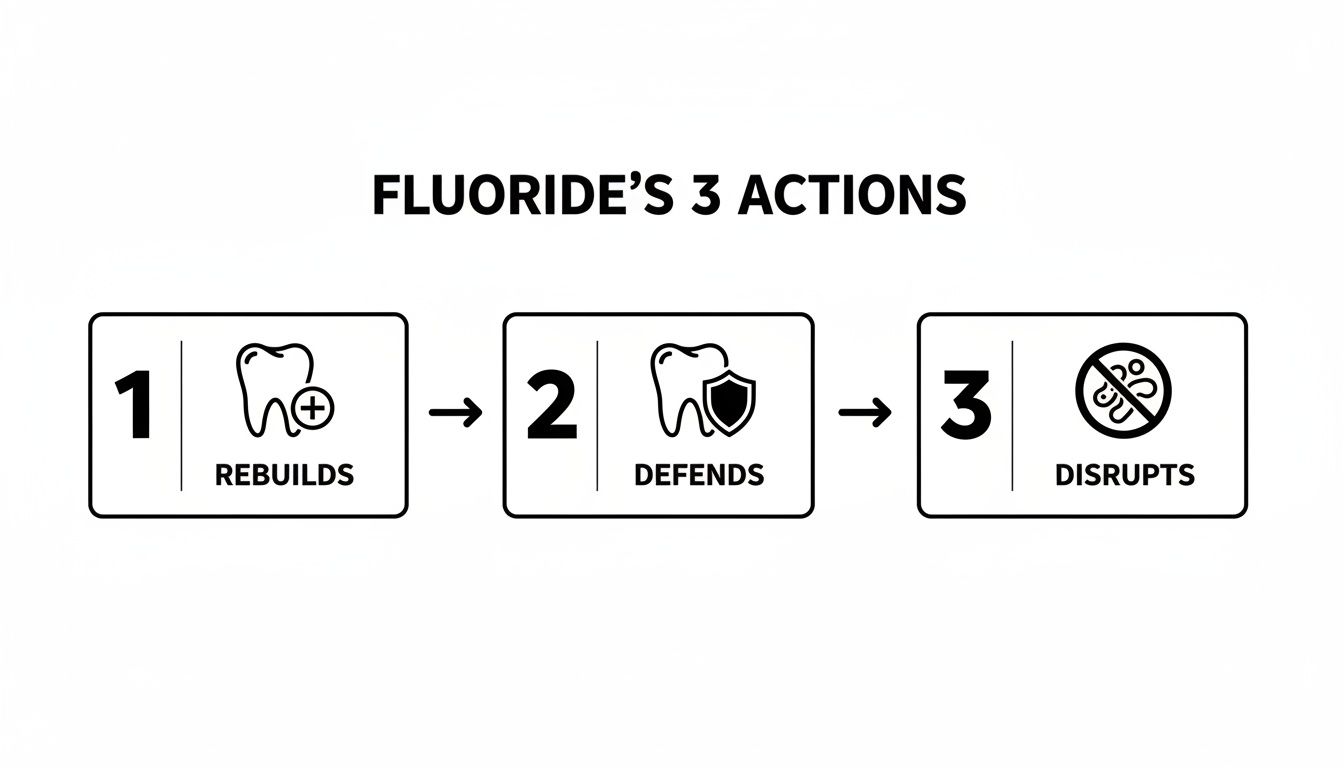
This constant cycle of repair and reinforcement is what makes fluoride so effective. According to the American Dental Association, this action on the tooth's surface not only helps reverse the very earliest signs of decay but also creates a more durable tooth overall. In fact, studies show that communities with fluoridated water see cavity reductions of up to 49% in permanent teeth, which really highlights fluoride's powerful benefits after teeth have erupted.
This means every time you use a fluoride product, you are actively rebuilding and fortifying your teeth against the daily grind.
While fluoride is a powerhouse, you might also wonder if an enamel repair toothpaste can give you an extra boost. For those looking for more advanced solutions, some products are specifically designed to maximize this rebuilding process. Formulas that combine fluoride with other remineralizing agents can offer enhanced benefits. A great example is a specialized product like MI Paste, which also works to support enamel health.
Building A Shield Against Acid Attacks
Beyond just patching things up, fluoride also plays defense, acting like a high-tech shield that makes your tooth enamel tougher from the get-go. When fluoride works its way into the enamel during remineralization, it creates a new substance called fluorapatite, which is a whole lot less vulnerable to acid.
What this means in the real world is that when cavity-causing bacteria start feasting on sugars and churning out acid, your newly fortified enamel just doesn't break down as easily. It's a proactive upgrade, not just a repair job.
But the strategy doesn't stop there. Fluoride also goes on the offensive, directly targeting the bacteria responsible for cavities.
Weakening The Attackers
Fluoride is a master of sabotage when it comes to oral bacteria. It gets right in the middle of their metabolic process, making it much harder for them to turn sugars into enamel-eroding acid. This move effectively weakens their entire attack force.
This disruption works in a couple of key ways:
- Enzyme Inhibition: Fluoride slips inside bacterial cells and blocks the key enzymes they need to process sugar. If they can't efficiently use sugar as fuel, their acid production drops off a cliff.
- Reduced Adhesion: It also messes with the production of the sticky "glue" bacteria use to form plaque and cling to your teeth. This makes it much easier for your toothbrush and even your own saliva to wash them away.
This two-pronged approach—bolstering your enamel's defenses while simultaneously weakening the attackers—is what makes fluoride so incredibly effective. It's a major reason why water fluoridation is credited with slashing tooth decay by up to 25% in both kids and adults.
A Fortified Defense System
This enhanced resilience is crucial for your long-term dental health. By making enamel more resistant to acid, fluoride raises the bar for when a cavity can even start to form. Simply put, your teeth are better equipped to handle the daily challenges from the foods and drinks you consume.
The ultimate goal of fluoride's defensive action is to prevent demineralization before it happens, keeping your enamel strong and intact day after day.
To really safeguard your smile, it's also smart to think about other methods for preventing enamel erosion, which can weaken teeth over time. Combining a solid fluoride routine with habits that protect your enamel gives you the most robust defense possible against dental damage. You can read our full guide on how to prevent enamel erosion to learn more.
How You Get Fluoride: Topical vs. Systemic
Fluoride works its magic on your teeth through two very different but equally important routes: from the outside-in (topical) and the inside-out (systemic). Grasping this distinction is key to understanding how fluoride provides such comprehensive protection throughout your life.
Think of it like building and maintaining a house. Systemic fluoride is like building the house with stronger, more durable bricks right from the start. Topical fluoride, on the other hand, is like applying a high-tech, weatherproof shield to that finished house, protecting it from daily attacks for years to come.
Both methods are essential for a healthy smile, but they play their biggest roles at different stages of our lives.
H3: Systemic Fluoride: Building Strength From Within
Systemic fluoride is the kind you ingest, usually through fluoridated public water or sometimes prescribed supplements during childhood. It works its wonders while permanent teeth are still forming beneath the gums.
As those teeth develop, the fluoride is incorporated directly into the enamel's crystal structure. This builds stronger enamel during formation, making the teeth more resistant to cavities for a lifetime. Even tiny amounts of fluoride integrated this way create an enamel that is naturally tougher against acid.
This foundational benefit is a huge public health success story. CDC data showed that between 1945 and 1999, community water fluoridation slashed childhood cavities by 40-70% and tooth loss in adults by 40-60%. You can learn more about why fluoride is essential for dental health from University of Utah experts.
H3: Topical Fluoride: Protecting From The Outside
Once our adult teeth are fully formed and in place, topical fluoride takes center stage. This is the fluoride you get from products applied directly to the surface of your teeth.
Common sources of topical fluoride include:
- Fluoridated toothpaste
- Mouth rinses and gels
- Professional treatments at the dentist's office (like varnishes or foams)
This method works by constantly bathing your teeth in fluoride, enriching your saliva and plaque with this protective mineral. It’s the direct fuel for the remineralization process we talked about earlier, actively repairing microscopic damage and beefing up your enamel's defenses against acid attacks. This continuous, on-the-spot reinforcement is absolutely crucial for maintaining dental health throughout adulthood.
To make things even clearer, let's break down the key differences between these two powerful delivery methods.
H3: Topical vs. Systemic Fluoride: A Comparison
| Feature | Topical Fluoride | Systemic Fluoride |
|---|---|---|
| Sources | Toothpaste, mouth rinses, professional varnishes and gels. | Fluoridated water, dietary supplements (as prescribed). |
| Primary Mechanism | Works on the surface of existing teeth, promoting remineralization and inhibiting demineralization. | Is incorporated into the enamel structure as teeth are forming. |
| Key Audience | Everyone, but it is the primary method for adults with fully formed teeth. | Primarily children, as their permanent teeth are developing under the gums. |
Ultimately, both methods work together. The systemic fluoride you got as a child built a stronger foundation, and the topical fluoride you use today keeps that foundation protected and repaired.
For adults, the main benefit comes from the consistent, direct-contact application of topical fluoride, which keeps the enamel shield strong and actively repairs daily damage.
This is exactly why products like remineralizing MI Paste, which contains 900 ppm of fluoride, are so effective. They're especially helpful for people with a high risk of cavities or those with braces, delivering a concentrated topical dose right where it's needed most.
Choosing The Right Fluoride For You
Knowing how fluoride works is one thing, but putting that science into practice is where the real magic happens. Not every fluoride product is created equal, and the best one for you hinges entirely on your unique dental health picture. Your daily toothpaste is a great starting point, but some situations definitely call for a bigger gun.
When you look beyond the typical drugstore aisle, you'll see that fluoride concentration is measured in parts per million (ppm). Most over-the-counter toothpastes you'll find contain somewhere between 1,000 to 1,500 ppm, which is a solid, effective dose for daily cavity prevention for most of us.
But what if you're not "most of us"? For some people, that standard dose just isn't enough to win the fight against decay.
Who Needs A Stronger Dose of Fluoride?
If you find yourself in one of the camps below, a standard toothpaste might be leaving your enamel's defenses a bit thin. A higher concentration can give your teeth the extra reinforcement they desperately need.
- You're Prone to Cavities: If you're doing everything right with your hygiene but still getting cavities, your dentist will likely recommend a prescription-strength product.
- You Have Dry Mouth (Xerostomia): Saliva is your mouth's built-in cleaning and repair crew, neutralizing acid and helping remineralize enamel. When it's in short supply, cavity risk skyrockets, making extra fluoride a must.
- You Have Braces: All those brackets and wires are a paradise for plaque buildup. They create countless nooks and crannies that are tough to clean, raising the risk of demineralization and those dreaded white spots.
- Your Tooth Roots Are Exposed: When gums recede, they expose the root surfaces of your teeth. This material, called cementum, is much softer than enamel and far more vulnerable to decay.
In these cases, dentists often reach for prescription-strength pastes to level the playing field.
High-powered toothpastes, like Fluoridex Daily Defense, pack a serious punch with 5,000 ppm of fluoride. That’s nearly five times the amount in regular paste, giving it the power to supercharge the remineralization process and build a much tougher shield against acid.
Building Your Personalized Routine
It's not just about bumping up the concentration, though. Some advanced formulas are designed to tackle multiple problems at once, combining high-strength fluoride with other key minerals like calcium and phosphate to give the enamel-rebuilding process an extra boost. This is a game-changer for someone trying to reverse the earliest signs of a cavity or manage sensitivity.
The goal is to create a daily routine that confronts your specific risks head-on. The single best way to figure this out is to have a frank conversation with your dentist or hygienist. They can look at your personal health history, assess your risk factors, and help you decide if an over-the-counter product is enough, or if a prescription-strength solution is what you need to keep your smile strong and healthy for the long haul.
Understanding Fluoride Safety And Myths
Jump online and you're bound to find some wild claims about fluoride. It’s easy to get lost in the noise. The best way to cut through it all is to look at the decades of evidence from health organizations that have actually studied this stuff inside and out.
Probably the biggest concern you’ll hear about is dental fluorosis. It’s important to know this isn't a disease; it's a cosmetic condition that might cause faint white streaks on the teeth. And here's the critical part: it only happens from swallowing too much fluoride while the teeth are still forming under a young child's gums. It’s not something adults need to worry about from their toothpaste or mouthwash.
Ensuring Safe And Effective Use
Keeping kids safe from fluorosis is really quite simple. It all comes down to using the right amount of toothpaste to get all those topical benefits on the teeth while making sure very little gets swallowed.
Just follow these straightforward guidelines for safety and effectiveness:
- For children under 3 years old: A tiny smear of fluoride toothpaste is all you need—think the size of a single grain of rice.
- For children 3 to 6 years old: You can bump that up to a pea-sized amount.
- For all children: Always supervise brushing time to make sure they spit out the toothpaste when they’re done and don’t swallow it.
These aren't just random suggestions; they're the official recommendations from groups like the American Dental Association (ADA) and the CDC. They're designed to give kids that powerful cavity protection while keeping fluoride intake well within the safe zone during those key developmental years.
By tackling these misconceptions head-on with established science, you can feel confident that fluoride is a safe, proven, and essential tool for strengthening teeth and maintaining excellent oral health throughout your life.
For adults, the risk of any negative effects from using fluoridated water and dental products as directed is practically zero. The amounts are carefully regulated to give you maximum cavity-fighting power without posing a health risk. You get to enjoy all the ways how fluoride does strengthen teeth completely worry-free.
Your Top Fluoride Questions, Answered
Even after getting the science down, it's totally normal to have some practical questions about how fluoride fits into your daily life. Let's clear up a few of the most common ones so you can feel confident in your oral care routine.
We’ll tackle the real-world concerns people often have, from whether adults still need it to how quickly it actually starts working.
Is Fluoride Still Necessary For Adults?
Absolutely. Fluoride is famous for helping kids build strong teeth, but its job is far from over once you're an adult. You could even argue it's just as important for protecting the teeth you already have.
Every single day, your teeth are under attack from acids in food, drinks, and bacteria. Fluoride is your first line of defense, constantly stepping in to repair microscopic weak spots on your enamel and stop new cavities before they can start. This ongoing protection is vital.
Plus, adults often face unique issues like gum recession, which exposes the softer, more vulnerable root surfaces of your teeth. Problems like dry mouth can also send your cavity risk through the roof. In these cases, consistent fluoride from your toothpaste and rinses provides crucial, targeted protection to help keep your smile healthy for a lifetime.
Can I Get Too Much Fluoride From Water And Toothpaste?
When you use products as directed, it’s virtually impossible for an adult to get too much fluoride from optimally fluoridated water and standard dental products. The levels are carefully regulated to maximize the benefits while keeping you safe.
The main concern you hear about "too much" fluoride is related to dental fluorosis, a cosmetic issue that only happens in young children who consistently swallow large amounts of toothpaste while their permanent teeth are still forming under the gums.
This is exactly why it's so important to supervise young kids when they brush. Use just a smear the size of a grain of rice for kids under 3, and a pea-sized amount for kids 3-6. For adults, this just isn't a practical risk.
How Long Does It Take For Fluoride To Work?
Fluoride gets to work on a microscopic level from the very first time you use it. The moment you start brushing, it’s already inhibiting acid production from bacteria and supplying the minerals your enamel needs to rebuild.
The noticeable effects, however, depend on what you're trying to achieve. If you're using a high-concentration fluoride product to tackle a specific problem like tooth sensitivity, you might feel a real improvement within just a few weeks of consistent use.
But the main benefit of fluoride—cavity prevention—is something that builds up over time. Think of it less like a quick fix and more like a lifelong maintenance plan for your smile. Consistent, daily use is what builds and maintains that strong, acid-resistant enamel, giving you durable, long-term protection against decay.
For a complete range of professional-grade fluoride toothpastes, gels, and rinses to build your perfect oral care routine, explore the dentist-recommended brands at DentalHealth.com. Find the right products to strengthen your teeth and keep your smile healthy, delivered directly to your door. Visit us today at https://dentalhealth.com.