
How to Clean Clear Aligners and Keep Your Smile Bright
Let's be honest, the whole point of clear aligners is that they're, well, clear. But they won't stay that way on their own. The key is a simple daily routine: rinse them with lukewarm water every single time you take them out, and give them a gentle scrub with a soft toothbrush and some clear, unscented soap.
This isn't just about looks. Making this a habit is your best defense against the plaque and bacteria that love to build up, keeping your aligners truly invisible and your treatment right on schedule.
Why Pristine Aligners Are Essential for Your Smile
Your aligners are designed to be discreet, but they can quickly turn cloudy, stained, or even yellow without the right care. Keeping them pristine isn't just vanity—it's a critical part of your oral health. You're wearing these things for up to 22 hours a day, which means they're essentially a second skin for your teeth.
When you slack off on cleaning, plaque and bacteria throw a party on your trays, forming a sticky, gross biofilm. That's when the trouble starts:
- Bad Breath: Trapped bacteria are notorious for causing unpleasant odors.
- Cavities: That biofilm holds bacteria right up against your enamel, creating the perfect environment for tooth decay.
- Gum Irritation: Plaque buildup along the gumline can easily lead to sore, inflamed gums.
Think of it like wearing dirty glasses. A cloudy aligner doesn't just look bad; it creates an unhealthy environment for your teeth and gums.
To help you stay on track, here's a simple checklist that breaks down the essentials.
Your Daily Aligner Cleaning Checklist
This quick rundown covers the must-do tasks to keep your aligners in top shape every single day.
| Action | When to Do It | Why It Matters |
|---|---|---|
| Rinse Immediately | Every time you remove them to eat or drink. | Prevents saliva and plaque from drying and hardening on the surface. |
| Gentle Brushing | At least twice a day, typically morning and night. | Removes the soft plaque film that builds up throughout the day and night. |
| Brush Your Teeth | Before reinserting your aligners. | Stops you from trapping food particles and sugar between your teeth and the trays. |
| Proper Storage | Anytime they are not in your mouth. | Keeps them safe from damage, dirt, and being accidentally thrown away. |
Following these steps consistently is the foundation of a successful and hygienic clear aligner experience.
The Connection Between Cleanliness and Treatment Success
A diligent cleaning routine has a direct impact on how well your orthodontic treatment works. It's no surprise the global clear aligners market has ballooned to $4.8 billion, with a dedicated $537 million market just for aligner cleaners. The numbers tell the real story here.
Research shows that a staggering 85% of wearers see biofilm buildup within the first week if they aren't cleaning properly. This isn't just a hygiene issue—it can slash treatment efficacy by 25% and crank up your risk of decay by 35%. On the flip side, daily soaks in effervescent solutions are proven to wipe out 99.9% of plaque, while brushing alone only gets about 50%.
Maintaining your aligners isn't just another chore; it's a commitment to the investment you've made in your smile. Clean trays fit better, work more effectively, and ensure your journey ends with the healthy, beautiful result you signed up for.
Adopting the right mindset helps. It's useful to apply the same best practices for cleaning and preserving delicate items as you would for any other valuable possession. This approach protects your investment and paves the way for a successful outcome.
Mastering Your Daily Aligner Cleaning Routine
The real secret to keeping your aligners crystal clear and doing their job isn't some complicated trick—it's just being consistent. If there's one habit you need to lock down during your treatment, it's building a simple, daily cleaning routine. This tiny bit of effort each day is what stops that gross buildup that leads to cloudy trays, bad breath, and bigger dental problems down the road.
Just think about it: you wouldn't wear the same shirt for a week straight. Your aligners are in your mouth for up to 22 hours a day; they definitely deserve the same level of attention. The goal is to make cleaning them such a normal part of your day that you don't even have to think about it.
The Rinse and Brush Method
The core of your daily care is a simple two-step process you should do every single time you take your aligners out.
First, give them an immediate rinse under lukewarm water. I can't stress this enough: never use hot water. It can warp the delicate plastic, ruining the custom fit your orthodontist worked so hard to create. This quick rinse washes away saliva and plaque before it has a chance to dry and harden onto the surface.
Next, it’s time for a gentle but thorough brushing. You’ll want to use a separate, soft-bristled toothbrush just for your aligners—not the one you use on your teeth. A little bit of clear, unscented soap is all you need to scrub away the soft biofilm that builds up inside and out.
Pro Tip: Keep a dedicated "aligner toothbrush" right by your sink. Having it there as a visual cue makes it so much easier to stick with the habit and stops you from accidentally grabbing your regular toothbrush, which might have abrasive toothpaste residue on it.
Prepare Your Teeth Before Reinserting
Cleaning the aligners is only half the job. Your teeth have to be completely clean before you pop those trays back in. If you put your aligners in right after a meal without brushing and flossing, you’re basically creating a sealed-off greenhouse for food bits, sugar, and bacteria to feast on your enamel for hours.
This is a perfect recipe for cavities and can really irritate your gums. Make this your non-negotiable rule:
- Brush your teeth thoroughly after every single meal or snack.
- Floss to get everything out from between your teeth.
- Give your mouth a quick rinse with water before putting the aligners back in.
This careful approach is what keeps both your teeth and your aligners in top shape. The principles are very similar to what we talk about in our guide on how to clean your retainer, since both appliances need that same level of care to stay hygienic and effective.
The market for clear aligners has exploded to $6.34 billion globally, showing just how popular they are. But here's the catch: without proper cleaning, that popularity doesn't guarantee success. Bacterial buildup can get in the way of your treatment, and studies show plaque accumulation affects 70-80% of wearers who get lazy with their routine. A simple daily habit of gentle brushing and a nightly soak can actually extend the life of your aligners by 30-50%, keeping problems at bay. You can see more data on the aligner cleaner market on MarketIntelo.com. Getting this daily routine right is the best thing you can do for a successful treatment.
Effective Deep Cleaning Methods for a Weekly Refresh
Daily cleaning is your first line of defense, but let's be honest, a quick brush doesn't always cut it. For your aligners to stay truly invisible and hygienic, a weekly deep clean is the secret weapon. Think of it as hitting the reset button to obliterate any stubborn buildup and bacteria your daily routine might have missed.
Over time, you might notice a sticky, persistent film forming on your aligners. This biofilm can make them feel grimy and look cloudy, which is definitely not the look we're going for. A weekly deep clean targets this gunk directly, keeping your aligners fresh, odor-free, and as discreet as the day you got them. It’s a small time investment that pays off big time in clarity and confidence.
The simple infographic below breaks down the daily cleaning process that should be second nature by now.
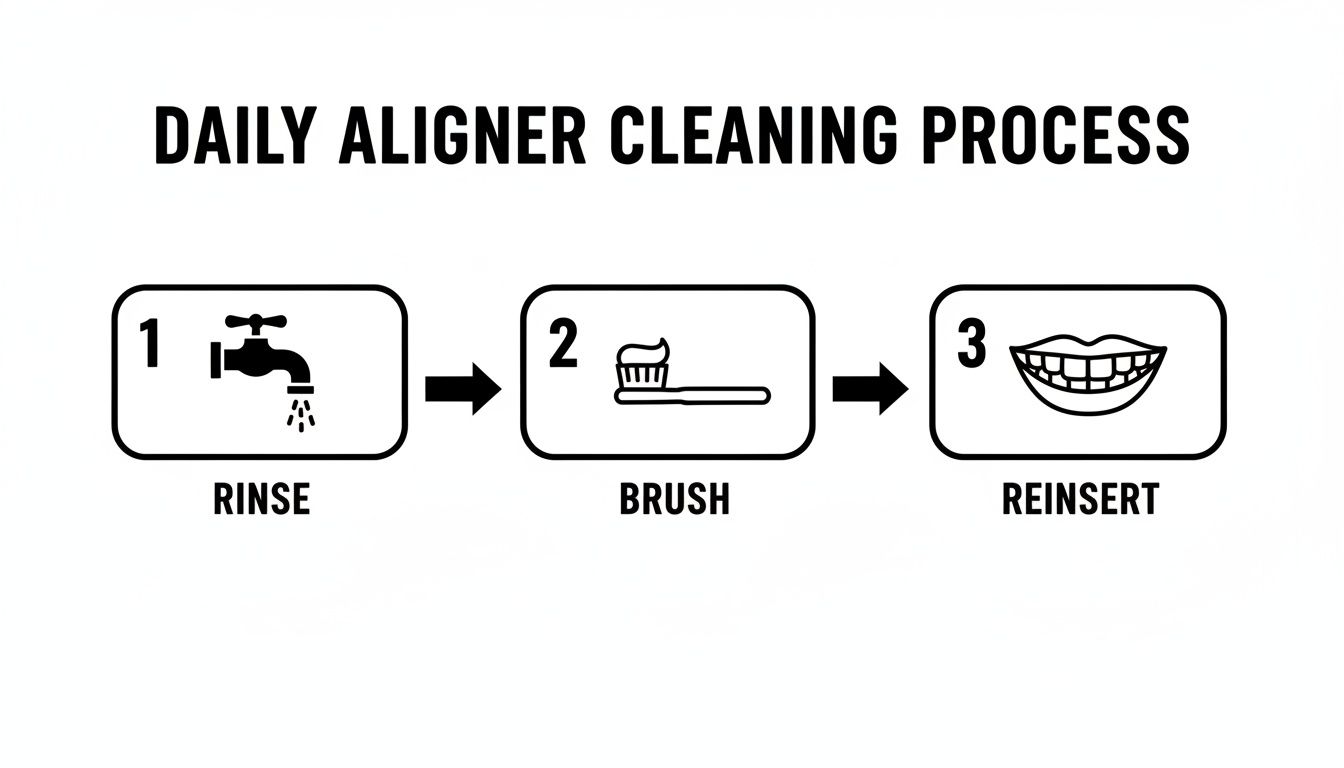
This daily habit of rinsing, brushing, and reinserting is the foundation of good aligner hygiene. Your weekly deep clean will build on this routine to get you the best possible results.
Using Specialized Cleaning Tablets
One of the easiest and most effective ways to deep clean your aligners is with a good old effervescent cleaning tablet. These are formulated specifically to dissolve plaque and kill bacteria without being harsh on the aligner material itself.
The process couldn't be simpler:
- Grab a glass and fill it with lukewarm water.
- Pop a cleaning tablet in.
- Fully submerge your aligners and just let them soak.
- After about 15-30 minutes (check the product instructions), take them out and give them a thorough rinse.
These tablets are designed to get into every tiny crevice and knock out the microscopic culprits that cause odors and cloudiness. It’s no surprise the aligner cleaner market, currently valued at $444.02 million, is projected to more than double to $945.67 million by 2032. Research shows these tablets can kill up to 99.99% of germs, a massive improvement over the 60% you might get from brushing alone. Just remember to always avoid hot water—anything over 120°F can warp your aligners.
The Power of an Ultrasonic Cleaner
If you're looking for that professional-grade clean at home, an ultrasonic cleaner is a fantastic investment. These devices use high-frequency sound waves to create microscopic vibrations in the water, a process known as cavitation. It sounds technical, but all you need to know is that those tiny vibrations are powerful enough to dislodge even the most caked-on plaque, bacteria, and stains from every nook and cranny.
Using one is a breeze. Just fill the chamber with water, drop in a cleaning tablet for some extra oomph, place your aligners inside, and hit the "on" button. In just a few minutes, they’ll come out looking noticeably cleaner and clearer. While it's a bigger upfront purchase, many people swear by the results for keeping their aligners pristine throughout treatment. To see what might work for you, check out our comprehensive retainer cleaner reviews for more great options.
By making a weekly deep clean part of your routine, you're not just cleaning your aligners—you're protecting your oral health and making sure your orthodontic treatment stays on track, smoothly and effectively.
Common Aligner Cleaning Mistakes You Need to Avoid
Knowing the right way to clean your aligners is only half the battle. Just as important is knowing what not to do. It’s surprisingly easy to fall into a few common traps that seem harmless but can cause serious, irreversible damage to your expensive trays. These little mistakes can lead to warped, cloudy, or weakened plastic, potentially throwing your whole treatment schedule off track.
One of the biggest culprits is temperature. You might assume hot water gives a better, more sanitizing clean, but it's actually the fastest way to ruin your aligners. That specialized plastic is molded for a super-precise fit, and exposing it to high heat can permanently warp its shape.
Once an aligner is warped, it won't fit correctly, making it completely useless for moving your teeth. Always, always stick to lukewarm or cool water.
Say No to Abrasives and Harsh Chemicals
Another mistake people make all the time is grabbing their regular toothpaste to give their aligners a scrub. While it's perfect for tough tooth enamel, most toothpastes contain abrasive particles designed to polish teeth. On the much softer plastic of your aligners, these ingredients create thousands of microscopic scratches.
Those tiny scratches do two things, neither of them good. First, they make your aligners look dull and cloudy. Second, they create the perfect little crevices for bacteria and plaque to hide and multiply. This is why a soft-bristled toothbrush and a drop of clear, unscented soap are your best friends for daily cleaning—you get the job done without creating a rough, bacteria-friendly surface.
The goal is to remove buildup, not to etch the surface. Abrasive agents work against you by creating more places for stains and bacteria to cling, making your aligners harder to keep clean over time.
Beyond toothpaste, a few other common household products are strictly off-limits. They can do a lot more harm than good and should never come anywhere near your trays.
- Colored Mouthwash: The dyes in many popular mouthwashes will absolutely stain your aligners. You'll end up with a green or blue tint that totally defeats the purpose of them being "clear."
- Harsh Soaps: Scented or colored soaps can leave behind a chemical residue that not only tastes awful but can also irritate your gums and mouth. Always go for a simple, clear antibacterial soap.
- Household Cleaners: This might seem obvious, but it's worth repeating: never use products like bleach, dish soap, or other harsh chemicals. They can degrade the medical-grade plastic, making it brittle and completely unsafe to have in your mouth.
By simply sidestepping these common pitfalls, you protect both the integrity and the invisibility of your aligners. This ensures they can do their job effectively, keeping your smile journey on the right track without any costly or time-consuming detours. A little proper care is a small daily investment that safeguards your much larger investment in a perfect smile.
Keeping Your Aligners Clean While Traveling
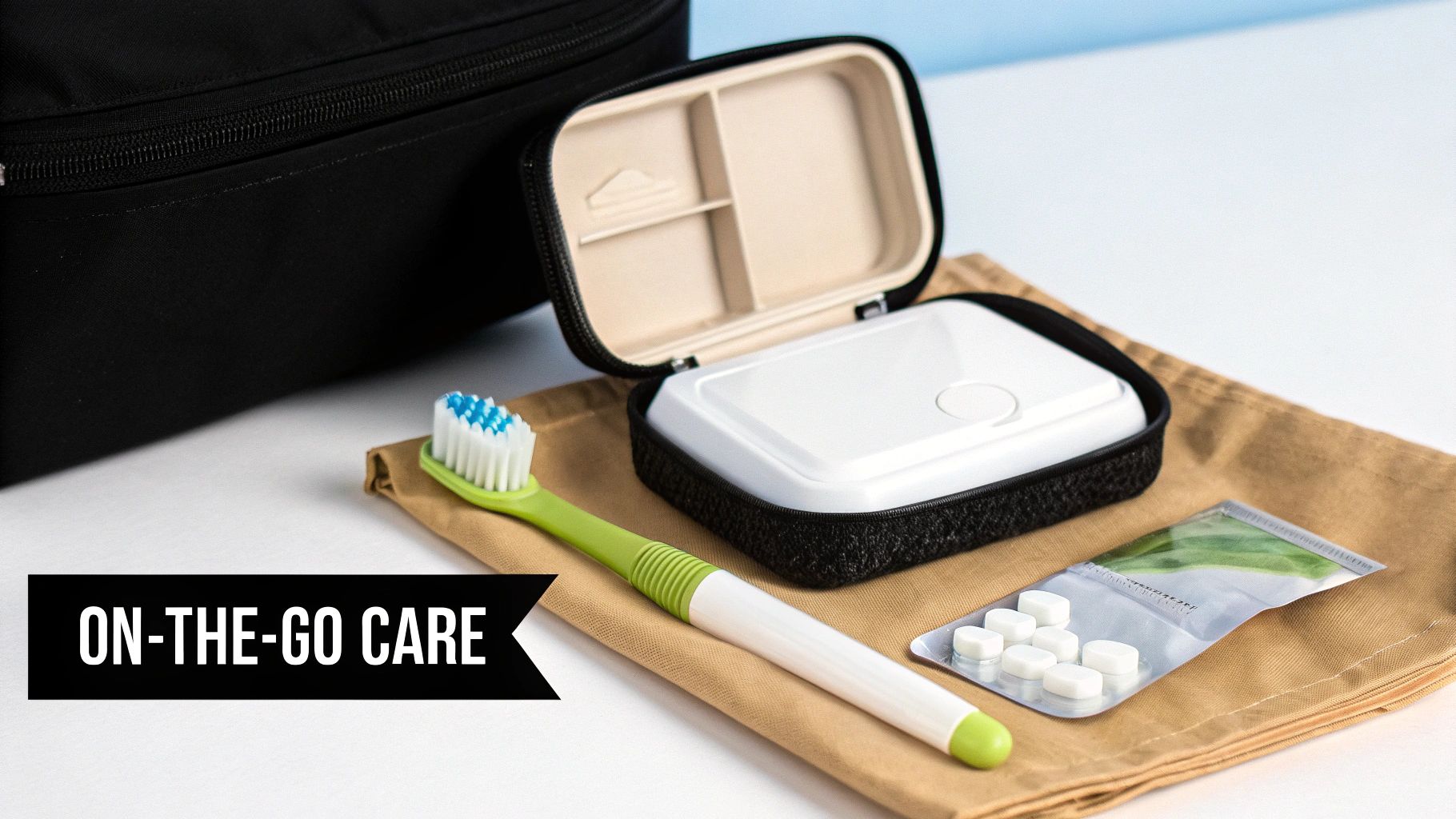
Trying to keep up with your aligner hygiene while traveling or just navigating a busy day can feel like a hassle, but with a little bit of prep, it’s totally manageable. Sticking to your cleaning routine on the go is the best way to stop plaque from building up and make sure your treatment stays on track. The trick is to make it convenient, no matter where you are.
A simple, compact cleaning kit will be your best friend when you’re away from home. Just toss a few must-haves into a small bag, and you’ll always be ready. This one small step takes away all the stress of figuring out how to clean your aligners when you're not in your own bathroom.
Your Essential On-The-Go Cleaning Kit
Putting together a dedicated travel kit means you’ll never have to compromise on keeping your aligners fresh. It doesn't need to be bulky or complicated; just a few key items will do the trick.
Here’s a quick list of what to pack for clean aligners anywhere:
- A Durable Aligner Case: This is absolutely non-negotiable. Always, always, always store your aligners in their case to protect them from germs and from getting crushed. Never wrap them in a napkin—that’s the fastest way to accidentally throw them away.
- Travel-Sized Toothbrush: Grab a dedicated, soft-bristled toothbrush that’s just for your aligners. A foldable one is a great space-saver.
- Clear, Unscented Soap: A small bar or a tiny bottle of liquid antibacterial soap works perfectly. It gets your aligners clean without leaving behind any weird residue or causing stains.
- Floss or Interdental Picks: These are for your own teeth after eating out. You want to make sure no food gets trapped when you pop your aligners back in.
Your aligner case is more than just a storage box; it’s a shield against bacteria and physical damage. Consistently using it is one of the most important habits you can build during your treatment. Keeping them protected prevents costly replacements and frustrating setbacks.
Practical Tips for Cleaning in Public
Let’s be honest, cleaning your aligners in a public restroom or after a business lunch can feel a bit awkward. But it's simpler than you might think. Just find a restroom, and give your aligners a quick rinse and a gentle brush using the supplies from your travel kit. It really only takes a minute.
What if you don’t have your full kit? At the very least, rinse both your mouth and your aligners thoroughly with water before putting them back in. This isn’t a perfect substitute for a proper cleaning, but it's a solid temporary fix that helps wash away food particles and acids.
For longer trips, it’s a great idea to pack some cleaning tablets. You can learn more about really effective options like Retainer Brite cleaning tablets, which are perfect for getting a deep clean right in your hotel room. These simple strategies ensure your journey to a straighter smile continues without a hitch, no matter how far you roam.
Your Aligner Care Questions Answered
Even when you have a great cleaning routine down, specific questions and odd situations are going to pop up. Think of this as your go-to guide for troubleshooting the most common aligner problems. Getting quick, clear answers helps you stay on top of your care and avoid any bigger issues down the road.
We’re going to walk through the most frequent concerns people have, from mysterious smells to stubborn yellowing, so you know exactly what to do.
What Should I Do If My Aligners Start to Smell Bad?
A noticeable smell is a dead giveaway that bacteria are having a party on your aligners. This is your signal to get more serious about your cleaning routine, and fast. That odor comes from bacteria releasing sulfur compounds as they feast on tiny food particles and saliva.
First, amp up your daily cleaning. Make sure you’re brushing the aligners with a soft-bristled brush and a dab of clear, unscented soap every single time they come out of your mouth. For a bigger punch, start using an effervescent cleaning tablet every day. A quick 15-minute soak can eliminate up to 99.9% of odor-causing bacteria.
Also, take a hard look at your own oral hygiene. Trapped food is the number one source of bad smells, so be extra thorough with your brushing and flossing before popping your trays back in. If the smell doesn't go away after a few days of this stricter approach, it’s worth a call to your orthodontist just to make sure nothing else is going on.
Can I Use Vinegar or Baking Soda to Clean Aligners?
You’ll see these pop up in DIY cleaning hacks all over the internet, but trust me, using vinegar or baking soda is a terrible idea for your clear aligners. These household staples can do a lot more harm than good.
Vinegar is extremely acidic. Over time, that acid can actually eat away at the medical-grade plastic, making it brittle and much more likely to crack. Baking soda, on the other hand, is abrasive. It might feel like it's scrubbing things clean, but it's really creating thousands of microscopic scratches all over the surface.
Those tiny scratches are a huge problem. Not only do they make your aligners look cloudy and dull, but they also create the perfect little hiding spots for bacteria to grow, making your trays even harder to keep clean in the long run.
It's always better to stick with products that were made specifically for orthodontic appliances. That way, you know you're cleaning them effectively without causing damage that could mess with your treatment.
My Aligners Have Turned Yellow. Can I Whiten Them?
Yellowing is almost always caused by stains, usually from drinking things like coffee, tea, red wine, or dark sodas while your aligners are in. Unfortunately, once the plastic is heavily stained, it's nearly impossible to get them back to that perfectly clear look.
You can, however, often lighten them up with a good deep clean. Try soaking them in a solution made with a high-quality cleaning tablet, as some are formulated to help lift surface stains. For really stubborn yellowing, an ultrasonic cleaner can make a big difference. Its high-frequency vibrations can help shake loose the tiny particles that cause the discoloration.
But honestly, the best approach here is prevention. Make it a hard and fast rule: only drink plain water when your aligners are in. For everything else, take them out, and always give your mouth a good rinse before putting them back in. This one habit is the single best way to keep them looking brand new.
Is It Necessary to Clean My Aligners Every Time I Take Them Out?
Yes, one hundred percent. This is probably the most important habit you can build during your treatment. Every time you eat or drink, your mouth creates a fresh layer of plaque and saliva that coats everything, including your aligners.
If you put your aligners back in without cleaning them (and your teeth), you're essentially trapping all that bacteria right up against your tooth enamel. You’re creating a sealed-off little greenhouse for acids to go to work on your teeth, which dramatically increases your risk for cavities and gum problems.
A quick rinse under lukewarm water and a gentle 30-second brushing is all it takes. Making this a non-negotiable step every single time is the key to protecting your oral health for your entire journey to a straighter smile.
For professional-grade products to keep your smile healthy and your aligners pristine, explore the curated selection at DentalHealth.com. We offer dentist-recommended brands and everything you need for at-home care, shipped directly to your door. Visit us at https://dentalhealth.com to find the perfect solutions for your routine.