
How to Clean Retainer Case: how to clean retainer case for hygiene
That weird smell or sticky feeling inside your retainer case isn't just gross—it's a red flag. Your case can turn into a hotspot for bacteria, mold, and yeast surprisingly fast, which is why knowing how to clean your retainer case is just as critical as cleaning the retainer itself.
Why Cleaning Your Retainer Case Actually Matters
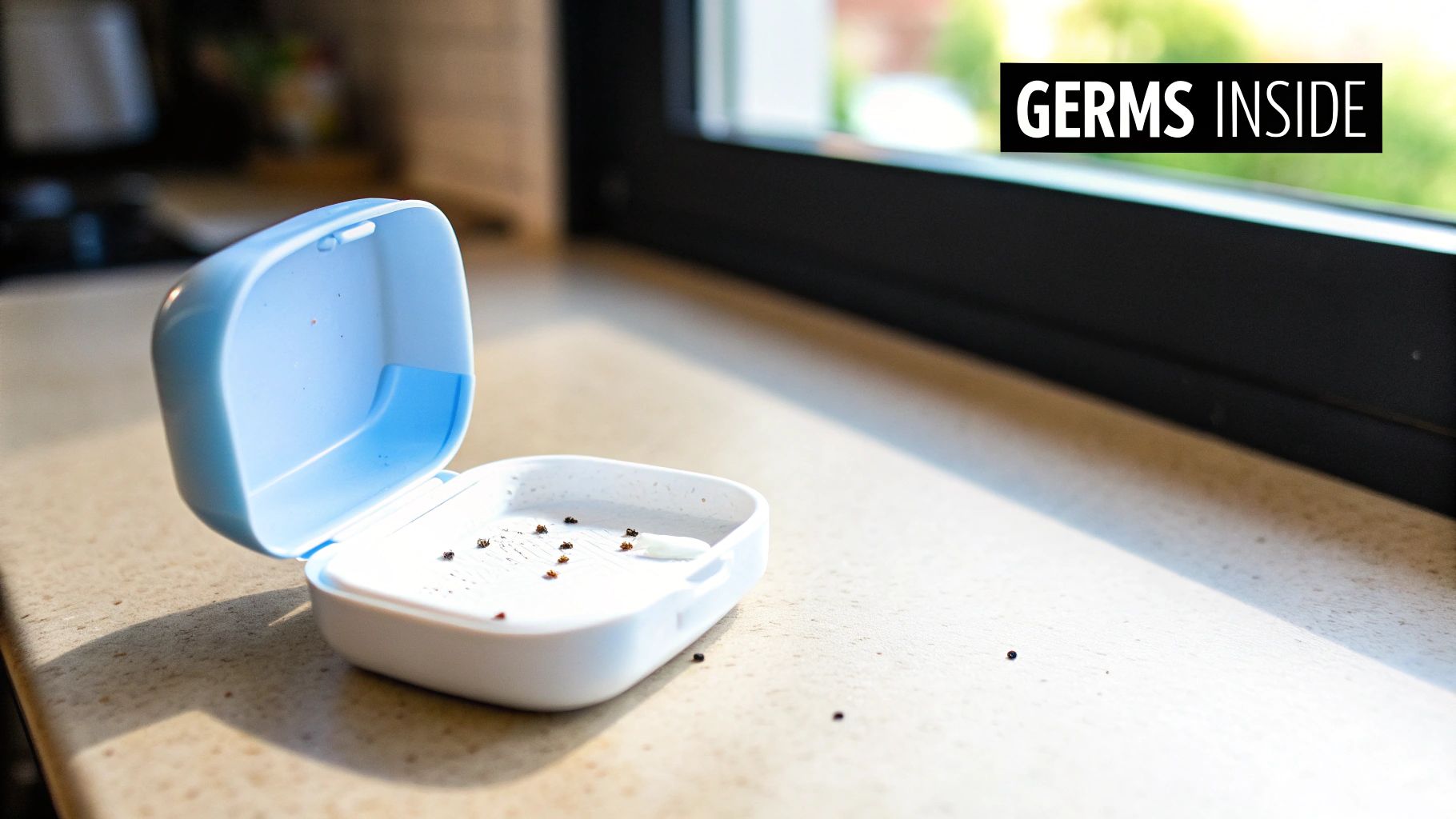
It's easy to obsess over your retainer and completely forget about where you store it. But think about it: every time you put a perfectly clean retainer back into a dirty case, you’re just re-contaminating it. You’ve undone all that careful cleaning in an instant.
The damp, closed-off environment of a retainer case is basically a perfect incubator for all sorts of microscopic nasties.
This creates a vicious cycle. Germs from the case hitch a ride on your retainer, and then they go directly into your mouth. This isn't just an "ick" factor; it can lead to some genuine health problems that go way beyond a bad taste in the morning.
The Hidden Health Risks of a Dirty Case
When your case is contaminated, it introduces a bunch of unwanted bacteria into your mouth's natural ecosystem. Over time, neglecting this one simple cleaning task can contribute to several issues:
- Stubborn Bad Breath (Halitosis): The bacteria that cause bad odors absolutely love the plaque and saliva residue that builds up in a dirty case.
- Gum Inflammation: Shuttling extra bacteria into your mouth can easily irritate sensitive gums, making them red and sore.
- Oral Thrush: A buildup of yeast, like Candida albicans, in the case can put you at a higher risk of developing this uncomfortable fungal infection.
- Damage to Your Retainer: That plaque can harden into tartar right on your appliance, making it tough to clean and potentially even harming its shape and fit over time.
Here's the bottom line: a dirty case equals a dirty retainer. Keeping its storage spot hygienic is a non-negotiable part of protecting your orthodontic investment and your oral health.
Ultimately, cleaning your retainer case isn't just about making it look nice or smell better. It’s a vital piece of your daily oral hygiene puzzle. You can learn more about how to clean your retainer to round out your routine, ensuring both your appliance and its home stay safe and sanitary.
Mastering the Simple Daily Cleaning Routine
Keeping your retainer case truly clean isn't some complicated chore. It’s all about building a quick, consistent daily habit. All you need is about two minutes a day to stop grime and bacteria from building up, making sure your case is a safe place for your retainer. You don't need any fancy gadgets—just a couple of things you almost certainly already have in your home.
The best tools for this job are simple: mild dish soap and a dedicated, soft-bristled toothbrush. And yes, it absolutely has to be a separate brush from the one you use on your teeth. Using the same one is just asking for cross-contamination. This basic combo is more than strong enough to scrub away that daily film of saliva and plaque that gets sticky fast.
The Right Way to Wash and Dry
First things first, give the case a quick rinse under cool or lukewarm water. Never use hot water. High heat can easily warp the plastic, and you might find it won't snap shut properly afterward.
Next, put a tiny drop of mild dish soap on your dedicated brush and gently scrub every surface of the case, inside and out. Don't forget to get into the little corners and hinge areas—that's where germs love to set up camp.
Once you’ve given it a good scrub, rinse the case thoroughly under cool water until there's no hint of soap left.
Now for what might be the most critical step: letting it air-dry. Always place the open case upside down on a clean paper towel. This position lets all the moisture drain out completely, getting rid of the damp environment that bacteria thrive in. Letting it dry upright can trap 70% more bacteria, which completely defeats the purpose of cleaning it in the first place.
Why Consistency is Key
Making this part of your morning or nightly routine is what really makes the difference. It's great that awareness of oral hygiene has led to a surge in interdental cleaning products, but it’s the simple, everyday habits that have the biggest impact. Residue can start building up in over 60% of cases in just 24 hours. A quick daily wash with mild soap gets rid of up to 95% of this surface grime—a tiny bit of effort that pays off big for your oral health.
The principles of keeping oral appliances clean are pretty universal. To get a better sense of this, you can learn about how to clean dentures and partials the right way, as a lot of the core ideas apply to retainers, too.
Deep Cleaning Methods for a Truly Sanitized Case
While a daily rinse and scrub are great for maintenance, a weekly deep clean is your best defense against the stubborn, invisible gunk that can build up. Think of it as hitting the reset button on your case's hygiene. These methods go beyond a simple surface clean to truly disinfect and sanitize, giving your retainer the pristine home it deserves.
For an incredibly easy yet powerful clean, specialized effervescent tablets are a fantastic choice. It's easy to forget, but a dirty retainer case can quickly become a hotspot for bacteria. In fact, some studies show that a shocking 70% of retainer-related infections come directly from a contaminated case.
To knock out that risk, you can just fill the case with water, drop in a tablet like Retainer Brite, and let it fizz away. These dentist-recommended tablets are designed to kill 99.9% of bacteria in about 15 minutes. It’s a simple step that makes a huge difference.
DIY Soaking Solutions
If you prefer a do-it-yourself approach, a couple of common household items work wonders, too. Both white vinegar and hydrogen peroxide have great disinfecting properties that can get your case back to looking and smelling fresh.
- White Vinegar Soak: Mix up a solution of one part white vinegar to one part cool water. Let the case soak for about 30 minutes. This is especially good for breaking down any white, crusty mineral deposits (plaque buildup) and killing germs.
- Hydrogen Peroxide Bath: Use a standard 3% hydrogen peroxide solution. You can either dilute it with an equal amount of water for a gentle clean or use it straight for a bit more power. A 15-20 minute soak is all it takes to disinfect the case.
Important Reminder: No matter which soaking method you use, it is absolutely critical to rinse the case thoroughly with cool water afterward. This gets rid of any leftover taste or residue from the cleaning solution before you let it air dry completely.
This simple flowchart breaks down the essential daily habit.
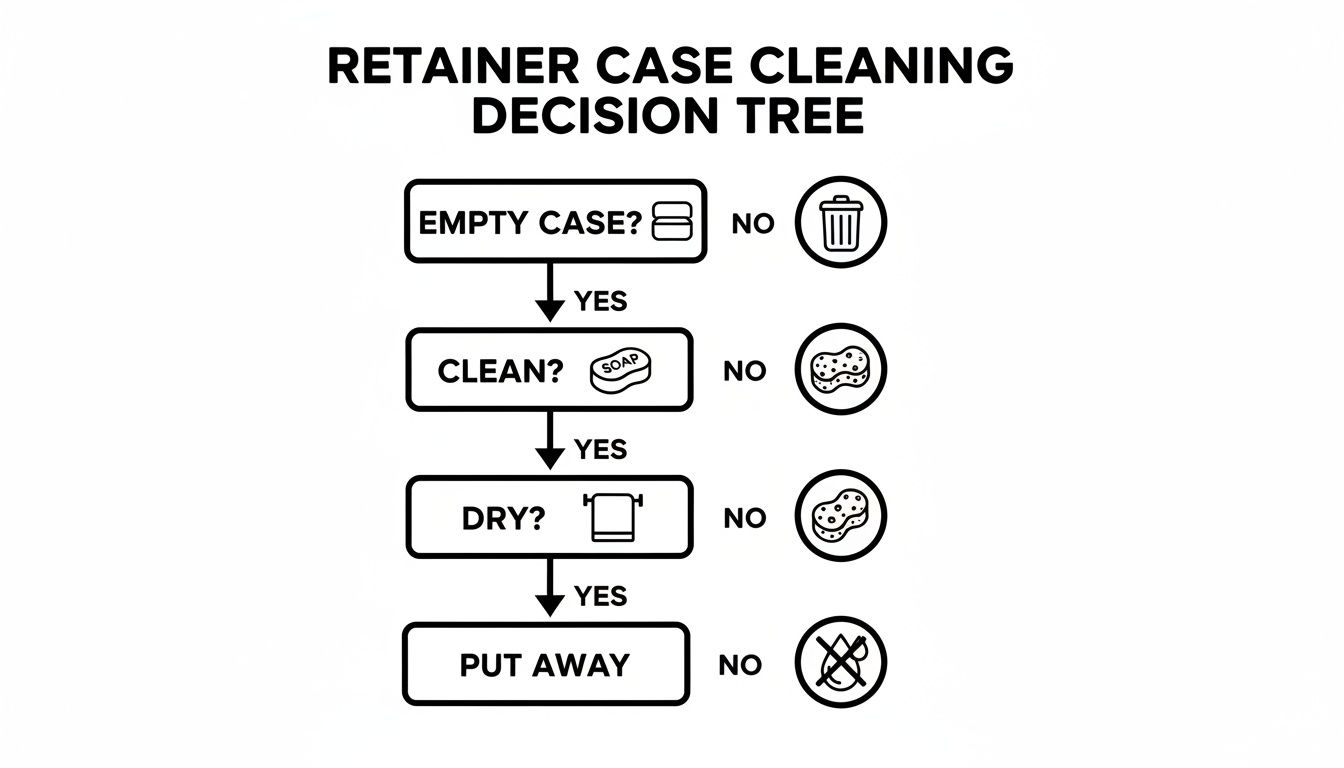
As the chart shows, cleaning and drying are non-negotiable steps every single time you take your retainer out. Skipping them is just asking for bacteria to move in.
Retainer Case Deep Cleaning Method Comparison
Choosing the best deep cleaning method often comes down to what works for you. Each option has its own strengths, whether you prioritize convenience, cost, or what you already have in your pantry.
| Cleaning Method | Best For | How It Works | Frequency |
|---|---|---|---|
| Effervescent Tablets | Ultimate convenience and formulated safety | Pre-measured tablets dissolve in water to release powerful cleaning agents that kill bacteria and lift stains. | Weekly |
| White Vinegar | Removing mineral buildup (calculus) and general disinfecting | The acetic acid in vinegar naturally breaks down mineral deposits and kills a wide range of germs. | Weekly |
| Hydrogen Peroxide | A strong, quick disinfection for odors and bacteria | It acts as an oxidizing agent, effectively killing bacteria and neutralizing odors on contact. | Weekly |
Ultimately, whether you choose a specialized tablet or a DIY soak, the most important thing is consistency. Aim to deep clean your retainer case at least once a week to keep it sanitized, clear of buildup, and odor-free.
Effervescent tablets are pre-measured and specifically formulated for oral appliances, which makes them a reliably safe bet. If you're curious about what makes them so effective, you can explore the Retainer Brite ingredients to see the science behind the clean. This simple weekly habit is a small time investment that goes a long way in protecting both your oral health and your orthodontic investment.
Exploring Ultrasonic Cleaners for Professional Results
If you're after a truly professional-grade clean right at home, it might be time to look into an ultrasonic cleaner. This is a game-changer. The technology goes far beyond what a simple brush and soap can ever hope to achieve, using high-frequency sound waves to create millions of microscopic bubbles in water.
These tiny bubbles are where the magic happens, a process called cavitation. They implode the second they touch your retainer case, generating a gentle yet surprisingly powerful scrubbing action. This blasts away grime, bacteria, and stubborn plaque from every single nook, cranny, and textured surface you can't even see.
It's the ultimate deep clean, ensuring your case isn't just visibly spotless but microscopically hygienic. Best of all, they're incredibly easy to use. Just fill the device with water, maybe add a specialized cleaning solution, and pop your open retainer case inside for a few minutes.
How Ultrasonic Cleaners Elevate Hygiene
The real advantage of an ultrasonic cleaner is its incredible ability to sanitize all those hard-to-reach areas that brushing always seems to miss. You might be surprised to learn that poor case hygiene contributes to 25-30% of retainer replacements each year due to bacterial damage.
The growing market for ultrasonic retainer cleaners offers a powerful solution to this problem. These devices can remove 99.99% of submicron debris and have been shown to slash infection risk by half. For the best results, just submerge your case in an ultrasonic cleaner for 3-5 minutes once a week to keep it in pristine condition.
Investing in an ultrasonic cleaner means you’re prioritizing a level of sanitation that manual methods simply can't match. It’s an effective way to protect your orthodontic investment and your overall oral health.
For those ready to embrace more advanced cleaning methods, a specialized device like the Mykal Ultrasonic Cleaner Plus can provide that thorough sanitization you're looking for. To see how these devices stack up against other popular methods, check out our comprehensive retainer cleaner reviews.
Common Cleaning Mistakes You Need to Avoid
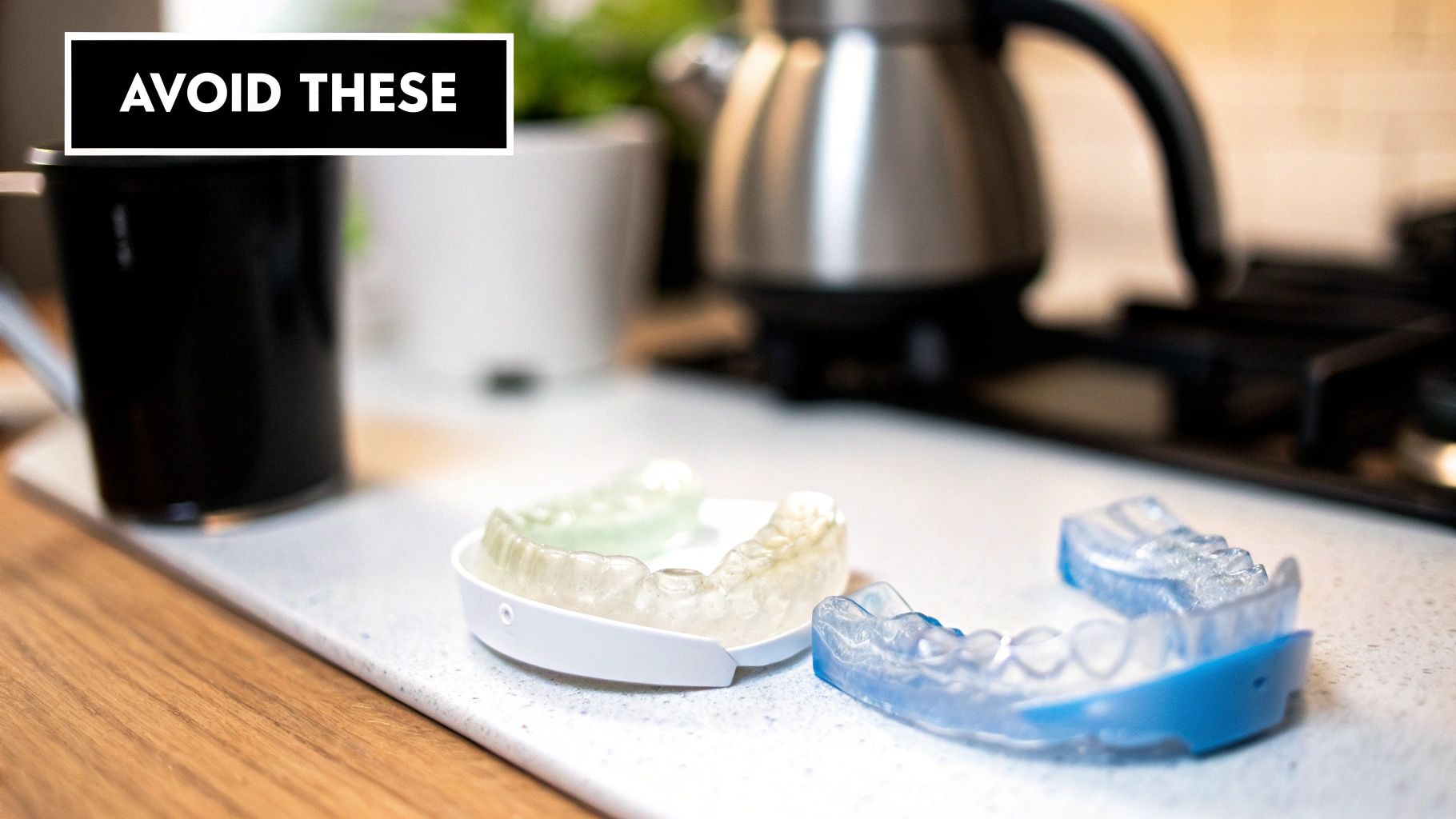
Sometimes, the best way to get something right is to learn all the ways you can get it wrong. When it comes to cleaning your retainer case, a few well-intentioned habits can cause more harm than good, potentially wrecking your case or making it less hygienic.
One of the biggest culprits? Using hot or boiling water. It makes sense in theory—heat kills germs, right? But the high temperature will almost certainly warp the plastic. Once a case is warped, it won't close securely. That leaves your retainer exposed to whatever is floating around in the air, basically making the case useless. Always, always stick to cool or lukewarm water.
Another common pitfall is grabbing harsh household chemicals from under the sink. Products like bleach and abrasive cleaners are way too aggressive for the type of plastic used in retainer cases. They'll degrade the material, cause it to get discolored, and can leave behind a toxic residue you definitely don't want anywhere near your mouth.
Everyday Items That Do More Harm Than Good
It's tempting to use whatever is handy, but a couple of items you use daily should never touch your retainer case. Getting this right is a simple swap that makes a huge difference.
-
Your Everyday Toothbrush: Whatever you do, don't use the same toothbrush on your case that you use on your teeth. It’s a direct shuttle service for transferring bacteria from your mouth right into the environment where you store your retainer. Dedicate a separate, soft-bristled brush just for cleaning your case and retainer.
-
Abrasive Toothpaste: Think about it—many toothpastes are designed with tiny, gritty particles to polish tough tooth enamel. On plastic, those same particles will create thousands of microscopic scratches. Each tiny scratch is a new home for bacteria to move in and multiply.
Perhaps the most overlooked mistake is sealing the case shut while it's still damp. Bacteria and mold absolutely love dark, moist environments. Always let your case air dry completely before you close it up. The easiest way is to just leave it upside down on a clean paper towel.
Have More Questions? We Have Answers.
Even with the best cleaning routine, questions pop up. Let's tackle some of the most common ones we hear about keeping your retainer case in top shape.
How Often Should I Get a New Retainer Case?
Most orthodontists will tell you to swap out your retainer case every six to twelve months. But you should definitely grab a new one sooner if you spot any cracks, if the lid isn't snapping shut securely anymore, or if a funky smell just won't go away, even after a good deep clean.
Can I Just Toss My Retainer Case in the Dishwasher?
It’s tempting, but it's best to skip the dishwasher. The intense heat combined with harsh detergents can easily warp the plastic. Once that happens, the case might not close properly, failing to protect your retainer. Sticking with gentle, cool-water hand washing is a much safer bet.
A warped case that doesn't seal correctly is an open invitation for airborne dust and bacteria. Gentle hand-washing is the only way to preserve its protective fit.
What’s the Best Way to Clean My Case While Traveling?
When you're on the road, your daily soap-and-water routine will work just fine. For a simple deep clean, just pack a few effervescent cleaning tablets. They’re super lightweight, take up almost no room in your bag, and are the easiest way to make sure your case stays sanitary no matter where you are.
How Do I Get Rid of Tough Stains or Lingering Odors?
For those stubborn stains or a smell that just won't quit, try a 30-minute soak. A simple solution of one part white vinegar to one part cool water is incredibly effective. After it soaks, give the case a gentle scrub with a soft brush, rinse it well, and let it air dry completely.
For all your orthodontic care needs, from powerful cleaning tablets to sensitivity-relief toothpaste, explore the dentist-recommended brands at DentalHealth.com. Get professional-grade products like Retainer Brite delivered right to your door. Shop now at https://dentalhealth.com.