
How to Prevent White Spots on Teeth for a Flawless Smile
The first line of defense against white spots on your teeth is pretty straightforward: a rock-solid oral hygiene routine and a smart approach to your diet. The whole game is about stopping plaque from setting up camp and limiting the acid attacks that leach minerals from your tooth enamel. That’s the real culprit behind those chalky marks.
Uncovering the Causes of White Spots on Teeth
Have you ever spotted a flat, chalky white mark on a tooth and wondered how it got there? Those spots are what we in the dental world call white spot lesions (WSLs), and they're the earliest visible warning sign of a cavity forming.
Think of your tooth enamel as a dense, crystalline shield. These white spots appear when that shield starts to lose its vital minerals—a process known as demineralization. When the enamel loses density in a specific area, it reflects light differently, creating that noticeable opaque white patch. It's not a stain; it's a structural change.
This mineral loss isn't a random event. It's caused directly by acids that plaque bacteria produce when they feast on sugars and starches from your food. Every time you sip a soda or eat a sugary snack, you’re creating an acid bath in your mouth that weakens your enamel's defenses. If this happens over and over without good cleaning, your enamel can't rebuild itself (remineralize), and a white spot is born.
Who Is Most at Risk?
While anyone can get white spots, some situations really stack the deck against you. Knowing if you fall into one of these groups can help you get ahead of the problem.
- Orthodontic Patients: This is a big one. Braces and even clear aligners create an obstacle course for your toothbrush, with tons of tiny ledges and crevices where plaque loves to hide. It's no surprise that white spots are a common frustration after the braces come off.
- High-Sugar Diets: If you're frequently consuming sugary foods, sodas, sports drinks, or even acidic fruits, your mouth is constantly in a state of demineralization. This can easily overwhelm your saliva's natural ability to neutralize acid and repair your enamel.
- Poor Oral Hygiene: This might seem obvious, but if brushing and flossing are inconsistent, you’re giving plaque free rein to sit on your teeth for hours. That extended contact time gives the acid plenty of opportunity to do its damage.
- Dry Mouth (Xerostomia): Saliva is your body's unsung hero against cavities. It washes away food particles, neutralizes acid, and delivers minerals back to your teeth. When saliva flow is low—often due to medications or certain health conditions—the risk for demineralization goes through the roof.
Even habits you might not think about can play a role. For instance, mouth breathing, especially at night, can dry out your mouth and reduce saliva's protective effects. It's worth understanding the broader picture, including the oral health benefits of nasal breathing during sleep, as it can reveal hidden factors contributing to enamel issues.
Key Takeaway: White spots aren't just cosmetic flaws; they are weakened, porous areas of enamel. They’re the first alarm bell that your teeth are losing the battle against plaque and acid.
The good news? Because they're an early warning sign, white spots are often preventable and sometimes even reversible with the right care. Catching this process in its earliest stage is the absolute best way to stop a white spot from becoming a full-blown cavity that needs a filling. By understanding these root causes, you can build a powerful defense to keep your smile healthy and bright.
Your Daily At-Home Oral Hygiene Routine
Preventing white spots really boils down to your daily habits. It’s not about adding a bunch of complicated steps to your routine; it’s about being deliberate with the steps you already take. A solid at-home oral hygiene routine is your number one defense against the acid attacks that cause enamel demineralization, and it all comes down to stopping plaque from ever getting a foothold.
The whole process is a simple, but destructive, chain reaction. Sugars from your diet feed the plaque bacteria on your teeth, which then produce harmful acids. These acids are what strip the essential minerals from your enamel, creating those chalky white spots.
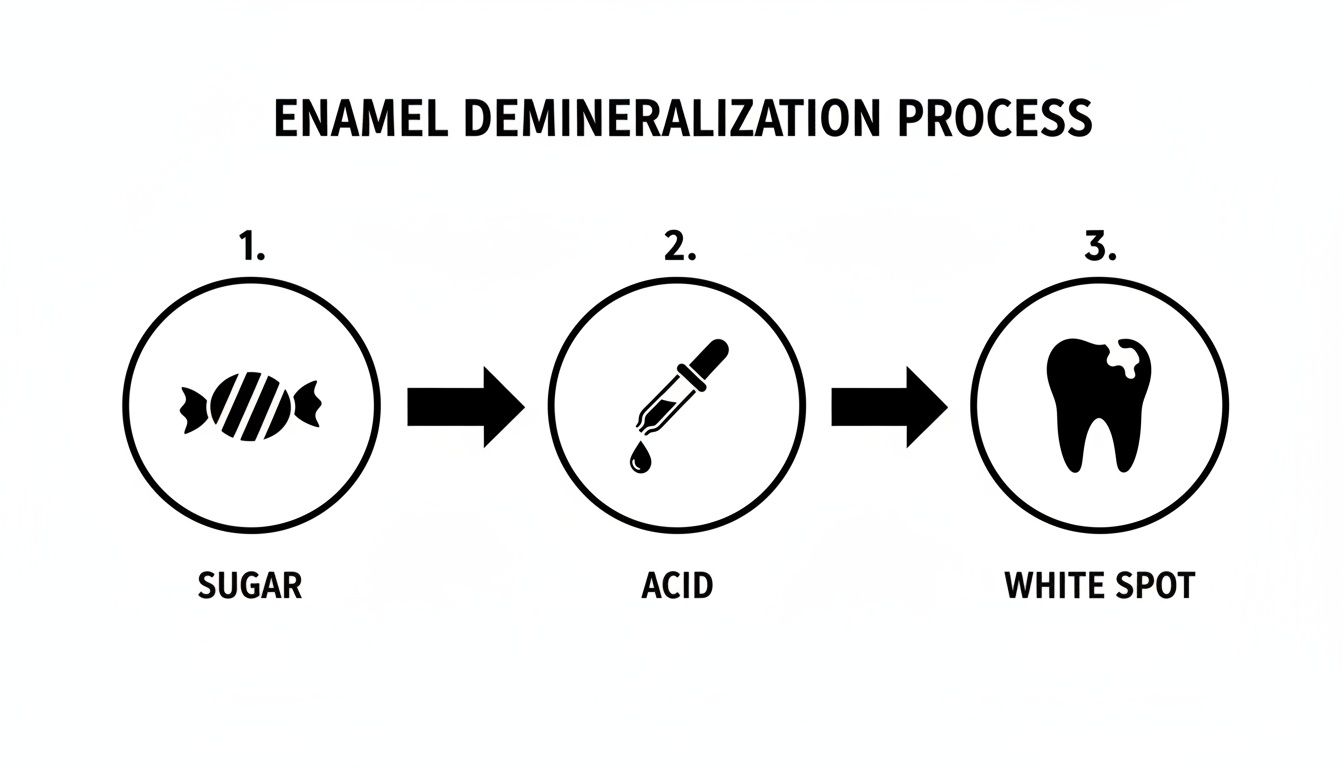
When you see it laid out like that, it's clear just how vital it is to break that chain by keeping plaque buildup under control.
To make it even easier, here’s a quick checklist of the core daily and weekly actions you should be taking to protect your smile.
Your Daily and Weekly Smile Protection Routine
| Frequency | Action | Recommended Product Example | Why It Works |
|---|---|---|---|
| Twice Daily | Brush for 2 Minutes | Soft-bristled toothbrush with fluoride toothpaste | Physically removes plaque and food debris while strengthening enamel with fluoride. |
| Once Daily | Floss Thoroughly | Floss threader (for braces) or a water flosser | Cleans between teeth and around orthodontic hardware where brushes can't reach, preventing acid buildup. |
| Once Daily | Use an Antimicrobial Rinse | BreathRX Anti-Bacterial Mouth Rinse | Kills bacteria that produce plaque and acid, reducing the overall bacterial load in your mouth for hours. |
| Weekly | Use a Remineralizing Agent | MI Paste ONE | Delivers bio-available calcium and phosphate to actively repair and strengthen weakened enamel spots. |
This routine provides a multi-layered defense, combining physical removal of plaque with chemical protection and enamel repair to keep your teeth strong and free of white spots.
Mastering Your Brushing Technique
How you brush makes a world of difference. It's not about scrubbing hard; it's about technique.
Grab a soft-bristled toothbrush and angle it at 45 degrees toward your gumline. This is the magic angle. It lets the bristles sweep plaque away from that critical area where your gums meet your teeth.
Use gentle, short, circular strokes instead of sawing back and forth. You need to spend a full two minutes doing this, twice a day, making sure you hit every single surface—front, back, and the tops where you chew. If you have braces, this is especially important. You have to meticulously brush above, below, and on the brackets themselves.
Making Flossing an Unskippable Habit
Let’s be honest: flossing is the one step people are most likely to skip. But it’s the only way to get plaque out from between your teeth, which is a prime spot for demineralization to start.
If you wear braces, this step becomes absolutely non-negotiable, but you'll need the right tools. A floss threader is a simple little plastic loop that helps you guide regular floss underneath the wires.
A water flosser can also be a complete game-changer, especially for orthodontic patients. It shoots a pressurized stream of water to blast out food bits and plaque from around brackets and between teeth. It gets into spots that are otherwise almost impossible to clean. Just make it a habit to floss at least once a day, ideally right before bed.
The importance of this can't be overstated. Studies have repeatedly shown a direct link between consistent, thorough hygiene and the prevention of white spot lesions in orthodontic patients.
Finishing with an Antimicrobial Rinse
Think of this as the final security sweep for your mouth. Brushing and flossing physically remove the bulk of the plaque, but a good antimicrobial mouth rinse can wipe out a significant portion of the remaining bacteria.
You want a formula designed to kill the germs that cause plaque and bad breath. For instance, a rinse like BreathRX uses powerful ingredients to neutralize bacteria without the unpleasant burn of alcohol-based products. Swishing for 30-60 seconds after you brush and floss provides a clean finish and helps keep your enamel protected for hours.
Strengthening Enamel with Fluoride and Remineralization
Excellent oral hygiene is great for physically scrubbing away plaque, but a truly powerful defense also means strengthening your teeth from the inside out. This is where fluoride and remineralization treatments come in, acting like a dedicated repair crew for your enamel.
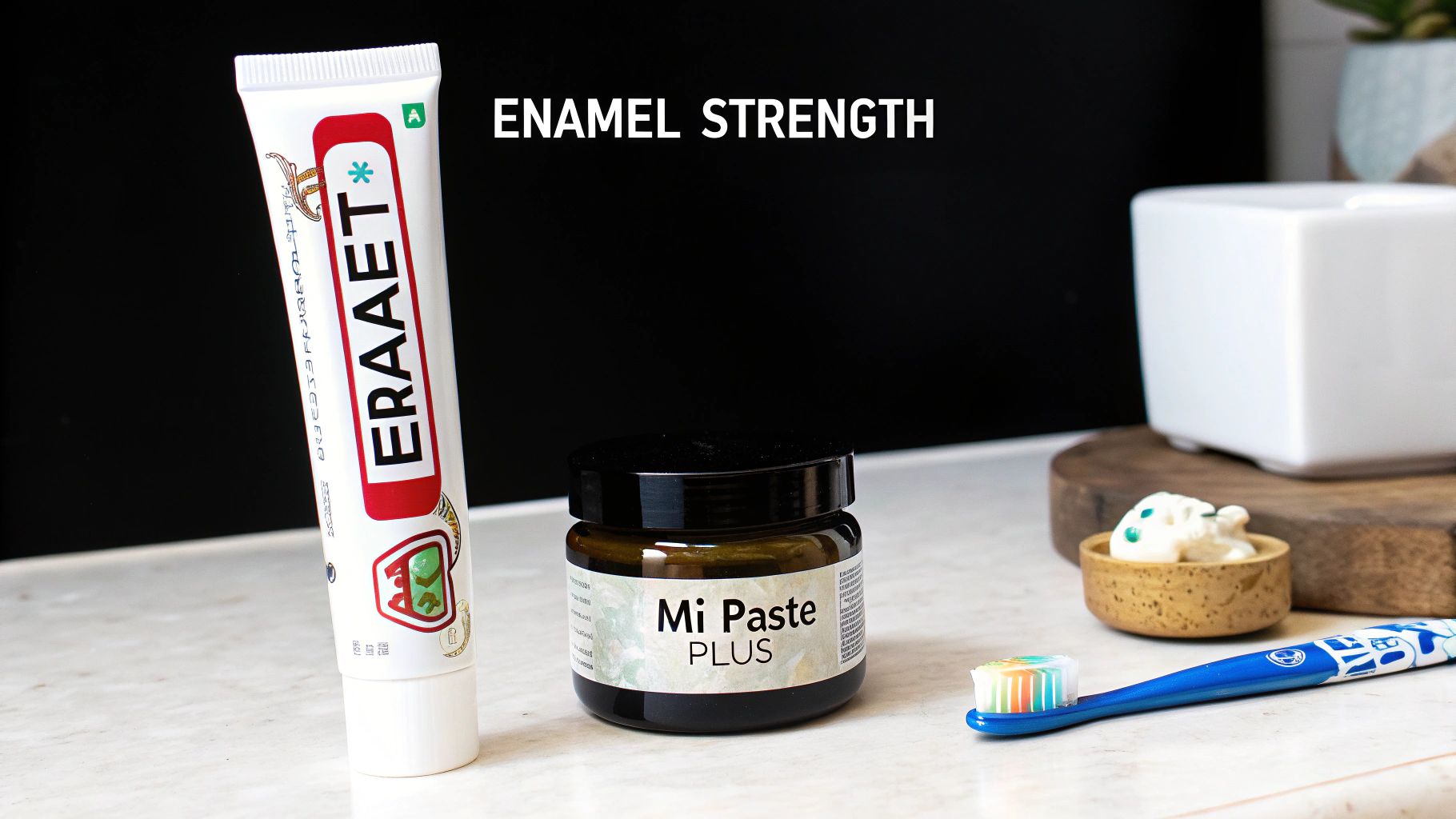
Think of your enamel as a tight, crystalline structure. When acid from plaque attacks, it starts pulling out essential mineral crystals, creating weak, porous spots. Fluoride actually integrates into the enamel's surface, forming a new, stronger, and more acid-resistant compound called fluorapatite. It essentially makes your teeth's natural shield much tougher to break through.
Upgrading Your Fluoride Game
Your daily over-the-counter fluoride toothpaste is a fantastic starting point, but it might not be enough for those at higher risk—especially orthodontic patients or anyone dealing with dry mouth. This is where high-concentration, prescription-strength options can make a world of difference.
Products like Fluoridex toothpaste contain a much higher concentration of fluoride (5,000 parts per million) compared to the typical 1,000-1,500 ppm found in most store-bought brands. This elevated level provides a more powerful remineralizing effect, actively helping to rebuild weakened enamel before white spots can fully form. In fact, daily use of these high-potency toothpastes has been shown to reduce demineralization by up to 40% in high-risk groups. You can dive deeper into these powerful fluoride applications in dental research.
Using it couldn't be simpler: just replace your regular toothpaste with it and brush as you normally would, twice a day. The key, as with anything in dental care, is consistency.
Actively Rebuilding Enamel with Remineralization Pastes
While fluoride is a fantastic shield, sometimes you need to call in the construction crew. That's the perfect job for remineralizing pastes, which go beyond just strengthening enamel and actively replenish its core building blocks: calcium and phosphate.
Pro Tip: Think of it like repairing a pothole. Fluoride helps fortify the surrounding road, but a remineralizing paste comes in to actually fill the hole with new material.
Products like MI Paste Plus are designed to do exactly this. They contain a unique, bio-available form of calcium and phosphate that your enamel can easily absorb. When you apply the paste, these minerals are delivered directly to the demineralized areas, essentially refilling the spots where acid has stripped them away.
For the best results, follow this simple routine, preferably right before bed:
- First, brush and floss your teeth as usual.
- Take a pea-sized amount of MI Paste Plus on your finger.
- Smear it over your teeth, focusing on any high-risk areas or visible white spots.
- Use your tongue to spread it around evenly.
- Leave it undisturbed for at least three minutes, then spit out any excess. Don't rinse, eat, or drink for at least 30 minutes afterward.
This gives the minerals plenty of time to soak into the enamel and start the repair process overnight. Combining a high-strength fluoride toothpaste with a targeted remineralizing agent creates a comprehensive system for both preventing and reversing the earliest signs of white spots. You can also explore our guide on how MI Paste works to restore your enamel to learn more.
Keeping Teeth Spot Free During Orthodontic Treatment
Investing in orthodontic treatment is a huge step toward the beautiful, healthy smile you've always wanted. But here’s the thing: braces and aligners, while working their magic, also create an obstacle course where plaque loves to hide. This makes preventing those frustrating white spots a top priority from day one.
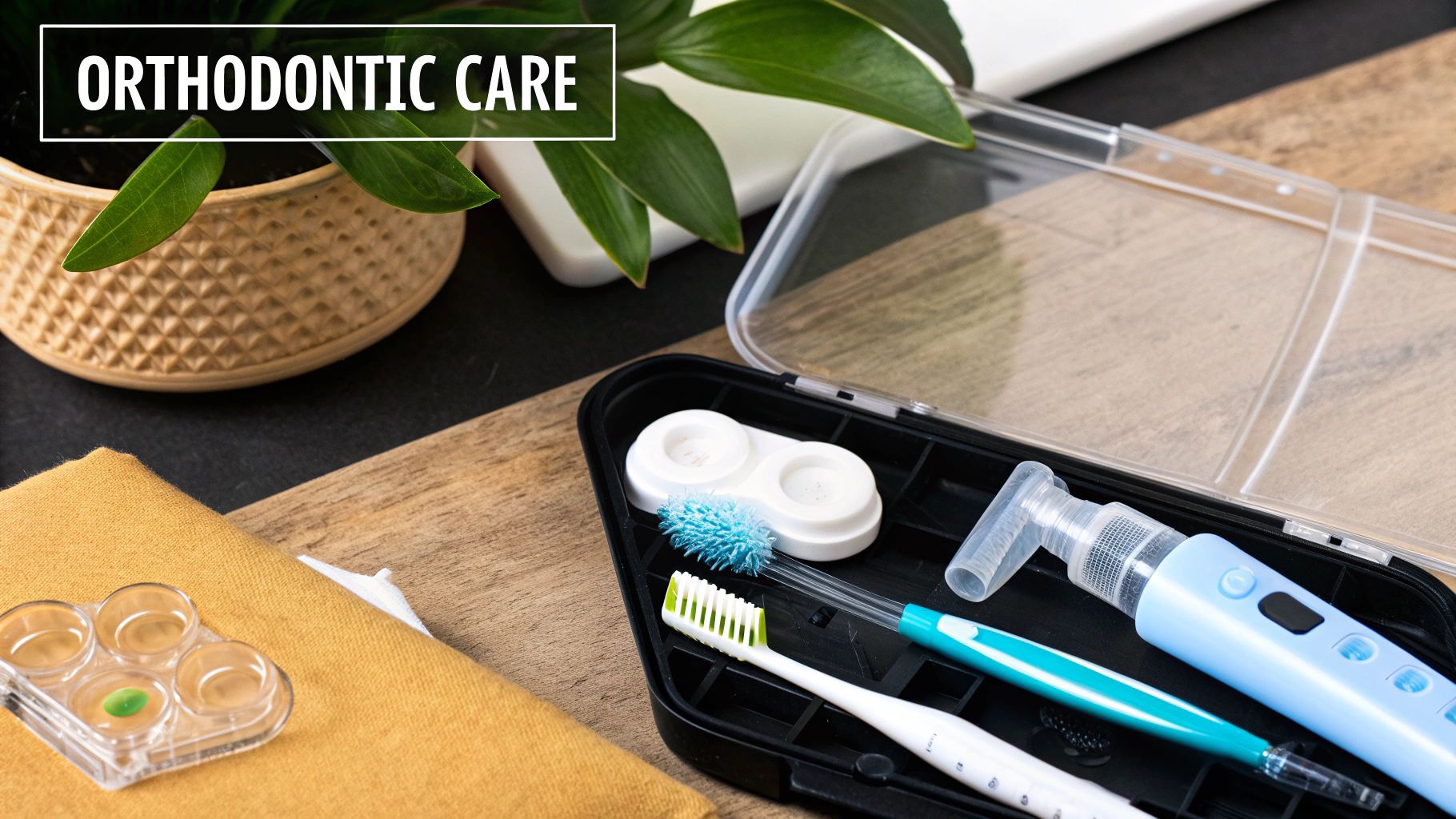
The brackets and wires from traditional braces provide countless ledges and crevices for bacteria to set up camp. This plaque buildup constantly produces acid that sits right against your enamel, leading to demineralization and those tell-tale chalky spots. Being diligent with your cleaning isn't just a suggestion; it's a necessity.
The number of orthodontic patients who end up with white spot lesions (WSLs) is alarmingly high—some studies show it affects between 50% to 90% of individuals. This isn't a minor side effect; it's a very common complication that can spoil the final result. In fact, one meta-analysis found the average prevalence to be 55.06%, which really underscores how critical vigilant care is. You can find more insights on orthodontic treatment complications at journals.sagepub.com.
Cleaning Hacks for Traditional Braces
To win the war against plaque, you'll need to upgrade your toolkit. Your standard brushing routine simply won't cut it when you're trying to navigate all that hardware.
- Interdental Brushes: These tiny, cone-shaped brushes are your secret weapon. They're designed to slip right under your archwires and clean around the sides of the brackets—all those spots your regular toothbrush just can't reach.
- Water Flossers: A water flosser is a total game-changer for anyone with braces. It uses a pressurized stream of water to blast away food particles and plaque from around brackets and between teeth. It gets into places where even floss threaders can struggle.
- Orthodontic Toothbrush: Look for a toothbrush with special V-shaped bristles. They're designed to straddle the brackets, cleaning the tooth surface and the hardware at the same time.
Best Practices for Clear Aligners and Retainers
If you use clear aligners or a retainer, you've got a different kind of challenge. Yes, you can take them out to clean your teeth, but the appliance itself can quickly become a breeding ground for bacteria if you're not careful.
Crucial Reminder: It's not enough to just clean your teeth—you have to clean your aligner or retainer with the same level of care. A dirty appliance will trap bacteria and acid directly against your enamel for hours at a time.
You need to get in the habit of cleaning your appliance every single time you take it out. A dedicated cleaner like Retainer Brite is great for killing bacteria and preventing that gross buildup. For a complete rundown, check out our detailed guide on how to care for retainers to keep your appliance fresh and hygienic. Don't let a dirty appliance undermine all the hard work you're putting into your smile.
How Your Diet Impacts Enamel Health
It’s easy to overlook, but what you eat and drink can be one of the biggest factors in keeping your smile bright and free of white spots. Think of it this way: every time you have something sugary or acidic, you’re feeding the plaque bacteria in your mouth. Those bacteria then produce acids that go to work on your teeth.
This "acid attack" is what starts leaching essential minerals like calcium and phosphate right out of your enamel. If you're snacking or sipping on sugary drinks throughout the day, your teeth are constantly under siege, never getting a break. Your saliva can't keep up with neutralizing the acid and rebuilding the enamel, and that’s exactly how those weak, chalky white spots start to appear.
The goal isn't to banish all treats forever. It’s about being smarter about when and how you enjoy them.
Making Smart Food Swaps
Instead of getting bogged down by a long list of "don'ts," let's focus on simple, powerful swaps. These small adjustments can dramatically cut down on the number of acid attacks your teeth face each day, giving your enamel a fighting chance to stay strong.
For example, switching a daily soda for sparkling water with a hint of mint or cucumber cuts out a huge source of both sugar and acid. When you need something to snack on, grabbing a handful of almonds or a piece of cheese instead of candy can make a world of difference. Cheese is a fantastic choice because it actively helps neutralize mouth acids and is packed with enamel-building calcium.
Here’s a simple comparison to help you make better choices on the fly.
Smart Food Swaps for a Spot-Free Smile
| Instead of This (Enamel Enemy) | Try This (Enamel Ally) | Why It's a Better Choice |
|---|---|---|
| Sports Drinks or Soda | Plain or sparkling water | Hydrates without coating your teeth in sugar and corrosive acids. |
| Hard Candies or Gummies | Crunchy veggies (carrots, celery) | Stimulates saliva flow, which naturally cleans teeth, and won't stick in crevices. |
| Sugary Breakfast Cereal | Plain yogurt with fresh berries | Provides calcium for enamel and lets you control the sugar content. |
| Potato Chips or Crackers | Nuts (almonds, cashews) | Low in sugar, high in protein and healthy fats, and won't break down into sticky mush. |
| Fruit Juice | Whole fruit | Delivers fiber and requires chewing, which helps clean teeth, unlike pure sugar liquid. |
These swaps might seem minor, but their cumulative effect on your enamel health is massive. Protecting your teeth is all about giving them more time to recover and less time under attack.
Key Insight: It’s not just what you eat, but how you eat. Rinsing your mouth with plain water after eating fruit or having a sweet treat can wash away residual sugars and acids, immediately stopping the demineralization process. You can learn more about how to strengthen tooth enamel through diet in our related guide.
For a broader perspective on how food impacts your entire body, including your oral health, looking into general nutrition principles is a great next step. Ultimately, turning your daily food choices into a defense strategy is one of the most effective ways to stop white spots before they ever get a chance to form.
Professional Solutions for Existing White Spots
So, you've spotted them—those pesky white spots have already made an appearance. Don't panic. This is far from a lost cause. At this point, we just shift our focus from prevention to active treatment, and the first person you should call is your dentist.
Getting a professional opinion early is key. When caught soon enough, your dentist can often reverse or at least dramatically reduce the appearance of white spots before they set in for good. They’ll be able to properly diagnose what’s causing them and figure out the best way to tackle them, recommending solutions that go far beyond what any at-home product can do.
Common Dental Treatments
Thankfully, there are several gentle, minimally invasive options dentists use to treat these spots. Depending on your specific situation, they might suggest one of these:
-
ICON Resin Infiltration: This is a fantastic, drill-free approach for less severe spots. The treatment involves filling the porous, weakened part of the enamel with a tooth-colored resin. This helps the white spot blend seamlessly with the rest of the tooth, making it virtually disappear.
-
Microabrasion: If the spots are just on the surface, your dentist might recommend microabrasion. It’s a bit like a gentle polish for your teeth. They remove a microscopic layer of the enamel, taking the discoloration with it and revealing the smooth, healthy tooth structure underneath.
-
Concentrated Fluoride Varnish: Sometimes, all your enamel needs is a powerful boost to get back on track. A professional-grade fluoride varnish can supercharge the remineralization process, helping your tooth rebuild and strengthen itself from the inside out.
The right treatment really depends on how deep the white spot goes and what caused it in the first place. A professional evaluation is the only way to know for sure which path is right for your smile.
No matter which treatment you receive, sticking to a great prevention routine afterward is non-negotiable. Continuing to use products like Fluoridex and MI Paste Plus is a smart way to protect your investment and keep new spots from ever showing up.
Your Questions About White Spots, Answered
We hear a lot of the same questions about those pesky white spots on teeth. Let's clear the air with some straightforward answers to the questions that pop up most often in our practice.
Are White Spots After Whitening Permanent?
Usually, no. If you notice white spots becoming more obvious right after a whitening treatment, it's often just temporary dehydration of your tooth enamel. Think of it like a temporary side effect.
These spots typically fade and blend back in within a few days as your teeth naturally rehydrate. If they stick around, it's a sign they were pre-existing areas of demineralization that the whitening process simply made more visible. The good news is, those can be treated.
Do Over-The-Counter Whitening Kits Cause White Spots?
This is a common misconception. The kits themselves don't create the white spots, but they can definitely put them on full display.
Here’s what happens: an over-the-counter kit lightens all the healthy enamel surrounding a pre-existing, demineralized spot. This increases the color contrast, making that spot suddenly "pop" and look much more noticeable than it did before. This is exactly why we always recommend a quick chat with your dentist before starting any whitening regimen.
Key Takeaway: White spots are almost always present before whitening. The treatment simply makes them more noticeable by lightening the surrounding healthy enamel, creating a starker contrast.
How Can I Fix Existing White Spots on My Teeth?
You've got several great professional options, and the right one just depends on the severity of the spots.
For minor cases, your dentist might start with a remineralization therapy using a high-concentration fluoride gel or a specialized product like MI Paste Plus. These work to replenish the lost minerals and strengthen the enamel.
If the spots are more noticeable, treatments like microabrasion (a very gentle polishing of the enamel) or ICON resin infiltration are fantastic. ICON is a cool technique where a fluid resin fills in the porous enamel, perfectly blending the color with the rest of the tooth. For very stubborn spots that don't respond to other methods, cosmetic options like bonding or veneers are also on the table. Your dentist is the best person to look at your unique smile and recommend the perfect solution.
Ready to build a powerful defense against white spots? DentalHealth.com offers professional-grade products like Fluoridex and MI Paste Plus to strengthen your enamel and keep your smile bright. Shop our dentist-recommended solutions today at https://dentalhealth.com.