
How to Stop Sensitive Teeth Pain for Lasting Relief
When a jolt of pain shoots through your tooth after a sip of iced tea or a bite of ice cream, it's more than just a fleeting annoyance. That sharp, sudden sting is a direct signal from your teeth, telling you that their natural defenses are down. To really stop the pain for good, you first have to understand what's actually going on in there.
Why Your Teeth Hurt and What It Means
The culprit is almost always exposed dentin. This is the soft, porous layer of tissue that sits just underneath your tooth's hard, outer enamel. Think of your enamel as a protective helmet for the sensitive nerve inside. When that helmet gets worn down, cracked, or the gums pull away from it, the delicate structures underneath are left vulnerable.
The Role of Enamel Erosion and Gum Recession
So what causes this protective layer to break down? It usually boils down to two main issues: enamel erosion and gum recession. And often, they’re caused by everyday habits you might not even realize are a problem.
- Enamel Erosion: This is the slow, gradual wearing away of your tooth's protective shell. The biggest offenders are acidic foods and drinks (think citrus, soda, and wine) and brushing too aggressively, especially with a hard-bristled toothbrush.
- Gum Recession: When your gums pull back, they expose the root of the tooth. Unlike the top part of your teeth, the roots aren't covered by that tough enamel, making them incredibly sensitive to temperature changes and other triggers.
If you’re wincing every time a cold breeze hits your teeth, you’re in good company. Tooth sensitivity is incredibly common. A huge 2023 study found that over 50% of adults across several European countries deal with dentine hypersensitivity, and a staggering 98% showed signs of dental erosion. The pain was most common in people aged 38–47, with cold foods being the number one trigger.
Uncovering the Common Triggers
While worn enamel is the underlying problem, certain actions and habits can make the pain much worse. Pinpointing what sets off your sensitivity is the key to finding relief.
One of the most frequent causes I see is simply brushing too hard. Many of us think scrubbing with force gets teeth cleaner, but that back-and-forth sawing motion can literally strip away enamel and damage your gums over time. Another common issue is teeth grinding (bruxism), which many people do in their sleep without realizing it. This puts a massive amount of pressure on your teeth, creating microscopic cracks and wear. To learn more about the mechanics, you can explore this guide on what causes tooth sensitivity and how to stop it.
Key Takeaway: Tooth sensitivity isn't a disease; it's a symptom. That pain is a direct message that your teeth's protective layers have been compromised, most often because the dentin is exposed.
Other factors can also open the door to sensitivity pain:
- Tooth decay or cavities: A cavity is a hole that creates a direct pathway to the sensitive, inner part of your tooth.
- Cracked or chipped teeth: Just like a cavity, a crack is an open invitation for hot, cold, or sweet triggers to reach the nerve.
- Recent dental work: It's normal to have some temporary sensitivity after procedures like teeth whitening or even a routine cleaning. This usually fades on its own. If you want to dive deeper, our guide on what causes tooth sensitivity to cold has some great information.
Once you connect the dots between your daily habits and your pain, you can start making targeted changes that go beyond a quick fix and provide real, lasting comfort.
Finding Immediate Relief at Home

When that sharp, unexpected zinger of pain hits, your only thought is how to make it stop now. Long-term solutions are great, but you need something that works in the moment. Thankfully, a few simple at-home first-aid tricks can bring you quick comfort when a sensitivity flare-up catches you off guard.
One of the easiest and most effective things you can do is a warm salt water rinse. This isn’t just an old wives' tale; it actually works. Salt water creates a more alkaline environment in your mouth, which helps calm down the gum inflammation that often makes sensitivity worse.
Just dissolve half a teaspoon of salt in a cup of warm water, swish it gently around your mouth for about 30 seconds, and then spit it out. You’d be surprised how soothing this simple act can be for an irritated mouth.
Targeted Application for Fast Action
For a more direct hit on the pain, you can use your desensitizing toothpaste as a spot treatment. Instead of just brushing with it, squeeze a small, pea-sized amount onto your fingertip or a cotton swab. Gently rub it right onto the sensitive tooth or the exposed root area that’s screaming at you.
Let it sit there for a few minutes before you rinse. This gives the active ingredients—like potassium nitrate or stannous fluoride—time to get to work, blocking the pain signals that are traveling up through your tooth’s tiny tubules. It's a fantastic trick to calm a specific trouble spot right before a meal or when you’re trying to get to sleep.
Quick Tip: After dabbing the toothpaste on, don't rinse with water right away. Letting the paste sit on the tooth for a few minutes gives those pain-blocking ingredients more time to do their job, which means more relief for you.
Avoiding Triggers During a Flare-Up
Another huge part of getting immediate relief is playing detective to figure out your triggers. When your teeth are already on high alert during a flare-up, even the slightest thing can set them off. The smartest move is to temporarily steer clear of the usual suspects.
Here’s what to avoid when your teeth are feeling extra sensitive:
- Extreme Temperatures: Put the iced coffee and steaming hot soup on hold. Your best bet is to stick with lukewarm or room-temperature foods and drinks to avoid that shocking jolt to your nerve endings.
- Acidic Foods and Drinks: Things like citrus fruits, tomatoes, soda, and wine can feel like pouring salt in a wound. They can erode enamel even further, so give your teeth a break from these acidic foods.
- Sugary Treats: Sugary snacks and drinks are notorious for irritating exposed dentin and making discomfort worse. Choose something less sweet until the sensitivity calms down.
Simply managing your triggers is a free and practical way to dial down the pain while your other treatments kick in. If you're looking for something stronger you can use at home, a professional-grade teeth desensitizing gel can offer an even more robust barrier against painful sensations.
By combining these simple at-home strategies, you can take back control when sensitivity strikes. A salt water rinse soothes inflammation, a direct toothpaste application targets the pain at its source, and avoiding triggers prevents any more irritation. These steps provide the immediate relief you need to get through your day comfortably while you work on a more permanent fix.
Choosing Products That Actually Work
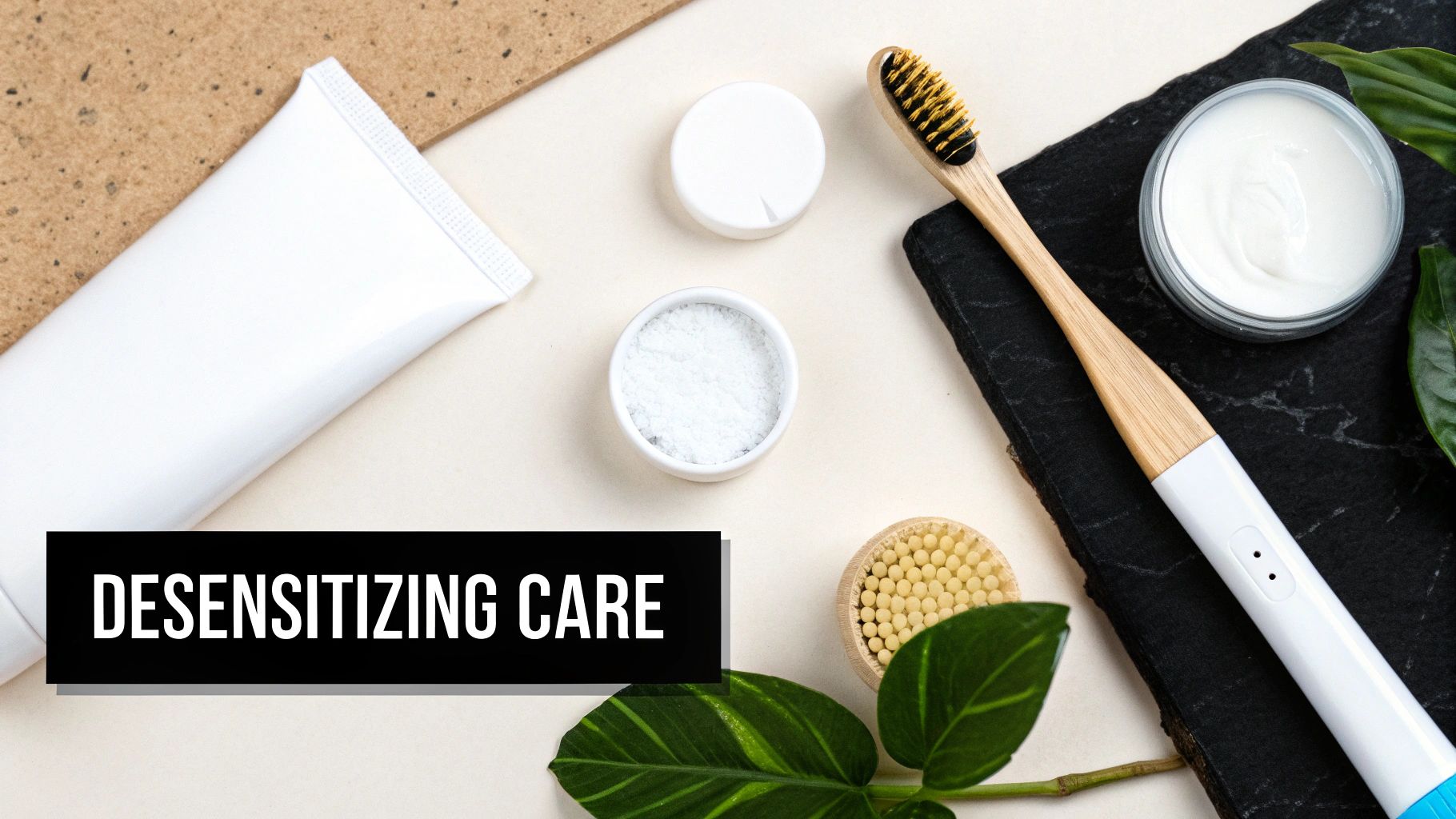
Walking down the dental care aisle can feel like a pop quiz you didn't study for. So many products promise relief from sensitivity, but what actually delivers? The secret is looking past the flashy packaging and understanding the active ingredients. A consistent routine with the right products is your most reliable path to building a solid defense against those sharp pangs of pain.
In fact, one of the most proven ways to manage tooth sensitivity is the regular use of desensitizing and remineralizing products. For many people, this simple habit can dial down symptoms within a few weeks. It's a common issue, affecting an estimated 45 million adults in the U.S., often hitting its peak between the ages of 30 and 40.
The best formulas rely on ingredients like 5% potassium nitrate, stannous fluoride, or arginine to either block pain signals or physically seal the tiny, vulnerable pathways in your teeth. You can read more about the science behind dentin hypersensitivity on Wikipedia.
Decoding Desensitizing Toothpastes
Your first line of defense should almost always be a specialized toothpaste. These aren't just marketing ploys; they contain specific ingredients that tackle sensitivity in two very different ways.
-
Nerve-Calming Agents: The most common player here is potassium nitrate. It works by seeping into the microscopic tubules in your dentin and essentially soothing the nerve inside the tooth. Think of it as turning down the volume on pain signals, making the nerve less reactive to triggers like a cold drink.
-
Tubule-Blocking Agents: Ingredients like stannous fluoride and arginine take a different approach. They build a protective barrier over exposed dentin, physically plugging the channels that lead to the nerve. This shield stops triggers from reaching the nerve in the first place.
When you're shopping, flip the box over and look for these ingredients. The key is consistent, twice-daily use, as the benefits are cumulative. Don't get discouraged if you don't feel a difference overnight—it can take two to four weeks to notice a real change.
The Power of Remineralizing Pastes
If your sensitivity is more stubborn or linked to weakened enamel, a remineralizing paste can be a total game-changer. These aren't toothpastes; they're topical creams you apply after brushing. Products like MI Paste Plus are formulated with special ingredients that actively repair and reinforce your tooth structure.
The magic often comes from a compound like Recaldent™ (CPP-ACP), which delivers bio-available calcium and phosphate right where your teeth need it. This technology helps rebuild weakened enamel, making it tougher against acid attacks and less porous overall.
Expert Tip: To get the most out of a remineralizing paste, apply a pea-sized amount to your teeth with a clean finger or cotton swab just before bed. This gives the active ingredients hours to work undisturbed while you sleep, allowing them to fully integrate into your enamel.
These pastes are a fantastic option for people with sensitivity caused by enamel erosion from acidic foods or even brushing too hard. They don't just mask the pain; they help fix one of its root causes. For a closer look at your options, our guide on products for sensitive teeth breaks down some of the best choices out there.
Building Your Oral Health Toolkit
Choosing the right product really comes down to what's causing your sensitivity. When you're standing in the store, it helps to know what each ingredient is designed to do.
Below is a quick comparison to help you understand what you're buying. This table breaks down the common active ingredients, how they work, and what situations they're best for.
Comparing Active Ingredients in Sensitivity Products
| Active Ingredient | How It Works | Best For | Example Product Type |
|---|---|---|---|
| Potassium Nitrate | Calms the nerve endings inside the tooth, making them less responsive to stimuli. | General, widespread sensitivity from various causes. A great starting point. | Desensitizing Toothpaste |
| Stannous Fluoride | Creates a barrier over dentin tubules, physically blocking triggers from reaching the nerve. | Sensitivity combined with a need for cavity protection and anti-gingivitis benefits. | Multi-benefit Toothpaste |
| Calcium & Phosphate | Rebuilds and strengthens weakened enamel by replenishing lost minerals. | Sensitivity caused by enamel erosion, demineralization, or acid damage. | Remineralizing Paste |
| Arginine | Works with calcium to plug and seal open dentin tubules, providing fast relief. | Quick relief from sensitivity, often found in formulas for immediate comfort. | Sensitivity Toothpaste, In-Office Treatments |
Ultimately, choosing the right product is just the first step. The real magic happens with consistency. A daily routine that incorporates these ingredients gives you the best shot at long-term relief and stronger, healthier teeth.
Adopting a Gentle Brushing Technique
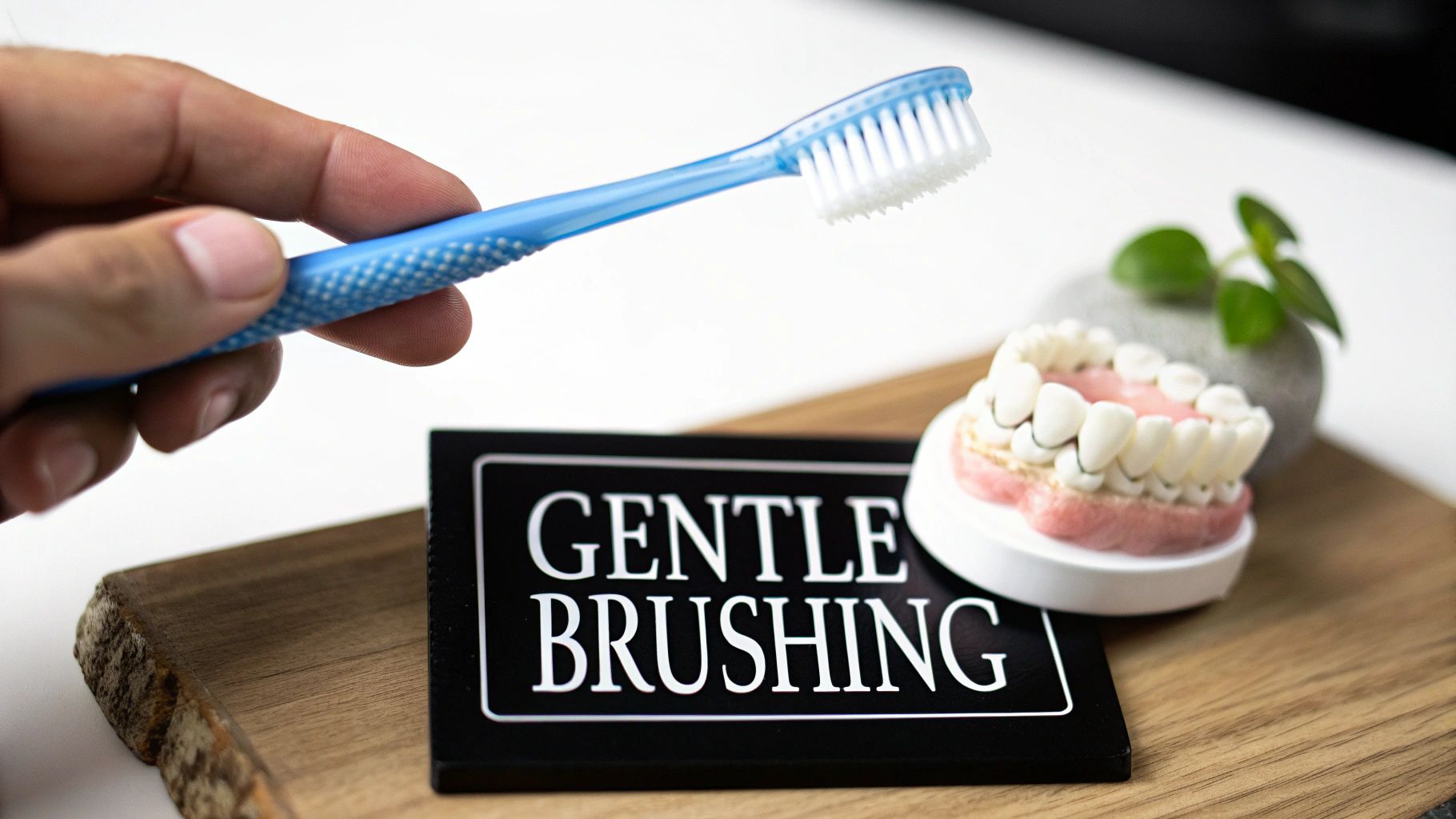
It seems counterintuitive, but one of the quickest ways to trigger sensitive teeth is by brushing too aggressively. Many of us have an instinct to scrub hard, thinking a firm hand gets teeth cleaner. Unfortunately, this habit can actively work against you, wearing down your protective enamel and even causing your gums to recede.
This combination of abrasion and pressure is a classic recipe for sensitivity. It exposes the soft, porous dentin layer underneath your enamel, which is filled with thousands of tiny channels that lead straight to the tooth's nerve. Correcting your technique isn't about being less clean; it's about being smarter to protect your teeth for the long haul.
Rethinking Your Tools and Technique
First things first, take a hard look at your toothbrush. If the bristles are labeled "medium" or "hard," it's time for an immediate swap. A soft-bristled brush is completely non-negotiable for anyone dealing with sensitivity, as it cleans perfectly well without acting like sandpaper on your enamel.
A huge part of a gentle brushing technique is simply choosing the right tool. Products like a sensitive toothbrush like the Elgydium Sensitive Toothbrush Sensitive Smooth are designed specifically for this purpose. Their finer, more flexible bristles can clean along the gumline without causing irritation or damage.
Once you have the right tool, it's all about your form. The goal is to get away from that common but destructive back-and-forth sawing motion. Instead, try a more controlled method:
- Angle the Brush: Position the bristles at a 45-degree angle to your gumline. This lets the bristles sweep away plaque from both the tooth surface and just underneath the gum's edge.
- Use Small Circles: Move the brush in gentle, small circular motions, focusing on a few teeth at a time. This method is far more effective at dislodging plaque and much kinder to your gums.
- Lighten Your Grip: Try holding your toothbrush with just your fingertips, almost like you're holding a pen. This simple change naturally reduces the amount of pressure you apply.
Common Brushing Mistakes to Correct
Even with a soft brush in hand, old habits can die hard. Many people don't even realize they're making mistakes that contribute to their discomfort. Breaking these habits is absolutely essential if you want to stop sensitive teeth pain for good.
One of the biggest culprits is applying too much force. A dead giveaway? If the bristles on your toothbrush look splayed out and flattened after just a few weeks of use, you are definitely pressing too hard. An electric toothbrush with a built-in pressure sensor can be a fantastic investment, as it will alert you the moment you start pushing too hard.
A Practical Tip: Try brushing with your non-dominant hand for a couple of days. You’ll naturally be less forceful and more deliberate, which can help you reset your muscle memory and adopt a lighter touch permanently.
Another common mistake is rushing. You should aim to brush for a full two minutes, spending about 30 seconds on each quadrant of your mouth (upper right, lower right, etc.). This ensures you're cleaning every surface thoroughly without having to resort to aggressive scrubbing. Rushing almost always leads to missed spots and a tendency to overcompensate with pressure.
By making these simple adjustments—choosing a soft brush, refining your angle, and lightening your grip—you can transform a daily habit from a source of pain into a key part of your solution.
Knowing When to See a Dentist
While at-home strategies are fantastic for managing everyday sensitivity, they aren’t a cure-all. Sometimes, that zinging pain is your tooth's way of sending up a serious flare—a signal that you need a professional’s touch.
It's one thing to have a predictable twinge when you eat ice cream. It's another thing entirely when the pain is severe, constant, or seems to come out of nowhere. Learning to spot the difference between manageable discomfort and a dental red flag is key to preventing a small issue from becoming a big, painful problem.
Recognizing Urgent Dental Symptoms
So, how do you know when it’s time to stop self-treating and start dialing your dentist? Certain types of pain are clear indicators that an underlying issue needs a proper diagnosis. If you experience any of the following, don't wait—schedule an appointment right away.
These symptoms often point to problems that go beyond simple dentin exposure:
- Sharp, Lingering Pain: Discomfort that sticks around for more than 30 seconds after a hot or cold trigger is a major warning sign. This could mean the nerve is inflamed or damaged.
- Pain Focused on a Single Tooth: If intense pain is isolated to one specific tooth, it might be a cavity, a crack, or even a dental abscess.
- A Constant, Throbbing Ache: A dull, persistent ache that doesn't seem to need a trigger isn't typical sensitivity. This often points to an infection or a deep cavity that has reached the tooth's pulp.
- Pain When You Chew: Does biting down send a jolt through a tooth? That could be a sign of a crack or a failing dental filling.
Pain that wakes you up at night or gets in the way of your daily life is never normal. Think of it as your body's alarm system—it's telling you that a professional needs to find out what’s going on.
Professional Treatments for Lasting Relief
When you get to the dental office, the first step is figuring out the real cause of your pain. Once your dentist pinpoints the problem, they can recommend a treatment designed for lasting relief—something over-the-counter products simply can't provide.
Depending on your specific situation, your dentist might suggest one of several highly effective in-office treatments. These are designed to either seal off exposed dentin or fix the underlying structural issue causing the pain.
Here are a few common professional solutions:
- Fluoride Varnish: A highly concentrated fluoride gel or varnish is painted directly onto your teeth. It’s a simple, quick way to strengthen your enamel and dentin, making them more resistant to acid and blocking those tiny tubules that transmit pain signals.
- Dental Bonding: If your sensitivity is from receding gums, your dentist can apply a tooth-colored bonding resin to cover the exposed root surfaces. This acts like a protective shield, sealing the vulnerable area from painful triggers.
- Prescription-Strength Products: Sometimes, you just need something stronger. Your dentist can prescribe a high-fluoride toothpaste or rinse that offers far more robust protection than anything you can buy at the store.
- Fixing Structural Issues: If a cavity is the culprit, a filling is the answer. For a cracked tooth, a crown might be needed to hold it together and protect it from further damage.
The goal of seeing a dentist is to move beyond just managing symptoms and find a definitive solution. Your dental team has the tools and expertise to stop sensitive teeth pain at its source and get your oral health back on solid ground.
Common Questions About Tooth Sensitivity
Even when you're doing everything right, questions about tooth sensitivity can pop up. It's totally normal. Navigating the world of dental care can feel a little confusing at times, but getting straight answers is the best way to manage your pain with confidence.
Let's tackle some of the most common questions people ask. Knowing these details will help you make smarter choices for your teeth, whether you're thinking about whitening or just wondering when your new toothpaste will finally kick in.
Can Teeth Whitening Cause Permanent Sensitivity?
This is a big one. Teeth whitening is notorious for causing temporary sensitivity, so it's a valid concern. The good news? For the vast majority of people, this discomfort is not permanent.
It all comes down to how whiteners work. The active ingredients, usually hydrogen or carbamide peroxide, temporarily make your enamel more porous. This opens up the tiny microscopic tubules in your dentin, creating a short-term direct line to the nerve. That’s what causes that sharp zing when you sip a cold drink after a whitening session. In almost every case, the sensitivity fades within a few days once you stop the treatment and your enamel's pores close back up.
To make the whole process more comfortable, you can try a few simple things:
- Give Your Teeth a Break: Instead of whitening every single day, try whitening every other day.
- Go for a Lower Concentration: Opt for a whitening gel with a lower percentage of peroxide. It might take a little longer to see results, but it's much gentler.
- Prep with Desensitizing Products: Start using a sensitivity toothpaste for a week or two before you even begin whitening, and keep using it throughout the process.
How Long Until Desensitizing Toothpaste Works?
It’s the question on everyone's mind when they start a new product: when will I actually feel better? While we'd all love instant relief, desensitizing toothpastes need a little time to work their magic. You're not just covering up the pain; you're either calming the nerve down or building a protective barrier over it.
Generally, most people start to notice a real difference in about two weeks of consistent, twice-a-day use. The active ingredients, like potassium nitrate or stannous fluoride, have a cumulative effect. Potassium nitrate works over time to soothe the nerve, while stannous fluoride gradually creates a shield over any exposed dentin.
A great pro tip is to avoid rinsing with water right after brushing. Just spit out the extra foam. Leaving a tiny bit of that toothpaste residue on your teeth gives the active ingredients more contact time to do their job.
You can usually expect to feel the full benefits after about a month of regular use. If you're still not feeling much relief after four to six weeks, it’s a good idea to schedule a visit with your dentist to make sure nothing else is going on.
Are Natural Remedies for Sensitive Teeth Effective?
Lots of people are curious about natural or home remedies, and some can definitely offer a bit of temporary relief for mild sensitivity. A warm salt water rinse, for instance, is fantastic for calming down gum inflammation, which can sometimes be a contributor to tooth pain. Think of it as a simple, soothing first-aid step.
Other remedies you might hear about, like oil pulling with coconut oil or applying a garlic paste, do have antibacterial or anti-inflammatory properties that can help soothe an irritated mouth. But it's really important to understand their limits.
These natural approaches don't get to the root cause of sensitivity, like worn-down enamel, receding gums, or a tiny crack in a tooth. They’re best viewed as complementary aids for short-term comfort, not a primary treatment. They might make you feel better in the moment, but they won't rebuild enamel or seal up the tubules that lead to your tooth's nerve. For persistent or more severe sensitivity, clinically proven products and a professional dental exam are always the most reliable path forward.
Does Diet Affect Tooth Sensitivity?
Absolutely. Your diet has a massive impact on tooth sensitivity—in fact, it's one of the biggest factors you have control over. What you eat and drink can either protect your enamel or actively wear it away, exposing the sensitive layers underneath.
The main culprits are pretty straightforward:
- Acidic Foods and Drinks: This is the big one. Things like citrus fruits (lemons, oranges), soda, sports drinks, and wine are major drivers of enamel erosion. Acid literally softens your enamel, making it vulnerable to being scrubbed away when you brush.
- Extreme Temperatures: That sudden, sharp jolt of pain is most often triggered by very hot or cold foods and drinks. When dentin is exposed, it’s highly reactive to those temperature shocks.
- Sugary Snacks: Sugar is food for the acid-producing bacteria in your mouth, which contributes to both decay and enamel erosion over time.
To manage sensitivity with your diet, try to limit acidic foods and drinks. When you do have them, rinse your mouth with plain water afterward to help neutralize the acid. And here's a crucial tip: wait at least 30 minutes after eating or drinking something acidic before you brush your teeth. Brushing right away can scrub at that temporarily softened enamel, making the problem even worse in the long run.
At DentalHealth.com, we simplify access to professional-grade products that offer real relief. Explore our curated selection of desensitizing toothpastes, remineralizing pastes, and other dentist-recommended solutions to build a routine that protects your teeth and stops sensitivity pain for good. Shop now and enjoy free shipping on all USA orders. Find your solution at https://dentalhealth.com.