
How to Stop Tooth Sensitivity Fast and Find Lasting Relief
If you want to get a handle on tooth sensitivity, you have to go straight to the source. The problem usually boils down to two things: worn-down enamel or receding gums, both of which leave the sensitive inner part of your tooth exposed.
The best at-home approach is a simple, three-part strategy: switch to a desensitizing toothpaste (look for potassium nitrate or stannous fluoride), use a gentle brushing technique with a soft-bristled brush, and cut back on acidic foods that eat away at your enamel. Making these small changes can make a huge difference in reducing that sharp pain and building up protection over time.
Decoding the Real Causes of Your Tooth Sensitivity
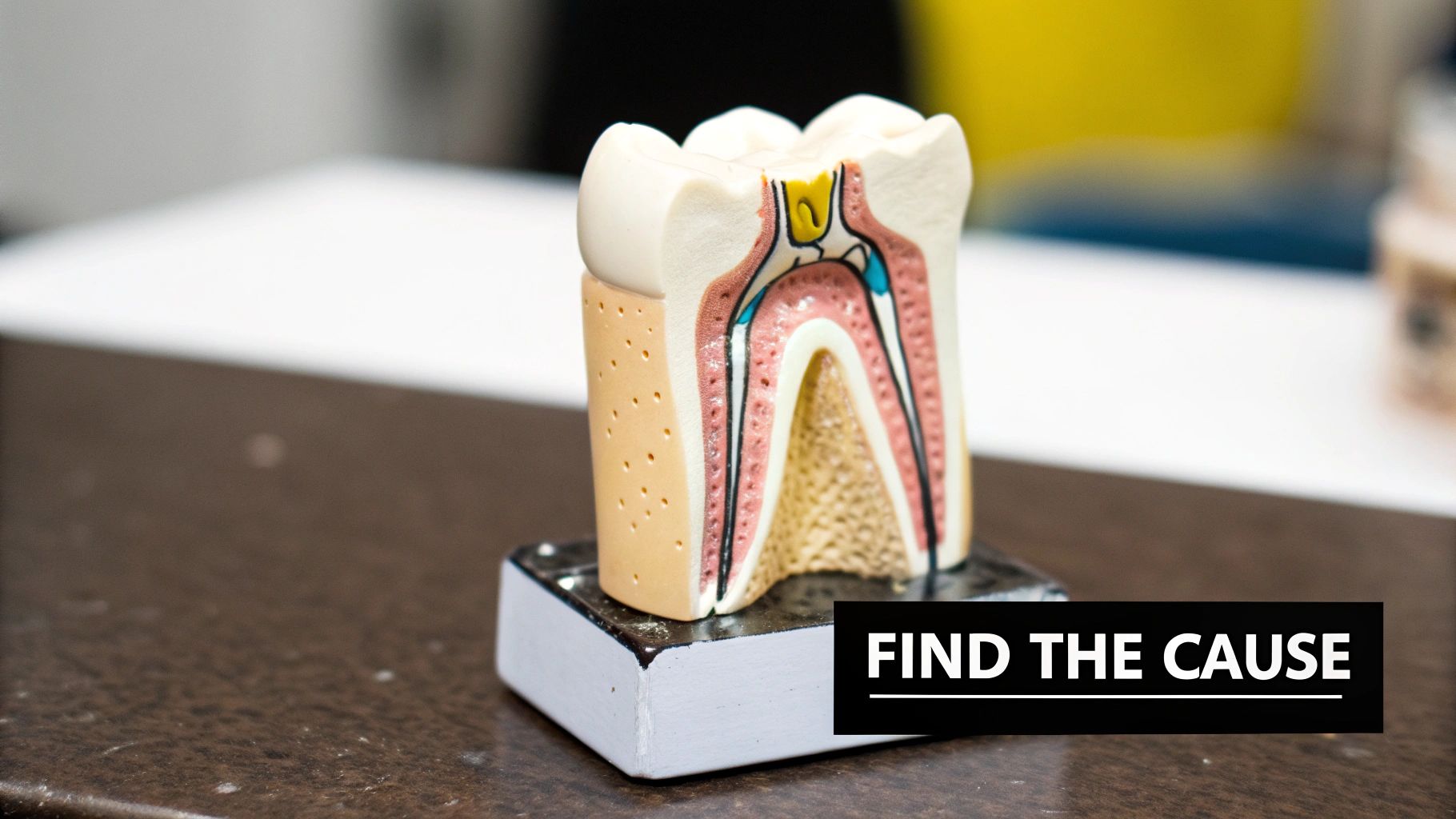
That sudden, zinging pain you get from a cold drink isn't just a random annoyance—it's your teeth telling you something is wrong. The clinical term is dentin hypersensitivity, and it happens when the tough outer layers of your teeth (the enamel and cementum) get thin. This exposes the softer, more porous layer underneath called dentin.
Think of dentin as a collection of thousands of tiny, hollow tubes that lead directly to the tooth's nerve center, known as the pulp. When those tubes are left unprotected, triggers like cold, heat, sugar, or even a gust of wind can rush through them and hit the nerve. The result? That familiar, sharp jolt of pain.
Common Culprits Behind Exposed Dentin
More often than not, it's our everyday habits and certain health conditions that are breaking down our teeth's natural defenses. Pinpointing what's causing your sensitivity is the first real step toward finding relief.
Here are some of the most frequent causes:
- Enamel Erosion from Acidic Foods and Drinks: That daily soda, morning citrus fruit, or glass of wine can soften and dissolve your enamel over time.
- Aggressive Brushing Habits: If you're scrubbing your teeth with a hard-bristled brush, you're not just cleaning them—you're likely wearing away enamel and encouraging your gums to recede.
- Gum Recession: Gums can pull away from the teeth due to gum disease or even just from years of wear and tear. This exposes the root surfaces, which don't have that protective enamel coating.
- Teeth Grinding (Bruxism): Many people clench or grind their teeth, especially at night. This puts a massive amount of pressure on the enamel, causing it to crack or wear down way too fast.
And if you're dealing with this, you're far from alone. One European study of 3,500 adults found that over half experienced dentine hypersensitivity, with the problem being most common between the ages of 38 and 47.
Less Obvious Triggers to Consider
Sometimes, the cause isn't so straightforward. Have you had dental work done recently? A new filling or a teeth whitening session can cause temporary sensitivity that usually fades. Other times, a tiny crack in a tooth or a worn-out filling can create a direct line to the nerve, causing a much more localized and intense pain.
Understanding the 'why' is crucial. Once you connect your daily habits—like that forceful brushing style or your love for acidic drinks—to the pain you feel, you can stop just managing the symptoms and start fixing the root cause.
This approach gives you the power to make targeted changes. For instance, knowing exactly what causes tooth sensitivity to cold can help you adjust your diet and habits for almost immediate relief.
Immediate Soothing Tactics for Tooth Pain
When that sudden, sharp jolt of tooth pain hits, you need relief now, not in a few days. Long-term solutions are definitely the goal, but a few immediate actions can calm a painful flare-up and help you get through the moment. Think of these as first-aid strategies for sensitive teeth.
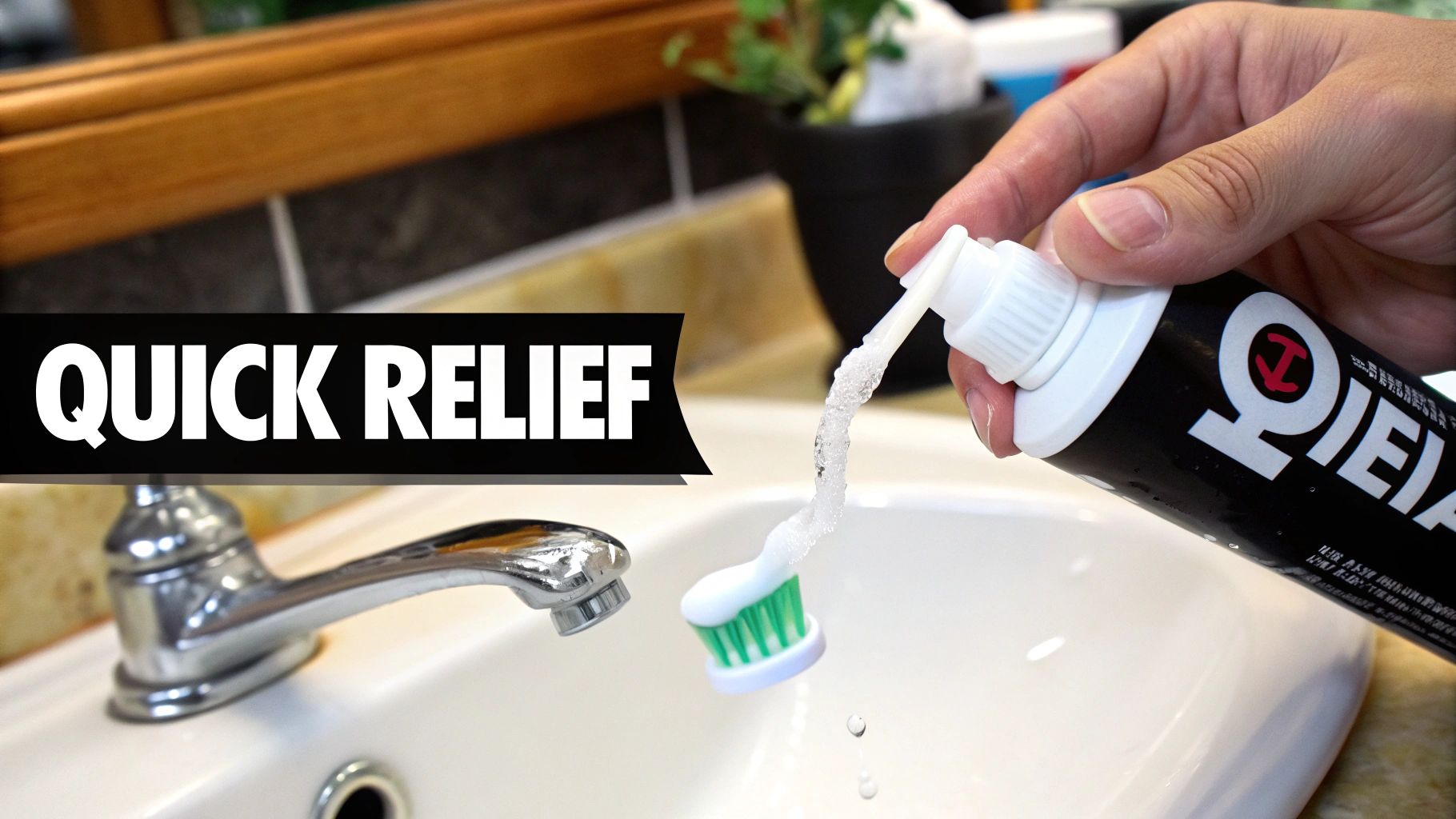
One of the most direct and effective things you can do is apply a desensitizing toothpaste right on the sore spot. Instead of just brushing with it, squeeze a small, pea-sized amount onto your fingertip and gently rub it onto the sensitive area of the tooth. Let it sit for a minute or two before rinsing.
This little trick allows the active ingredients, like potassium nitrate or stannous fluoride, to make direct contact with the exposed dentin tubules, giving you targeted and much faster comfort. For really stubborn spots, you might find that a specialized desensitizing gel for teeth offers even more potent, concentrated relief.
Simple At-Home Rinses and Swaps
Another simple but powerful tool in your arsenal is a lukewarm saltwater rinse. Just mix half a teaspoon of salt into a glass of warm water and swish it around your mouth for about 30 seconds. Saltwater is a natural antiseptic and can help reduce any inflammation in the gums, which often goes hand-in-hand with sensitivity.
Making some temporary dietary changes can also make a huge difference. For the next 24-48 hours, try to steer clear of the usual suspects:
- Extreme Temperatures: Put the ice water, hot coffee, and ice cream on hold for a bit.
- Acidic Foods: Temporarily sideline citrus fruits, tomatoes, vinaigrettes, and sodas.
- Sugary Treats: Candy and sweet drinks can easily aggravate sensitive nerves, so it's best to avoid them during a flare-up.
These tactics are designed for immediate, short-term comfort. They won't fix the underlying cause of your sensitivity, but they can dramatically reduce pain during a flare-up, giving you some breathing room to implement a more permanent care routine.
If you're hit with severe tooth pain out of the blue and can't get to your dentist, an online urgent care service can be a helpful resource for initial advice. These quick responses are key to learning how to stop tooth sensitivity when it’s at its worst, bridging the gap until you can get a professional evaluation.
Building a Sensitivity-Proof Daily Oral Care Routine
Real, lasting relief from tooth sensitivity isn't about a single magic bullet. It's built through consistent, gentle habits that fortify your teeth day in and day out. This isn't about adding a bunch of complicated steps to your life; it’s about refining what you already do.
So many of us think that a harder scrub means cleaner teeth. It’s a common mistake, but that aggressive brushing can wreak havoc, wearing down your enamel and causing your gums to recede. This exposes the sensitive dentin and root surfaces, creating the exact pain you’re trying to avoid.
Master the Art of Gentle Brushing
Think of your toothbrush as a precision tool, not a scouring pad. Your first, non-negotiable step is switching to a soft-bristled brush. Hard or even medium bristles are just too abrasive for daily use, especially if your enamel is already a bit compromised.
Next, let's talk technique. Hold your brush at a 45-degree angle to your gum line and use short, gentle, circular strokes. Imagine you're massaging your teeth and gums, not scrubbing a dirty pot. This method is incredibly effective at removing plaque without causing damage. An electric toothbrush with a built-in pressure sensor can be a fantastic investment—it'll literally tell you when you're pushing too hard.
Your goal is to clean away plaque, not to scrub off your enamel. If the bristles on your toothbrush look splayed out and flattened after just a few weeks, that's a dead giveaway you're brushing with way too much force.
The 30-Minute Rule You Can’t Ignore
When you brush is just as critical as how you brush, especially after eating or drinking anything acidic. That soda, citrus fruit, or even a salad with a vinaigrette dressing temporarily softens your tooth enamel, leaving it incredibly vulnerable.
Brushing right after an acidic meal literally grinds those acids into your weakened enamel, fast-tracking erosion. The solution is simple: wait at least 30 minutes after consuming anything acidic before you pick up that toothbrush. This gives your saliva enough time to neutralize the acids and let your enamel reharden. Rinsing with plain water right after your meal can help speed things up.
Why Mindful Flossing Is Essential
Finally, let’s not forget about flossing the right way. Flossing isn't just about yanking out that piece of popcorn stuck between your teeth; it's about cleaning the gum line where plaque loves to hide. But snapping the floss hard against your gums can cause irritation and, over time, recession.
Instead, gently guide the floss between your teeth. Curve it into a "C" shape against the side of each tooth and carefully slide it just beneath the gum line until you feel a little resistance. This approach cleans effectively without traumatizing that delicate tissue, helping to keep your sensitive root surfaces covered and protected. These small, mindful habits are the foundation for learning how to stop tooth sensitivity for good.
Habits That Secretly Worsen Tooth Sensitivity
Sometimes, the habits we don't even think about are the real culprits behind our tooth pain. Use this quick guide to spot and correct common daily habits that might be the hidden cause of your tooth sensitivity.
| Harmful Habit | Why It Worsens Sensitivity | A Better Approach |
|---|---|---|
| Using Teeth as Tools | Opening packages or bottles with your teeth can cause micro-cracks in your enamel, exposing the sensitive dentin underneath. | Grab a pair of scissors or a bottle opener. Your teeth are for chewing, not for being a multi-tool. |
| Chewing on Ice or Hard Candy | The extreme cold and hardness can shock the tooth nerve and easily lead to cracks or chips in the enamel. | If you need to chew on something, opt for sugar-free gum. It stimulates saliva flow, which is great for your teeth. |
| Constant Snacking on Sugary/Acidic Foods | This keeps your mouth in a constant acidic state, preventing saliva from neutralizing acids and rehardening enamel. | Limit snacks and try to eat them with meals. If you do snack, rinse with water afterward to wash away acids and sugars. |
| Aggressive Use of Whitening Strips | Overusing peroxide-based whiteners can penetrate the enamel and irritate the tooth's nerve, causing significant sensitivity. | Follow the product instructions exactly. Consider a gentler whitening toothpaste or consult your dentist for safer options. |
By being more mindful of these seemingly harmless habits, you can take a huge step toward protecting your enamel and reducing sensitivity. Small changes really do add up to big relief.
Choosing the Right Products for Sensitive Teeth
Walking down the toothpaste aisle can feel completely overwhelming. You're faced with a wall of boxes, all promising to be the magic bullet for your sensitive teeth.
But here’s the truth: when you're learning how to stop tooth sensitivity, it's not about the flashy packaging. It's about what's inside the tube. Understanding the active ingredients empowers you to pick a product that doesn't just numb the pain for a bit but actually gets to the root of the problem.
Two main ingredients are the heavy hitters in the world of desensitizing toothpastes, and they work in totally different ways. Knowing how each one functions helps you pick the right strategy for your specific kind of sensitivity.
Key Ingredients That Deliver Real Relief
First up is potassium nitrate. Think of it as a nerve-calming agent for your teeth. It works by seeping down through those tiny tubules in your dentin to reach the tooth's nerve. Once there, it basically tells the nerve to chill out, interrupting the pain signals being sent to your brain. This approach doesn't build a physical barrier, but it makes the nerve less reactive to triggers over time.
The other superstar ingredient is stannous fluoride. This one is a true multitasker. Not only does it do the standard fluoride job of fighting cavities and strengthening enamel, but it also creates a microscopic shield over your exposed dentin tubules. By physically blocking these pathways, it stops triggers like ice cream or a hot coffee from ever reaching the nerve in the first place.
Choosing the right ingredient is like picking the right tool for the job. Potassium nitrate numbs the nerve's response, while stannous fluoride builds a shield to block the trigger. Many top-tier toothpastes actually combine these or similar ingredients for a powerful one-two punch against sensitivity.
Beyond Your Daily Toothpaste
While a good desensitizing toothpaste is your first line of defense, sometimes you just need to bring in the specialists. For more stubborn or severe sensitivity, your bathroom cabinet arsenal can expand to include other targeted products.
- Prescription-Strength Toothpastes: Products like Fluoridex contain a much higher concentration of fluoride (1.1% sodium fluoride) than what you can grab off the shelf. This provides a serious boost to enamel strength and more robust protection.
- Remineralizing Pastes: If your enamel has been weakened by things like acid erosion from soda or reflux, a remineralizing agent like MI Paste can be a game-changer. It delivers calcium and phosphate ions directly to the tooth surface, helping to rebuild and fortify those weakened spots.
- Targeted Gels and Rinses: Fluoride rinses or specialized desensitizing gels can supplement your daily brushing. They offer an extra layer of protection that’s especially helpful right before you go to bed.
Dentists often recommend these types of products for specific situations, like managing the sensitivity that can follow a whitening treatment or addressing the discomfort from significant gum recession. As you can see from our guide on products for sensitive teeth, having a full toolkit can make a huge difference.
When you're trying to figure out what to add to your routine, a detailed Smartmouth Toothpaste review can give you real-world insights into whether a particular product is the right fit. Building your sensitivity-proof lineup is all about making informed choices, not just grabbing the first box you see. By focusing on proven ingredients and targeted solutions, you can finally silence that painful zing and get back to enjoying your favorite foods and drinks without wincing.
Knowing When It's Time to See a Dentist About Sensitivity
While most everyday tooth sensitivity can be managed perfectly well with the right toothpaste and a gentle oral care routine, some symptoms are red flags. They're your mouth’s way of telling you that you need professional help.
Learning to recognize when to make that call is crucial. It’s the key to stopping a minor annoyance from turning into a major, painful, and expensive problem down the line.
At-home remedies are fantastic for sensitivity caused by generalized enamel wear or minor gum recession. What they can’t do is fix underlying structural issues with a tooth. If your pain is severe, constant, or hangs around for more than 30 seconds after you’ve removed the trigger (like a cold drink), it’s time to get a dentist on the phone.
Warning Signs You Shouldn't Ignore
Pay close attention to how and where you feel the pain. Widespread, mild sensitivity is one thing, but very specific symptoms often point directly to a more serious issue that only a dentist can diagnose.
Don't put off booking an appointment if you experience any of these:
- Pain Focused on a Single Tooth: A sharp, zinging pain that you can pinpoint to one tooth could easily signal a cavity, a cracked tooth, or a filling that's started to fail.
- Sensitivity with Swollen or Bleeding Gums: When sensitivity is paired with angry, inflamed gums, it often points to advancing gum disease (periodontitis). This requires professional treatment to get it under control.
- Visible Damage: If you can actually see a chip, a crack, or a dark spot on your tooth, the sensitivity is almost certainly a symptom of that physical damage.
- Pain When You Chew: Discomfort when you bite down is a classic sign of a cracked tooth or a problem deep inside the tooth's pulp. This might even mean you need a root canal.
Think of persistent tooth pain as your body's built-in alarm system. Ignoring it is like pulling the batteries out of a smoke detector—the underlying fire will only get worse. Getting professional care quickly is the only way to address the root cause before it escalates.
Untreated dental problems are a massive health issue across the globe. In the United States alone, nearly 21% of adults are walking around with untreated tooth decay, which is a leading cause of severe sensitivity. You can learn more about this global health challenge from the World Health Organization.
Professional Treatments Your Dentist Might Recommend
Once you're in the dental chair, your dentist has a whole toolkit of effective treatments to stop tooth sensitivity at its source. After figuring out the exact cause, they might suggest one of several options.
Common In-Office Solutions
- Fluoride Varnish: This isn't your average fluoride rinse. A highly concentrated fluoride gel is painted directly onto your teeth to rapidly strengthen the enamel and block the tiny tubules in your dentin.
- Dental Bonding: For sensitive root surfaces exposed by gum recession, your dentist can apply a tooth-colored resin to cover and seal them off from triggers.
- Fillings or Crowns: If the sensitivity is simply a symptom of a cavity or a crack, restoring the tooth with a filling or crown will solve the problem and eliminate the pain.
- Gum Grafts: When gum recession is significant, a minor surgical procedure can be done to cover the exposed roots, which provides both lasting protection and immediate relief.
Sitting down and discussing these options with your dentist will help you create a definitive plan to get rid of your sensitivity for good.
Common Questions About Tooth Sensitivity
Navigating the world of tooth sensitivity brings up a lot of questions. Even after you've nailed down a good routine, you might still wonder about certain situations or what to expect down the road. Let's tackle some of the most common questions I hear, with clear answers to help you manage your oral health confidently.
Getting a handle on the details of what causes sensitivity and how treatments work is a huge part of learning how to stop tooth sensitivity for good. Let's clear up some common uncertainties.
Can Teeth Whitening Cause Permanent Sensitivity?
This is a huge concern for anyone wanting a brighter smile, and it's a valid one. Whitening treatments, whether at home or in the office, very often cause a temporary spike in sensitivity. It makes sense when you think about it—the active ingredients, like carbamide or hydrogen peroxide, have to penetrate the enamel to lift stains, and that process can easily irritate the tooth’s nerve.
The good news? For the vast majority of people, this discomfort is temporary and disappears within a few days after you stop the treatment. It is very rarely a permanent issue.
My Go-To Tip: To get ahead of the discomfort, start using a desensitizing toothpaste for a week or two before you even begin whitening. Keep using it throughout the process. Applying a remineralizing product like MI Paste after your whitening sessions can also work wonders to soothe the nerves and help rebuild enamel.
How Long Does Sensitivity Toothpaste Take to Work?
When it comes to desensitizing toothpaste, patience is everything. It's not like a painkiller that offers instant relief. These toothpastes need time to build up their protective effects. You'll probably need to use it twice a day, every single day, for at least two weeks to really notice a big difference.
Some people feel a little relief sooner, but consistency is what seals the deal. Ingredients like potassium nitrate need to accumulate over time to calm the nerve down, while stannous fluoride needs repeated applications to build a solid barrier over those exposed dentin tubules. Sticking with it is absolutely crucial for lasting results.
Can Tooth Sensitivity Be Cured Completely?
Whether sensitivity can be "cured" really comes down to the root cause. If your pain is from a specific, fixable problem—like a cavity, a leaky filling, or a cracked tooth—then yes. Once your dentist treats that issue, the sensitivity associated with it should be gone for good.
However, if your sensitivity is due to ongoing conditions like enamel erosion or gum recession, the goal shifts from a "cure" to effective, long-term management. While you can't regrow lost enamel or gum tissue, you can absolutely manage the symptoms so well that they completely disappear from your daily life. The right combination of products, gentle habits, and professional care can deliver what feels like a complete and lasting cure from the pain.
Are Natural Remedies Like Oil Pulling Effective?
While some people really enjoy oil pulling as part of their oral hygiene routine, there's very little scientific evidence showing that it directly treats dentin hypersensitivity. At its core, sensitivity is caused by exposed dentin tubules, and oil pulling simply doesn't create the physical barrier or have the nerve-calming effect needed to stop that zinging pain.
It might help reduce some plaque-causing bacteria, which is always a plus for your gum health, but it's no substitute for clinically-proven ingredients. For reliable, targeted relief from sensitivity, your best bet is to stick with products that have been specifically designed and tested for that exact purpose.
Ready to build your ultimate sensitivity-fighting toolkit? At DentalHealth.com, we stock professional-grade products like Fluoridex and MI Paste that dentists recommend for lasting relief. Find the perfect solution for your needs and get it delivered right to your door. Explore our collection at https://dentalhealth.com.