
Your Guide to Preventing Coffee Stains On Teeth
Preventing coffee stains really comes down to two things: minimizing how much coffee actually sits on your teeth and quickly neutralizing the stuff that causes the staining in the first place.
This means building a few simple habits, like using a straw, swishing with water right after you're done, and keeping your enamel strong and healthy. Making these small tweaks lets you enjoy your daily coffee without worrying about your smile.
Why Coffee Is Staining Your Smile
Let’s get one thing straight: you do not have to give up your beloved morning brew to keep your teeth white. The first step is just understanding why it happens. The real culprit isn't the coffee itself, but a few specific compounds inside it that just love to cling to your tooth enamel.
Think of your tooth enamel like a beautiful ceramic mug. It feels smooth, but on a microscopic level, it’s covered in tiny pits and ridges. This makes it the perfect surface for stains to grab onto.
The Role of Tannins and Chromogens
Coffee is loaded with compounds called tannins, a type of polyphenol. These are the exact same substances you find in red wine and dark teas that give them their color and that slightly bitter bite.
When it comes to your smile, tannins are a double threat:
- They have a dark color. These pigments, also known as chromogens, are practically designed to stain.
- They are incredibly sticky. Tannins are experts at binding to surfaces, and that includes the protein in your tooth enamel.
Every time you sip your coffee, these tannins latch onto your enamel and settle into all those microscopic nooks and crannies. Over time, that build-up is what causes that familiar yellow or brown tint. It's a slow burn, but with daily exposure, it's almost unavoidable without the right game plan.
A Daily Habit with a Cumulative Effect
The day-in, day-out exposure really adds up. Coffee stains are so common because those tannins stick to the porous surface of your teeth just like they would to a white shirt. Even one cup a day is enough to kickstart the staining process.
As these compounds break down in your saliva, they embed themselves deeper into the enamel. In fact, one study found that 60% of participants who drank coffee more than twice a day reported tooth discoloration. You can dig into the connection between coffee and staining in this dental health overview.
The key takeaway is simple: your tooth enamel isn't a perfectly smooth shield. It's a porous surface that readily soaks up the dark pigments from your coffee. The more often your teeth are exposed, the more these pigments pile up.
Once you get this, the focus shifts. You stop blaming the coffee and start thinking strategically. Instead of feeling guilty about your caffeine habit, you can focus on strengthening your enamel and clearing away those staining compounds before they have a chance to set. Protecting your smile isn't about giving things up; it's about being proactive.
Your Post-Coffee Stain Prevention Playbook
What you do in the moments right after finishing your morning brew can make all the difference. Think of it as your immediate response plan—a few simple, powerful actions designed to fight off staining compounds before they get a chance to settle in. Mastering these habits is the key to enjoying your daily coffee without sacrificing a bright, confident smile.
This infographic breaks it down, showing exactly how coffee's tannins are the real culprits behind those stubborn stains.
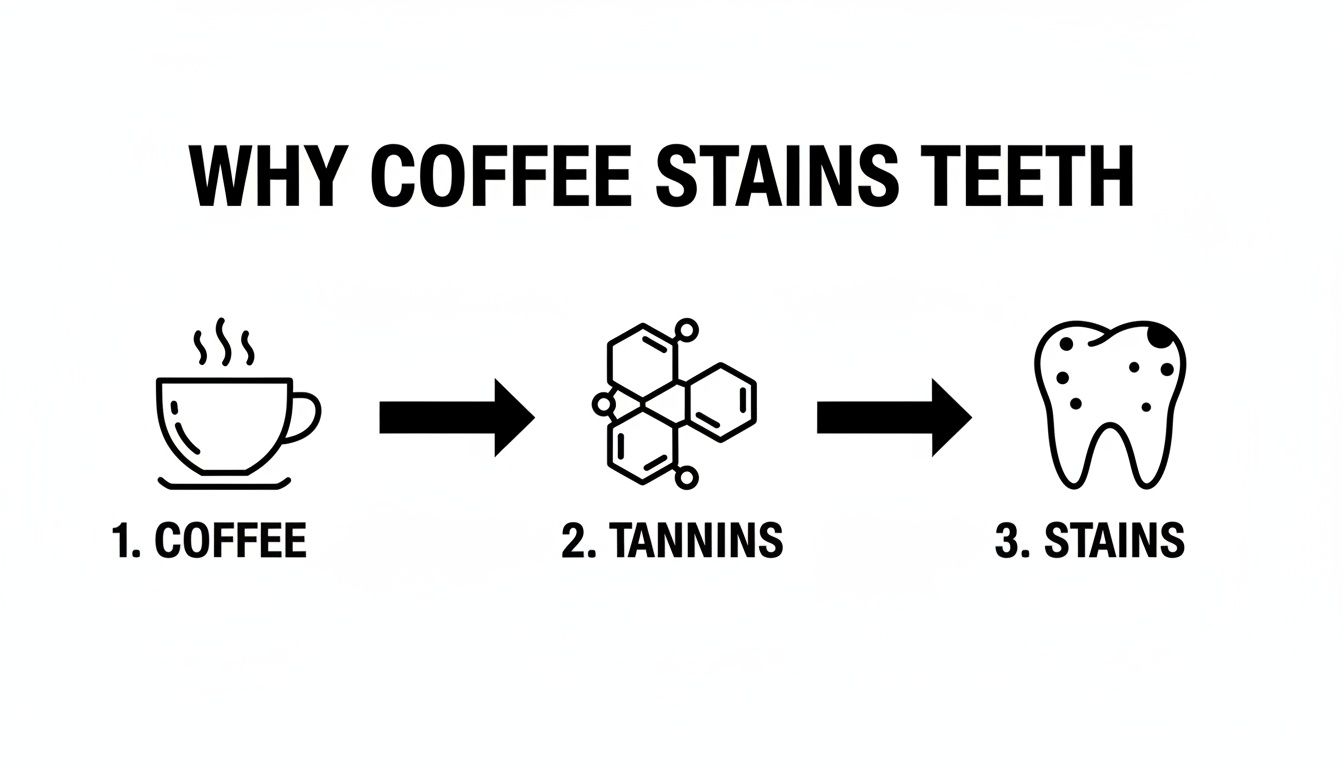
As you can see, the dark compounds in coffee are perfectly designed to cling to your tooth enamel, which is naturally porous.
The Rinse, Wait, Brush Method
The most effective strategy I've seen in practice comes down to three simple parts: rinse, wait, then brush. It's easy to remember.
As soon as you’ve taken your last sip, swish vigorously with plain water for about 30 seconds. This simple act works wonders. It immediately washes away those lingering tannins and helps neutralize the acid before it can do any damage.
Next comes the hardest part for most people: waiting. Coffee is acidic, and that acid temporarily softens your tooth enamel, making it surprisingly vulnerable. If you grab your toothbrush right away, you risk scrubbing away microscopic layers of this protective coating.
Waiting at least 30 minutes before you brush gives your saliva enough time to neutralize the acid. This allows your enamel to remineralize and harden up again. Rushing this step can lead to enamel erosion and increased sensitivity over time.
This waiting period is non-negotiable for long-term dental health. Once your 30 minutes are up, you can brush thoroughly with a quality toothpaste to clear away any remaining surface pigments.
To make it easier to see how these habits stack up, here's a quick reference table.
Immediate Actions After Drinking Coffee
| Action | How It Works | Effectiveness Level |
|---|---|---|
| Rinse with Water | Immediately flushes away acidic residue and loose stain particles. | High (Essential first step) |
| Wait 30+ Minutes | Allows saliva to neutralize acids and for enamel to reharden, preventing erosion. | Critical (Non-negotiable) |
| Brush After Waiting | Removes any remaining stain compounds that have settled on the tooth surface. | High (Completes the process) |
| Chew Sugar-Free Gum | Stimulates saliva flow, which helps neutralize acid and rinse the mouth. | Moderate (Good if you can't rinse) |
These immediate actions, when combined, form a powerful defense against daily coffee staining.
Smart Drinking Strategies
Beyond your after-coffee routine, how you drink your coffee also plays a big role. A few small tweaks can drastically reduce how much the staining liquid touches your most visible teeth.
Here are a few practical tips you can start using today:
- Use a Straw: This is a no-brainer for iced coffee, but it works for hot drinks too (just be careful!). A straw helps the liquid bypass your front teeth, depositing it further back in your mouth.
- Drink It Quickly: Sipping a single cup over several hours is like giving your teeth a prolonged acid bath. It’s far better to finish your coffee within 15-20 minutes to minimize that exposure time.
- Avoid Sugar: Sugar is fuel for the bacteria in your mouth, which then produce even more acid. This amplifies coffee's enamel-softening effect, making your teeth more susceptible to staining.
By combining these drinking tactics with the "rinse, wait, brush" method, you create a powerful daily defense. For those looking to dive deeper, our guide on how to prevent teeth staining covers more long-term strategies. But remember, implementing these immediate actions is the first and most critical line of defense for any coffee lover.
How Coffee Acidity Weakens Your Enamel
While the dark pigments in coffee get all the blame for staining, there’s a quiet accomplice at work: acidity. The staining process isn’t just about color sticking to your teeth. It’s about your enamel becoming vulnerable enough for those stains to grab hold in the first place, and coffee's naturally acidic nature is a huge part of that.
Your tooth enamel is the hardest substance in your body, but it’s not invincible—and its kryptonite is acid. When you sip your coffee, its low pH temporarily softens this protective outer layer. On a microscopic level, the surface becomes rougher and more porous.
This softened, porous state is the perfect opportunity for tannins and chromogens to seep in and settle down. Think of it like trying to clean a smooth, glazed ceramic plate versus a rough, unglazed one. The stains will always have an easier time clinging to the rougher surface.
The Connection Between Acidity and Sensitivity
This acidic attack isn't just a cosmetic problem; it's a structural one. Over time, repeated exposure to acid can lead to enamel erosion, which is the permanent loss of this vital protective layer.
As your enamel thins out, the sensitive dentin underneath becomes more exposed. This is what leads to that sharp, zinging pain when you have something hot or cold. If you’ve ever noticed that certain foods or drinks cause a temporary shock that they never used to, that’s a classic sign your enamel is wearing thin. Your daily coffee habit could very well be a contributing factor.
For anyone worried about this, exploring ways to strengthen tooth enamel is a great proactive step you can take.
The real danger of coffee isn't just the immediate stain but the long-term enamel weakening. Managing acidity is just as crucial as managing tannins for maintaining both a white smile and overall oral health.
Why Timing Your Brushing Is Crucial
The acidity in coffee is often overlooked, but it plays a massive role in your dental health. Coffee can have a pH as low as 5.0-5.5, creating an acidic environment where enamel softens and bacteria can thrive, which only makes discoloration worse.
Research has shown a clear link between post-coffee habits and staining. One study, for instance, revealed that people with poor brushing habits after drinking coffee had nearly double the rate of "bad" staining status (46.7%) compared to those with good hygiene (23.3%).
This is exactly why brushing your teeth immediately after your last sip is a terrible idea. You'd essentially be scrubbing away at your softened, vulnerable enamel with an abrasive paste.
A smart move is to learn how to reduce the acidity of your coffee, which makes it gentler on your teeth from the start. It’s a simple adjustment that can make a huge difference in preserving your smile's protective layer for years to come.
Building Your Stain-Fighting Oral Care Arsenal
While quick actions like rinsing with water definitely help, your daily oral care routine is the real foundation for preventing coffee stains long-term. Think of it as building a defensive wall, brick by brick, that makes your enamel more resilient against the daily assault from tannins and acids.
Choosing the right products isn’t about finding one magic bullet. It’s about creating a smart, synergistic system where every component has a specific job: protecting and brightening your smile. This system really comes down to three key actions: polishing away new stains, strengthening your enamel against future discoloration, and neutralizing the acidic environment where stains thrive.
The Power of Polishing Toothpastes
Your first line of defense is a high-quality whitening toothpaste. But let's be clear—not all whitening formulas are the same. You're looking for gentle, consistent maintenance, not an aggressive scrub that could harm your enamel. The key is to find toothpastes with mild abrasives like hydrated silica or calcium carbonate.
These ingredients work by physically polishing the tooth's surface, buffing away that daily film of tannins before they get a chance to settle into the enamel's pores. It’s less like sanding a floor and more like polishing silver—a gentle but incredibly effective way to maintain its natural luster.
A common misconception is that whitening toothpastes bleach your teeth. In reality, their primary function is to remove extrinsic (surface) stains, which is exactly what you need for combating daily coffee consumption.
By consistently lifting these surface stains, you stop the gradual buildup that leads to a dull, yellowed look. This approach also makes any professional whitening treatments you get last much longer, keeping your smile consistently bright.
Fortifying Enamel with Remineralizing Products
Polishing away stains is only half the battle. A truly stain-resistant smile has strong, healthy enamel with fewer microscopic pores for tannins to grab onto. This is where remineralizing products step in, acting as a crucial shield.
Products with ingredients like fluoride, nano-hydroxyapatite, or calcium phosphate work to replenish minerals your enamel has lost. This process essentially "fills in" the tiny cracks and pores that coffee's acidity can create, leaving a smoother, less porous surface.
- Fluoride: This classic ingredient becomes part of the enamel structure, creating a more acid-resistant mineral called fluorapatite.
- Nano-Hydroxyapatite (nHA): These tiny particles are amazing because they mimic your natural enamel, bonding directly to the tooth to fill in imperfections.
A stronger, smoother enamel surface doesn't just look better; it gives staining molecules fewer places to hide. If you're serious about long-term prevention, adding a remineralizing paste or rinse is a non-negotiable step. For those just getting started, there are great guides on how to remove teeth stains at home that often feature these types of strengthening products.
Neutralizing Rinses to Counteract Acidity
Finally, you have to deal with the acidic environment that coffee creates. An acidic mouth softens enamel, making it a prime target for both staining and erosion. While a quick water rinse helps, a dedicated neutralizing rinse offers a more powerful solution.
Look for mouthwashes that are alcohol-free and have a neutral or alkaline pH. These formulas help quickly restore your mouth’s natural pH balance after you've had something acidic like coffee. This simple step helps your enamel reharden faster, shrinking the window of vulnerability where stains are most likely to set. Using a rinse like this just once or twice a day provides a powerful buffer against the acidic side effects of your daily brew.
Daily Habits for a Brighter, Whiter Smile
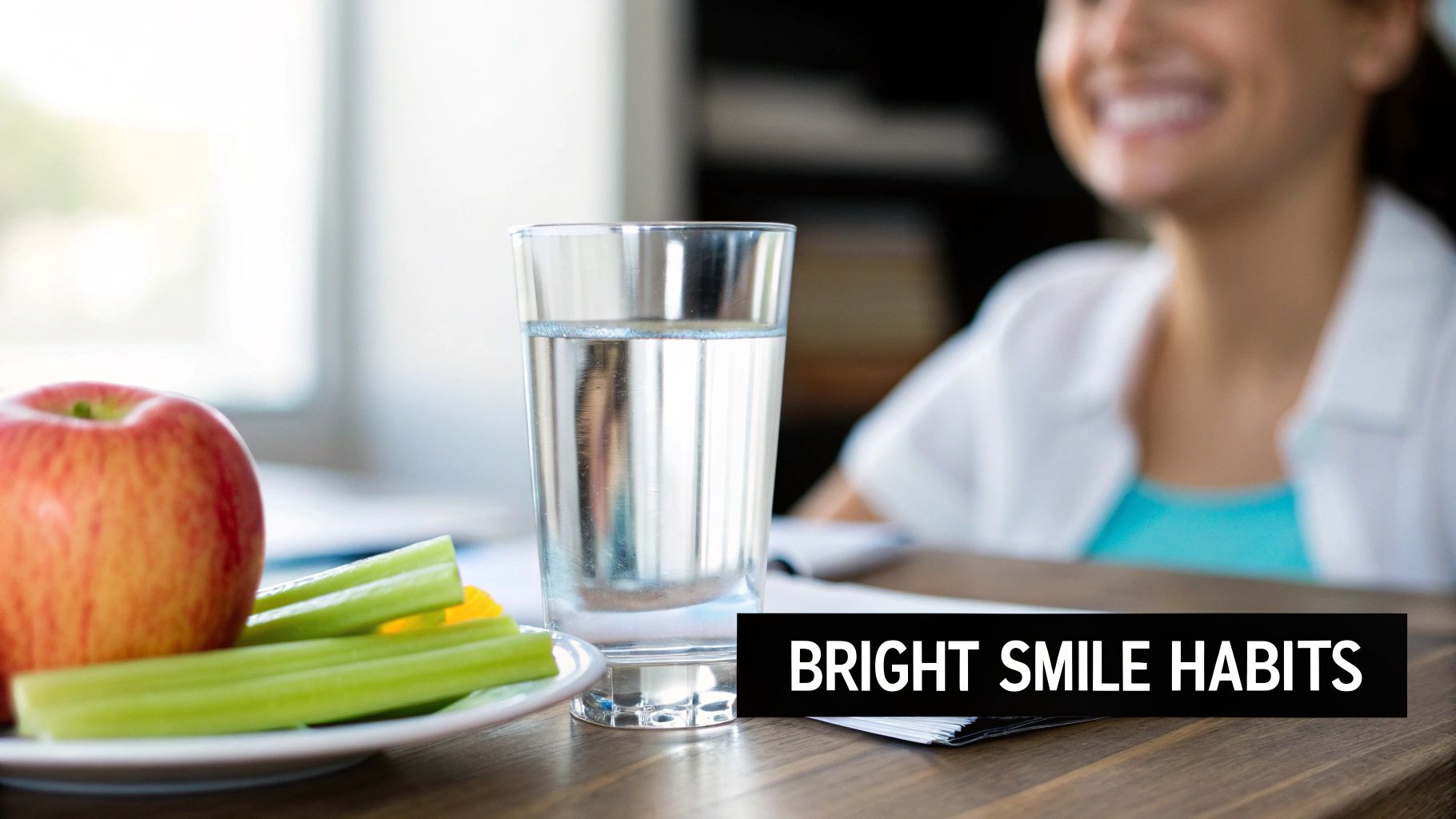
Keeping your teeth white goes way beyond just the products you use. Think of it as part of your overall healthy lifestyle. The small, consistent things you do every day really add up, turning your body's own defenses into your best ally against stains.
One of the easiest things you can do? Drink more water. It’s not just for hydration; water fires up your saliva production. Saliva is nature's rinse cycle, constantly washing away leftover coffee particles and neutralizing those pesky acids.
When you sip water between coffees or with your meals, you’re giving that natural cleansing process a major boost. This simple step dramatically cuts down the amount of time staining compounds get to spend sitting on your enamel.
Smart Snacking for a Whiter Smile
You can actually eat your way to cleaner teeth. Some foods are like natural toothbrushes, physically scrubbing away surface stains before they can really take hold.
Here are a few of my favorites to recommend:
- Crunchy Fruits: An apple is perfect. As you chew, its fibrous texture gives your teeth a great polishing.
- Crisp Vegetables: Celery and carrots are fantastic, too. They take a lot of chewing, which not only scrapes away plaque but also gets that helpful saliva flowing.
Working these into your snack rotation adds a gentle, mechanical cleaning that perfectly complements your brushing routine. It's about more than just whitening products; learning how to whiten teeth naturally through simple diet choices can make a huge difference.
Your diet can either work for you or against you. Choosing crisp, fibrous foods is an easy win—you’re actively fighting coffee discoloration with every bite.
The Non-Negotiable Professional Cleaning
At the end of the day, nothing you do at home can truly replace a professional dental cleaning. Your daily habits are crucial for maintenance, but only a hygienist can tackle the stubborn tartar and deep-set stains your toothbrush simply can’t reach.
Hygienists use specialized tools to polish your teeth, clearing away the built-up film where coffee stains love to settle. Try to get a cleaning every six months. This professional "reset" is absolutely essential for keeping coffee stains at bay and giving your daily efforts a clean slate to work from.
Common Questions About Preventing Coffee Stains
Even with the best game plan, a few questions always seem to pop up for my fellow coffee lovers. Let's dig into some of the most common ones I hear, so you can fine-tune your routine and feel good about your daily cup.
Does Adding Milk to My Coffee Reduce Staining?
Yes, it can definitely help, at least a little bit. The secret weapon here is a protein in milk called casein. This protein actually latches onto the tannins in coffee—the very compounds that cause stains—making them less likely to grab onto your tooth enamel.
Think of it this way: a lighter-colored coffee generally means fewer of those staining compounds are making direct contact with your teeth. Just remember, this doesn't totally neutralize the coffee's acidity or get rid of the staining risk altogether. It's more of a helpful buffer, not a free pass to skip rinsing with water or brushing later on.
Is Iced Coffee Better for My Teeth Than Hot Coffee?
This is a great question, but the answer isn't really about the temperature. It all comes down to how you drink it.
Whether it's hot or iced, coffee has the same acidic properties and staining tannins. The real game-changer with iced coffee is the fact that most of us drink it with a straw. Using a straw lets the liquid bypass your most visible front teeth, which slashes the amount of direct contact and gives stains less opportunity to set. Plus, a lot of people tend to drink iced coffee faster than they'd sip a hot mug, shortening the overall exposure time for their enamel. It's the delivery method, not the temperature, that makes the difference.
A straw is one of the simplest and most effective tools in your stain-fighting arsenal. It physically steers the coffee away from the front surfaces of your smile, whether your drink is hot or cold.
How Often Should I Use At-Home Whitening Products?
This really depends on the product's strength and how sensitive your teeth are. For daily upkeep, a good whitening toothpaste designed for gentle, daily polishing is your best bet for lifting away fresh surface stains before they settle in.
When you're using more intensive treatments, like professional-grade whitening strips or gels, you'll want to complete the full course as directed. After that inicial treatment, you can maintain those bright results with touch-up applications every three to six months. It's easy to overdo it, and that can lead to sensitivity, so always stick to the instructions and pay attention to how your teeth feel.
Will a Professional Cleaning Remove All Coffee Stains?
A professional cleaning and polishing from your dental hygienist is fantastic for removing extrinsic stains—that's the official term for the buildup on the outer surface of your enamel. For most of us who enjoy coffee regularly, a cleaning makes a huge, immediate difference in brightness.
But if stains have been sitting there for a very long time, they can sometimes seep deeper into the enamel, becoming intrinsic stains. When this happens, your dentist or hygienist might recommend professional whitening treatments to get the best results. Think of your regular cleanings as the absolute cornerstone of your prevention plan—they keep those surface stains from ever getting the chance to become a bigger problem.
Ready to build your ultimate stain-fighting arsenal? DentalHealth.com offers a curated selection of professional-grade whitening toothpastes, remineralizing products, and sensitivity treatments to keep your smile bright and healthy. Explore our dentist-recommended brands and find everything you need at https://dentalhealth.com.