
Retainer Brite Ingredients: Uncover retainer brite ingredients in your cleaner
When you pop a Retainer Brite tablet into water, it’s not just fizzing for show. That chemical reaction is a finely-tuned cleaning machine going to work, designed to disinfect, deodorize, and dissolve all the gunk that builds up on your dental appliance. Its power comes from a specific blend of oxidizing agents, effervescent components, and chelators that team up to tackle bacteria and tartar without relying on harsh, damaging chemicals.
What's Actually Inside Your Retainer Brite Tablet?
Ever wonder what makes that little blue and white tablet so effective? Retainer Brite is what's known as an effervescent cleaner, made specifically for things like retainers, aligners, and night guards. Think of it as a specialized deep-cleaning bath for your oral device, engineered to handle the unique challenge of keeping it truly hygienic day after day.
The formula isn't just a random mix of chemicals. Each ingredient is chosen for a specific job, and they all work together to get your appliance looking and feeling brand new.
- Disinfection: Key components get to work immediately, eliminating the harmful bacteria and other microorganisms that love to hide in the tiny crevices of your appliance.
- Deodorizing: The formula doesn't just mask bad smells; it neutralizes and removes the unpleasant odors at their source.
- Dissolving Buildup: It's incredibly effective at breaking down stubborn plaque, tartar, and surface stains that brushing alone often misses.
This multi-pronged attack is what really sets it apart from just using soap and water. The following infographic gives a great visual breakdown of how these core functions keep your appliance fresh and clean.
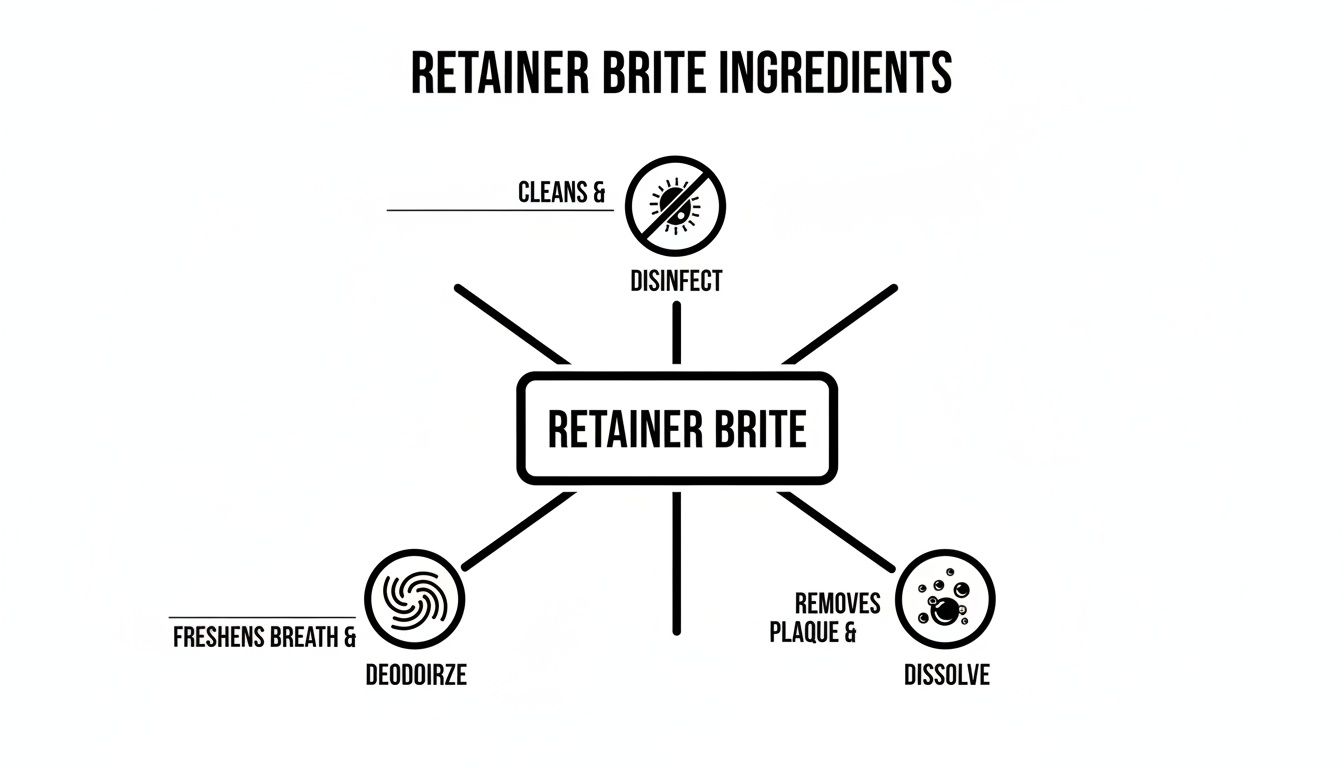
As you can see, the ingredients combine to disinfect, deodorize, and dissolve grime, ensuring a comprehensive clean every single time you use it.
A Formula Built on a Foundation of Science
The effectiveness of Retainer Brite isn't just a marketing claim—it's backed by some serious science. The formulation is proven to kill 99.99% of common odor-causing bacteria, which is a huge deal when you're putting that appliance back in your mouth.
For the 25 million Americans wearing orthodontic appliances, finding a reliable cleaner is essential. Retainer Brite’s kosher-certified recipe provides that powerful clean, making it a go-to for a wide variety of dental devices.
To give you a better idea of how it all works, let's look at the key players in the formula.
| Ingredient | Ingredient Category | Primary Function |
|---|---|---|
| Potassium Persulfate | Oxidizing Agent | Main disinfectant; kills bacteria and viruses |
| Sodium Bicarbonate | Effervescent Agent | Creates the fizzing action to help lift debris |
| Citric Acid | Chelating Agent | Binds to and removes mineral deposits (tartar) |
| Sodium Carbonate | pH Balancer | Stabilizes the solution for optimal cleaning |
This combination is what makes the product so effective. Each ingredient complements the others to deliver a complete clean.
The real genius of the formula is its synergy. While one ingredient is releasing oxygen to lift away debris, another is busy dissolving mineral buildup, and a third is neutralizing odors right at their source.
This balanced approach ensures your retainer isn't just visibly clean, but also hygienically safe. To keep up with this level of cleanliness, stocking up on a Retainer Brite 96-tablet supply is a smart move for consistent, daily care.
Now, let's take a closer look at the specific components that make all this possible.
The Power Players Behind The Cleaning Action
At the heart of every Retainer Brite tablet are two key ingredients that do all the heavy lifting: Potassium Persulfate Compound and Sodium Percarbonate. You can think of them as a highly specialized sanitation crew for your dental appliance. They don't just mask odors or rinse away loose gunk; they get down to the molecular level to break down and eliminate the invisible threats hiding on your retainer.
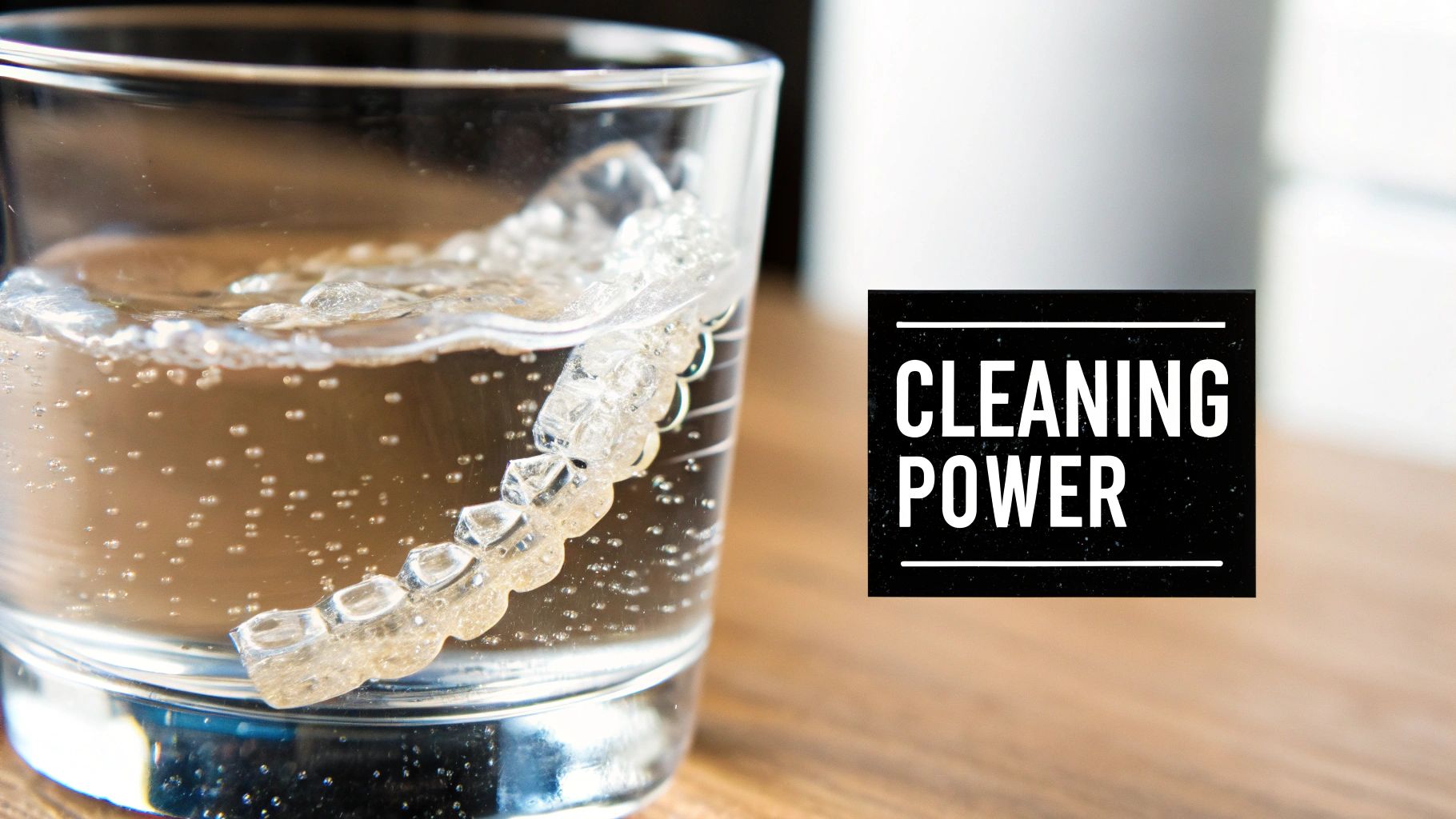
This powerful duo works together to create a disinfecting solution that knocks out odor-causing bacteria without resorting to harsh chemicals that could damage the delicate material of your appliance. Their combined action delivers a deep, hygienic clean that simple brushing just can't match.
The Stain-Fighting Oxidizer
The first major player, Potassium Persulfate Compound, is a beast when it comes to stain removal. Its main job is to break down stubborn organic material—all the proteins and biofilms that create a sticky, grimy layer on your retainer. By oxidizing these compounds, it effectively dismantles the very structure of stains and bacterial colonies.
This powerhouse ingredient is a major component, making up to 10-15% of the tablet. In tests, it's been shown to kill 99.99% of common bacteria like Streptococcus mutans, which is responsible for about 60% of nasty retainer odors, all within a standard 15-minute soak.
Its targeted action is what gets rid of that yellowish tint that can build up on appliances over time, helping restore them to their original clear appearance.
Essentially, potassium persulfate weakens the chemical bonds holding stains and bacteria to your retainer, making them easy to wash away. It’s like using a specialized solvent to dissolve a stubborn stain on fabric, but designed specifically for oral appliances.
This chemical process is the first line of defense, setting the stage for the next phase of the deep clean.
The Oxygen-Lifting Bubbles
Next up is Sodium Percarbonate. The moment this ingredient hits the water, it reacts and releases millions of tiny, energetic oxygen bubbles. This isn't just for show; these bubbles perform a critical mechanical cleaning function.
It’s a process often called an "oxygen lift." The bubbles actively work their way into all the microscopic nooks, crannies, and pores on your retainer's surface that a toothbrush could never hope to reach. As they form and rise, they physically lift and carry away the plaque and food debris that the potassium persulfate has already loosened.
To really get what these ingredients are doing, it helps to understand what dental plaque is and how to remove it from surfaces. The oxygen bubbles are the muscle that physically dislodges that sticky biofilm.
Together, these two Retainer Brite ingredients deliver a comprehensive one-two punch against grime. The potassium persulfate chemically breaks down the buildup, and the sodium percarbonate physically lifts it away, leaving your appliance exceptionally clean and fresh.
How Supporting Ingredients Create The Fizz And Finish
Those powerful oxidizers don't work in a vacuum. To get that signature fizzing action and a truly polished clean, a whole team of supporting Retainer Brite ingredients needs to get involved. This is where the dynamic duo of Sodium Bicarbonate and Citric Acid really shines.
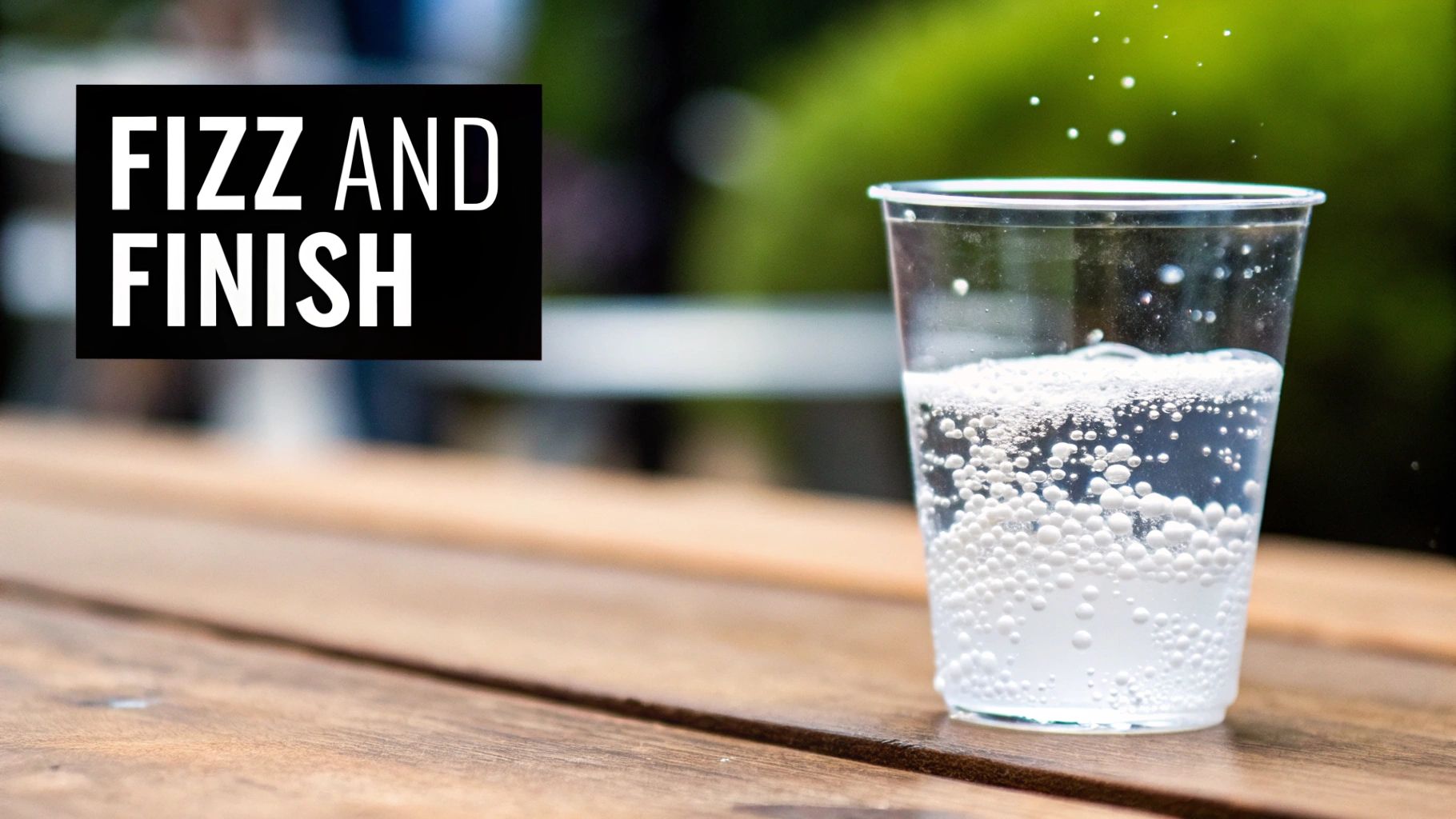
Think of their reaction as a tiny, bubbling micro-scrubbing force. As soon as the tablet hits the water, the fizz they create provides physical agitation—a gentle but persistent bubbling that helps mechanically knock loose any food particles and plaque from your appliance. This action is fantastic for getting into all the little grooves and corners that a brush might miss.
The Fizz And Its Deodorizing Power
Sodium Bicarbonate, which you probably know as baking soda, does a lot more than just create bubbles. It’s a very mild abrasive, so it helps scrub away surface stains without scratching the delicate plastic of your retainer. It also happens to be a natural and incredibly effective deodorizer, neutralizing the acidic compounds that cause bad odors.
Working right alongside it is Citric Acid, which brings its own unique skills to the formula. It's a champ at preventing mineral buildup—the very thing that leads to hard tartar deposits. On top of that, Citric Acid helps adjust the cleaning solution to the perfect pH level, making sure the main cleaning agents can do their job at peak efficiency. Another key player, Sodium Carbonate, often acts as a water softener, which just boosts the overall cleaning power of the entire formula.
Retainer Brite tablets are all about the precise blend. You've got sodium bicarbonate for that gentle scrubbing action, citric acid balancing the pH for better stain removal, and sodium percarbonate releasing those deep-cleaning oxygen bubbles. It's this carefully calibrated combination that helps prevent up to 80% of the plaque buildup that can lead to discoloration and bad breath.
Each supporting ingredient has a highly specific role. It’s like a pit crew in a race—while the driver gets the attention, the crew is essential for ensuring the car runs perfectly, from changing tires to adjusting aerodynamics. Here, the supporting ingredients ensure the cleaning process is fast, efficient, and complete.
A Well-Rounded Cleaning Solution
This synergistic approach means every single aspect of cleaning is covered. The active oxidizers handle the disinfecting, while the effervescent agents physically loosen debris and kill bad odors.
This well-rounded formula is exactly why specialized tablets are so often recommended over single-ingredient, DIY cleaning methods. If you're curious about how different products stack up, it's worth checking out some comprehensive retainer cleaner reviews. Ultimately, every component works together, creating a complete solution that leaves your appliance not just looking clean, but hygienically pristine and fresh.
Is Retainer Brite Safe To Use?
When it comes to anything that goes in your mouth, safety is obviously the first thing on your mind. So, let's break down the ingredients in Retainer Brite to see how they affect both you and your dental appliance. The good news is, the formula was created to be tough on germs and buildup but gentle where it really matters.
The main active ingredient you should know about is persulfate. It’s a rockstar cleaning agent, but a very small number of people can have an allergic sensitivity to it. This is exactly why the instructions are so clear about that final, crucial step after soaking.
Rinsing your appliance thoroughly under running water is non-negotiable. This simple step washes away any leftover cleaning solution, which cuts out direct contact and just about eliminates any risk of irritation.
Following this one rule ensures you get all the cleaning power without any of the potential issues, making it perfectly safe for your daily routine.
Protecting Your Dental Appliance
You’ve invested a lot of money and time into your retainer or aligners, and you want them to last. The Retainer Brite formula is designed to be completely compatible with the plastics and acrylics used in most modern appliances. It gets the job done without making the material cloudy, brittle, or weak over time.
There is one important rule to follow, though, especially if your retainer has any metal parts, like a classic Hawley retainer.
- Don't Over-Soak: Stick to the recommended 15-minute cleaning time. That’s all it takes.
- Prevent Corrosion: Leaving it in for hours, and especially overnight, can potentially cause the solder joints or other metal pieces to corrode. The 15-minute soak gives you the best clean with the lowest risk.
Sticking to this timeframe is the best way to protect the integrity of your appliance for years to come.
A Closer Look At Allergen Profiles
If you have specific sensitivities, it's good to know the formula has been carefully reviewed. SkinSafe, a platform that analyzes product ingredients, gives the 96-count pack a 91% top allergen-free rating. This confirms it’s made without common irritants like gluten, nickel, and lanolin.
On top of that, the official safety data sheets show that the ingredients have low acute toxicity, with any potential exposure being way below what a person would ever experience during normal use. Think about it: you only touch the dry tablet for a second, and you rinse the appliance completely when you're done. Your actual contact with the ingredients is almost zero.
If you want to dig deeper, you can always check out the material safety data sheets to see the product's low toxicity profile for yourself. By keeping these key points in mind, you can use Retainer Brite with total confidence, knowing it's effective for your appliance and safe for you.
Comparing Retainer Brite To DIY Cleaning Methods
When you’ve got a perfectly good dental appliance, it’s only natural to wonder if you can clean it with things you already have around the house. How do common DIY methods really stack up against a specialized cleaner like Retainer Brite? While hacks using toothpaste, vinegar, or mouthwash might seem like a quick fix, they often come with hidden downsides for your expensive orthodontic gear.
These at-home solutions might look like they're working, but they weren’t created for the specific materials in today's retainers and aligners. A product formulated with the right Retainer Brite ingredients is designed to provide a targeted, safe clean that these alternatives just can't deliver, protecting your investment for the long haul.
The Pitfalls Of Common Household Cleaners
Let's break down the most common mistakes. Using your regular toothpaste to scrub a retainer is a big one. Most toothpastes get their power from abrasive particles that are great for tough tooth enamel, but not so much for the softer plastics used in retainers. These tiny particles can etch thousands of microscopic scratches into the surface, creating the perfect breeding ground for bacteria and plaque.
Other household staples aren't much better. Alcohol-based mouthwash, while great for killing some germs in your mouth, can seriously dry out the plastic of your retainer. This makes it brittle and much more likely to crack over time. Vinegar is another popular go-to, but it can be far too acidic. Not only can it tarnish the metal components on Hawley retainers, but it often leaves behind a powerful aftertaste that’s nearly impossible to fully rinse away.
The real problem with DIY methods is their one-size-fits-all approach. They simply weren't designed to be safe for the complex polymers and metals in modern dental appliances, which can lead to gradual but significant damage.
A Comparison Of Dental Appliance Cleaning Methods
To really see the difference, it helps to put them side-by-side. Let's compare Retainer Brite to these common household methods across the three things that matter most: how well they clean, how safe they are for your appliance, and how easy they are to use. This comparison makes it crystal clear why a purpose-built cleaner is almost always the better choice for taking care of your retainer.
| Cleaning Method | Effectiveness | Material Safety | Convenience |
|---|---|---|---|
| Retainer Brite | Kills 99.9% of odor-causing bacteria; effectively removes plaque and stains. | Formulated to be non-corrosive and safe for both plastics and metals when used as directed. | Quick 15-minute soak; pre-measured tablets make it foolproof. |
| Toothpaste | Removes loose debris but doesn’t disinfect; abrasives cause micro-scratches. | High risk of scratching plastic surfaces, which leads to more bacteria buildup. | Easy to grab, but manual scrubbing can easily damage the appliance. |
| Vinegar | Has some antibacterial properties but struggles with stubborn, built-up plaque. | Can corrode metal parts and may degrade some plastics with prolonged use. | Inexpensive, but needs to be mixed and leaves a strong odor that lingers. |
| Mouthwash | Kills some surface bacteria but does very little to remove plaque or tough stains. | Alcohol-based formulas can dry out and damage plastics, making them brittle. | Seems quick, but soaking is not recommended and it isn't a true cleaning agent. |
In the end, while DIY methods are always within reach, their long-term effects can seriously compromise the hygiene and structural integrity of your retainer. The balanced formula of Retainer Brite ingredients gives you a reliable and safe clean every time, ensuring your appliance stays in top condition for as long as you need it.
How To Use Retainer Brite For The Best Results
Knowing what’s inside the tablet is only half the battle. If you want to unlock its full cleaning potential, you’ve got to use it correctly. Following a few simple steps ensures you get a safe, effective clean every time without accidentally damaging your expensive dental appliance.
Think of it this way: the whole process is designed to kickstart the chemical action of the Retainer Brite ingredients while protecting your investment.
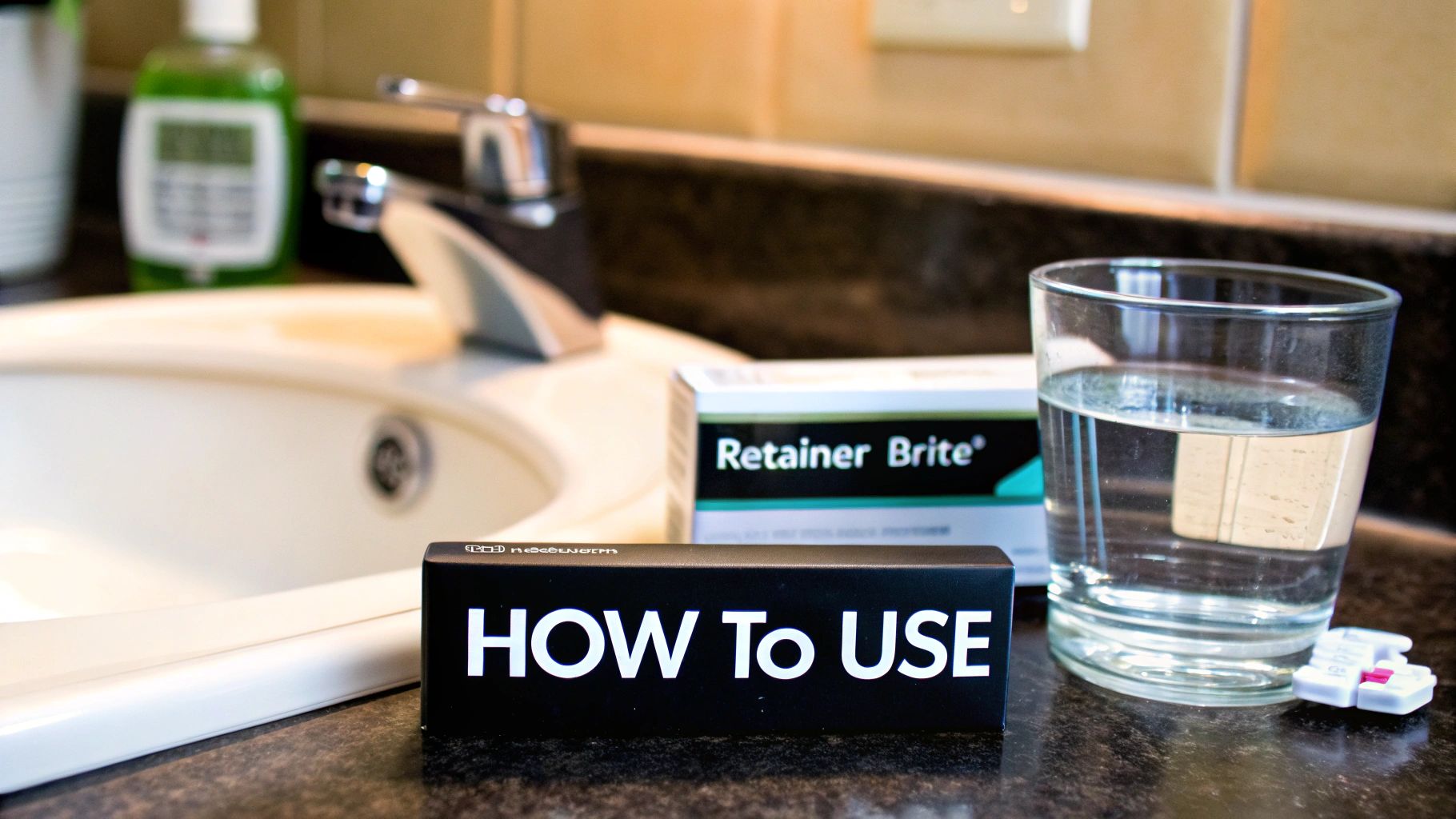
It all starts with the water temperature. You need to use warm water, but never, ever hot water. Boiling water can warp and permanently ruin the delicate plastic of your retainer or aligner, rendering it completely useless. Warm water is the sweet spot that helps activate the effervescent ingredients, starting the fizzing action that physically lifts away grime and debris.
The Optimal Soaking Process
First, drop one tablet into the warm water. Then, immediately submerge your appliance, making sure it's completely covered.
The ideal soaking time is just 15 minutes. This gives the active ingredients enough time to kill bacteria and dissolve plaque but is short enough to prevent any potential damage to the appliance itself.
Each tablet is formulated to dissolve perfectly in about 100 mL of warm water for that crucial 15-minute soak. In fact, studies have shown this method effectively cleans aligner surfaces without degrading the polymer by more than 2-3%, which confirms just how safe it is when used as directed.
After soaking, the single most important step is to rinse your appliance thoroughly under running water. This washes away any residual cleaning agents, making it completely safe to place back in your mouth.
Finally, don't forget about storing the tablets themselves. Keep them in a cool, dry place to maintain their chemical integrity and ensure they work perfectly every time.
Of course, using a great product is just one part of the equation. Understanding general retainer cleaning practices gives you a broader perspective on daily hygiene. For even more detailed tips, you might be interested in our guide on how to care for retainers.
Common Questions About Retainer Brite Ingredients
Even after breaking down the science behind the ingredients, you probably still have a few practical questions. Let's get into some of the most common things people ask about using Retainer Brite to make sure you get the best (and safest) results.
Is It Safe to Soak My Retainer Overnight?
It might seem like a longer soak would mean a deeper clean, but you should never soak your appliance overnight. The sweet spot for cleaning is just 15-20 minutes.
Why the time limit? For retainers with metal parts, leaving them in the solution for hours on end could eventually lead to corrosion of the solder joints. Sticking to the recommended time gives you all the cleaning power you need without putting your expensive orthodontic appliance at risk.
Can I Have an Allergic Reaction?
It's pretty rare, but a very small number of people might have a sensitivity to persulfates, which are one of the main cleaning agents in the formula. This could show up as a rash or some irritation.
The single most important thing you can do to avoid any reaction is to rinse your appliance thoroughly under running water after you're done soaking it. This washes away any leftover cleaning solution, making it totally safe to pop back in your mouth.
Does Retainer Brite Whiten My Appliance?
Retainer Brite is a powerhouse when it comes to removing stains, but it doesn't actually whiten the material of your appliance. Its job is to break down and lift off that cloudy or yellow film that plaque and tartar build up over time.
By getting rid of all that gunk, it restores your retainer or aligner back to its original crystal-clear state, which makes it look much whiter and brighter. It doesn’t contain any bleaching agents that would chemically change the color of the plastic. The best way to keep new stains from forming is to use it every day.
For a reliable, daily cleaning solution that keeps your appliance pristine, trust DentalHealth.com for all your oral care needs. Explore our selection of Retainer Brite and other professional-grade products today.