
Teeth Whitening Kit Online Buying Guide for 2026
Online sales of oral-care and whitening products totaled $42 million in 2025 across retailers tracked by Grips. That's a lot of products to compare on a screen, where a large peroxide percentage can look more persuasive than the instructions underneath it.
Buying a teeth whitening kit online gets easier when you compare the ingredient, wear time, tray fit, and local rules together. The strongest gel isn't automatically the best value. A useful kit is one you can use correctly, comfortably, and for the full labeled course.
Peroxide Strength Versus Wear Time
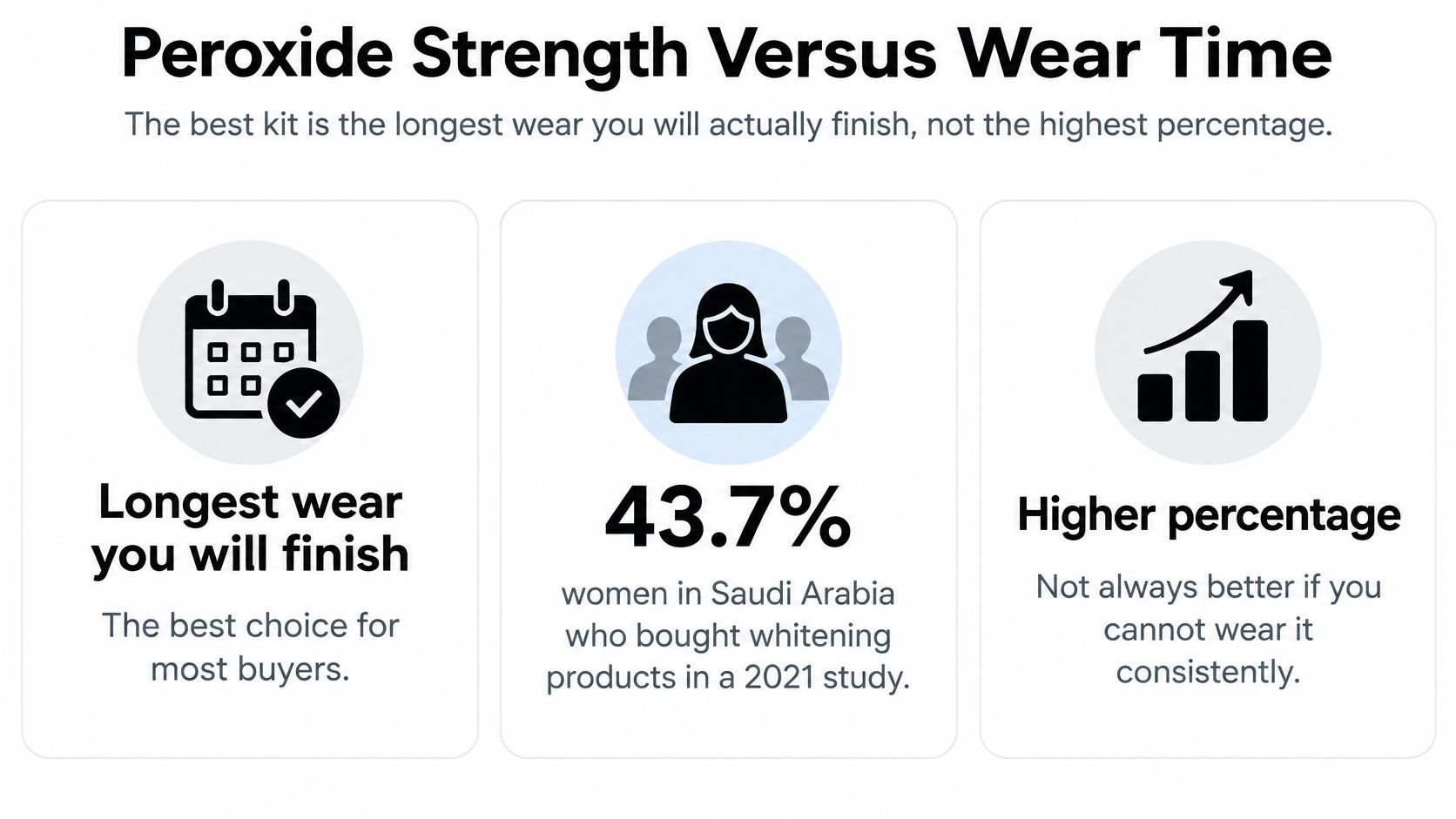
Choose a kit with a labeled wear schedule you can finish, not the highest percentage you can find. Longer wear isn't automatically better either. The right choice is the prescribed exposure that fits your routine without pushing your teeth or gums past their tolerance.
Whitening kit strength, wear time, and who it fits
Use this table to sort the product types, then check the actual package instructions. These bands aren't interchangeable prescriptions.
| Kit band | Active ingredient | Typical wear | Best for | Sensitivity note |
|---|---|---|---|---|
| Mild carbamide | Lower-strength carbamide peroxide | An extended session only when the label permits it | Buyers prioritizing comfort and a manageable routine | Lower strength doesn't guarantee no sensitivity |
| Standard carbamide | Mid-strength carbamide peroxide | The specific product's shorter or extended schedule | Buyers with healthy teeth seeking a defined treatment course | Don't borrow the schedule from a milder gel |
| Hydrogen peroxide day gel | Hydrogen peroxide | The product's stated daytime session | People who can't comfortably wear trays for hours | Keep overflow away from the gums |
| High carbamide burst | Higher-strength carbamide peroxide | Only the labeled short-session course | Dentist-cleared users with a specific treatment plan | Not a substitute for a lower-strength nightly routine |
| EU consumer product | Hydrogen peroxide within the local consumer category | The locally authorized cosmetic-use instructions | Buyers shopping without dental involvement | Check the destination country's restrictions before ordering |
The American Dental Association describes at-home systems commonly containing 10% to 38% carbamide peroxide, with schedules in a systematic review ranging from 2 to 10 hours daily for 6 to 28 days, in its whitening overview. Those are ranges across different systems, not permission to choose any combination of concentration and hours.
That distinction matters at checkout. A gel designed for extended wear doesn't make a stronger gel suitable for the same treatment time. Likewise, removing a slow-release product much earlier than directed may mean you haven't followed its intended course.
Read the ingredient before the percentage
Carbamide peroxide breaks down to release hydrogen peroxide, which lightens discoloring molecules within natural teeth. Hydrogen peroxide is also sold directly as the active whitening ingredient.
Because the ingredients differ, matching percentages don't mean matching formulations. Our guide to what carbamide peroxide is can help you recognize the ingredient name before comparing products.
Start with the mild-carbamide row if comfort is your main concern, but don't assume any tray can stay in overnight. Move to a standard formulation only when its directions and your dental condition make it appropriate. Day gels suit people who prefer a scheduled daytime session, while high-strength products call for particular care with the prescribed exposure.
The exposure rule: Consider strength multiplied by minutes on the teeth, but never use that shortcut to invent an equivalent dose. Ingredient release, formulation, tray fit, and treatment frequency also matter. Follow the specific product's directions.
For example, say you can reliably sit with a tray while reading, but you won't sleep comfortably with it. A product intended for daytime use makes more sense than an extended-wear product you'll repeatedly remove early. That's a schedule decision, not a reason to buy the strongest tube.
This visual summarizes the comparison, but the package directions remain the instructions for your session.
Buy for a course, not a permanent habit
In a 2021 study of women in Saudi Arabia, 43.7% had undergone tooth whitening, and 61% of those reporting whitening frequency had done it only once in their lifetime, according to the published cross-sectional study. That describes a particular population, not whitening habits worldwide.
For an individual buyer, the practical question is simpler: are you purchasing a defined treatment or stocking up without a stopping point? Choose a course you can complete, record its endpoint, and resist treating leftover gel as a reason to keep going.
How to Pick a Kit for Your Teeth
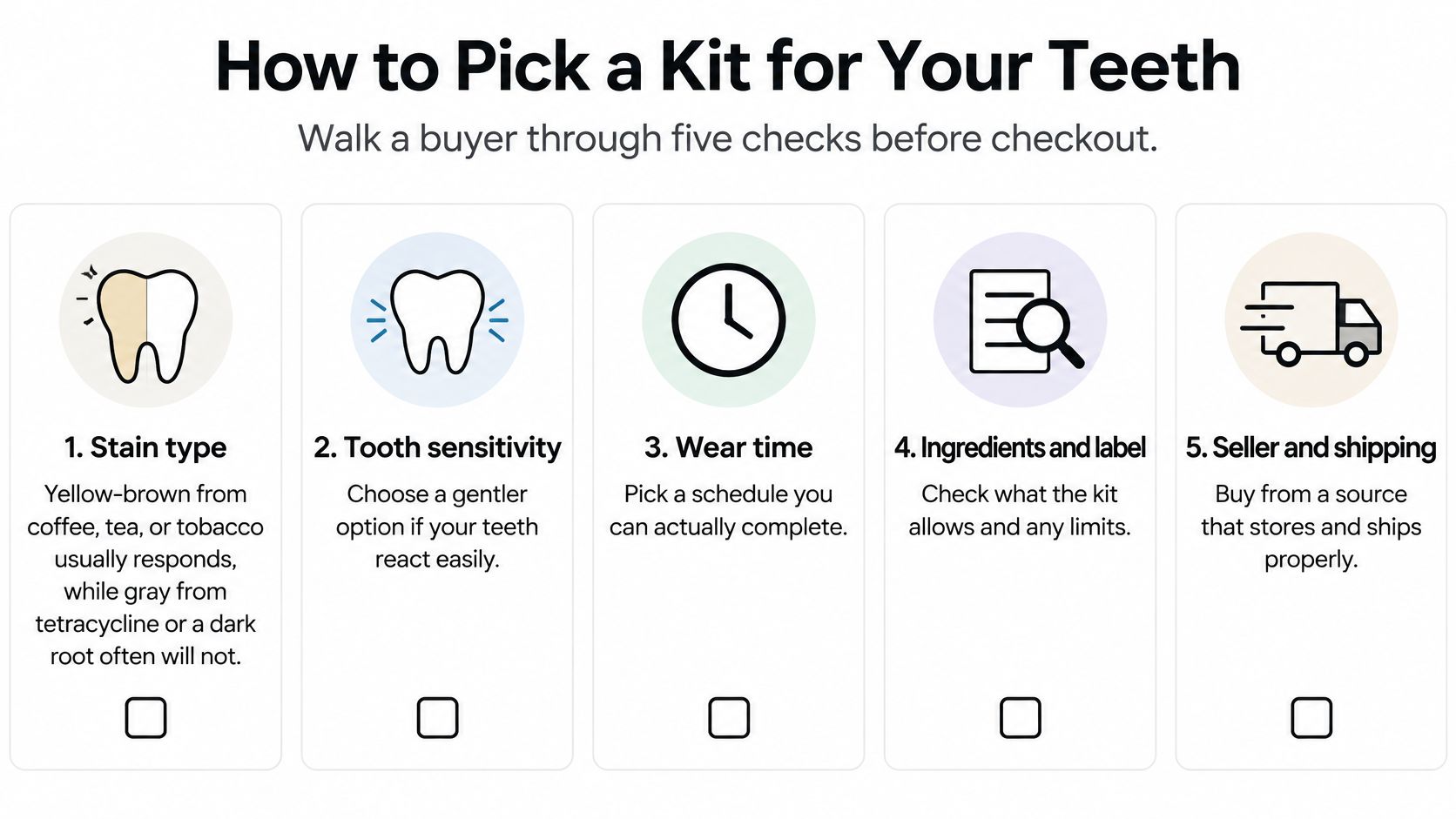
Before choosing a delivery format, work out what you're trying to change. A kit can be well made and still be the wrong purchase for your teeth.
Use these checks before comparing packaging or accessories.
Check the teeth before the kit
- Identify the discoloration. Even yellowing or dietary staining is a different starting point from a single dark tooth. Gray discoloration, a history of injury, or a tooth that changed after dental treatment deserves an examination rather than a stronger online order.
- Map visible restorations. Crowns, veneers, bonding, and tooth-colored fillings won't lighten like natural teeth. If they're visible when you smile, ask a dentist to plan the final shade before changing the neighboring teeth.
- Check dental health. Untreated decay, a loose filling, bleeding gums, or unexplained pain should move whitening off your immediate shopping list. If you're pregnant or have another reason to question whether elective whitening is appropriate, ask your dental clinician before starting.
- Choose a delivery method you can control. A fitted tray should hold gel against the intended tooth surfaces without rocking or cutting into the gumline. Paint-on products need careful coverage and aren't a workaround for a dark tooth whose cause you don't know.
- Account for existing sensitivity. If cold water already hurts, don't treat that as a minor inconvenience to overcome. Get the cause checked and discuss a gentler whitening plan and sensitivity toothpaste, including whether potassium nitrate is appropriate.
Compare realistic buyer situations
Say your teeth have a fairly even yellow tone, your gums are comfortable, and you have no visible restorations. A tray-based course may be worth considering after confirming your dental health. Choose by the labeled schedule and whether you can maintain even contact, not by the promise on the front of the box.
Now consider someone with a front crown and sharp reactions to cold drinks. The sensible purchase may be no kit yet. A dentist can assess the discomfort and explain whether whitening the natural teeth would create an obvious shade mismatch.
For a visual introduction to whitening, watch this before setting up your own product.
Before paying, find the peroxide type, percentage, wear instructions, syringe quantity, and tray contents on the product page. Also check whether you're buying a complete kit or a refill. A gel-only order won't solve the practical problem of having no suitable tray.
Shipping Rules and What the Label Allows
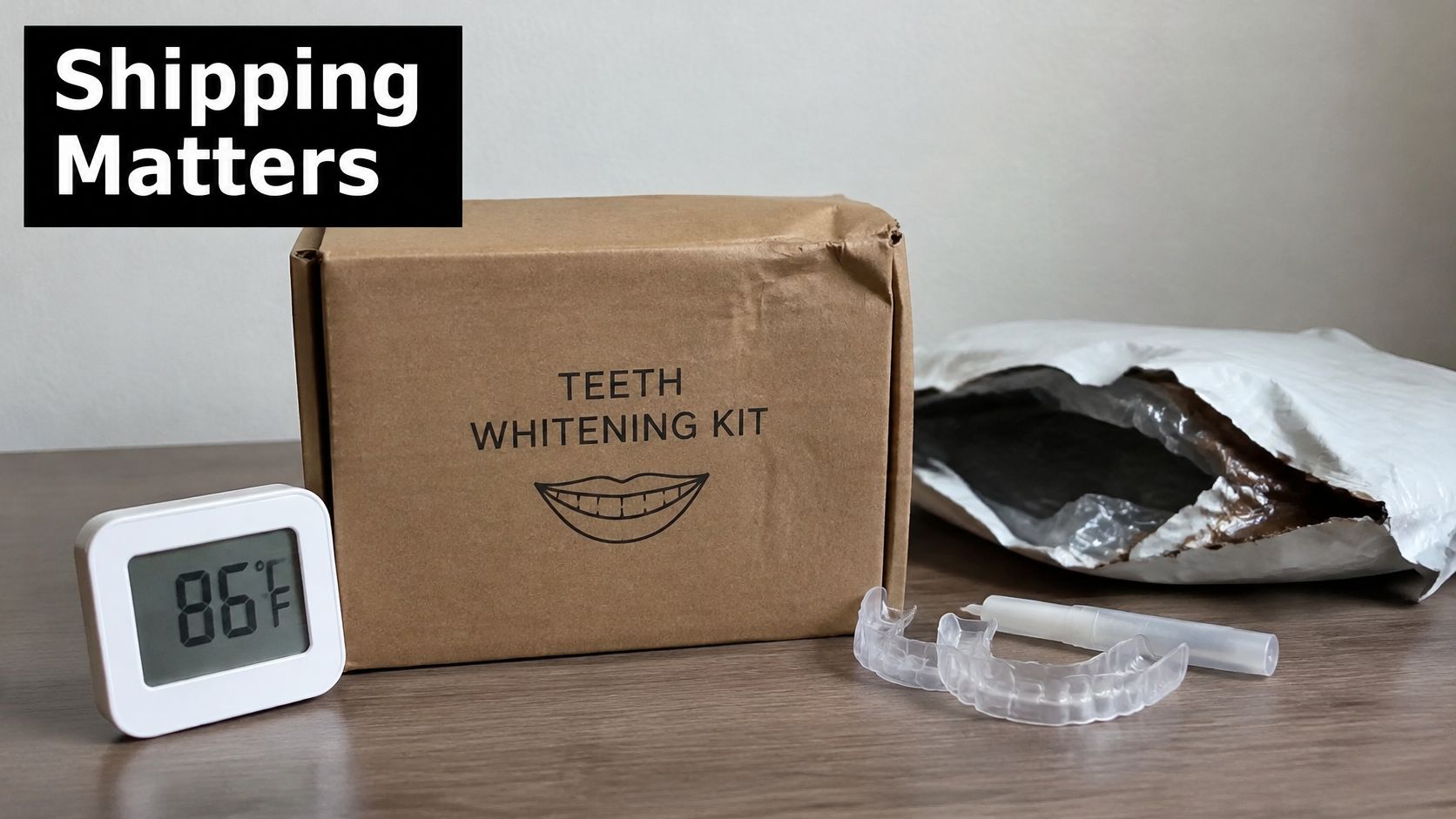
Treat storage and delivery as part of the purchase, not an afterthought. Read the product's temperature instructions before ordering, and don't assume an unopened carton makes poor storage irrelevant.
At DentalHealth.com, we store every item in a temperature-controlled environment. When your package arrives, check the seals, expiry information, and storage instructions before opening the gel.
The carton and syringe should tell the same story as the listing.
Online availability isn't local authorization
The European Commission's explanation of tooth-whitening products places up to 0.1% hydrogen peroxide in the general consumer category, describes dental involvement for products above 0.1% and up to 6%, and states that products above 6% aren't considered safe for consumer use under that framework.
Those categories aren't marketing labels. A product offered to U.S. buyers isn't automatically appropriate to import or use elsewhere, and a carbamide-peroxide percentage shouldn't be read as the same hydrogen-peroxide percentage.
Our guide to teeth whitening gel in the USA provides additional shopping context. For an international order, confirm the rules where you'll receive and use the product, rather than relying on the seller's country alone.
Inspect before opening
Look for a readable ingredient label, intact packaging, and consistent product identification. If the listing says only professional strength, without naming the active ingredient and its concentration, you don't have enough information to compare it.
Don't reroute a restricted shipment through a friend to bypass the seller's shipping area. You'd still need to comply with destination rules, and you could complicate any return or product query.
Before payment, confirm:
- A visible specification. The peroxide type and percentage are stated.
- A usable schedule. Wear instructions are available before the purchase.
- A practical return route. You understand what happens if the item arrives damaged or the tray isn't suitable, including any restrictions on opened products.
How to Whiten at Home Without Overdoing It
Set up the session before opening the syringe. Put the product instructions, a timer, a clean tray, tissues, and a cotton swab beside the sink so you won't be searching with gel already in your mouth.
These steps apply to a tray-based system. Prefilled trays, strips, and paint-on products have their own application instructions, so don't transfer a loading method from one format to another.
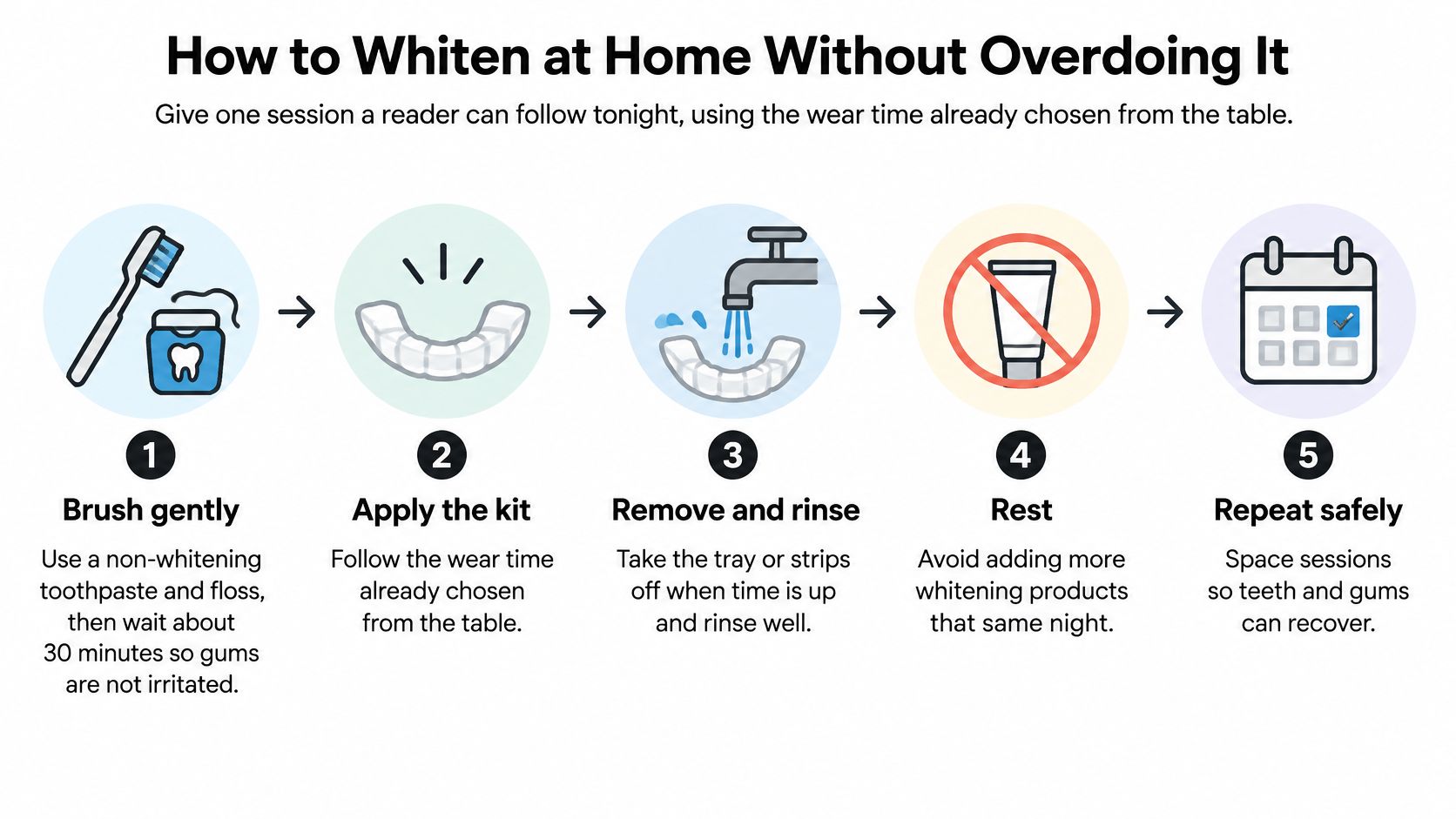
This visual provides a simple reminder of the sequence.
Prepare and apply carefully
- Start with gentle cleaning. Brush with a mild, non-whitening toothpaste and clean between your teeth without snapping floss into the gums. If cleaning leaves the tissue sore or bleeding, postpone whitening rather than placing peroxide against irritated areas.
- Inspect the empty tray. Seat it without gel and check for rocking, sharp edges, or pressure on the gums. A poor fit is easier to address before treatment, and adding more gel won't correct it.
- Load only the directed amount. Place gel in the tooth wells specified by the instructions, toward the surfaces you're treating. A small dab is a placement aid, not a universal dose: syringe design and product directions determine how much to use.
- Seat gently and remove excess. Press the tray into place without repeatedly squeezing or biting down. Wipe away gel that escapes toward the gumline with a clean finger or cotton swab, and remove the tray if gel continues to overflow.
Keep the syringe capped and stored as directed while you wear the tray. Don't leave it beside a hot tap or in reach of children or pets.
Time, remove, and reset
- Set the timer immediately. Use the wear time for the exact product in your tray. Don't extend the session because you became distracted, and don't assume a product is suitable for sleep because another gel was.
- Stop when the session ends. Remove the tray, spit out residual gel, and don't swallow it. Discomfort is also a reason to stop early, not a sign that you should wait for the timer.
- Clean your mouth and equipment. After treatment, rinse your mouth with tepid water, brush gently with a mild toothpaste, then rinse the trays and let them dry thoroughly before storing. Don't close a wet tray inside its case.
- Record the session before planning another. Note the product used, whether you completed the directed wear, and any tooth or gum discomfort. Follow the labeled interval rather than squeezing in an extra application because you missed a previous session.
Choose comfortable food and drink afterward rather than testing your teeth with something very hot or cold. Rinse away food residue and keep your regular oral hygiene gentle.
Don't add strips, another gel, or an aggressive whitening toothpaste to chase a faster result that evening. A session you tolerate is useful information; a stack of products makes it harder to identify what caused a problem.
When the course ends, stop and assess rather than automatically opening another pack. If you're dissatisfied, compare your starting and finishing appearance under similar lighting and seek dental advice before increasing exposure.
Sensitivity and Other Problems to Fix
Sharp, electric zingers during or after wear are a reason to pause. Don't assume pain means the gel is working especially well, and don't cover it up just to finish the session.
Whitening problems, likely causes, and what to do
| What you notice | Likely cause | What to do |
|---|---|---|
| Zingers or cold sensitivity | Exposure that exceeds your tolerance, or an existing dental problem | Pause treatment and discuss a shorter permitted schedule and sensitivity toothpaste with your dentist |
| White line or sore gum | Gel extending past the tray edge | Stop until the tissue recovers; correct overflow before restarting |
| No lighter shade after the full course | A restoration, internal discoloration, or inadequate contact | Ask a dentist to identify the cause instead of buying stronger gel |
| Patchy color | Uneven contact, inconsistent application, or another cause of discoloration | Check tray seating and have persistent patches assessed |
| Pain that lasts or a burned patch | Possible dental disease, a crack, or chemical injury | Stop whitening and arrange a dental examination |
The ADA News discussion of whitening safety describes sensitivity and oral irritation as usually mild and transient, but reports that 20–22% carbamide peroxide carried approximately twice the sensitivity risk of 10–11% carbamide peroxide in a cited network meta-analysis. The reported relative risk was 2.0, with a 95% credible interval of 1.07–4.31.
That comparison doesn't predict your personal response. It does undermine the idea that a stronger tube is a cost-free upgrade.
Change the cause, not just the product
Apply a specific correction to the problem you notice. For overflow, reduce the load to the prescribed amount and check the fit. For sensitivity, pause and discuss spacing treatments, a shorter permitted session, or desensitizing toothpaste under professional guidance.
For PolaNight 10 sensitivity, our guidance is to try a two-hour treatment first. If there are no adverse reactions, try the overnight treatment the next time you whiten. That's product-specific guidance, not an overnight-testing rule for every gel.
Our explanation of teeth whitening gel side effects can help you distinguish application problems from symptoms that warrant assessment. Keep gel away from inflamed or receding gums, and don't restart while the tissue remains sore.
Persistent pain, discomfort when biting, a damaged-looking gum patch, or discoloration confined to a single tooth needs professional evaluation. You can't diagnose those problems by comparing online before-and-after photos.
Repeated aggressive bleaching can contribute to enamel permeability, erosion, and a more translucent appearance. If your teeth look increasingly glassy rather than lighter, stop chasing a shade change and have them examined.
Order the Kit You Can Finish
Choose the gentlest appropriate formulation with a schedule you can complete. If dietary discoloration is the likely issue and your teeth and gums are healthy, compare suitable daytime or extended-wear options; if restorations or unexplained symptoms are the main concern, postpone the order.
Confirm the order before payment
- Match the ingredient. Check that the product page and selected variation name the same peroxide type and strength.
- Check the contents. Confirm the syringe quantity, whether trays are included, and whether existing trays are suitable for the product.
- Save the instructions. Have the wear schedule and storage guidance ready before delivery, rather than relying on a marketplace headline.
- Plan for comfort. Add a sensitivity product only when it fits your dental guidance. Don't use it as permission to increase whitening exposure.
- Resolve unclear details. Call our customer support at +1-888-508-3375 before checkout if you can't identify the strength or understand what's included.
We offer free shipping on all USA orders. Our 30-day return policy gives customers 30 days after receiving an item to request a return; review the applicable conditions before opening your purchase.
On arrival, inspect the package and expiry information, then read the enclosed directions before loading a tray. Your first session should follow that product's instructions, including any permitted shorter starting schedule, not a wear time remembered from a different kit.
We offer professional-grade at-home whitening gels and kits, sensitivity-care products, and phone support to help clarify your purchase. Visit DentalHealth.com to compare the ingredient, strength, contents, and wear instructions, then order the kit that fits your dental guidance and routine.