
The Complete Guide to Toothpaste for Sensitive Teeth
If you’ve ever winced from a sharp, sudden pain after a sip of a cold drink or a bite of something sweet, a specialized toothpaste for sensitive teeth should be your first line of defense. These formulas are designed to do one of two things: either calm the tooth's nerve down or block the microscopic pathways that lead directly to it. Finding the right one can bring significant, lasting relief and finally let you enjoy your favorite foods again.
Your Guide to Soothing Sensitive Teeth

That all-too-familiar jolt of pain has a clinical name: dentin hypersensitivity. It's more than just a momentary bother—it’s a clear signal from your teeth. It means the protective outer layers, like your enamel, have worn down, leaving the softer, more porous inner material called dentin exposed to the world.
Think of dentin as being full of thousands of tiny, fluid-filled tubes. These tubes are like microscopic straws that lead straight to the tooth's nerve center. When something like cold air or hot coffee hits these exposed tubes, the fluid inside them moves and pokes the nerve, triggering that sharp, temporary pain. This is exactly what toothpaste for sensitive teeth is engineered to stop.
How Sensitivity Toothpastes Provide Relief
These aren't just your average toothpastes; they're packed with active ingredients that tackle sensitivity in one of two ways:
- Nerve Desensitization: Some ingredients get to work calming the nerve itself, essentially making it less reactive to those triggers. You can think of it as turning down the volume on the pain signal.
- Tubule Occlusion: Other ingredients take a more direct approach by physically plugging up these microscopic tubes. They form a protective barrier over the exposed dentin, stopping triggers from ever reaching the nerve.
It's this dual approach that helps so many people find real relief. And it's a widespread issue—the global sensitive toothpaste market was valued at around $1.81 billion and is expected to grow substantially by 2032. You can learn more about the growing demand for these oral care essentials and why they've become a bathroom staple for millions.
Getting a handle on how these ingredients work is the key to picking the right product. To make it simple, the table below breaks down the most common active ingredients and what they do. This quick guide will set the stage as we dive deeper into finding the perfect formula for lasting comfort.
Quick Guide to Sensitivity Toothpaste Ingredients
| Active Ingredient | How It Works | Best For |
|---|---|---|
| Potassium Nitrate | Calms the tooth's nerve, preventing it from sending pain signals. | General, widespread sensitivity from various triggers. |
| Stannous Fluoride | Blocks the dentin tubules and strengthens enamel. | Sensitivity combined with a need for cavity and gingivitis protection. |
| Arginine | Works with calcium to plug and seal the exposed tubules. | Fast-acting relief, especially for sensitivity near the gumline. |
Understanding the Causes of Tooth Sensitivity
That sharp, sudden sting you feel when sipping a cold drink? That’s your teeth sending out an S.O.S. It’s a classic sign of dentin hypersensitivity, which is a fancy way of saying the protective outer layers of your teeth—the enamel and cementum—have worn thin.
When that happens, the softer, more porous layer underneath, called dentin, is exposed.
Think of dentin as being full of thousands of microscopic, fluid-filled channels, almost like tiny straws that lead straight to the tooth’s nerve center. When these "straws" are open to the world, things like cold air, hot coffee, or sugary foods cause the fluid inside to shift. That tiny movement is all it takes to trigger the nerve, and zing—you feel that all-too-familiar jolt of pain.
Common Triggers for Exposed Dentin
So, what causes this protective armor to wear down in the first place? Usually, it's a combination of everyday habits and conditions that slowly chip away at your teeth's natural defenses. Getting a handle on these culprits is the first step to finding relief.
Here are the most common offenders:
- Aggressive Brushing: Using a hard-bristled brush or just scrubbing way too hard can physically wear down your enamel. Over time, it can also cause your gums to recede.
- Enamel Erosion from Diet: A diet high in acidic foods and drinks—think citrus fruits, soda, sports drinks, and wine—can literally dissolve tooth enamel, leaving the sensitive dentin underneath exposed.
- Gum Recession: When gums pull back from the teeth, they uncover the root surfaces. Unlike the crown of your tooth, roots aren't covered by hard enamel, making them incredibly sensitive.
- Teeth Grinding (Bruxism): Many people clench or grind their teeth, especially at night, without even realizing it. This immense pressure can wear down enamel and expose the dentin layer.
Each of these issues leads to the same problem: an open pathway to your tooth's nerve. By figuring out which ones might be affecting you, you can make smarter choices for your daily routine. For a closer look, we have a whole guide on what causes tooth sensitivity to cold and how to manage it.
More Than Just Wear and Tear
While daily habits are often the main suspect, sensitivity can sometimes be a red flag for other dental problems. It’s important to know the difference between general, widespread sensitivity and a pain that’s pointing to something specific.
Sometimes, sensitivity isn't just a matter of exposed dentin from wear and tear. It can be an early warning sign of a cavity, a cracked tooth, or even a failing filling that needs professional attention.
For instance, if you feel a sharp pain in one specific spot rather than all over, that could signal a localized issue. Conditions like periodontal disease can also cause major gum recession, leading to persistent and widespread discomfort. This is why getting to the bottom of the pain is so important. Once you pinpoint the source, you can choose a toothpaste for sensitive teeth that truly addresses your needs and get back in control of your oral health for good.
How Sensitivity Toothpastes Actually Work
Ever wondered how a simple tube of toothpaste can silence that sharp, zinging pain from sensitive teeth? It’s not magic, but it is some pretty clever dental science. A toothpaste for sensitive teeth does more than just clean; it uses specific active ingredients that follow one of two main strategies to bring you relief.
This two-pronged attack is key because tooth sensitivity almost always boils down to a couple of core issues: gum recession and enamel erosion. When either of these happens, the sensitive inner part of your tooth gets exposed.
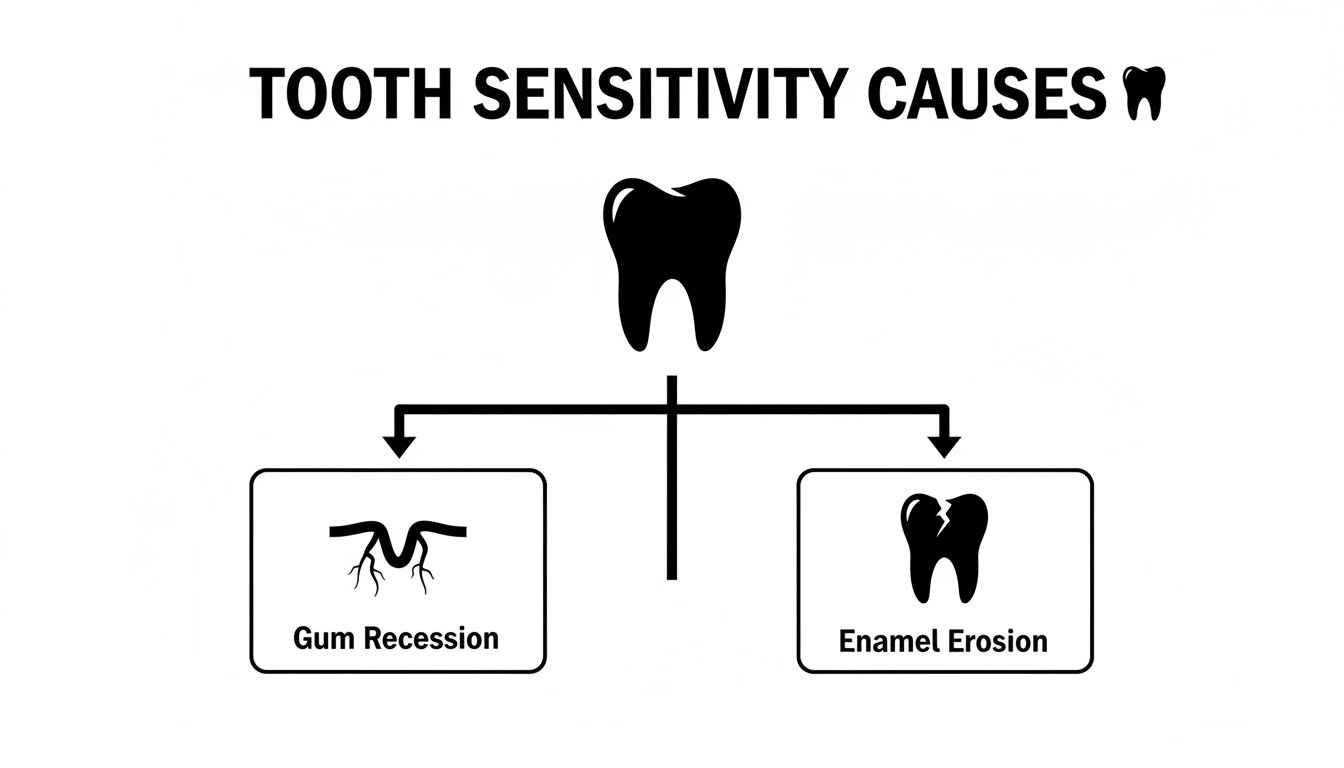
As you can see, whether your enamel wears thin or your gums pull back, the result is the same: exposed dentin. This is where the pain starts. Understanding this helps make sense of how different toothpastes work—one approach focuses on calming the nerve itself, while the other works to physically rebuild your tooth's defenses.
Strategy 1: Calming the Nerve
The first method is all about quieting down the nerve inside your tooth. Think of that nerve as a hyper-sensitive alarm system that goes off at the slightest trigger. Ingredients like Potassium Nitrate act like a dimmer switch for this system.
When you brush, potassium ions from the toothpaste travel down the microscopic tunnels (tubules) in your dentin. They gather around the nerve and essentially disrupt its ability to send pain signals to your brain. It doesn't fix the exposed dentin, but it makes the nerve much less likely to freak out when you drink something cold or hot.
This approach is fantastic for widespread, general sensitivity, but it requires a bit of patience. You’ll need to use it consistently, twice a day, to let those potassium ions build up. It usually takes about two weeks before you really feel the difference.
Strategy 2: Blocking the Tunnels
The second strategy is more of a direct, physical fix. Instead of just hushing the nerve, these ingredients act like tiny plumbers, sealing off the open ends of those dentin tubules. This creates a real barrier that stops painful triggers from ever reaching the nerve in the first place.
This process, known as occlusion, is the powerhouse behind several key ingredients:
- Stannous Fluoride: This is a true multi-tasker. It doesn't just block the tubules; it also helps strengthen your remaining enamel against acid attacks, giving you double the protection.
- Arginine and Calcium Carbonate: This dynamic duo works together to form a mineral-rich layer over the dentin, plugging the tubules. Formulations with this combo often provide relief much faster than nerve-calming ingredients.
By forming a protective seal over the exposed dentin, tubule-blocking agents effectively rebuild the tooth's natural shield against external triggers. This mechanism provides both immediate and long-term defense against sensitivity pain.
So, which one is right for you? It really comes down to your specific needs and how quickly you want relief. The best way to decide is to compare the active ingredients side-by-side.
Comparing Active Ingredients in Sensitivity Toothpaste
To make things easier, we've broken down the most common active ingredients found in sensitivity toothpastes. This table compares how they work, how quickly you can expect them to work, and any extra benefits they bring to the table.
| Ingredient | Mechanism of Action | Speed of Relief | Additional Benefits |
|---|---|---|---|
| Potassium Nitrate | Nerve Desensitizer: Interrupts pain signals sent from the nerve to the brain. | Slower onset, typically requires 2 weeks of consistent use for noticeable results. | Excellent for managing general, widespread sensitivity. |
| Stannous Fluoride | Tubule Blocker: Forms a protective barrier over exposed dentin tubules to block stimuli. | Can provide relief in a few days to two weeks, with benefits building over time. | Provides anti-cavity, anti-gingivitis, and anti-plaque benefits. |
| Arginine | Tubule Blocker: Works with calcium to physically plug and seal the dentin tubules. | Often provides faster relief, sometimes after just a few uses. | Mimics a natural biological process to seal sensitive pathways. |
Ultimately, whether you choose a nerve desensitizer or a tubule blocker, consistency is everything. Using your chosen toothpaste twice a day is the only way to build up and maintain that protective effect.
Choosing the Right Toothpaste for Your Needs
Walking down the dental care aisle can be overwhelming. You're faced with a wall of tubes, all promising relief from tooth sensitivity. But picking the right one doesn't have to be a guessing game. By zeroing in on a few key factors, you can confidently find the perfect toothpaste for sensitive teeth that lines up with your specific situation and what you want for your oral health.
The best place to start is matching the active ingredient to the kind of sensitivity you're dealing with. If it's a nagging, all-over sensitivity, a toothpaste with potassium nitrate is probably your best bet—it works by calming down the nerve itself. But if your sensitivity is clearly linked to things like enamel wear or receding gums, a tubule-blocking agent like stannous fluoride offers a more targeted, protective barrier.
Decoding Abrasivity and Special Needs
For anyone struggling with enamel erosion, how abrasive your toothpaste is becomes incredibly important. You need to look for the Relative Dentin Abrasivity (RDA) value, which you can usually find on the packaging or the product’s website. An RDA score under 70 is ideal; it means the formula is gentle enough that it won't scrape away more precious enamel while you brush.
Of course, sensitivity is often just one piece of the puzzle. Most of us have other things we're trying to manage with our oral care, but the good news is you don't have to choose between sensitivity relief and other benefits.
- Whitening Concerns: A lot of standard whitening toothpastes are way too harsh for sensitive teeth. You'll want to find formulas specifically made for "sensitive whitening." These use gentle polishing agents to lift stains without causing that familiar zing of pain.
- Orthodontic Care: If you have braces, you need a toothpaste that can clean effectively around all that hardware without being abrasive. A stannous fluoride toothpaste is often a great pick here, as it also helps combat gingivitis—a common headache for anyone with orthodontics.
- Remineralization Needs: For enamel that's feeling weak or thin, specialized pastes that contain ingredients like calcium phosphate can be a game-changer, actively helping to rebuild and strengthen the tooth surface. You can get a better sense of how these ingredients work in our guide to using MI Paste Plus, which offers a more advanced level of protection.
Look for the ADA Seal of Acceptance
When in doubt, let the American Dental Association (ADA) be your guide. Spotting the ADA Seal of Acceptance on a box is a simple shortcut to a quality product. This seal means the toothpaste has been independently tested and verified to be safe and to actually do what it claims to do. It cuts through the marketing noise.
The ADA Seal confirms that a toothpaste for sensitive teeth does what it promises. It’s a mark of trust, ensuring the active ingredients are present in therapeutic amounts and backed by scientific evidence.
This need for trusted, scientifically-backed products isn't just a local issue; it's a global one. The demand for effective sensitivity solutions is on the rise worldwide. In fact, the Asia-Pacific region has become the fastest-growing market for sensitive toothpaste, driven by a surge in health awareness and more frequent recommendations from dental professionals.
By lining up the right active ingredient with your type of sensitivity, keeping an eye on the RDA level, and looking for that ADA seal, you can walk out of the store with a toothpaste that will bring you real, lasting relief.
Getting the Best Results From Your Toothpaste
Choosing the right toothpaste for sensitive teeth is a huge step, but picking the product is only half the battle. To really get the relief you’re after, how you use it is just as important. A few small tweaks to your daily routine can make a world of difference in managing sensitivity for good.
It all boils down to your technique. You want to be thorough but gentle, giving those active ingredients a chance to work their magic without causing more irritation to your gums or wearing on your enamel.
Your Daily Brushing Blueprint
To get the most out of your sensitivity toothpaste, weaving a few simple habits into your routine is key. The single most important factor for getting—and keeping—that pain relief is consistency.
Make these steps part of every brushing session:
- Use a Soft-Bristled Brush: This is non-negotiable. A hard-bristled brush can actually wear down your enamel and encourage gum recession, which is exactly what you're trying to fight. Always go for a soft brush.
- Brush for a Full Two Minutes: It feels like a long time, but most people stop way too soon. Set a timer on your phone to make sure you’re giving the active ingredients enough contact time with your teeth.
- Brush Twice Daily: Brushing once in the morning and again right before bed creates a consistent shield of protection. This stops that zinging pain from creeping back in during the day or overnight.
After you're done brushing, there's one more little trick that a lot of people miss.
Spit, but don't rinse. After you finish, just spit out the extra foam and resist the urge to rinse your mouth with water. Leaving that thin film of toothpaste on your teeth gives the active ingredients—like potassium nitrate or stannous fluoride—a lot more time to work.
Setting Realistic Expectations
While some ingredients can offer pretty quick relief, building up a strong, lasting barrier against sensitivity takes time. You might notice a little improvement within a few days, but it usually takes two to four weeks of consistent, twice-daily use to feel the full effect. Think of it like building up a shield—every time you brush, you're adding another layer of protection.
If you’re using other products like whitening kits or prescription fluoride, a good sensitivity toothpaste becomes an essential partner. In fact, using a desensitizing toothpaste for a couple of weeks before you start whitening can make the whole process a lot more comfortable. For those using stronger treatments, your toothpaste helps maintain that comfort day-to-day. And if you're looking into more intensive options, our guide to using a teeth desensitizing gel can show you additional strategies for complete relief.
When to See a Dentist About Tooth Sensitivity
While grabbing a quality toothpaste for sensitive teeth is a fantastic first move, it isn't always the whole story. Think of sensitivity as your mouth's own alarm system—sometimes it's just a minor alert you can handle at home, but other times it's blaring a warning about a bigger problem that needs a professional.
Ignoring that alarm when the pain is persistent or sharp can let underlying issues get much worse. Knowing the difference between everyday sensitivity and a real red flag is crucial for your long-term dental health.
Signs That Require a Professional Opinion
If you're dealing with any of the following, it’s time to call your dentist. These symptoms are often clues that your sensitivity is just a side effect of something else going on—like a cavity, cracked tooth, or gum disease—that toothpaste alone simply can't fix.
Keep a close eye out for these specific warning signs:
- Severe and Lingering Pain: The discomfort hangs around long after you've finished your hot coffee or cold drink.
- Sensitivity in a Single Tooth: A sharp, zinging pain that's isolated to one specific tooth could point to a cavity or a fracture.
- Visible Tooth Damage: You've noticed a new chip, a crack, or even a dark spot that wasn't there before.
- Gum-Related Symptoms: Your gums are swollen, red, or bleeding in the same area you're feeling the sensitivity.
A dentist can run a full exam to get to the bottom of what’s really causing your pain. This makes sure you aren’t just temporarily soothing a problem that actually needs a filling or a crown to stop it from getting worse.
Got Questions? We've Got Answers
Even after breaking it all down, it’s natural to still have a few questions rolling around. We get it. Here are some straight-up answers to the most common things people ask about using a toothpaste for sensitive teeth. This should give you the confidence you need to get started.
How Long Until I Feel Relief?
This really comes down to the active ingredient doing the heavy lifting in your toothpaste. If your toothpaste uses a nerve-calming ingredient like potassium nitrate, you'll likely need about two weeks of consistent, twice-daily brushing for it to really build up and tell those nerves to quiet down.
Ingredients that block the tubules, like stannous fluoride, work on a similar timeline. They create a protective shield over the exposed dentin, but that barrier needs time to form properly. For best results with any sensitivity toothpaste, give it at least four weeks of dedicated use. If you're still not feeling any better by then, it's a good idea to check in with your dentist.
Can I Still Whiten My Teeth If They Are Sensitive?
Yes, you definitely can—you just have to be smart about it. A great trick is to start using a desensitizing toothpaste for two full weeks before you even begin a whitening treatment. Keep using it all the way through the whitening process, too.
This pre-treatment routine helps build up that protective barrier we talked about, which can make the whole whitening experience a lot more comfortable. It’s also wise to look for whitening kits specifically made for sensitive teeth; they usually have lower, gentler concentrations of peroxide.
When you're talking to a dentist about whitening and sensitivity, being clear about your experience is crucial. Digging into modern healthcare patient education resources can also arm you with better questions and a deeper understanding of your options.
Is Sensitivity Toothpaste Safe for Everyday Use?
Absolutely. In fact, it's designed for it. Toothpastes for sensitive teeth are formulated for long-term, daily brushing. They contain fluoride for essential cavity protection—just like any regular toothpaste—but with that crucial added benefit of sensitivity relief.
Think of it this way: consistent daily use is what maintains the protective effect. If you stop using it, that zinging pain will probably come right back as the nerve-calming effect wears off or the protective plugs wash away. To be sure you're getting a product that's both safe and effective, always look for the ADA Seal of Acceptance on the box.
At DentalHealth.com, we've hand-picked a collection of dentist-recommended toothpastes to help you tackle sensitivity and crush your oral health goals. Find the right formula for you and enjoy free USA shipping on every order.