
Zoom Whitening for Sensitive Teeth: A Calm Plan
You want a whiter smile, but you still remember the sharp jolt from a whitening strip when you drank something cold. Maybe you've never bleached your teeth, yet ice water already makes you pull the glass away. That hesitation is reasonable, but sensitive teeth don't automatically disqualify you from Zoom whitening.
The better approach is to stop treating whitening as an all-or-nothing decision. Peroxide strength, light intensity, and wear time are three separate variables, and each can be adjusted. Your goal isn't to tolerate as much discomfort as possible. It's to find the lowest effective dose that gives you a brighter smile without turning every cold drink into a warning shot.
What Sensitive Teeth Mean for Zoom Whitening
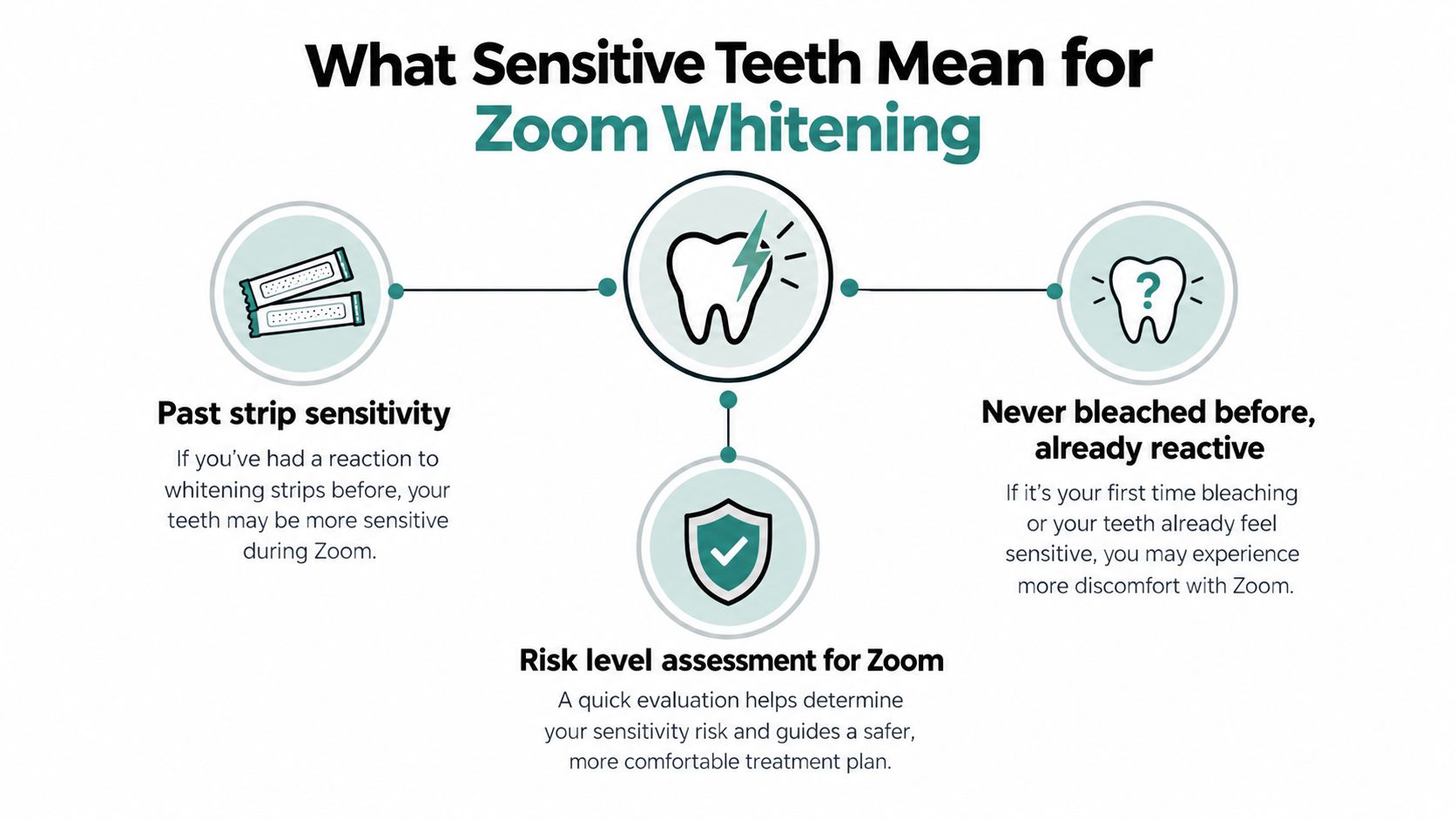
If cold water already causes a sharp jolt, a Zoom appointment deserves planning rather than guesswork. Sensitive teeth do not automatically rule out whitening, but they do change how you should set up the treatment.
Zoom is a professional whitening system available in dental offices and through take-home routines. Its peroxide gel passes through enamel to break apart stain molecules. That process can temporarily irritate the structures beneath enamel, which explains why whitening may produce brief sensitivity.
A previous reaction to whitening strips is a useful warning, not a prediction that every Zoom protocol will feel identical. Before whitening, have a dentist check for exposed roots, enamel wear, decay, a cracked tooth, or a worn filling. Treat the underlying problem first. Whitening over it is a poor plan.
The three dials you can adjust
Peroxide strength controls how aggressively the gel works. In-office Zoom generally uses a stronger peroxide system than a cautious take-home routine, creating a more intense exposure. If your teeth react easily, start with the lower-strength option your dentist considers appropriate.
Light intensity affects how quickly the gel reacts. Light activation is not automatically better for every patient. Research comparing Zoom techniques found that descending light intensity caused less sensitivity than high light intensity after the first and second days, while neither group reported tooth sensitivity at one week (the comparative clinical study).
Wear time controls how long your teeth contact the gel. With a take-home routine, shorten the initial interval and increase it gradually if your teeth remain comfortable.
Here is the practical rule: change one variable at a time. Lower peroxide strength first, shorten wear time next, or reduce light intensity, so you can identify which setting improves comfort.
Start with the gentlest sensible pathway. Increase only after the previous step feels calm. That approach lets you adjust Zoom whitening for sensitive teeth instead of abandoning treatment altogether.
Why Whitening Triggers Sensitivity in the First Place
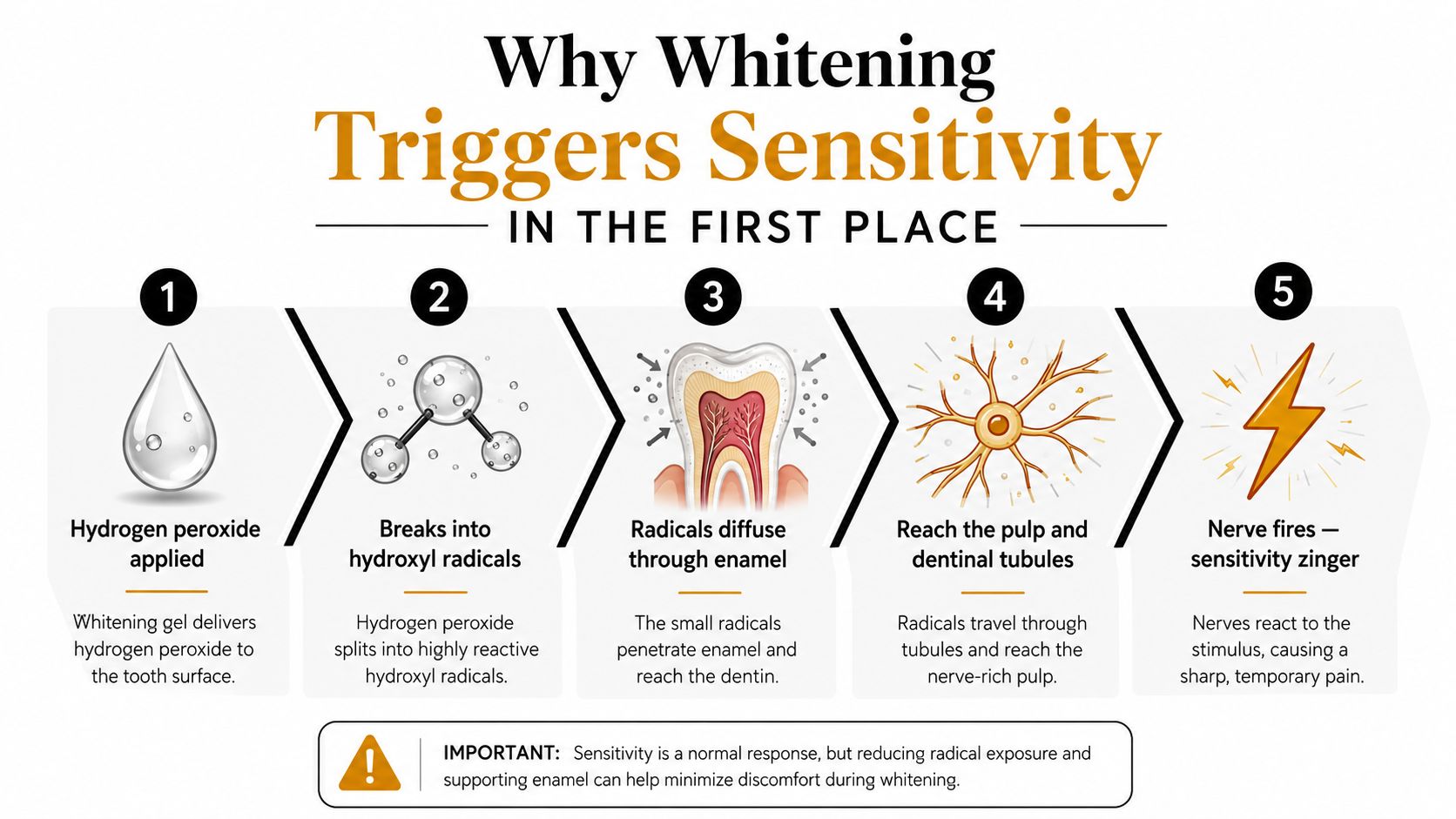
Bleaching-induced sensitivity is usually a dosing problem, not evidence that whitening has permanently damaged a healthy tooth. The peroxide has to move through enamel to reach and break apart discoloration. During that process, temporary fluid movement in microscopic dentinal channels can stimulate the nerve and create the familiar short, sharp “zing.”
The three inputs matter for different reasons.
- Peroxide concentration: A stronger gel moves stain-breaking chemistry through the tooth more rapidly. The randomized trial comparing Philips Zoom Chairside System with Opalescence Xtra Boost used 25% hydrogen peroxide and found no significant difference in induced sensitivity between the systems, showing that the comparator matters as much as the label on the treatment (the chairside whitening trial).
- Light intensity: Light can accelerate the reaction, but faster isn't always more comfortable. Higher-energy activation may make the appointment feel sharper for a patient whose teeth are already reactive.
- Wear time: Even a lower-strength gel can cause trouble if it stays in contact with the teeth longer than you can tolerate. Duration is the easiest lever to adjust in a take-home routine.
Why the light deserves scrutiny
The light is often marketed as the feature that makes Zoom distinctive, but it shouldn't be treated as mandatory for every sensitive patient. Evidence summarized in the clinical literature indicates that light activation doesn't consistently improve whitening and can increase sensitivity in some high-energy protocols. Photobiomodulation, by contrast, may reduce post-bleaching sensitivity without reducing whitening efficacy, although these interventions generally reduce intensity rather than eliminate symptoms (the recent review of sensitivity-management evidence).
That gives you a clear decision. If strong peroxide is necessary for your target shade, ask whether the light can be reduced or omitted. If light activation is part of the appointment, ask the clinician to control the intensity rather than assuming the highest setting is the best setting.
Matching the Right Zoom Option to Your Sensitivity Level
There are three practical routes, and your previous reaction should determine where you start. Do not choose the fastest option just because it promises the quickest visible change. Choose the strongest option your teeth can handle without forcing you to abandon the treatment.
| Option | Peroxide strength | Light used | Typical wear time | Sensitivity risk | Best for |
|---|---|---|---|---|---|
| In-office Zoom chairside whitening | Strong, including a clinically studied 25% hydrogen peroxide protocol | Clinician-controlled activation, depending on the protocol | Short, monitored treatment cycles | Highest intensity of the three routes | Patients who want rapid whitening and have no unresolved sensitivity concerns |
| Zoom take-home DayWhite or NiteWhite | Lower concentration than chairside treatment | No light required | Clinician-prescribed home wear interval | Moderate and adjustable | Patients who want control over strength and timing |
| Low-strength take-home gel | Lower peroxide exposure | No light | Short initial wear, increased only if comfortable | Lowest practical starting point | Patients with a history of strip sensitivity or cold-triggered zingers |
The Philips Zoom WhiteSpeed clinical data are reassuring, but they also show why “sensitivity-free” is too absolute a promise. 98.5% of subjects reported no sensitivity immediately after whitening, while 82.1% still reported no sensitivity by Day 7, and almost all reported symptoms were mild, with only one subject rating sensitivity as moderate (Philips' randomized clinical trial). The sensible takeaway is that most symptoms are manageable, but delayed sensitivity deserves attention during the first week.
My recommendation by starting point
If your teeth already react to cold, start with a take-home Zoom gel and no light. Use a conservative wear interval, then reassess before increasing exposure. If you finish a comfortable course and want more brightness, adjust one variable rather than jumping straight to an in-office session.
If you've tolerated whitening products before and need a fast result, discuss in-office Zoom with your dentist. Ask for a sensitivity plan before treatment begins, not after the first painful cycle. If you have spontaneous pain, pain when biting, visible cracks, gum recession, or a recent filling that feels wrong, postpone whitening until a dentist evaluates the cause.
Pre-Treatment Prep That Lowers Your Risk
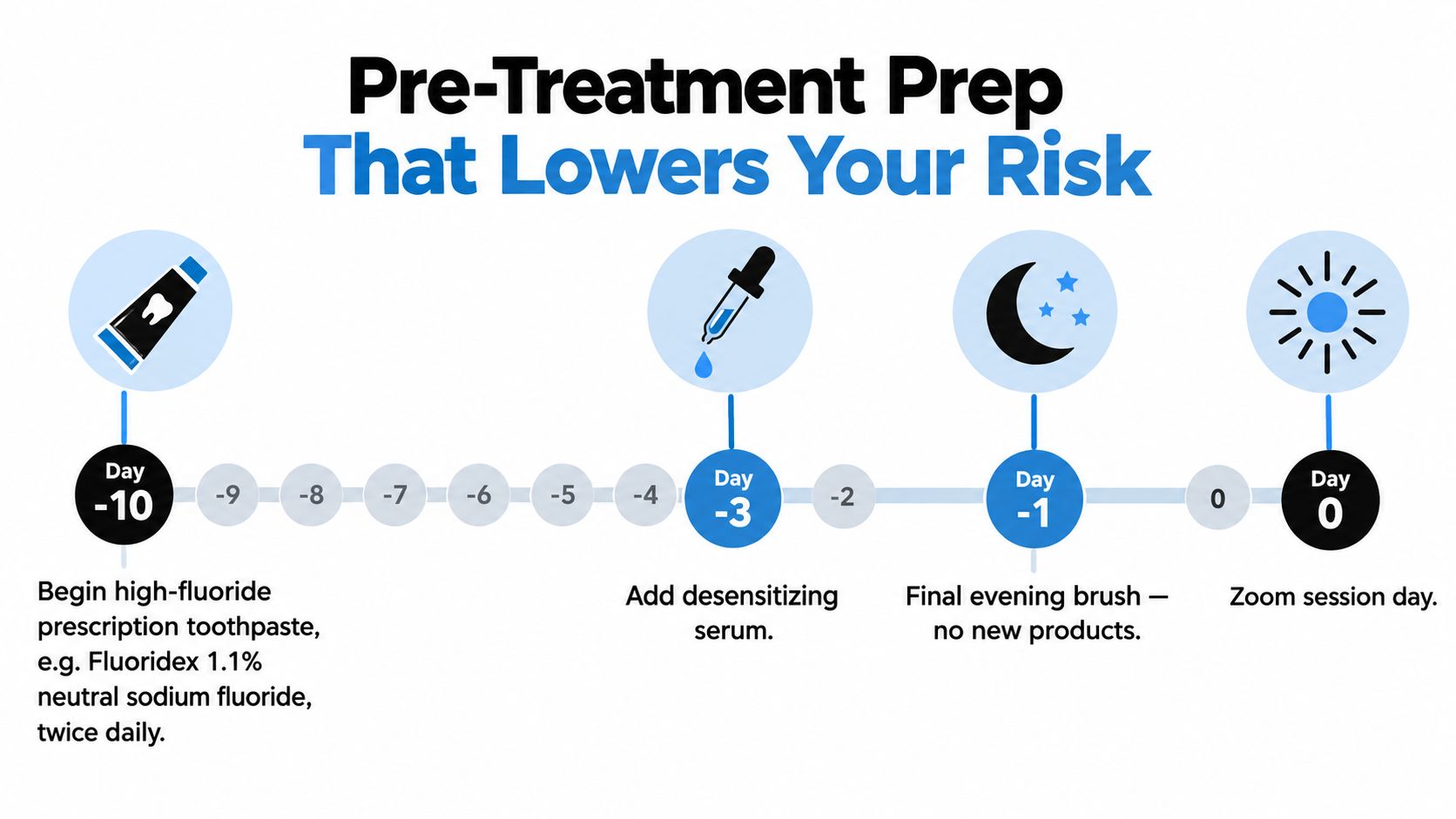
Preparation should begin well before the whitening appointment. The purpose isn't to guarantee zero sensitivity. It's to strengthen your daily routine, reduce avoidable irritation, and give the dentist a clearer baseline for deciding how aggressively to proceed.
Build a calmer surface
Use a high-fluoride prescription toothpaste such as Fluoridex if your dentist recommends it. Brush gently with a soft-bristled brush, because aggressive scrubbing can expose or irritate sensitive areas before peroxide touches them. Fluoride supports enamel resistance and is a more sensible foundation than trying to compensate for rough brushing after treatment.
MI Paste or MI Paste Plus can also fit into a preparation routine when it's appropriate for you. These products use calcium and phosphate ingredients associated with remineralization support. Apply the paste after brushing and follow the product directions rather than leaving a large amount on the teeth.
For a practical explanation of how MI Paste Plus fits into a sensitivity-focused routine, see this guide to MI Paste Plus.
Remove the obvious irritants
Pause acidic mouthwash and cut back on highly acidic foods and drinks before whitening. Acid can make an already reactive mouth feel less comfortable, especially when combined with peroxide. Don't introduce several new products on the night before treatment. Your dentist needs to know what your teeth normally tolerate.
Schedule whitening when you have recovery time afterward. A midweek appointment is more practical than booking it immediately before an important event, because brief sensitivity can appear after the session rather than during it. Philips' clinical summaries describe sensitivity as generally mild and transient, but they also document a drop in the proportion reporting no sensitivity by Day 7, so planning for the recovery window is sensible (Philips' published Zoom clinical summary).
Don't use preparation as permission to ignore warning signs. A tooth that hurts without a trigger needs diagnosis, not more fluoride and a stronger whitening gel.
During the Whitening Session Using Product to Your Advantage
Treat whitening as an active procedure. You're allowed to report discomfort, ask what can be changed, and stop if the sensation becomes sharp or persistent. A good protocol isn't defined by how much peroxide you endure. It's defined by whether the dentist can reach your shade goal while keeping the exposure controlled.
Before an in-office session, tell the clinician exactly what has triggered sensitivity in the past. Cold drinks, strips, brushing near the gumline, and a particular tooth each point to a different risk pattern. Ask whether the light intensity can be reduced, whether the treatment can use fewer activation rounds, and what desensitizing product will be applied between applications.
For at-home Zoom DayWhite or NiteWhite, make the first application a test of tolerance. Use less time than the maximum on the instructions only if your dentist approves that adjustment, and don't compensate by filling the tray with extra gel. Excess gel can spread onto the gums without whitening the teeth more effectively.
Use desensitizing products deliberately
A desensitizing gel containing potassium nitrate and fluoride can be useful between whitening applications when it's compatible with your treatment plan. Wipe away saliva, apply the product so it contacts the teeth, and follow its directions. The aim is contact with the tooth surface, not a thick layer that leaks into the soft tissues.
DentalHealth.com carries professional-grade products including Zoom whitening gels, Fluoridex, and sensitivity-care options for home routines. For a closer look at how a desensitizing gel can be used around whitening, read this guide to desensitizing gel for teeth.
If a sharp sensation starts, pause. Rinse with lukewarm water, let the tooth settle, and continue only if the feeling returns to baseline and your dentist has told you to do so. Don't clench on a tray, because pressure can push gel toward the gumline, where exposed or thin enamel often reacts first.
Aftercare Routine That Keeps Sensitivity Short-Lived
You finish a Zoom session, take a sip of cold water, and feel a sharp jolt. Treat that reaction as a signal to protect your teeth, not as a reason to test them again. The whitening product has done its job. Your aftercare should now remove avoidable triggers while you monitor whether the discomfort is settling.
Brush with a soft-bristled brush and light pressure. Use a high-fluoride toothpaste only if your dentist recommends it, and follow its rinsing instructions. Apply MI Paste as directed to reactive areas, particularly near the gumline.
Make the first recovery period boring
Choose room-temperature foods and drinks while your teeth feel sensitive. Skip citrus drinks, soda, wine, and other acidic items that leave your mouth feeling sharp or dry. Avoid very hot or cold foods, and do not test your teeth with ice water to check whether sensitivity has disappeared.
For a step-by-step recovery checklist, follow this guide to Zoom whitening aftercare.
A cotton roll or a small amount of dentist-recommended desensitizing gel can target one troublesome area. Potassium nitrate and fluoride are common ingredients in sensitivity products, but your dental history determines which product and application method are appropriate. If one tooth reacts differently from the others, stop repeatedly applying gel and have that tooth examined.
Recovery rule: Judge progress by the overall trend, not by one comfortable hour. Sensitivity that gradually settles is different from pain that stays constant, spreads, or begins without an obvious trigger.
The ADA identifies temporary tooth sensitivity as one of the most common adverse effects of bleaching and reports that it can occur in up to two-thirds of users during early bleaching stages (the ADA's whitening guidance). Aftercare therefore belongs in the treatment plan, not as an optional final step.
Contact your dentist if symptoms remain troublesome. Do so before repeating treatment or increasing gel strength. Persistent pain may indicate an exposed root, decay, a crack, or a problem with a restoration rather than routine whitening sensitivity.
Which Part of Zoom Actually Causes Sensitivity
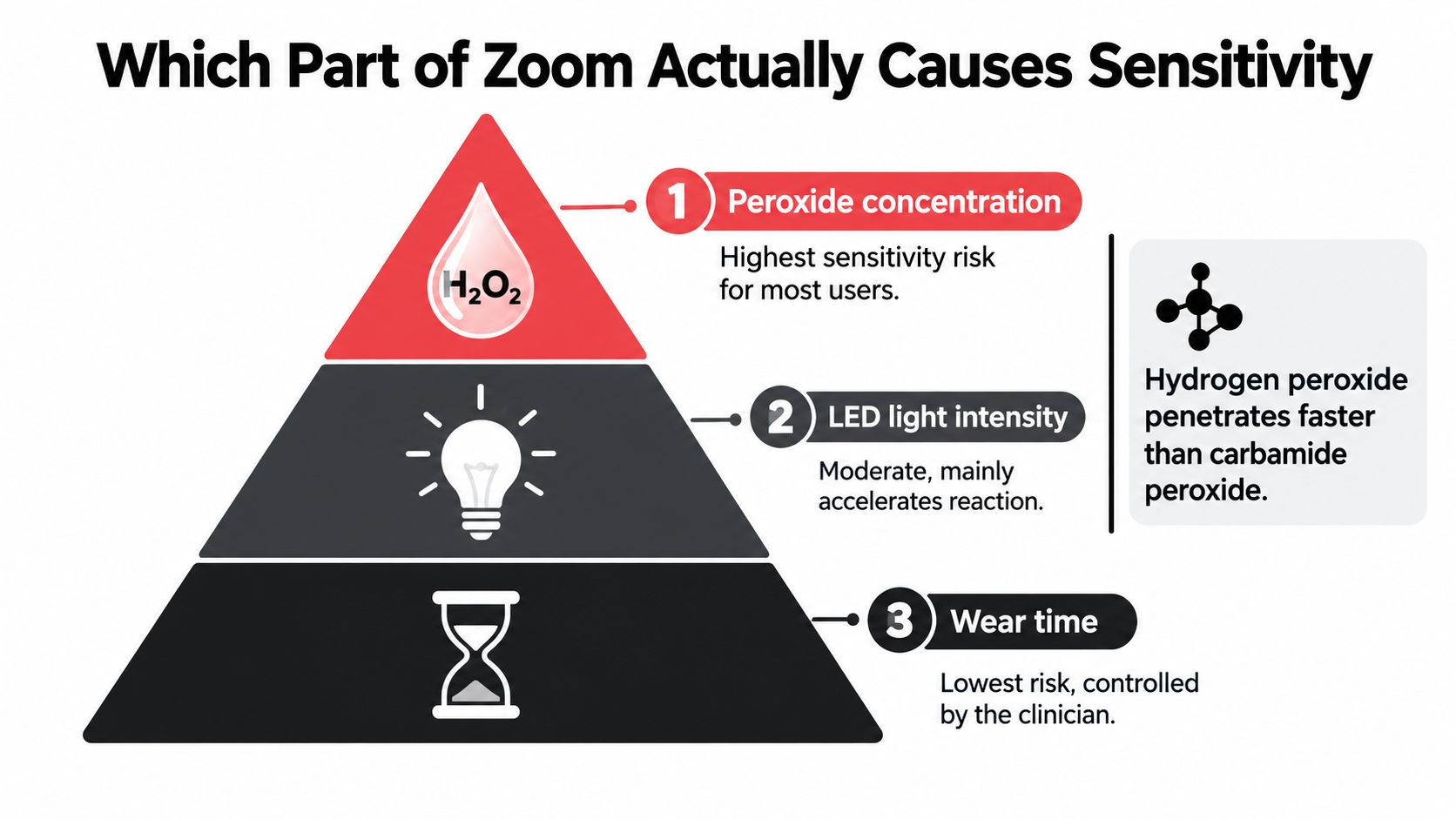
You finish a Zoom session with sharp “zingers” and assume the lamp caused them. In practice, sensitivity usually comes from three separate variables: peroxide strength, wear time, and light intensity. You can adjust one without abandoning whitening altogether.
Here is how I rank them:
- Peroxide concentration is usually the largest driver. Stronger peroxide creates a more intense chemical exposure, particularly during chairside treatment.
- Light intensity can accelerate the reaction. It may make treatment feel hotter and faster, but lowering the light does not remove peroxide's effect.
- Wear time is the easiest home adjustment. A shorter, controlled application gives sensitive teeth less exposure than a full-length session.
Do not blame the lamp alone. Comparative research found a mean shade change of -7.8 by Day 7 with Zoom, while induced sensitivity showed no statistical difference from Opalescence Xtra Boost (the comparative whitening research). Effective whitening and sensitivity control can coexist when the protocol matches your teeth.
Use a simple decision tree
If sensitivity occurs only during treatment and settles afterward, keep the product but ask your dentist about shorter exposure or lower light intensity next time. If sharp sensations continue beyond the normal recovery period, reduce peroxide strength before adding more desensitizing products. A lower-strength carbamide peroxide routine without light may suit you better than another strong chairside session.
Stop whitening and arrange an examination if pain throbs, starts spontaneously, focuses on one tooth, appears when biting, or accompanies a crack or loose filling. Whitening cannot correct a structural problem.
DentalHealth.com carries Zoom whitening gels, Fluoridex sensitivity toothpaste, MI Paste Plus, and other professional-grade at-home dental care products. Visit DentalHealth.com to choose a lower-intensity starting point and aftercare products suited to your sensitivity plan.