
Zoom Whitening Aftercare: Your Step-by-Step Guide
You've just left the operatory with a brighter smile, slightly tender gums, and a handout you may not read until something zings. The next few days matter more than the rest of the month. Good Zoom whitening aftercare is not about following a punishing list of food rules. It's about protecting sensitivity, limiting strong pigments while your teeth settle, and avoiding habits that can undo the result quickly.
The priority is simple: follow a careful first-day routine, stay deliberate through the first three days, and treat the traditional white diet as a useful shortcut rather than an absolute law. The clinical evidence supports a short, focused recovery period, not weeks of anxiety around every colored food.
What the First 72 Hours After Zoom Whitening Really Look Like
The first 24 to 72 hours are the practical aftercare window. A major clinical review found that sensitivity increased significantly one day after all three whitening treatments studied, while whitening-related sensitivity was generally temporary rather than permanent. That's why the early routine deserves your attention, especially if cold water or a warm meal suddenly feels sharp. The clinical review in PMC supports focusing aftercare early instead of treating discomfort as a permanent consequence.
Think of the period in three phases:
- The first day: Control temperature triggers, use gentle oral care, and avoid obvious staining agents.
- The second day: Keep avoiding dark and acidic exposures, but start judging your own comfort rather than following an endless list of prohibitions.
- The third day: Gradually return to normal if sensitivity has settled, while continuing sensible stain control.
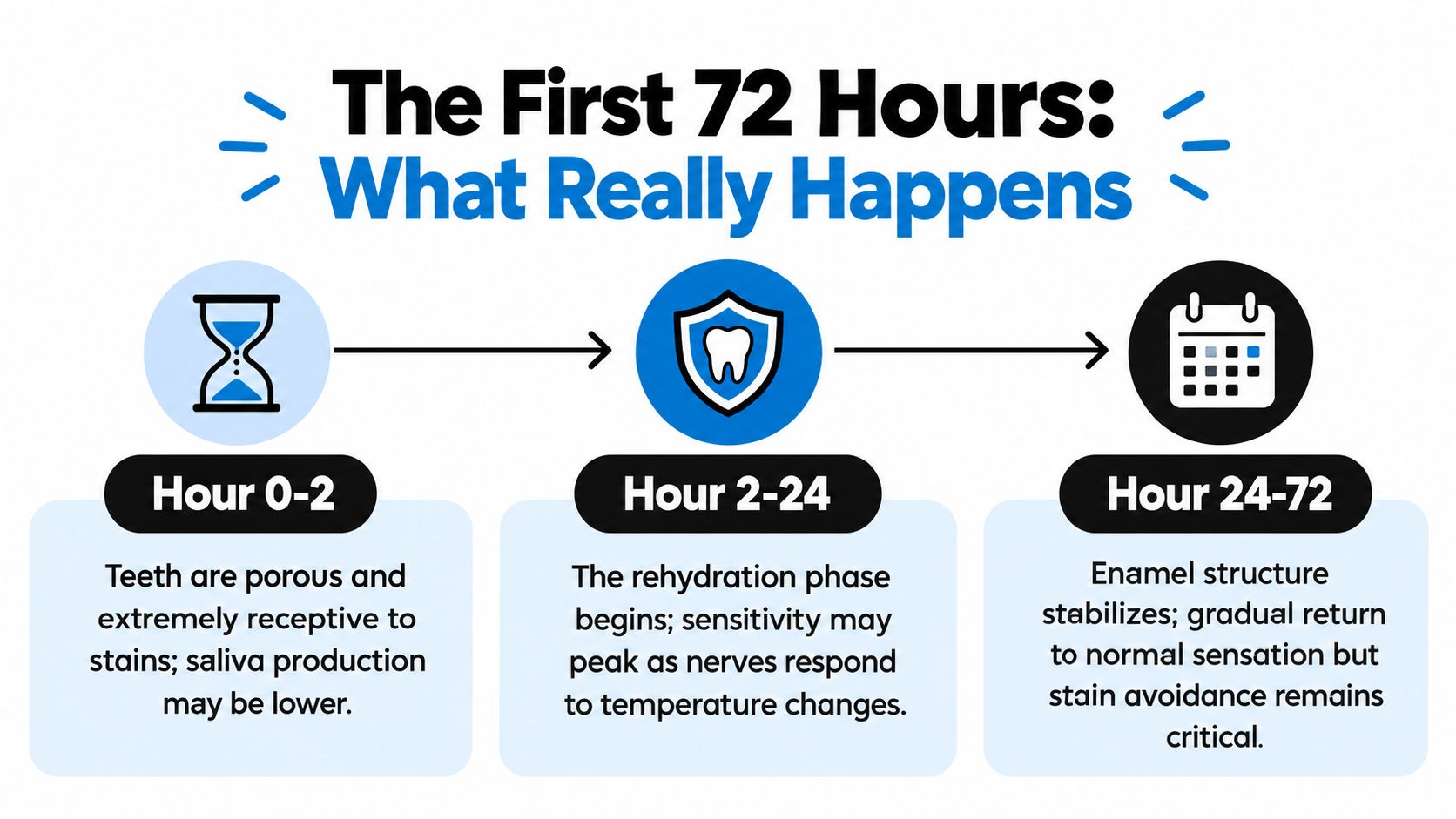
Practical rule: Protect comfort first, then protect color. Painful teeth make people brush poorly, skip hygiene, or abandon aftercare altogether.
Sensitivity commonly begins within the first few days and often resolves after several days. The American Dental Association's whitening guidance supports a conservative first 24 to 72 hours with gentle brushing, moderate temperatures, and desensitizing products when needed.
The rules below are ranked by usefulness. Avoiding coffee and red wine early is sensible. Panicking over a pale yellow food is not. A soft brush and sensitivity toothpaste matter more than memorizing an oversized “safe foods” chart.
Immediate Aftercare in the First 24 Hours
Start with the simplest instruction: don't put a challenging meal straight onto freshly treated teeth. Your dental team may give you specific timing instructions, so follow those first. If you weren't given a different protocol, begin with room-temperature water and choose gentle, low-color foods once you're cleared to eat.
The first few hours
Use room-temperature water rather than ice-cold or very hot drinks. Temperature swings are a common trigger after whitening, and there's no advantage to testing your teeth immediately with a frozen drink or boiling coffee.
Your gums may look temporarily pale where the whitening material touched them, or they may feel tender and tingly. Mild irritation can settle as the tissue recovers. Don't scrub the gumline to “fix” it, and don't apply household products to the area.
Brushing without making things worse
Brush with a soft-bristled brush and light pressure. You're cleaning, not polishing furniture. Use a fluoride or sensitivity-focused toothpaste, and avoid aggressive whitening pastes while your teeth and gums feel reactive.
A gentle bedtime routine is enough:
- Brush carefully with a soft brush.
- Floss only as comfortably as your gums allow.
- Rinse with a fluoride product if your dentist recommends one.
- Leave the teeth alone afterward instead of repeatedly checking the shade.
If discomfort becomes distracting, an over-the-counter pain reliever may be appropriate for you, provided you can safely take it and your dentist or physician hasn't advised against it. Don't use medication to push through severe pain. Sharp, escalating, or unusual symptoms deserve a call to the dental office.
The first day is also the wrong time for smoking, vaping, dark drinks, and acidic beverages. You're trying to reduce both irritation and the chance that strong pigments contact the teeth while they're settling. Water is boring, but it's the right choice immediately after treatment.
The White Diet Rule and What Is Actually Worth Avoiding
The 48-hour white diet exists for a reason, but it's often expanded into an unnecessarily strict food-policing exercise. Dark pigments, acidic ingredients, and tobacco are the meaningful concerns. You don't need to treat every yellow, beige, or mildly colored food as a threat.
The evidence for rigid post-treatment dietary rules is limited. A review discussing tooth whitening and color changes notes that recommendations to avoid dark, acidic, and strongly pigmented foods are still common, but much of the reasoning is extrapolated from enamel porosity and sensitivity rather than direct trials of every post-Zoom food rule. The review on whitening and dietary advice is a useful reason to be selective rather than superstitious.
Keep the short list short
| Actually Avoid (First 48 Hours) | Skip the Guilt |
|---|---|
| Coffee and black tea | Mildly colored grains |
| Red wine and cola | Pale spices used in normal amounts |
| Dark sauces such as soy-based sauces | Light-colored vegetables |
| Deeply pigmented berries and similar foods | Foods that aren't strongly acidic or dark |
| Smoking and vaping | A single pale-colored meal outside a rigid “white” menu |
Coffee, tea, red wine, cola, dark sauces, and tobacco are worth avoiding during the early stain-prone period. If you accidentally have one, rinse with water. Don't panic, and don't attack your teeth with an abrasive paste.
For habitual coffee or wine drinkers, use a practical return strategy. Wait until the early window has passed, use a straw when appropriate, keep the drink from lingering, and rinse with water afterward. If sensitivity allows, many patients can resume favorite drinks on the third day without turning aftercare into a week-long punishment. For more general stain-control ideas, this guide to preventing teeth staining offers useful everyday context.
The white diet is a sensible default, not a moral test. Protect the obvious risks, keep meals comfortable, and stop treating minor color differences as equally dangerous.
Managing Tooth Sensitivity Without Losing Progress
Sensitivity is manageable, but ignoring it is a poor strategy. The Philips Zoom science document reported that 98.5% of subjects had no sensitivity immediately after whitening, compared with 82.1% by Day 7, showing that some people experience delayed or lingering symptoms. Among participants who did report sensitivity, nearly all cases were mild, with one participant rating it as moderate. The Philips Zoom science document supports treating sensitivity proactively rather than waiting for it to become disruptive.
Use a calm, repeatable routine
Choose a desensitizing toothpaste containing potassium nitrate or stannous fluoride. Brush gently twice daily, and if your dental professional approves, place a small amount directly over sensitive areas before brushing and leave it in place briefly. Follow the product label and your dentist's instructions rather than assuming more product works faster.
Use lukewarm water and a soft or ultra-soft brush. Avoid soda, citrus drinks, kombucha, and other acidic exposures while the teeth are reactive. Acidic drinks can keep sensitivity triggers active, especially when you sip them slowly over a long period.
At night, an alcohol-free fluoride rinse can support the routine without adding the drying sensation some alcohol-containing rinses cause. If your dentist prescribed a desensitizing gel, use it exactly as directed.
For a broader explanation of triggers and practical relief options, how to manage tooth sensitivity is a useful patient resource. You can also review this focused guide on how to reduce teeth sensitivity after whitening.
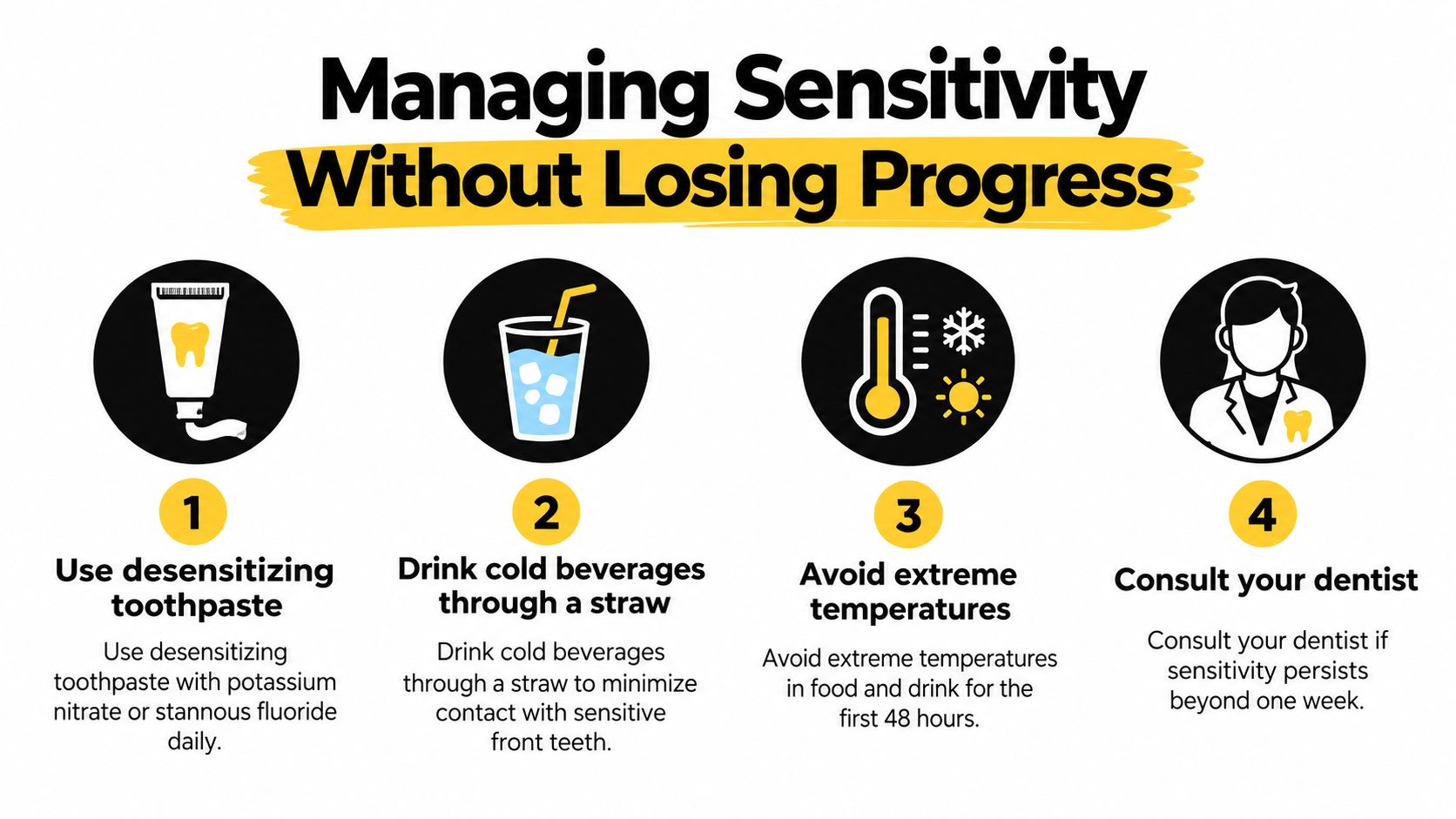
If a pain reliever is safe for you, a targeted over-the-counter option can help when sensitivity interferes with normal activities. Don't use medication to mask severe or worsening pain. Contact your dentist if symptoms remain troublesome beyond the expected recovery period, become intense, or affect one specific tooth.
Here's a short demonstration of the kind of gentle care that protects comfort without abandoning hygiene:
Best Products to Pair With Your Aftercare Routine
Buy products by function, not by the brightest packaging. After Zoom whitening, the useful categories are nerve-calming toothpaste, remineralizing support, fluoride protection, and a very soft brush.
| Product Category | Primary Role | When to Use |
|---|---|---|
| Desensitizing toothpaste | Reduces the discomfort associated with exposed sensitivity pathways | Start immediately and use during the recovery period |
| Fluoride toothpaste or remineralizing paste | Supports the tooth surface and helps maintain a protective routine | Use as directed, often during brushing or at night |
| Alcohol-free fluoride rinse | Adds fluoride exposure without aggressive rinsing or strong alcohol | Commonly used at bedtime if recommended |
| Soft or ultra-soft manual brush | Cleans without excessive pressure on sensitive teeth and gums | Use throughout the early recovery period |
A desensitizing formula is the first purchase if cold air or water causes brief shocks. Potassium nitrate formulas are designed to calm nerve response, while stannous fluoride formulas combine sensitivity support with fluoride protection. Don't switch between several strong products at once. Pick one routine and give it time to work.
A remineralizing paste can complement, but not automatically replace, your regular fluoride routine. Products based on fluoride or nano-hydroxyapatite serve a different purpose from a toothpaste focused primarily on nerve sensitivity. If you're comparing casein-based products, this explanation of what MI Paste is used for can help clarify where that category fits.
Skip charcoal powders, harsh abrasive pastes, whitening strips, and extra whitening sessions while your teeth feel sensitive. Scrubbing harder doesn't preserve brightness. It can make the gumline irritated and leave you more aware of every temperature change.
DentalHealth.com is one place patients can compare professional-grade whitening, sensitivity, fluoride, and remineralizing products from brands such as Philips Zoom, Fluoridex, and MI Paste. Choose based on the ingredient and instructions that match your dental professional's advice, not on a claim that promises instant perfection.
Long-Term Habits That Keep Your Zoom Results Looking Fresh
Long-term brightness depends more on repeated habits than on a rigid diet. Coffee, tea, wine, tobacco, plaque, and inconsistent brushing all matter because they repeatedly expose the teeth to pigments or leave buildup near the gumline.
Use the touch-up gel or trays your dentist provides according to their instructions. Don't improvise with stronger gel, longer wear times, or extra applications because the shade looks slightly less bright on one morning. A professional can tell you whether the issue is surface staining, natural shade variation, a restoration, or a problem that whitening won't correct.
Make contact time work in your favor
For coffee, tea, or wine, reduce how long the liquid sits around the front teeth. A straw can help with suitable drinks, and rinsing with water afterward removes residue without aggressive brushing. Don't brush immediately after acidic drinks, since your dentist may recommend waiting before brushing to avoid irritating the softened surface.
Nicotine deserves a direct answer. Smoking and vaping undermine a bright smile because they repeatedly expose teeth and gum margins to staining compounds. If you use nicotine, discuss a realistic cessation plan with your healthcare professional. At minimum, avoid nicotine during the early recovery period and don't pretend timing makes it harmless.
Keep the basics consistent:
- Brush twice daily: Use a whitening-safe, non-abrasive formula once your sensitivity has settled.
- Floss gently: Plaque around the gumline can make teeth look darker and uneven.
- Rinse with water: Do it after staining or acidic drinks.
- Monitor the shade: Uneven or unexpectedly rapid change deserves professional assessment.
Call your dentist if one tooth changes differently from the others, if whitening exposes a restoration mismatch, or if the color drops unusually fast despite steady care. Whitening doesn't repair enamel wear, decay, old fillings, crowns, veneers, or bonding. A brighter smile is maintained by a small routine, not by repeatedly bleaching every time you notice a change.
Your Prioritized Zoom Whitening Aftercare Checklist
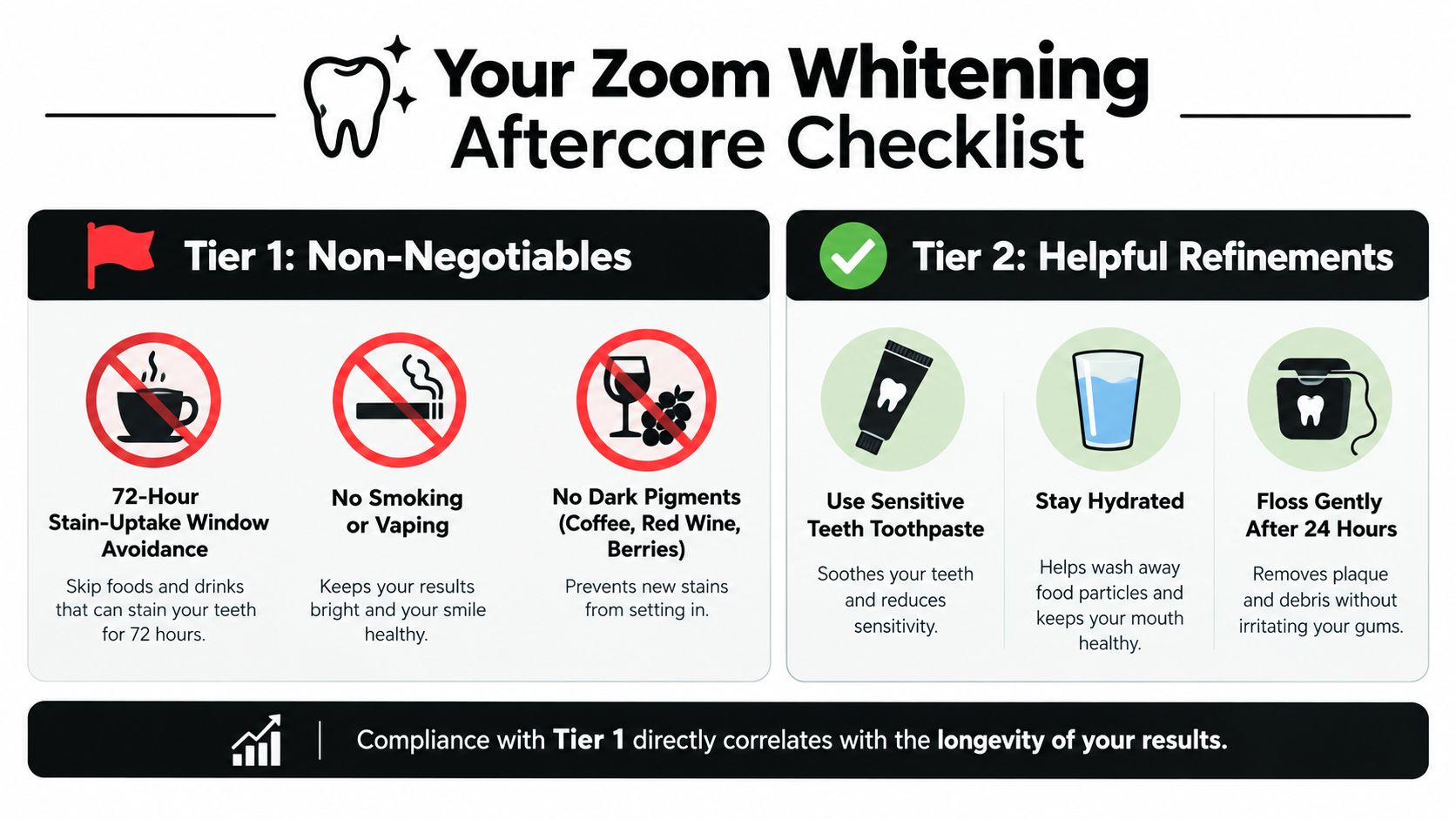
Use this as a screenshot-friendly plan. The first tier protects the treatment. The second tier improves comfort and helps preserve the result.
Tier 1, non-negotiable
- Protect the first 24 hours. Choose room-temperature water and gentle foods. Avoid extreme temperatures, dark pigments, tobacco, and acidic drinks.
- Respect the full 72-hour window. Be especially careful with coffee, tea, red wine, cola, dark sauces, and strongly pigmented foods while sensitivity and stain risk are highest.
- Brush gently. Use a soft brush and light pressure. Don't respond to sensitivity by scrubbing harder.
- Start sensitivity care early. Use a desensitizing toothpaste with potassium nitrate or stannous fluoride as directed.
- Call the dental office for warning signs. Persistent or worsening pain, visible white spots on the gums, or uneven whitening needs professional advice.
Tier 2, helpful refinements
- Treat the white diet as a smart default. Avoid the obvious stain culprits, but don't feel guilty about every lightly colored food.
- Rinse with water after pigment exposure. This is practical damage control, not a substitute for brushing.
- Use a fluoride rinse at night if your dentist recommends it.
- Choose a remineralizing paste when it fits your routine and professional guidance.
- Return to coffee or wine carefully. Wait until sensitivity allows, use a straw when suitable, and rinse afterward.
- Maintain the result with habits. Brush, floss, manage staining drinks, and use professional touch-up products only as instructed.
DentalHealth.com offers professional-grade whitening gels, Philips Zoom products, sensitivity toothpastes and rinses, fluoride care, and remineralizing options for maintaining a post-whitening routine. Visit DentalHealth.com to compare products and choose the supplies that fit your dentist-approved Zoom whitening aftercare plan.