
Zoom Whitening Sensitivity Relief: A Practical Guide
You've just had your teeth whitened, and the first sip of cold water makes you wince. Or you're still in the chair when a sharp zinger interrupts what was supposed to be a straightforward appointment. Now you're searching for Zoom whitening sensitivity relief, wondering whether you need a special gel, a different toothpaste, or time.
My recommendation is to stop treating discomfort as the price of a brighter smile. Choose an evidence-supported desensitizer, but put just as much attention into the whitening protocol itself. A stronger formula and a longer appointment aren't automatically better, and an expensive sensitivity product can't compensate for a treatment your teeth aren't tolerating.
Why Zoom Whitening Can Make Your Teeth Ache
Whitening sensitivity isn't just a surface problem. Peroxide exposure can irritate the pulp, the sensitive tissue inside the tooth. Existing exposed dentin can also contribute to discomfort because movement within its tiny tubules can stimulate sensitive nerve endings.
That distinction matters. You don't have to see a crack or an obvious cavity to feel uncomfortable after whitening. But you also shouldn't assume that every painful tooth is reacting only to the bleaching gel.
What a zinger means in the chair
Consider this situation: the dental team applies the whitening gel, and you feel a sudden sharp sensation. Tell them immediately, including whether it affects a particular tooth or feels widespread. Do not sit and endure it because you think stopping will spoil your results.
The useful response is to assess the treatment, not encourage you to endure it. Your dental team can decide whether the exposure needs adjusting or whether a tooth needs closer examination.
Chairside rule: Report sharp pain while it's happening. Your provider can't tailor the appointment to discomfort they don't know about.
Treatment sensations and recovery aren't interchangeable, either. In separate manufacturer-associated U.S. surveys from 2013, only 9% of 135 patients receiving Zoom! Whitespeed reported little or no sensitivity during treatment, while 82% of 67 patients using Zoom! with Relief ACP reported no sensitivity afterward, according to the Philips Zoom whitening FAQ. These were small, separate surveys, not a controlled comparison proving that Relief ACP prevents pain.
- During treatment: Speak up rather than treating discomfort as evidence that whitening is working.
- After treatment: Judge your recovery by whether symptoms are settling, not by another person's experience.
- When choosing products: Don't confuse post-treatment comfort claims with guaranteed protection during bleaching.
Sensitivity is usually temporary. Still, a predictable side effect deserves a plan, not dismissal.
Matching the Protocol to Your Comfort Threshold
The strongest whitening protocol isn't automatically the right one. If you already struggle with sensitivity, ask your dentist to explain why the proposed concentration and exposure are appropriate for your teeth.
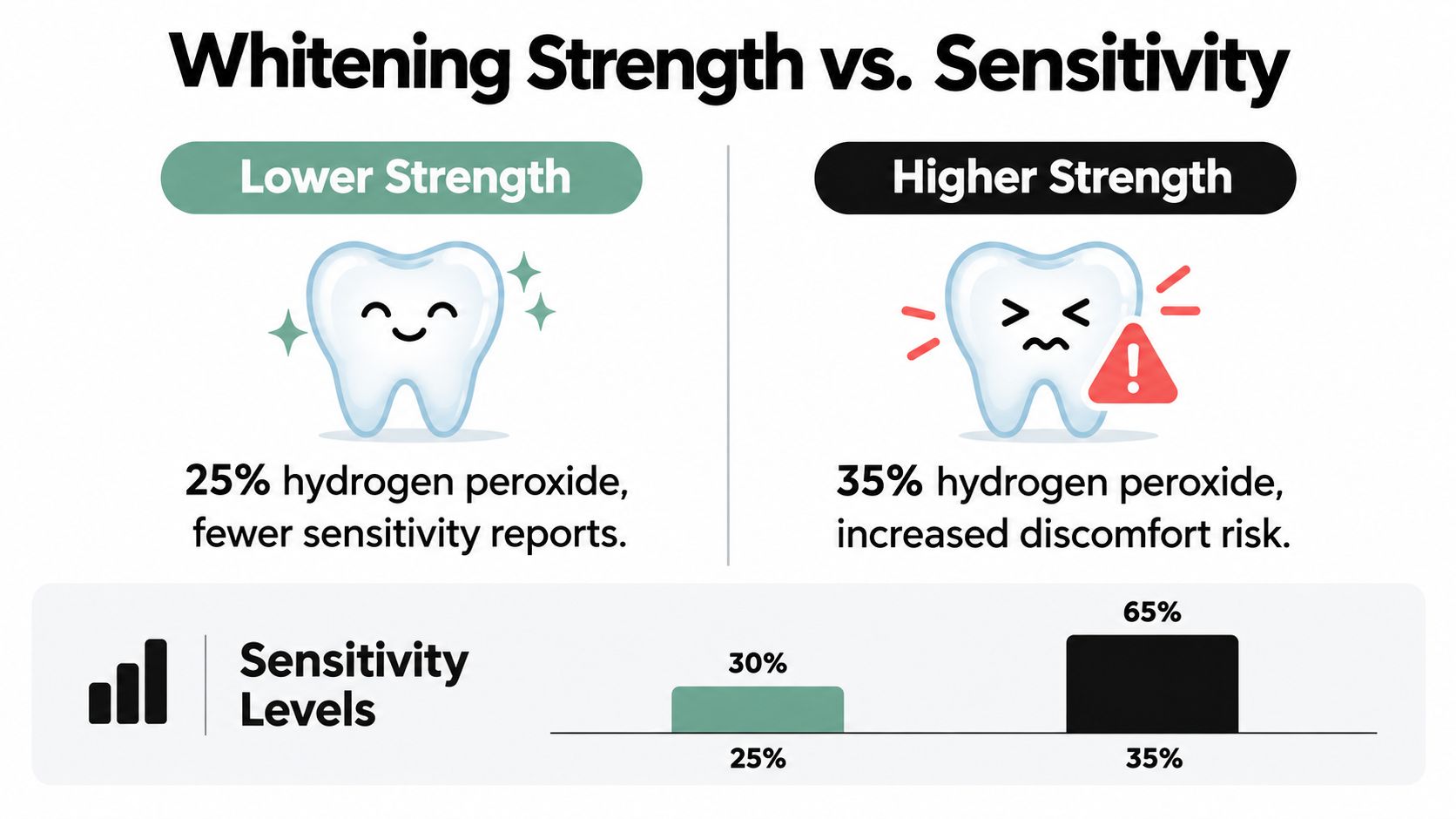
An umbrella review found that approximately 25%–35% hydrogen peroxide could achieve whitening comparable to higher concentrations of roughly 35%–40%, with less sensitivity; it also found no clinically meaningful whitening advantage from routine light activation, which may increase postoperative sensitivity, in its review of in-office bleaching protocols. Evidence about light and sensitivity remains mixed, so don't accept a promise that LED activation will make treatment painless.
The comparison below illustrates the strength-versus-comfort trade-off. Treat any sensitivity percentages displayed in the graphic as illustrative, not measured trial rates.
Ask for an adjustable plan
A stepped-down protocol means your provider adjusts peroxide exposure to your response instead of assuming you should finish the most intensive treatment available. Concentration, contact time, and any additional sessions belong in that conversation.
- Ask about concentration: Could a less intensive formula meet your whitening goal?
- Agree on a stopping point: What will the team do if sharp sensations develop?
- Discuss light use: Ask what benefit it adds to your particular protocol.
- Coordinate home treatment: If you'll use trays afterward, ask whether shorter wear times, breaks, or alternating treatment days are appropriate.
Don't independently alter an office gel or improvise a tray schedule. Your dentist should set those changes and explain how to resume treatment.
For background before your consultation, this guide to Zoom teeth whitening can help you identify the treatment you're considering. Then ask the question that matters most: What's the least intensive plan likely to meet my goal?
That's sensible treatment planning, not settling for an inferior smile.
Pre-Treatment Prep That Actually Helps
The most useful preparation isn't buying a premium toothpaste. It's checking whether your teeth are ready for bleaching.
A pre-treatment examination should address untreated decay, cracks, leaking restorations, gum recession, and existing hypersensitivity. Desensitizer alone isn't a reliable solution for these problems. Tell your dentist about teeth that already react to cold, hurt when you bite, or feel different from their neighbors.
Bring your questions and current product names to the appointment.
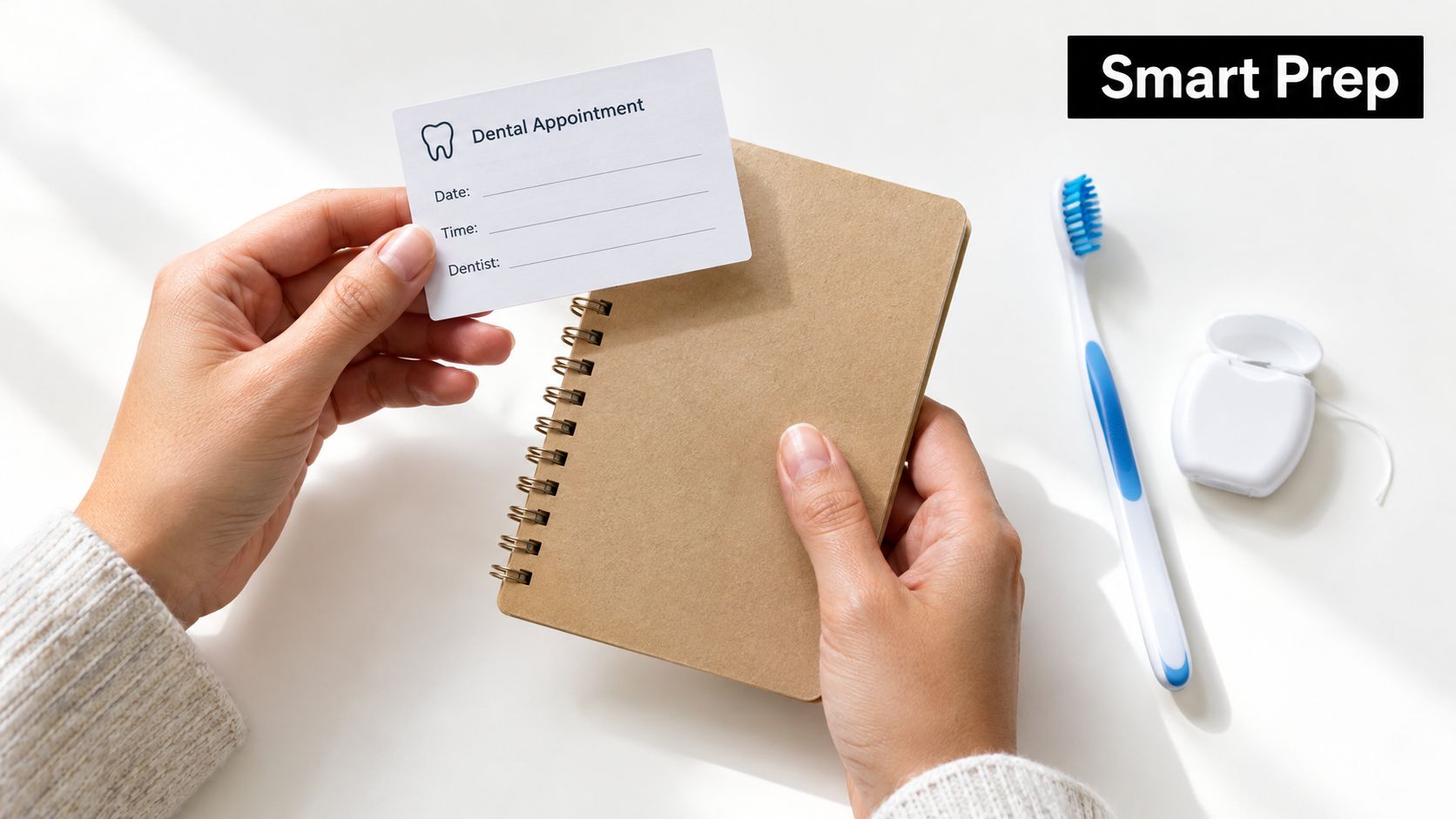
Why a week of toothpaste isn't insurance
In a randomized, double-blind trial, patients used sensitivity toothpaste in custom trays for 4 minutes daily for 7 days, then underwent two 40-minute sessions of 38% hydrogen peroxide, separated by one week; the pretreatment didn't significantly reduce sensitivity intensity compared with conventional toothpaste, according to the clinical trial published in Operative Dentistry.
That finding doesn't make every sensitivity toothpaste useless. It means this particular preparation didn't provide meaningful protection under that high-peroxide protocol. Don't buy a product expecting it to make an otherwise uncomfortable appointment painless.
Pretreatment toothpaste is an adjunct. It isn't permission to ignore an unhealthy tooth or push through excessive exposure.
Your preparation should be practical:
- Describe your baseline symptoms: Identify the tooth, trigger, and whether discomfort continues after the trigger stops.
- Show the actual label: Bring your toothpaste or gel name so the team can check its active ingredients.
- Ask about preventive desensitization: Discuss a clinician-selected potassium-nitrate or fluoride approach rather than assembling your own combination.
- Keep hygiene gentle: Brush and clean between teeth without an aggressive last-minute scrubbing session.
Ask for written instructions if your provider recommends a tray-applied product. You need to know which product to use, how to apply it, and whether it replaces or supplements your usual toothpaste. More preparation products don't necessarily mean better preparation.
Desensitizing Products Worth Your Money
Buy for the active ingredient and the intended use, not the promise on the front of the tube. Potassium nitrate and sodium fluoride deserve attention because they have evidence behind them, but neither should be sold to you as guaranteed protection.
Potassium nitrate decreases nerve excitability. Fluoride can help occlude dentinal tubules, reducing the fluid movement that stimulates sensitive nerve endings. These complementary mechanisms, along with evidence that desensitization can reduce bleaching sensitivity without compromising whitening, are summarized in the American Dental Association's whitening guidance.
Comparing Common Desensitizing Approaches
| Option | How It Works | Best Fit Scenario | Realistic Expectation |
|---|---|---|---|
| Potassium nitrate | Decreases nerve excitability | A dentist-selected preventive or recovery routine | May lessen discomfort, not guarantee its absence |
| Sodium fluoride | Helps block dentinal tubules | Fluoride-based sensitivity management | Useful support, not a repair for decay or cracks |
| Combination formula | Depends on its actual active ingredients | A coordinated plan chosen by your provider | More ingredients don't automatically improve relief |
| Relief ACP or remineralizing paste | Product-specific approach | Use when your dentist recommends the formulation | Don't assume every paste has equivalent bleaching-trial evidence |
Names such as Fluoridex, MI Paste Plus, and Philips Relief ACP identify products worth discussing, not interchangeable solutions. Check the specific formulation and instructions. A brand name alone doesn't tell you whether it contains the ingredient your provider wants you to use.
What elaborate formulas failed to deliver
A split-mouth trial involving 50 participants tested a pretreatment containing 10% calcium gluconate, 0.1% dexamethasone acetate, 10% potassium nitrate, and 5% glutaraldehyde, applied for 10 minutes before 35% hydrogen-peroxide bleaching, but found no significant sensitivity advantage over placebo, as described in this review of bleaching-sensitivity interventions. The broader evidence suggests desensitizers reduce pain intensity more consistently than they prevent sensitivity altogether.
That's a strong reason not to pay extra because a formula sounds fancy. Don't add steroid-containing products or layer several desensitizers without professional instructions.
Use this guide to teeth-desensitizing gel to prepare product questions. Choose one coordinated routine with a clear purpose before buying another tube.
The First 48 Hours of Aftercare
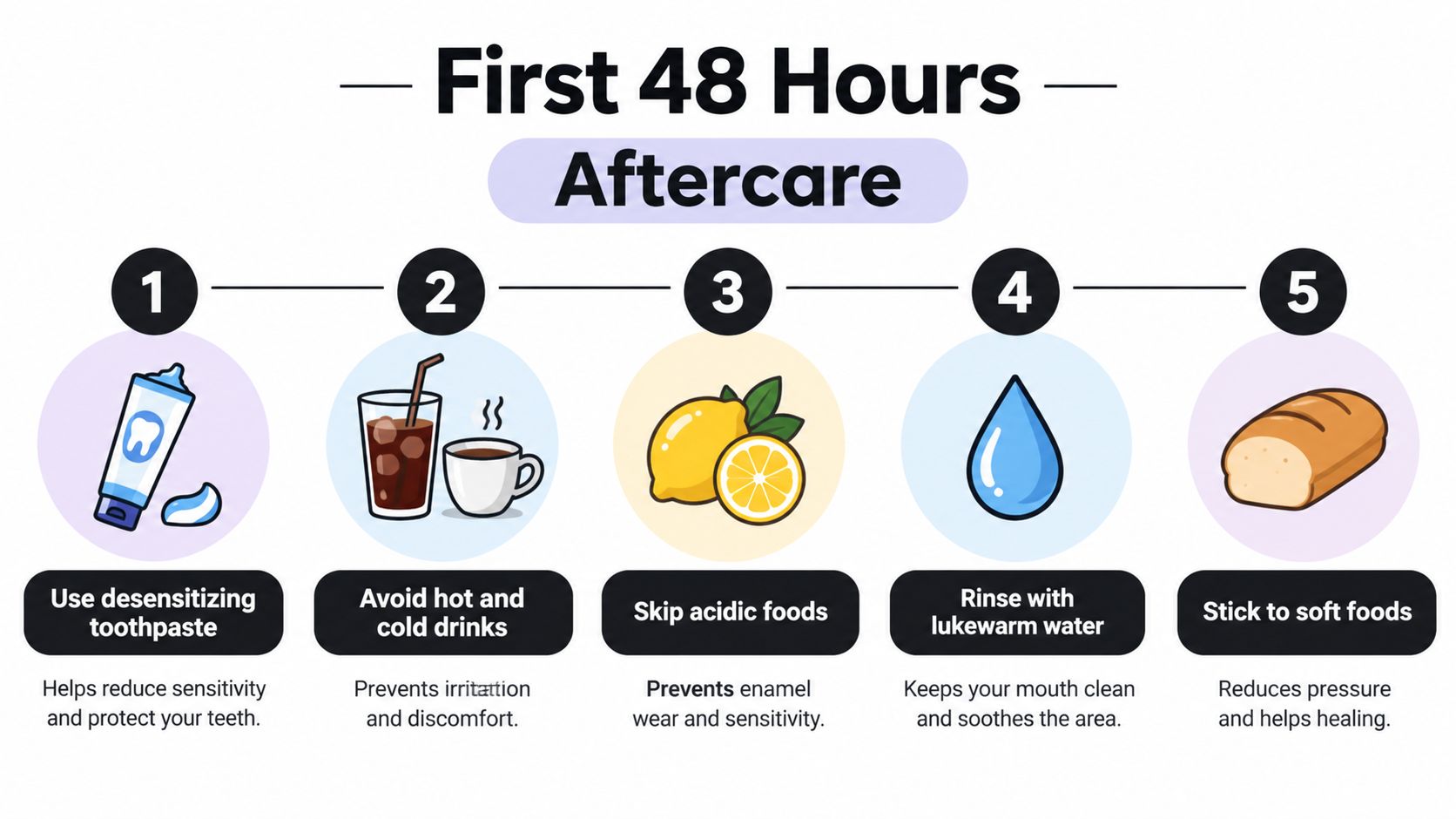
Keep recovery simple: follow your provider's product instructions, avoid obvious triggers, and don't add more bleaching while you're uncomfortable. The practical aftercare recommendation accompanying the sensitivity evidence is to avoid very cold or acidic foods for 24–48 hours. That's a comfort measure, not a promise that every tooth will feel normal when the window ends.
Use the graphic as a reminder, not as a substitute for your dentist's instructions.
Keep meals and oral care comfortable
Choose room-temperature water and mild meals you can eat comfortably. Scrambled eggs, plain pasta, or another soft option may be easier than testing your teeth with an icy drink. Let hot food cool, and leave citrus drinks and vinegar-heavy foods aside while you're sore.
Staining restrictions are a separate discussion. Follow the office's directions for protecting your whitening result, but don't mistake a rigid white-food diet for a proven sensitivity treatment.
- Use the recommended toothpaste: Follow the label and your provider's directions rather than leaving extra product on your teeth indefinitely.
- Brush gently: Use a soft brush without scrubbing the painful area.
- Pause touch-ups: Ask when to resume trays or strips instead of bleaching through discomfort.
- Track the trend: Note whether symptoms are easing, worsening, or becoming focused on a particular tooth.
Don't improvise product layering
If you've been told to use a remineralizing paste as well as toothpaste, ask for the application sequence. Brushing first and then using a separate paste may be part of your instructions, but rinsing, timing relative to meals, and tray use depend on the product.
There isn't one universal layering schedule established by the evidence discussed above. Follow the prescribed routine instead of inventing a stronger one.
For a visual walkthrough to accompany your written aftercare instructions, use the video below.
Don't repeatedly test a sore tooth with cold water to see whether it has recovered. Let everyday comfort guide you, and contact the office if the pattern isn't improving.
When Sensitivity Signals Something Bigger
Pain that persists, starts spontaneously, or worsens deserves a call to your dentist. You don't need to finish a tube of desensitizer before asking for an examination.
The important distinction isn't whether you can tolerate the sensation. It's whether your symptoms fit a settling post-treatment reaction or suggest something that needs assessment. A tooth that aches without a trigger shouldn't be managed like a brief reaction to a cold sip.
Describe the pattern clearly
When you call, explain where it hurts and what brings it on. Tell the team whether the discomfort stops promptly, lingers, interferes with eating, or seems different from the rest of your teeth.
Contact the provider rather than continuing at-home treatment if you notice:
- Spontaneous pain: Aching or sharp sensations without eating, drinking, or another obvious trigger.
- Lingering or escalating discomfort: Pain that continues after the trigger disappears or becomes harder to manage.
- A localized problem: A particular tooth feels substantially worse than its neighbors.
- Worsening gum irritation or swelling: Tissue symptoms need assessment, not another application of bleaching gel.
These are reasons to seek advice, not diagnoses you should make yourself. If swelling affects breathing or swallowing, seek urgent medical help.
Don't chase pain with more product. Stop whitening and let the provider determine what needs changing.
What the dentist should reassess
For sharp pain during treatment, useful checks include isolation, gel contact with the gums, dehydration, defective restorations, and total exposure time. Existing cracks or untreated decay may also need attention. The pretreatment trial discussed earlier reinforces why toothpaste alone shouldn't be treated as a guarantee.
Your provider may adjust the whitening plan or investigate an underlying dental problem. Those are different decisions, and a desensitizing gel can't tell you which is needed.
This overview of professional teeth-whitening side effects can help you describe your concerns. Don't delay the call while trying to diagnose yourself online.
Putting It All Together
A useful Zoom whitening sensitivity relief plan starts with the appointment, not the shopping cart. The evidence supports adjusting the treatment to your comfort and using desensitizers as support. It doesn't support assuming that the most intensive protocol plus the most elaborate paste will produce the best experience.
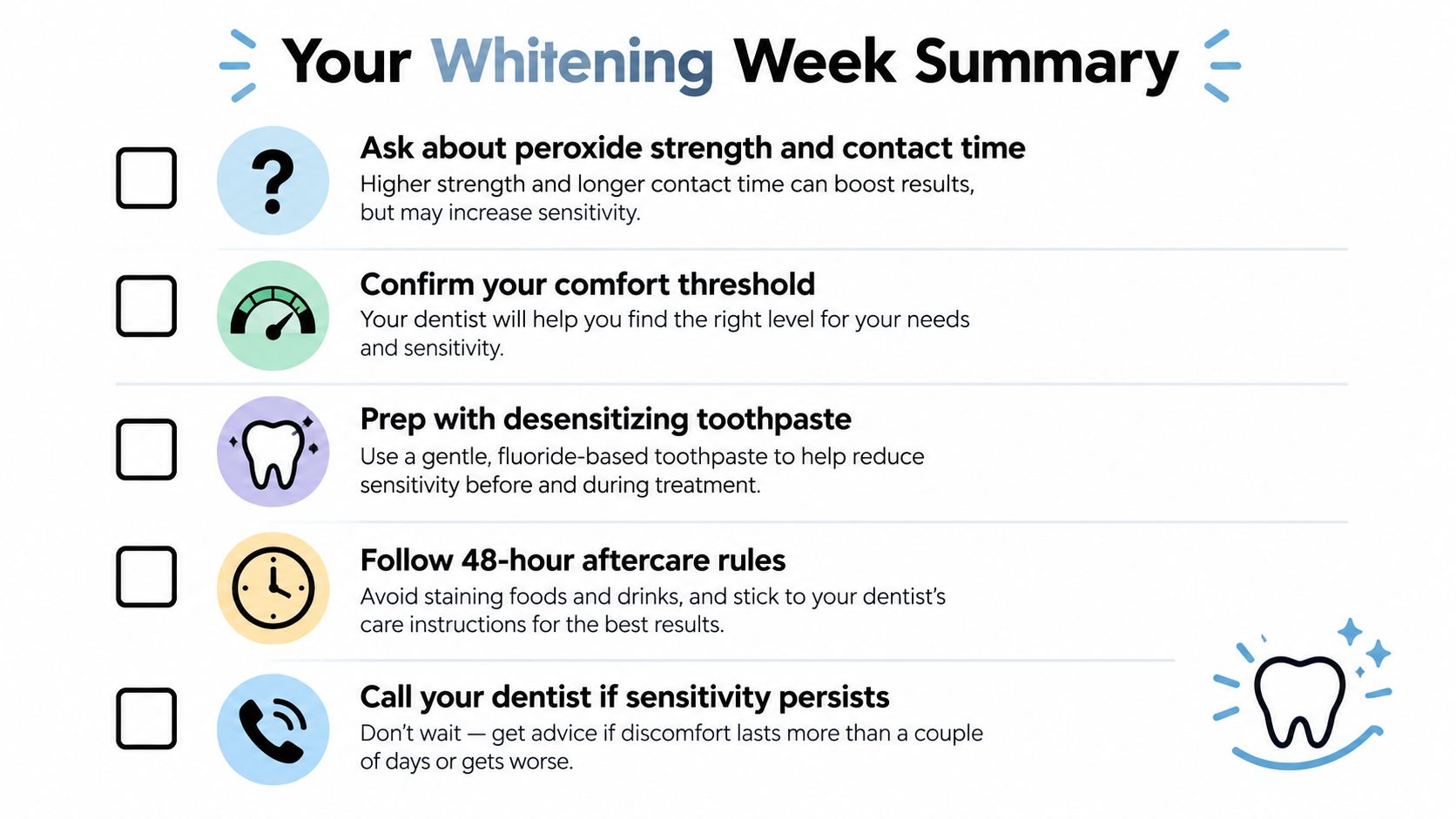
Keep this summary available during your whitening week.
Your practical checklist
- Agree on the exposure plan: Ask about peroxide strength, contact time, and how the team will respond to discomfort.
- Address existing problems first: Report baseline sensitivity and let the dentist evaluate suspicious teeth.
- Choose a purposeful product: Look for the ingredient your provider recommends, not a guarantee of instant comfort.
- Keep recovery uncomplicated: Follow the prescribed application routine and avoid triggers while your teeth settle.
- Know when to call: Persistent, spontaneous, or worsening pain belongs in a conversation with the dental office.
The toothpaste-preparation reminder in the graphic isn't a guarantee. Use pretreatment products when they're part of your provider's plan, with the realistic expectations discussed above.
Comfort-adjusted whitening isn't a compromise you should apologize for. It's a reasonable response to the evidence and to your own symptoms. Before you leave the office, make sure you know what to use at home, when to restart whitening, and whom to contact if recovery doesn't go as expected.
DentalHealth.com offers at-home whitening products, sensitivity toothpastes, and remineralizing pastes, alongside practical product guides. Visit DentalHealth.com to compare the ingredients and instructions for the product your dentist recommends before adding another desensitizer to your routine.