
Zoom Teeth Whitening: The Complete Guide to zoom teeth whitening
Zoom teeth whitening is a professional, in-office procedure that uses a powerful hydrogen peroxide gel paired with a specialized LED light. The goal? To lighten your teeth by up to eight shades in about an hour.
Think of it as the power-washer of cosmetic dentistry. It’s built for rapid, dramatic results that at-home treatments just can't deliver. It's easily one of the most popular ways to get a significantly brighter smile, quickly and safely, under the watchful eye of a dental professional.
What Is Zoom Teeth Whitening Really
Let’s say your teeth have collected years of stubborn stains from coffee, tea, and red wine. These stains are like tough grime on a window that regular scrubbing won’t even touch. This is where Zoom teeth whitening comes in. It's a scientifically designed system that gives your smile a deep, thorough cleaning, lifting discoloration from within the tooth enamel, not just from the surface.
This isn't just about slapping on some whitening gel. It’s a multi-step clinical process carefully managed by a dental pro to ensure everything is both safe and effective. The whole experience is designed to give you a noticeable transformation in a single visit, making it the perfect choice for a special event or for anyone who wants immediate results.
The Power Washer Analogy Explained
To really get how Zoom works, let's stick with that power-washer idea. The system relies on two key components working together perfectly:
- The Cleaning Solution: This is the professional-strength hydrogen peroxide whitening gel. Its job is to get into the microscopic pores of your tooth enamel and break apart the discolored molecules (called chromophores) that cause stains.
- The Turbo-Booster: This is the signature blue LED light. The light acts as a catalyst, energizing the hydrogen peroxide gel and dramatically speeding up the chemical reaction that obliterates stains. Without the light, the process would take ages.
Together, these two elements create a powerful synergy that lifts years of discoloration in a fraction of the time needed by other methods.
Your In-Office Whitening Experience
A typical Zoom whitening procedure is pretty straightforward and efficient, usually taking around 60 to 90 minutes from start to finish.
First, your dentist or hygienist will carefully cover your lips and gums, leaving only your teeth exposed. This is crucial for protecting the soft tissues in your mouth. Next, they'll apply the Zoom whitening gel directly to your teeth.
Once the gel is on, the blue LED lamp is positioned over your teeth to activate it. This part is usually broken into three 15-minute sessions. After the last session, they apply a post-treatment gel to help reduce any sensitivity. You walk out of the dental office with a smile that’s visibly brighter.
If you're looking for professional teeth whitening services, a specialized Bleaching Lounge can often provide a range of options tailored to what you need.
By breaking down the process into these simple steps, you can see that Zoom is more than just a product. It's a complete, supervised treatment designed for maximum impact and safety, setting a high bar for cosmetic dentistry.
The Science Behind a Dazzling White Smile
To really get what makes Zoom teeth whitening so effective, we have to look past the bright lights and comfy dental chair. The magic is all in the chemistry—a carefully planned reaction that turns years of discoloration into a brilliant, confident smile. It's a fascinating process where science and technology work together on a microscopic level.
At the core of it all is a powerful 25% hydrogen peroxide gel. Don't think of this gel as just a surface cleaner; it's more like a team of microscopic stain hunters. Over the years, deeply colored molecules from things like coffee, tea, and red wine—we call these chromophores—work their way into the tiny pores of your tooth enamel, causing that yellow or brown look.
Once the hydrogen peroxide gel is applied, it immediately starts to break down, releasing highly reactive particles called oxygen radicals. These radicals are the real heroes of the whitening story.
The Role of Oxygen Radicals
These tiny oxygen radicals are small enough to get past the enamel and into the dentin, which is the layer just underneath. Once they're in, they have one simple mission: find those chromophore molecules. Because they are chemically unstable, they're actively looking to bond with other molecules to stabilize themselves.
When an oxygen radical bumps into a discolored chromophore, it breaks the chemical bonds that allow the stain to absorb light and show color. By taking these stain-causing molecules apart, the radicals make them colorless, bringing back your tooth's natural, whiter shade. It’s less about scrubbing stains away and more about changing their chemical makeup so they no longer look yellow. If you want to dive deeper into the active ingredients, our guide on hydrogen peroxide gels has more information.
This chart shows how all the pieces of the Zoom process come together.
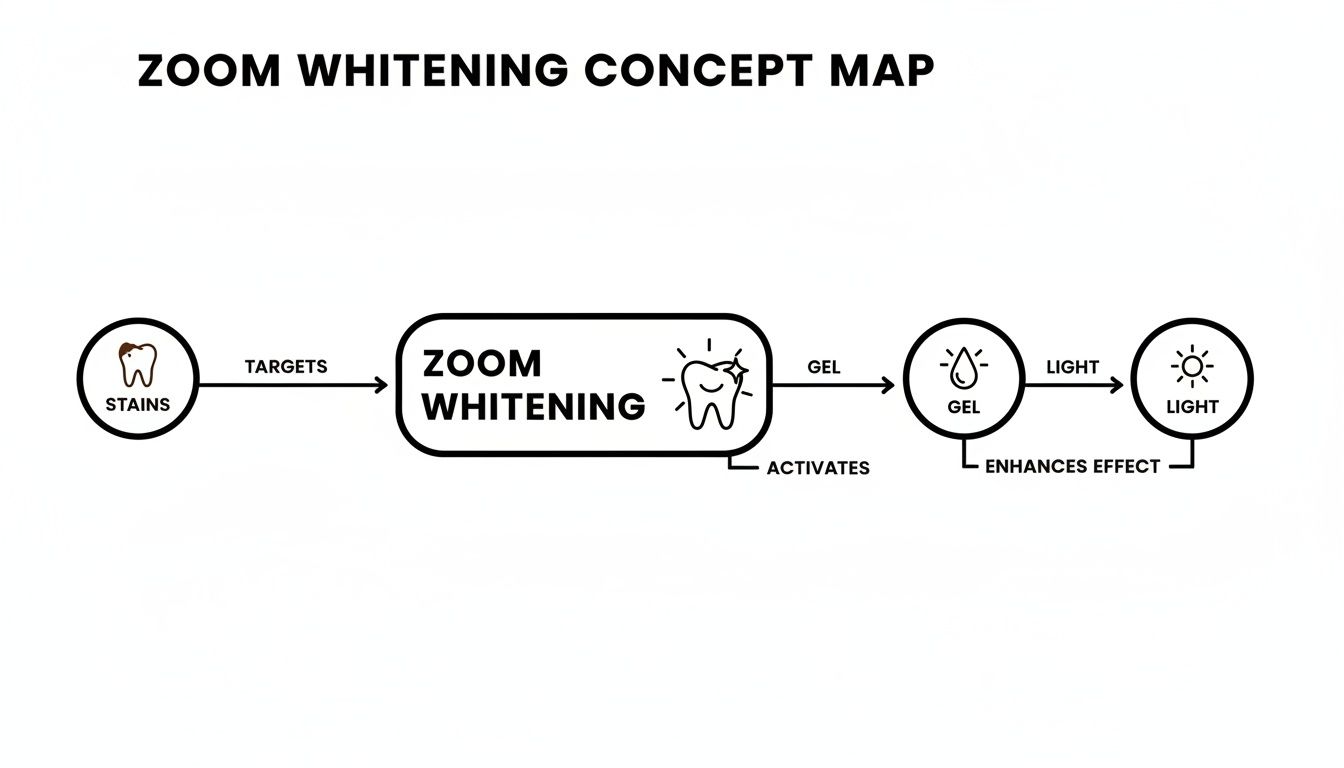
You can see the clear progression: the gel targets the stains, and the light kicks the whole process into high gear for the best possible effect.
Speeding Up the Reaction with Light
While the hydrogen peroxide gel could get the job done on its own, it would take a lot longer to see dramatic results. That’s where the iconic blue LED light comes in. The light acts as a catalyst, basically hitting the accelerator on the breakdown of hydrogen peroxide into its stain-fighting oxygen radicals.
The specific wavelength of the blue light energizes the gel, making the chemical reaction happen much, much faster. This acceleration is precisely why a full Zoom whitening treatment can be finished in about an hour, instead of taking days or weeks like other methods.
It's the synergy between the 25% hydrogen peroxide gel and the activating LED light that is the secret sauce behind Zoom's ability to deliver quick, impressive, and reliable results in just one dental visit.
This powerful combination is why Zoom became a gold standard in cosmetic dentistry right after Philips introduced it. Clinical studies back it up, showing that the proprietary gel and light can whiten teeth by an average of six to eight shades in a single session.
So how do we know for sure? Dentists use a tool called a VITA shade guide. It's a standardized chart of tooth colors that lets your dentist measure your starting shade and compare it to your final result. It gives us clear, objective proof of just how effective the treatment was, turning the simple desire for a "whiter smile" into a real, measurable outcome.
Zoom In-Office vs Professional At-Home Kits
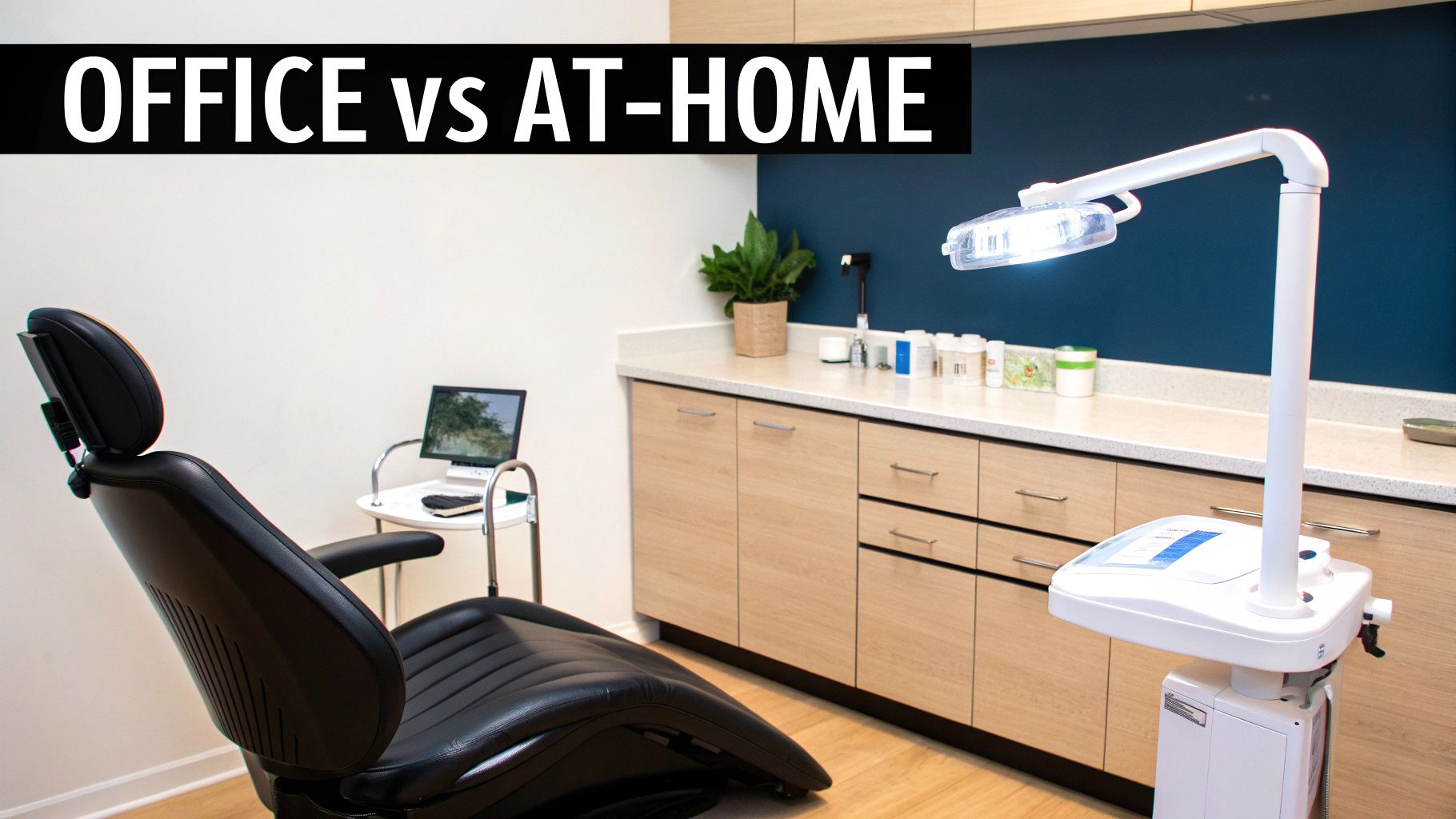
Choosing how to whiten your teeth is a lot like deciding how to paint a room. You can hire a professional crew to knock it out in a single afternoon, or you can grab a roller and do it yourself over a weekend. Both get the job done, but the time, cost, and process are worlds apart.
That's the best way to think about Zoom teeth whitening versus a professional at-home kit. One gives you dramatic, instant results with a dentist steering the ship, while the other offers amazing results on your own time. Let's dig into the details to see which one makes the most sense for you.
Speed and Immediacy of Results
The biggest selling point for in-office Zoom whitening is, without a doubt, speed. You walk into the dentist's office and walk out about an hour later with a smile that's up to eight shades brighter. It's the perfect solution if you have a big event—like a wedding or a reunion—just around the corner.
Professional at-home kits, like the ones from Opalescence or PolaDay you'll find on DentalHealth.com, are more of a marathon than a sprint. You'll wear your custom trays for a specific amount of time each day, usually for one to two weeks. The end result can be just as stunning, but it definitely requires more patience and consistency on your part.
Gel Concentration and Professional Supervision
To get those rapid-fire results, in-office Zoom uses a seriously potent 25% hydrogen peroxide gel. A formula this strong demands professional supervision. Your dentist is meticulous about protecting your gums and lips to make sure the gel only touches your teeth, keeping the whole process safe and incredibly effective.
By contrast, at-home kits use a gentler concentration of either hydrogen peroxide or carbamide peroxide, which is specifically designed for safe use without a dentist looking over your shoulder. While each individual application isn't as intense, the cumulative effect over the full treatment period works wonders on stains, often with less risk of sensitivity. You can get the full scoop on how they work in our guide to professional at-home teeth whitening.
It really boils down to this: in-office treatments leverage high-strength gels for immediate, supervised results, while at-home kits use lower-strength gels for gradual, self-managed whitening.
Convenience and Lifestyle Fit
What's "convenient" is totally up to you. For some people, blocking out a single 90-minute appointment and being done with it is the definition of easy.
For others, the freedom to whiten whenever and wherever is far more appealing. You can pop in your trays while you're answering emails, watching a movie, or just relaxing at home. That level of flexibility is a huge reason why at-home whitening has become so popular. In fact, the global teeth whitening market is expected to hit a staggering $14.31 billion by 2034, and the at-home segment is a major driver of that growth.
A Head-to-Head Look at the Costs and Features
Sometimes seeing it all laid out is the best way to make a decision. Here’s a simple breakdown of how these two powerhouse whitening methods stack up against each other.
| Feature | In-Office Zoom Whitening | At-Home Professional Kits (e.g., PolaDay, Opalescence) |
|---|---|---|
| Treatment Time | One session (60-90 minutes) | 1-2 weeks of daily applications |
| Typical Cost | $400 - $600 per treatment | $50 - $150 per kit |
| Gel Strength | High-concentration (25% hydrogen peroxide) | Lower-concentration (carbamide or hydrogen peroxide) |
| Supervision | Directly supervised by a dental professional | Self-administered at home |
| Best For | Immediate, dramatic results for a specific event | Gradual, flexible whitening on a budget |
| Sensitivity | Higher potential for temporary sensitivity | Generally lower risk of sensitivity |
At the end of the day, both options can lead you to a brilliantly white smile. In-office Zoom is an investment in speed and professional care, delivering a massive change in a single visit. Professional at-home kits from our store are a powerful, wallet-friendly alternative that lets you achieve dentist-quality results on your own schedule.
How to Manage Whitening Sensitivity
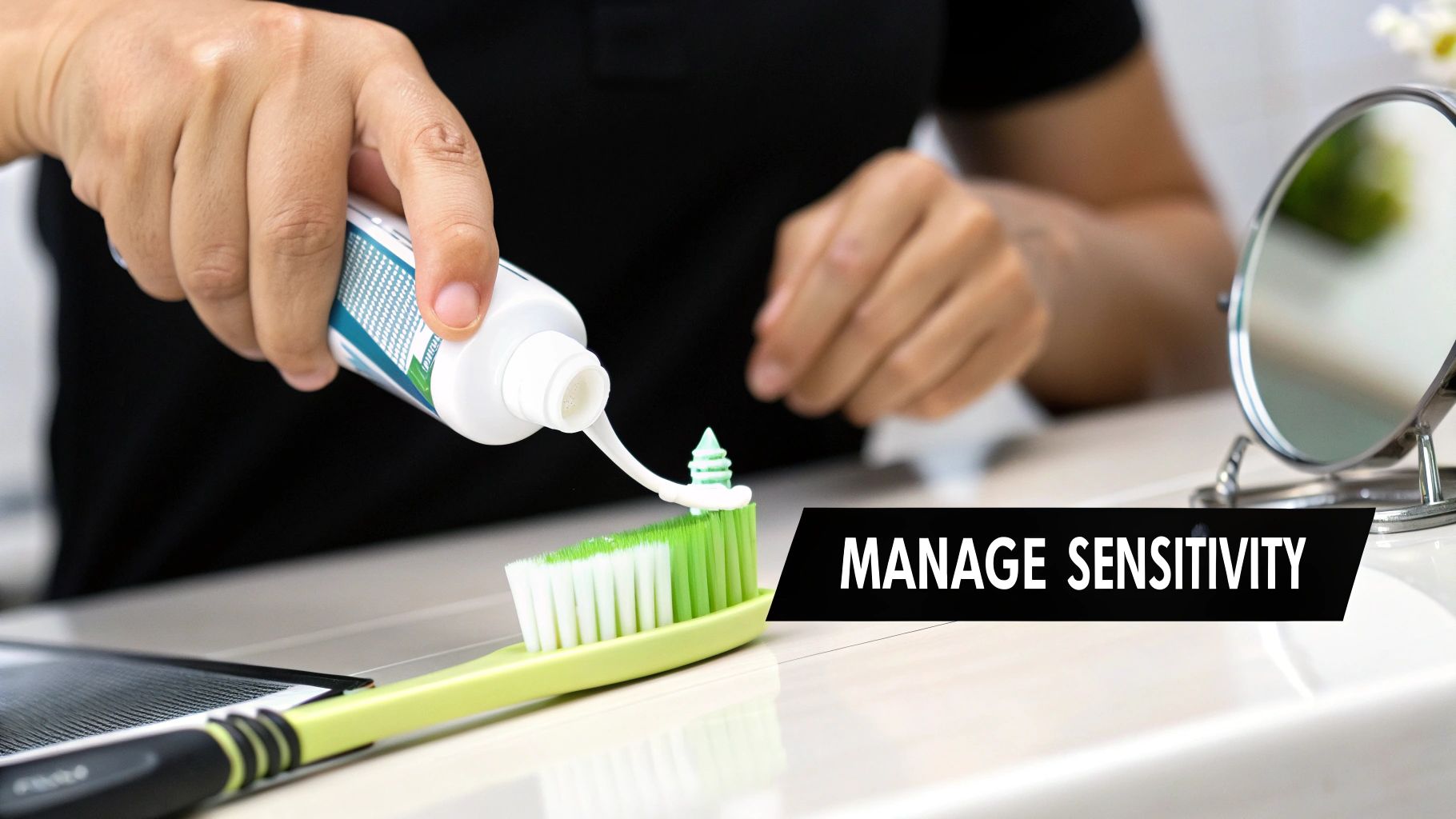
One of the biggest questions we get about Zoom teeth whitening is about sensitivity. That temporary "zing" or sharp feeling is a totally normal side effect, but it's also something you can absolutely manage. Knowing why it happens is the first step to making your whitening experience a comfortable one.
Picture your tooth enamel as a protective shield full of thousands of microscopic channels, called tubules. The whitening gel works by temporarily opening these tiny channels to get to the stained molecules underneath. This brief exposure of the inner tooth is what can cause that fleeting sensitivity to hot or cold.
The good news? It's temporary. Your teeth naturally remineralize, and those channels close back up, usually within 24 to 48 hours. Better yet, with a little planning, you can significantly dial down the discomfort from the start.
Steps To Take Before Your Whitening Session
Being prepared is your best defense against sensitivity. Taking a few simple steps in the week leading up to your Zoom appointment can really fortify your enamel and make the whole process much smoother.
- Start Using a Desensitizing Toothpaste: About a week or two before your treatment, switch to a toothpaste made for sensitive teeth. These products have ingredients like potassium nitrate that block the nerve pathways in those tubules, which helps numb your tooth's response to stimuli.
- Avoid Over-the-Counter Whitening Products: Hit pause on any whitening strips, pens, or aggressive whitening toothpastes a week before your appointment. You don't want to over-sensitize your teeth right before a professional-grade treatment.
- Take an Anti-Inflammatory: On the day of your session, taking an over-the-counter anti-inflammatory like ibuprofen (after checking with your doctor) about an hour beforehand can help reduce inflammation and proactively manage discomfort.
The key takeaway here is that a little prep goes a long way. Planning ahead for your Zoom teeth whitening can make a huge difference in how you feel during and after the procedure.
Soothing Your Smile After Treatment
Once your session is done, the focus shifts to soothing your teeth and helping them remineralize. Your dentist will probably apply a relief gel right away, but what you do at home is just as crucial. For a deep dive into recovery, we have a complete guide on how to reduce teeth sensitivity after whitening.
Post-treatment sensitivity is pretty common, initially affecting 60-70% of patients. But it's easily managed with the right products—which is great news for the 90% of orthodontic patients who also want to brighten their smile.
Here are a few effective strategies to use after your treatment:
- Use Remineralizing Pastes: Products like MI Paste are fantastic for post-whitening care. They deliver calcium and phosphate directly to the tooth surface, helping to plug up those open tubules and replenish minerals for immediate relief.
- Stick to Lukewarm Foods and Drinks: For the first 24-48 hours, steer clear of anything extremely hot or cold. Think room-temperature water and soft, bland foods to avoid shocking those sensitive nerve endings.
- Brush Gently: Use a soft-bristled toothbrush and your desensitizing toothpaste. Avoid aggressive scrubbing, which can irritate your enamel and gums while they're in a more sensitive state.
By combining these pre- and post-treatment steps, you can ensure your journey to a brighter smile with Zoom is as pleasant as it is effective.
Keeping Your Smile Bright and White
You've just invested in a brilliantly white smile with Zoom, and that's a fantastic feeling. Now, the real work begins: protecting that investment. How long that dazzling smile lasts really comes down to your daily habits in the days, weeks, and years ahead.
Think of it as a simple playbook for smile maintenance. Follow it, and you'll keep your results looking vibrant for the long haul.
The first 48 hours post-treatment are absolutely critical. During this window, your enamel is a little more porous than usual, which makes it a magnet for new stains. It’s like a freshly painted white wall—you have to be extra careful not to smudge it while it’s still setting.
The Immediate Aftercare Playbook
For the next two days, you’ll need to stick to a temporary diet that avoids anything that could stain a plain white t-shirt. It’s often called the "white diet," and it's your best defense against immediate discoloration.
- Avoid Dark Beverages: Coffee, tea, red wine, and dark sodas are the usual suspects. If you absolutely can't skip your coffee, use a straw. It makes a huge difference by minimizing contact with your teeth.
- Steer Clear of Staining Foods: Think berries, tomato sauce, soy sauce, beets, and even dark chocolate. These can quickly undo your whitening progress while your teeth are vulnerable.
- Choose "White" Foods: Stick to simple options like chicken, fish, rice, pasta, and cauliflower. Plain yogurt, bananas, and peeled apples are also great choices.
Don't worry, this strict routine is only for a couple of days. After that, you can ease back into your normal diet, just with a new awareness of how to manage potential stains.
Your smile's longevity isn't just about what you avoid; it's also about the proactive steps you take. Consistent maintenance is the secret to keeping that "just-whitened" look for years to come.
Your Long-Term Maintenance Strategy
Once you're past that initial 48-hour window, the goal shifts from intense protection to smart, sustainable maintenance. This is where building a simple and effective routine with the right products makes all the difference, keeping new stains from ever settling in.
A great long-term strategy involves regular touch-ups to combat daily exposure to staining foods and drinks. The best way to do this is with professional-grade, at-home products from DentalHealth.com designed specifically for maintenance. These tools help you erase new surface stains before they have a chance to set.
- Touch-Up Whitening Pens: For quick, on-the-go stain removal, a whitening pen from a trusted brand like GLO is perfect. It lets you target specific areas right after having a coffee or a glass of red wine.
- Lower-Concentration Gel Kits: You don't need another full-power whitening session to maintain your results. Using a lower-concentration gel kit for a night or two every few months is a highly effective and gentle way to lift new discoloration.
By combining good habits—like rinsing your mouth with water after meals and keeping up with great oral hygiene—with these periodic touch-ups, you create a powerful system. This approach ensures your Zoom teeth whitening results aren't just a temporary boost but a lasting feature of your confident smile.
Your Top Questions About Zoom Whitening
Deciding to invest in your smile is a big deal, and it's smart to have questions. You're probably wondering about everything from the price to how safe it really is. Let's walk through the most common questions we hear about Zoom teeth whitening so you can feel completely confident about your decision.
How Much Does Zoom Teeth Whitening Cost?
Let's get right to it: the price tag. For a full, in-office Zoom session, you can generally expect the cost to fall somewhere between $400 and $600. Of course, this can shift a bit depending on where you live and the specific dental practice you choose.
That price covers a whole lot more than just the whitening gel. You're paying for a comprehensive, professional service that includes the initial consultation, all the protective measures your dentist takes to keep your gums safe, the expert application of the high-strength gel, and the use of that specialized LED lamp. In short, you're paying for safety, professional expertise, and the fastest, most dramatic results possible.
It's good to know that cosmetic treatments like Zoom typically aren't covered by dental insurance. It never hurts to call and double-check your plan, though. If you're looking for a more wallet-friendly approach, professional-grade at-home kits from our store at DentalHealth.com are a fantastic alternative. They can deliver excellent, long-lasting results with gradual use and usually cost between $50 and $150.
Is Zoom Whitening Actually Safe for My Enamel?
Absolutely. When a qualified dentist performs your Zoom treatment, it's considered a very safe cosmetic procedure. The entire process is carefully controlled from start to finish, prioritizing your oral health while achieving a brilliant cosmetic outcome.
Your safety is always the number one concern. Before any whitening gel touches your teeth, your dentist will meticulously cover your gums and lips with a protective barrier. This makes sure the active ingredient, hydrogen peroxide, works its magic only on your tooth enamel.
The hydrogen peroxide gel used in Zoom is clinically proven to be safe and effective for tooth enamel. It works by breaking up stains deep inside the tooth, not by stripping or damaging the enamel surface.
The most common side effect anyone experiences is some temporary tooth sensitivity. This is totally normal, as the microscopic pores in your enamel open up for a short time. This feeling almost always fades within 24 to 48 hours. Using a desensitizing toothpaste before and after your appointment can make a huge difference in your comfort. A pre-whitening check-up is also key to ensure you don't have any underlying issues like cavities that could get irritated.
How Long Will My Zoom Whitening Results Last?
How long you get to enjoy that bright, new smile really comes down to your daily habits. With good maintenance, you can expect your Zoom teeth whitening results to look great for anywhere from one to three years.
Think of it like this: your teeth are a clean slate again. The same things that caused stains in the first place—like coffee, tea, or red wine—can cause new stains to build up over time.
To keep your smile radiant for as long as possible, consistency is your best friend.
- Keep up with your oral hygiene: Brush twice a day, floss daily, and don't skip your regular professional cleanings.
- Be mindful of staining culprits: Limit your intake of dark-colored foods and drinks like coffee, red wine, tea, and definitely avoid tobacco.
- Rinse right away: After having something that could stain, swish your mouth with water. It helps wash away the pigments before they have a chance to settle in.
Many people keep their results looking fresh indefinitely by doing simple at-home touch-ups. Using a professional gel kit from DentalHealth.com for a night or two every six months is a super effective way to knock out new stains and maintain that "just whitened" look.
Can Zoom Whiten My Crowns, Veneers, or Fillings?
This is a really important question for anyone with existing dental work. The short answer is no—Zoom and other whiteners only work on natural tooth enamel. They won't change the color of restorations like crowns, veneers, bonding, or fillings.
The reason is pretty straightforward. Those materials are typically made of non-porous ceramic or composite resin. The hydrogen peroxide in whitening gel works by seeping into the tiny pores of natural enamel to break down stain molecules. Since it can't penetrate these man-made materials, their color stays exactly the same.
If you have restorations on any of your front teeth, it's crucial to talk this over with your dentist before you whiten. If you lighten your natural teeth, your older dental work could suddenly look mismatched and out of place. Many patients opt to whiten their teeth first, then have their dentist replace the old restorations to perfectly match their new, brighter smile.
Ready to maintain your bright smile or explore professional-grade at-home whitening solutions? DentalHealth.com offers a curated selection of dentist-recommended products, from touch-up kits to sensitivity relief pastes, shipped directly to your door.