
What Are the causes of yellow teeth? An Expert Guide
The big reasons our teeth turn yellow range from everyday habits that cause surface stains to deeper discoloration that actually starts inside the tooth. It really comes down to a mix of your lifestyle, genetics, and age, which all impact two critical parts of your tooth: the outer enamel and the inner dentin.
Why Your Teeth Are Not Naturally White
Ever wonder why some people seem to have a naturally brighter smile? The secret is in the tooth's anatomy. It’s a common myth that teeth should be perfectly white. In reality, their true color comes from the interplay between two different layers.
Think of your tooth's outer layer, the enamel, like a semi-clear protective shield. It’s actually the hardest substance in your entire body, but how thick and smooth it is can vary a lot from person to person. Underneath this shield is the dentin, a dense, bone-like tissue that makes up most of the tooth. And here's the key: dentin is naturally a pale yellow color.
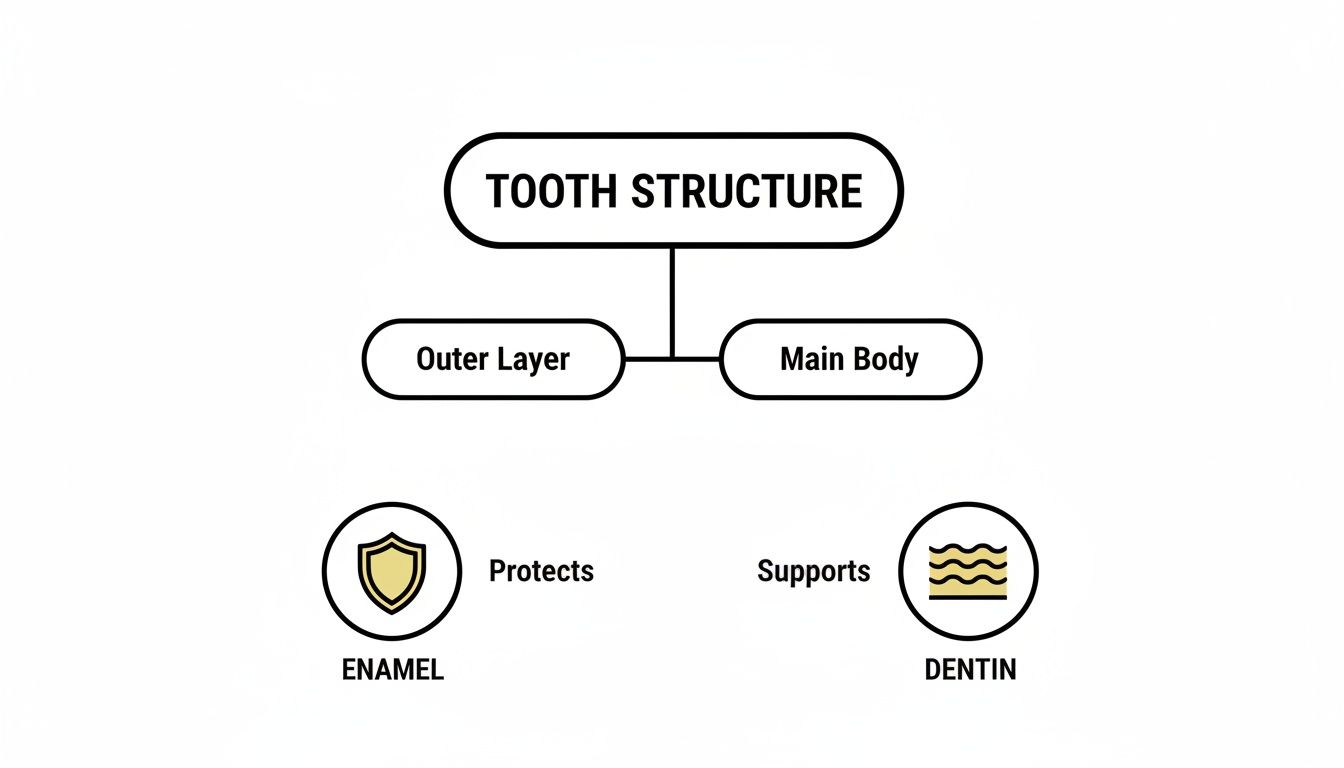
When your enamel is thick and healthy, it does a great job of hiding the yellow dentin underneath, giving your teeth a much whiter look. But as enamel gets thinner from age or erosion, more of that yellow dentin shows through, making your teeth look darker. If you're concerned about your enamel, our guide on ways to strengthen tooth enamel has some great tips.
To get to the bottom of tooth discoloration, it helps to understand the two main categories of stains. This tells us where the problem is coming from.
Key Causes of Yellow Teeth at a Glance
This table breaks down the main culprits behind tooth discoloration, splitting them into stains that happen on the surface versus those that come from within.
| Cause | Type of Staining | Brief Explanation |
|---|---|---|
| Foods & Drinks | Extrinsic | Pigments from coffee, tea, red wine, and berries stick to the enamel. |
| Tobacco Use | Extrinsic | Nicotine and tar create stubborn yellow and brown surface stains. |
| Aging | Intrinsic | Enamel thins over time, revealing the naturally yellow dentin underneath. |
| Medications | Intrinsic | Certain antibiotics (like tetracycline) and antihistamines can cause deep stains. |
| Genetics | Intrinsic | Some people are born with naturally thinner or less opaque enamel. |
| Trauma/Injury | Intrinsic | An injury to a tooth can cause the dentin to darken in response. |
| Poor Dental Hygiene | Extrinsic | Plaque buildup creates a sticky yellow film and attracts more stains. |
Knowing whether a stain is extrinsic or intrinsic is the first step in figuring out the best way to treat it and get your bright smile back.
Extrinsic vs. Intrinsic Stains
So, what’s the real difference between these two types of stains? It's all about location, location, location.
-
Extrinsic Stains: These are the stains on the outside of your teeth, clinging to the enamel surface. They're usually the result of lifestyle choices. Think about your morning coffee, that glass of red wine, or tobacco use—they're the most common offenders.
-
Intrinsic Stains: These stains happen on the inside of the tooth, affecting that deeper dentin layer. They’re often caused by things out of your control, like aging, genetics, certain medications you might have taken as a child, or even trauma to a tooth.
Figuring out which type of stain you have is crucial for choosing a whitening solution that will actually work. In the next sections, we'll dive deeper into what causes each of these types of stains.
The Daily Habits Staining Your Smile
Let's be honest—some of the most common causes of yellow teeth are hiding in plain sight. They're part of your daily routine. We're talking about extrinsic stains, which are the ones that form on the outer surface of your tooth enamel. While that morning coffee or evening glass of wine seems harmless enough, these are the primary culprits behind a smile that's lost its sparkle.
The best way to think of your tooth enamel is like a bright white ceramic mug. It feels smooth and solid, but it's actually covered in microscopic pores. Over time, the things you eat and drink seep into these tiny openings, gradually building up and changing the color of your teeth from the outside in.

The Main Culprits Behind Surface Stains
Unfortunately, the biggest offenders are often the things we enjoy the most. Dark-colored foods and drinks are packed with powerful pigment compounds notorious for latching onto tooth enamel.
-
Coffee and Tea: These beloved drinks are loaded with tannins, a type of plant compound that acts like a primer, helping color pigments stick to your teeth. Their acidity also slowly wears down enamel, making it even easier for stains to set in.
-
Red Wine: Just like your morning brew, red wine contains both intense pigments (known as chromogens) and those sticky tannins. It's a one-two punch that can quickly dull an otherwise bright smile.
-
Dark Sodas and Sauces: The artificial coloring in colas and the rich pigments in things like soy sauce or tomato sauce leave behind stubborn surface stains with repeated exposure. In fact, consuming sugary drinks like soda is one of the most significant daily habits that contributes to tooth discoloration.
Tobacco: The Stubborn Stainer
Beyond what you eat and drink, tobacco use is one of the most powerful causes of yellow teeth. It doesn’t matter if it's smoked or chewed; tobacco deposits a sticky film of tar and nicotine directly onto your enamel.
While nicotine itself is colorless, it turns a stubborn, ugly yellow the moment it mixes with oxygen. Tar, on the other hand, is naturally a dark brown. Together, they create deep, unsightly stains that are next to impossible to remove with just regular brushing. They work their way deep into the enamel's pores, leading to long-lasting discoloration that requires serious intervention to fix.
The impact of these daily habits is huge. A staggering 67% of U.S. adults have tried whitening products specifically to fight these kinds of extrinsic stains. This demand is why the North American market accounts for up to 38% of global whitening revenue—our daily indulgences gradually embed pigments that won't budge on their own.
How to Minimize Daily Staining
The good news? You don't have to give up everything you love to protect your smile. Small, consistent actions can make a massive difference in preventing stains from taking hold in the first place. For a deeper dive, check out our guide on how to prevent teeth staining.
A few simple adjustments can significantly cut down on the impact of staining agents:
- Rinse Right Away: After finishing your coffee, tea, or wine, simply swish your mouth with water. This quick rinse washes away the staining compounds before they have a chance to settle onto your enamel.
- Use a Straw: When you're drinking dark sodas, iced coffee, or iced tea, a straw is your best friend. It minimizes the liquid's contact with your front teeth, dramatically reducing direct exposure to those pigments.
- Brush Consistently: Stick to a solid oral hygiene routine by brushing twice a day. This removes the daily plaque buildup that stains love to cling to, giving them less to grab onto.
Think of these habits as your first line of defense. For stains that have already set in, don't worry—that's where professional-grade whitening treatments come in. They are specifically engineered to break down and lift those accumulated pigments, restoring your enamel's natural brightness.
When Discoloration Comes from Within
While your daily habits are a huge part of the story, some of the most stubborn tooth discoloration has nothing to do with what you eat or drink. This is what we call intrinsic staining, and it means the discoloration starts deep inside the tooth, originating in the yellowish dentin layer. Unlike surface stains, you can't just polish these away.
Think of your tooth's enamel like a coat of paint on a wall. Extrinsic stains are like scuff marks you can scrub off the paint. Intrinsic stains, on the other hand, are like a problem with the wall itself—the color is coming from the structure underneath, making it much tougher to fix from the outside.
These internal changes can be frustrating, especially if you already have great oral hygiene. But getting to the bottom of what causes them is the first step toward finding a solution that actually works.
The Unavoidable Factors: Aging and Genetics
Time and your own DNA are two of the biggest culprits behind intrinsic stains. As we age, the protective enamel layer on our teeth naturally gets thinner from a lifetime of chewing, grinding, and exposure to acidic foods. This gradual wear and tear lets more of the naturally yellow dentin show through, giving your teeth a darker, aged look.
Genetics also plays a starring role right from the start. The same way your genes decide your hair and eye color, they also determine the natural thickness and shade of your enamel. Some people are just born with thinner or more translucent enamel, making that yellowish dentin more obvious even from a young age.
"Intrinsic stains occur beneath the surface of the tooth. These stains happen when stain-causing particles work through the exterior of the tooth and accumulate within the tooth enamel. Excessive fluoride use, especially in children, can also cause intrinsic stains."
Unexpected Causes: Trauma and Medication
Sometimes, a single event or a medical treatment from your past can be the reason a tooth changes color. A physical injury, like a bad fall or a sports accident, can actually damage the living pulp inside a tooth. In response, the tooth might lay down more dentin to protect itself, which can cause it to darken to a grayish or yellowish color over time.
Certain medications are also notorious for causing deep, intrinsic stains. The antibiotic tetracycline, for instance, can lead to significant gray or brown bands on teeth if it's taken by kids whose permanent teeth are still developing under the gums.
The Fluoride Paradox
Fluoride is fantastic for building strong, healthy teeth, but it turns out you can have too much of a good thing. The condition is called dental fluorosis, and it happens when children take in too much fluoride while their adult teeth are still forming.
This isn't a simple surface stain; it's a change in the enamel's actual structure. It often shows up as faint white lines or spots, but in more severe cases, it can cause noticeable yellowish-brown discoloration. The numbers are pretty eye-opening: dental fluorosis affects 23% of the U.S. population and an incredible 41% of adolescents—a rate that has nearly doubled since 1987. You can dig deeper into this trend and its effect on the teeth whitening market from SNS Insider.
Because these stains come from the inside out, they usually need more powerful solutions than your average whitening toothpaste. If you're dealing with deep-set discoloration, our guide on how to fix discolored teeth offers some great insights into effective treatments.
How Oral Hygiene Affects Tooth Color
Your daily routine is the single most powerful tool you have for keeping your smile bright. We often rush to blame coffee or getting older, but the truth is, an inconsistent oral hygiene routine is one of the biggest culprits behind yellow teeth. It rolls out the red carpet for stains to build up and settle in for the long haul.
Every time you eat or drink, tiny food particles and sugars latch onto your teeth. If they're not brushed away promptly, they become a feast for bacteria, forming a soft, sticky, and nearly invisible film called plaque. Think of plaque as the foundation for future discoloration.
The Plaque to Tartar Pipeline
If plaque hangs around for more than 24-48 hours, it starts to mineralize, hardening into tartar (also called calculus). Unlike that soft plaque, tartar is a rough, porous deposit with a yellowish or brownish tint that bonds to your enamel like cement.
Once tartar forms, your toothbrush is powerless against it. Its porous surface is like a magnet for even more stains from your food and drinks, which just speeds up the yellowing process. This buildup loves to gather along the gumline and between teeth, leaving your smile looking dull and discolored.
Poor oral hygiene is a massive global health problem, with permanent tooth decay affecting an estimated 2 billion adults worldwide. This staggering number shows just how easily plaque buildup can snowball into enamel erosion and yellowing when it isn't managed consistently.
How Decay Deepens Discoloration
Going beyond just surface buildup, a neglected mouth can lead straight to tooth decay and cavities. When those plaque bacteria chow down on sugars, they produce acids that directly attack and weaken your enamel. This is a double whammy for your smile’s brightness.
First, the decay itself can create dark spots or pits on the tooth—obvious blemishes you can't miss. Second, as the acid erodes your enamel, the protective layer thins out. This makes it more translucent, allowing the naturally yellower dentin layer underneath to show through more clearly.
Poor hygiene is a key reason why 514 million children and 2 billion adults are dealing with tooth decay globally. Every untreated cavity becomes a little acid factory where bacteria break down enamel, revealing more of that yellow dentin. You can explore more data on the global impact of oral health from Grand View Research.
The Power of Prevention
The connection couldn't be clearer: letting your oral care slide directly causes the buildup that dulls your smile over time. A consistent and thorough hygiene regimen is your absolute best defense against plaque, tartar, and the decay that follows.
Here’s how you can stay ahead of the game:
- Brush Thoroughly: Spend a full two minutes brushing, twice a day. Make sure you're hitting every surface of every single tooth.
- Floss Daily: Flossing is non-negotiable. It clears out plaque from between your teeth and just below the gumline—places your toothbrush simply can't reach.
- Regular Dental Checkups: Professional cleanings are the only way to get rid of hardened tartar. These visits are essential for keeping your smile both healthy and bright.
By preventing plaque and tartar from ever getting a foothold, you’re not just protecting your oral health—you're preserving the natural brightness of your smile for years to come.
Your Action Plan for a Brighter Smile
Knowing what's causing your teeth to look yellow is half the battle, but taking the right action is what truly brings back a confident, bright smile. Let's shift from understanding the problem to finding the perfect solution. You don't always need an expensive trip to the dentist to see a real difference; professional-grade treatments can be used safely and effectively right from your own home.
This plan is your roadmap to choosing the best at-home products for your specific type of discoloration, handling any potential sensitivity, and keeping that smile shining long after you're done.
Target Stains with Professional-Grade Gels
For those stubborn stains that have worked their way deep into your enamel, a simple whitening toothpaste just won't cut it. You need something stronger that can get beneath the tooth's surface and break apart the pigment molecules from the inside. This is where professional-grade whitening gels really shine.
These gels are powered by active whitening agents like carbamide peroxide or hydrogen peroxide. Think of them as specialized stain removers for your teeth. They work by releasing oxygen molecules that travel into the tiny pores of your enamel, reacting with and dismantling the discolored molecules that are behind both extrinsic and intrinsic staining.
The real game-changer here is concentration. Products such as PolaDay CP 35%, available from trusted sources like DentalHealth.com, pack a much stronger punch than what you'll find in a standard drugstore kit. This means you’ll see faster, more impressive results, even on tough discoloration from years of coffee, smoking, or aging.
When you're using gels this powerful, it's critical to follow the directions to the letter. This ensures you get the maximum whitening effect without irritating your gums.
Manage and Prevent Tooth Sensitivity
One of the biggest worries people have about teeth whitening is sensitivity. This temporary discomfort can happen because the whitening process opens up microscopic tubules in your enamel, which briefly exposes the pathways to your tooth's nerve. While it can be uncomfortable, it's actually a sign that the product is working.
Luckily, managing this sensitivity is pretty straightforward if you have the right tools. It’s a simple two-part approach:
-
Desensitizing Toothpaste: Before you even start whitening, switch to a toothpaste made for sensitive teeth. These formulas often contain ingredients like potassium nitrate, which helps soothe the nerve, or stannous fluoride, which builds a protective layer over those open enamel pores.
-
Remineralizing Pastes: After you finish a whitening session, a product like MI Paste is a lifesaver. It helps put back essential minerals like calcium and phosphate. This not only makes your enamel stronger but also helps reseal those tiny tubules more quickly, cutting down on sensitivity and protecting your teeth.
Maintain Your Bright Results for the Long Haul
Getting a whiter smile is one thing, but keeping it that way is another. Once you’ve put in the work, you need a smart maintenance plan to stop new stains from undoing all your progress.
Try working these simple habits into your daily routine:
- Use a Whitening Maintenance Toothpaste: Choose a gentle whitening toothpaste to help polish away new surface stains before they get a chance to settle in.
- Rinse After Staining Foods: A quick swish of water after your morning coffee, tea, or that glass of red wine can wash away pigments before they have time to stick.
- Schedule Periodic Touch-Ups: Depending on your habits, a quick touch-up session with your whitening gel every few months can keep your smile consistently bright and beautiful.
By combining an effective whitening treatment with smart sensitivity management and a solid upkeep routine, you can take complete control of your smile’s brightness.
Your Top Questions About Tooth Discoloration, Answered
When you're looking into teeth whitening, a lot of questions can pop up. It's totally normal to want to get all the facts before you start. To help you feel confident about getting that brighter smile, we've tackled some of the most common questions we hear.
Can I Whiten Teeth That Have Been Yellow Since Childhood?
Yes, in most cases, you absolutely can. Those deeper, intrinsic stains you might have from genetics or even medication you took as a kid are definitely more stubborn than surface stains, but they aren't permanent.
While the whitening strips you grab at the drugstore probably won't have enough power, professional-grade systems designed for at-home use are a different story. They use higher concentrations of whitening agents like carbamide or hydrogen peroxide that can actually penetrate the enamel and start breaking down those deep-set discolorations. It might take a bit longer, but a quality kit is a fantastic and affordable way to start tackling those lifelong stains.
How Quickly Will I See Results from At-Home Whitening?
This really depends on two things: the strength of the product you're using and the kinds of stains you have. With professional-grade gels, a lot of people start seeing a real difference after just a few uses.
To get to your final, desired shade, you're typically looking at a treatment cycle of one to two weeks. Stains from things like coffee and tea usually lift the quickest. The secret to getting the best results fast is just being consistent and following the directions to the letter.
Expert Insight: Consistency beats intensity every time. Sticking to the plan with a professional-grade gel over one or two weeks will give you much better, more even results than trying to cram it all into one long whitening session.
Will Whitening My Teeth Damage My Enamel?
This is a huge concern for many, but when you use them as directed, today's professional-grade whitening products are perfectly safe for your enamel. The active ingredients don't eat away at your tooth structure. Instead, they work by temporarily opening up the microscopic pores in your enamel to lift the stains out from within.
The most common side effect you might run into is some temporary tooth sensitivity. This happens because the whitening agent can briefly get closer to the tooth's nerve. It’s easily managed, though. Using a desensitizing toothpaste or a remineralizing gel before and after you whiten can help seal those pores back up and keep you comfortable.
What Is the Difference Between Whitening and Bleaching?
You'll hear these terms used interchangeably all the time, but there's a small technical difference, at least according to the FDA.
A product is officially a "bleaching" agent if it contains peroxide (like carbamide or hydrogen peroxide). These are the ingredients that can whiten your teeth beyond their original, natural shade.
On the other hand, the term "whitening" technically refers to any product that just removes surface stains to get your teeth back to their natural color. Think of whitening toothpastes that use gentle abrasives to polish away the day's coffee stains.
Is Professional Whitening Worth the Cost?
There's no denying it: professional whitening from a dentist, whether it's done in the office or with their take-home kits, delivers incredible results. The downside, of course, is that the price tag can be pretty steep.
The good news? You can get remarkably similar results with professional-grade at-home systems. These kits often use the exact same ingredients and concentrations that dentists provide, giving you a powerful, cost-effective path to that brilliant smile. By buying from a trusted source, you get access to the same top-tier formulas without the hefty dental bill.
Ready to take the next step toward a brighter, more confident smile? DentalHealth.com offers a curated selection of professional-grade whitening gels, sensitivity treatments, and oral care essentials delivered right to your door. Explore our collection and find the perfect solution for your smile at https://dentalhealth.com.