
A Guide to Dental Desensitizing Gel for Sensitive Teeth
That sharp, sudden 'zing' you feel when you sip a cold drink is more than just a minor annoyance—it's a sign of dentin hypersensitivity. A dental desensitizing gel is a specialized treatment you can use at home, designed to block that pain right where it starts. It works by creating a protective barrier over the sensitive parts of your teeth for targeted, fast-acting relief.
Why Your Teeth Hurt and How Gels Can Help
There's a reason you wince when hot coffee or a sweet treat touches your teeth. Underneath your tooth's hard outer enamel is a softer layer called dentin. This layer is filled with thousands of microscopic channels that lead directly to the tooth's nerve center.
Normally, your enamel keeps these channels covered. But when it wears down from things like aggressive brushing or your gums recede, those tiny tubes become exposed.
This turns your teeth into a super-highway for sensations. Triggers like temperature changes or sugary foods travel straight down these channels, sending a jolt of pain directly to the nerve. You can think of it like exposed electrical wiring—what was once insulated is now vulnerable to every little spark.
A dental desensitizing gel is the perfect solution for insulating this exposed wiring. Its main job is to stop this painful process in its tracks and bring you comfort. This is a big deal for the estimated 30% of adults worldwide who deal with this common issue.
The demand for effective solutions is clear. The global market for tooth desensitizers is currently valued at over USD 461 million and is expected to climb to USD 677 million by 2032.
Understanding the Source of Discomfort
Figuring out the root cause of your sensitivity is the first step toward lasting relief. While worn-down enamel is a frequent culprit, many different factors can play a role. You can learn more about the specifics in our detailed guide on why are my teeth so sensitive.
To get the full picture, it's helpful to explore what causes tooth sensitivity and how to stop it, which dives into various triggers and solutions. A quality dental desensitizing gel gives you an accessible and powerful way to manage this discomfort directly, so you can get back to enjoying your favorite foods and drinks without fearing that familiar 'zing.'
The Science Behind Blocking Tooth Pain
To really get how a dental desensitizing gel stops that sharp, zinging pain, you have to know a little bit about what’s going on inside your tooth. Underneath that hard, white enamel is a softer layer called dentin. Think of dentin as a sponge-like material, but instead of holes, it’s filled with thousands of microscopic, fluid-filled channels called dentinal tubules.
When your enamel gets thin or your gums pull back, these tiny tubules are left exposed. They basically become microscopic straws that lead directly from the outside of your tooth to the sensitive nerve center inside. That's why a blast of cold air or a sip of an icy drink sends that jolt of pain—the sensation travels right down those channels and hits the nerve.
A good desensitizing gel tackles this problem head-on, using one of two smart strategies to bring you relief.
This map helps visualize how sensitivity happens—from the triggers to the exposed nerves—and how a desensitizing gel steps in to solve the problem.
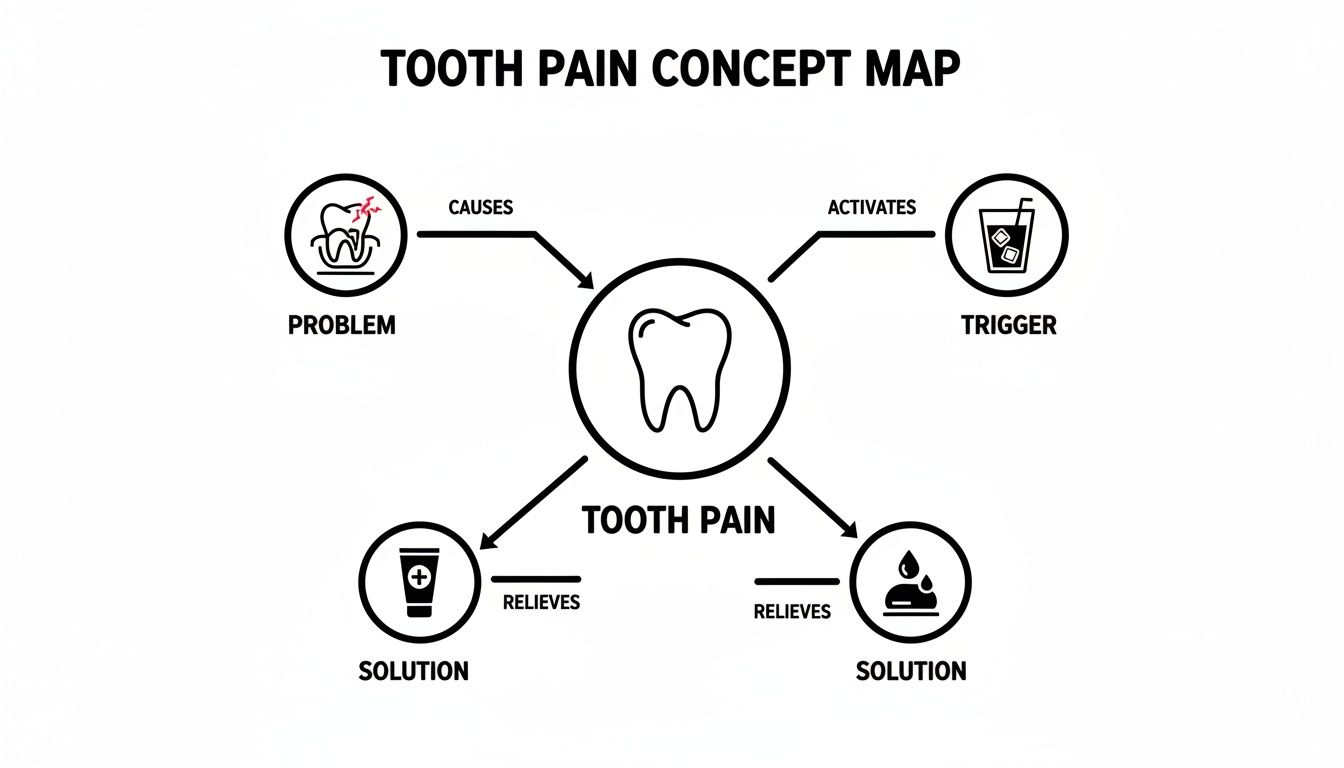
As you can see, the gel creates a much-needed barrier, directly interrupting the pain pathway created by those exposed dentin tubules.
Method 1: Calming Down the Nerve Signal
The first approach is all about "nerve depolarization," which sounds complicated but is actually pretty simple. Imagine your tooth nerve is like an overly sensitive car alarm that goes off at the slightest touch. Certain ingredients work to quiet that alarm system down.
The go-to ingredient for this job is potassium nitrate. It works by increasing the potassium ions around the nerve endings. This change essentially makes it harder for the nerve to fire off pain signals to your brain.
In simple terms, potassium nitrate tells the overactive nerve to take a chill pill. It doesn't physically block anything, but it turns down the volume on the pain signal, making the nerve less reactive to triggers.
This is a fantastic strategy for generalized sensitivity and it's why you'll see potassium nitrate in so many daily-use products, including the best types of toothpaste for sensitive teeth.
Method 2: Plugging Up the Pathways
The second strategy is more direct: it physically blocks the openings of the dentinal tubules. This process, called "tubule occlusion," is like putting tiny plugs in all those microscopic straws. It creates a protective seal, stopping triggers from ever reaching the nerve in the first place.
Here's a quick look at the key players that get this job done.
| Common Active Ingredients in Desensitizing Gels | | :--- | :--- | :--- | | Ingredient | How It Works | Best For | | Potassium Nitrate | Calms the tooth's nerve, making it less likely to send pain signals. | General, widespread sensitivity that needs ongoing management. | | Stannous Fluoride | Creates a protective mineral barrier over the exposed dentin tubules. | Both sensitivity relief and cavity prevention. | | Strontium Chloride | Forms tiny crystals that plug the openings of the dentin tubules. | Quick relief from sharp, localized sensitivity. | | Arginine & Calcium Carbonate | Works with saliva to form a mineral layer that seals the tubules naturally. | Building a long-lasting, durable barrier against triggers. |
By physically sealing off these microscopic pathways, ingredients like Stannous Fluoride and Strontium Chloride act like a temporary patch, providing both immediate and lasting relief from the sharp sting of tooth hypersensitivity.
How to Choose the Right Desensitizing Gel
Walking down the dental care aisle can feel a bit overwhelming, especially when you’re dealing with the sharp zing of tooth sensitivity and just want something that works. With so many desensitizing gels out there, how do you pick the right one? The first thing to know is that not all gels are created equal—they’re built for different problems and different ways of applying them.
For instance, you'll find gels designed specifically to be used with custom dental trays, which are perfect for calming your teeth before or after a whitening session. Others are more like a spot treatment, coming with a handy brush-on applicator so you can target that one troublemaker tooth. You'll even see remineralizing pastes that pull double duty, fighting sensitivity while strengthening your enamel.
The secret to finding your perfect match is simple: read the product label. That's where you'll find the active ingredients and their strength, which tells you exactly how the gel is going to bring you relief.
Decoding the Ingredients Label
Think of the ingredients list as your personal roadmap to a pain-free smile. Once you spot the main active ingredient, you’ll know if the gel works by calming down the nerve inside the tooth or by physically blocking the pathways that send pain signals. This is how you match the product to what’s actually causing your sensitivity.
Here’s a quick guide to help you out:
- Post-Whitening Sensitivity: If your teeth are screaming after a whitening treatment, you’ll want a gel with potassium nitrate. It’s brilliant at soothing the tooth's nerve, taking the edge off that temporary discomfort that whitening can sometimes cause.
- Daily Sensitivity Management: For that annoying, everyday sensitivity, look for a product with stannous fluoride. It gets the job done by creating a protective shield over the tiny exposed tubes in your dentin, giving you both pain relief and a defense against cavities.
It's no surprise that post-bleaching sensitivity is common, temporarily hitting up to 70% of people who whiten their teeth. This is where desensitizing gels from professional-grade brands like Shofu or Dentsply Sirona become a crucial part of a comfortable whitening routine. The market for these therapeutic gels is a big deal in oral care, which just goes to show how vital they are for preventive health. You can learn more about the growing tooth desensitizer market on datainsightsmarket.com.
The Advantage of Professional-Grade Brands
While plenty of over-the-counter options can do the trick, the professional-grade brands recommended by dentists—like the ones we carry here at DentalHealth.com—offer a level of reliability you can count on. These products aren’t just thrown on a shelf; they’re backed by serious testing and trusted by the pros for delivering consistent results.
When you choose a brand your dentist trusts, you're not just buying a product; you're investing in a solution that has been vetted for safety and effectiveness. This provides peace of mind, especially when dealing with persistent sensitivity.
By getting a handle on the different types of gels and learning what to look for on their labels, you can confidently pick a dental desensitizing gel that goes right to the source of your problem. This puts you back in control, letting you manage sensitivity whether it’s a temporary flare-up from whitening or a daily battle you need to win.
Your Step-By-Step Application Guide
Getting this stuff on your teeth correctly is the whole ballgame. It's the key to unlocking that fast, effective relief you're looking for. While every brand has its own specific instructions, a few universal steps will make sure you get the best (and safest) results from your at-home treatment.
Think of this less like a chore and more like a targeted therapy session for your teeth. When you apply it properly, you're maximizing the gel's contact with those sensitive spots, letting the active ingredients really work their magic. A consistent routine builds a much stronger, more reliable barrier against pain triggers like a cold drink or a bite of something sweet.
Our goal here is simple: get the gel where it needs to go without irritating your gums. Let's walk through it.
Prepare Your Teeth for Treatment
First thing's first: you have to start with a clean slate. You wouldn't paint a dirty wall, right? Same idea.
Give your teeth a thorough brushing with a soft-bristled toothbrush to clear away any plaque or leftover food particles. Really focus on the areas where you feel the most sensitivity. After you brush, floss carefully to clean between the teeth. This ensures the gel can reach every surface it needs to.
Pro Tip: Gently pat your teeth dry with a clean cloth or tissue right before you apply the gel. A drier surface helps the product stick better and stops it from getting diluted by saliva right away.
Applying the Desensitizing Gel
Once your teeth are clean and prepped, you're ready to go. The exact method will change depending on what kind of product you've got—some use custom trays, others are brush-on applicators, and some even use swabs.
For a typical tray-based application, just follow this simple, five-step process:
- Dispense the Right Amount: Squeeze a small, continuous bead of gel into the inner front side of your dental tray. You really only need a tiny bit. Using too much just causes it to ooze out and can bother your gums.
- Seat the Tray: Carefully place the tray over your teeth, making sure it fits snugly. I like to gently press on the front of the tray with my fingers to help the gel spread evenly across my teeth.
- Wipe Away Excess: This is a crucial step! Use a clean finger or a soft-bristled toothbrush to wipe away any gel that has squeezed onto your gums. This is the best way to prevent any temporary irritation.
- Wait Patiently: Pop in some headphones and relax. Wear the trays for the time recommended by the manufacturer, which is usually somewhere between 15 and 30 minutes. Don't eat or drink anything during this time.
- Clean Up: When the timer goes off, remove the trays. Rinse your mouth out well with water, but hold off on brushing your teeth again right away. Clean your trays with cool water and a toothbrush before you put them away.
To get the full benefit of the treatment, try to avoid eating or drinking anything for at least 30 minutes afterward. This gives the active ingredients plenty of undisturbed time to get the job done.
What to Expect and When It's Time to See a Dentist
So, you've started using a desensitizing gel. The big question on your mind is probably, "How long until this works?" It's a fair question, but the answer isn't one-size-fits-all. Some people feel a welcome wave of relief after their very first application. For others, it’s more of a slow build, taking several days of consistent use to really notice a difference.
The key here is patience and consistency. Think of it like starting a new workout routine; you don't see results after one trip to the gym. Applying the gel regularly as directed allows those active ingredients to work their magic, building up a protective barrier and giving you that lasting comfort you're looking for.
While these gels are incredibly safe, you might run into a minor, temporary side effect or two. The most common one is a bit of gum irritation. This usually only happens if you've been a little too generous with the gel and it squishes out of the dental tray onto your gums. An easy fix? Just wipe away any excess from your gums before you start the treatment.
Setting Realistic Expectations
It helps to know what's normal when you start using a desensitizing product. Here’s a quick rundown of what to expect and how to handle it:
- Initial Relief: You might feel a noticeable drop in sensitivity within the first 1-3 applications.
- Managing Gum Irritation: If your gums feel a little tender, double-check that you’re using just a small bead of gel and keeping it off your gum tissue.
- No Immediate Change: Don't get discouraged if nothing happens right away. Keep using the gel as directed for at least a week to give it a fair shot to build up its effects.
When Sensitivity Is a Red Flag for Something More
A dental desensitizing gel is a lifesaver for managing sensitivity caused by things like enamel wear or that zingy feeling after a whitening treatment. But it’s really important to know its limits. Sometimes, tooth sensitivity is your mouth's way of waving a red flag, signaling a bigger issue that a gel simply can't fix.
Think of tooth pain as your body’s built-in alarm system. A desensitizing gel can quiet the alarm, but you never want to ignore what’s triggering it. Masking the pain of a serious problem can let it snowball into something much more complex and costly down the road.
If your sensitivity just won't quit despite using the gel regularly, or if you notice any of the following, it’s time to pick up the phone and call your dentist:
- Sharp, nagging pain that hangs around for more than 30 seconds after eating or drinking something hot or cold.
- Pain when you bite down or chew your food.
- A visible hole, crack, or dark spot on the tooth in question.
- Gums that are swollen, red, or bleeding around the sensitive tooth.
These aren't just minor annoyances; they could be signs of a cavity, a cracked tooth, or even gum disease. All of these require a professional to take a look. Using a desensitizing gel responsibly is about more than just feeling better—it's about knowing when it's time to call in the experts to protect your long-term oral health.
Weaving Desensitizing Gels Into Your Oral Care Routine

Alright, you've got the science down. Now, let's talk about the real world—how to fit this powerful tool into your daily life without missing a beat. The best way to think about a dental desensitizing gel is not as a one-off treatment but as a go-to player in your oral health toolkit, ready to jump in whenever you need it.
For a lot of people, its most popular use is as a sidekick to a teeth whitening regimen. Applying a desensitizing gel with potassium nitrate either right before or after a whitening session can be a total game-changer. It can turn what might be an uncomfortable, zinger-filled experience into a surprisingly smooth and easy process by getting ahead of that temporary sensitivity.
Practical Scenarios for Everyday Use
The beauty of these gels is how simple and adaptable they are. You can completely customize how you use them based on what your teeth are telling you.
-
During Orthodontic Treatment: Anyone who’s had braces or clear aligners knows about the sore spots and general achiness. Dabbing a little gel on those irritated areas can bring targeted relief and make the whole journey a lot more comfortable.
-
For Retainer Maintenance: Once the braces are off, retainers become a lifelong partner. Using a desensitizing gel in your retainer every so often can help soothe any lingering sensitivity and keep things comfortable for the long haul.
-
Managing Chronic Sensitivity: If you're tired of that sharp pang from hot coffee or cold water, applying the gel to those specific troublemaker teeth a few times a week can build up a really solid, lasting barrier against the pain.
Taking Back Control of Your Comfort
At the end of the day, a dental desensitizing gel puts you back in the driver's seat of your own comfort. Whether you're chasing a brighter smile or just want to enjoy an ice cream cone without that dreaded wince, this product offers a direct line to relief.
When you start using a desensitizing gel, you're not just putting a bandage on a symptom; you are actively managing it at the source. This small shift in your approach can lead to fast pain relief, far more comfortable whitening sessions, and a genuine improvement in your day-to-day oral well-being.
Products like remineralizing pastes can offer similar benefits by working to strengthen your enamel from the outside in. If that sounds interesting, you can learn more about how they work in our guide on how to use MI Paste Plus. Having this knowledge lets you confidently tackle tooth sensitivity and get back to enjoying a comfortable, happy smile.
Your Questions, Answered
Jumping into a new dental care product can bring up a few questions. We get it. To make sure you feel totally comfortable and informed, we’ve put together answers to some of the most common things people ask about desensitizing gels.
Can I Use Dental Desensitizing Gel Every Day?
That's a great question, and the answer really hinges on the specific gel you've chosen.
Most of the over-the-counter gels you'll find, especially those with potassium nitrate, are formulated to be gentle enough for daily use—think of them as a supercharged version of your daily sensitivity toothpaste. They work by building up protection over time for consistent, day-to-day comfort.
On the other hand, some of the more concentrated, professional-strength formulas are best used for short-term relief. These are perfect for tackling that sharp sensitivity that can pop up after a teeth whitening treatment.
The most important takeaway? Always, always follow the directions on the package or the specific advice from your dental team. For chronic sensitivity, sticking to the recommended daily routine is the secret to building—and keeping—that protective shield against pain.
How Is a Desensitizing Gel Different From a Sensitivity Toothpaste?
While they both fight sensitivity, the biggest differences between a desensitizing gel and a sensitivity toothpaste boil down to two key things: the concentration of the active ingredients and the way you use it.
Sensitivity toothpastes have a lower dose of ingredients like potassium nitrate or stannous fluoride. They're designed for your regular brushing routine, offering a slow-and-steady approach to managing sensitivity as part of your daily cleaning.
Desensitizing gels are more like a potent, targeted treatment. You apply the gel directly to the spots that are giving you trouble and leave it on for a bit. This lets the more powerful ingredients get to work right where you need them for faster, more direct relief.
Will Desensitizing Gel Affect My Teeth Whitening Results?
Not at all! When you use it correctly, a desensitizing gel won't mess with your whitening results one bit. In fact, many dentists actually recommend using one alongside your whitening treatments to make the whole experience a lot more pleasant.
A common pro-tip is to apply the gel in your whitening trays either right before or just after a session. It’s a great way to proactively calm the nerves in your teeth and head off those notorious "zingers" without getting in the way of the whitening agent. Just be sure to check the product instructions to get the timing right and make the most of both treatments.
Ready to finally get a handle on your tooth sensitivity and start enjoying a more comfortable smile? At DentalHealth.com, we've hand-picked a selection of professional-grade desensitizing gels that dentists trust. Find the perfect solution for your needs and get fast, free shipping on your order today!