
How long does teeth whitening last: Extend your brighter smile with expert tips
So, you're wondering how long that bright, white smile will actually last. It’s the million-dollar question, and the honest-to-goodness answer is that it varies quite a bit—anywhere from a few months to three years.
It really boils down to two things: the whitening method you chose and your day-to-day habits.
Your Whitening Results Timeline Explained
Think of your freshly whitened teeth like a brand-new white t-shirt. It looks fantastic at first, but over time, things like coffee, red wine, or pasta sauce are bound to leave their mark. The same principle applies to your smile.
Understanding the realistic timeline for each whitening option is the first step in protecting your investment and keeping that smile looking its best. Some treatments give you that instant "wow" factor, while others are a slower, steadier burn. The trick is to find what works for your teeth, your lifestyle, and how much upkeep you're willing to do.
Comparing Whitening Timelines
Not all whitening is created equal. The strength of the whitening gel, how it's applied, and whether a pro is involved all make a huge difference in how long you can expect the results to stick around.
- Professional In-Office Whitening: This is the heavyweight champion of longevity. A single, high-powered treatment at the dentist's office can keep your smile dazzling for 1 to 3 years.
- Professional At-Home Kits: These kits, like the ones you can get from DentalHealth.com, are a fantastic middle ground. With good habits and occasional touch-ups, your results can easily last for up to a year or more.
- Over-the-Counter (OTC) Strips: A solid choice for a quick boost, but they're more of a temporary fix. You can typically expect the brightness to fade after about 3 to 6 months.
- Whitening Toothpastes & Rinses: These are your daily maintenance crew. They're great at polishing away new surface stains but don't provide deep, dramatic whitening. Their effects are pretty much tied to how consistently you use them.
For a quick overview, here's how the most popular options stack up against each other.
Teeth Whitening Longevity at a Glance
This table gives you a quick snapshot of what to expect from different whitening methods, helping you match the right solution to your goals.
| Whitening Method | Average Duration | Best For |
|---|---|---|
| In-Office Professional | 1–3 Years | Maximum impact and longest-lasting results from a single session. |
| Professional At-Home Kits | Up to 1 Year | Excellent, lasting results with the convenience of at-home touch-ups. |
| Over-the-Counter Strips | 3–6 Months | A budget-friendly option for a temporary brightness boost. |
| Whitening Toothpastes | Ongoing Maintenance | Polishing away daily surface stains to maintain your current shade. |
As you can see, the path you choose has a direct impact on how long you'll enjoy the rewards.
The Professional Advantage
There's a reason professional in-office whitening delivers the most staying power. Dentists use powerful, high-concentration hydrogen peroxide gels (often 25-40%), which are way stronger than anything you can buy over the counter. Sometimes, they even use a special light to kick the process into high gear, potentially lightening your teeth by up to eight shades in just one visit.
This intensive approach is precisely why the results last so much longer than at-home options. You can dive deeper into the numbers by checking out these handy teeth whitening statistics.
Ultimately, while a trip to the dentist gives you the biggest initial bang for your buck, a professional-grade at-home kit is your best bet for maintaining that glow long-term, putting you in complete control of your smile's radiance.
Professional vs. At-Home Whitening: A Detailed Comparison
Deciding between professional and at-home whitening is a bit like choosing between a personal trainer and a top-of-the-line home gym. One gives you a powerful, fast-tracked session with immediate, dramatic results. The other offers a more flexible, consistent path to hitting and maintaining your goals for the long haul.
In-office whitening is that personal trainer experience. In just one visit, your dentist applies a high-concentration hydrogen peroxide gel, often accelerated by a specialized light. It’s a sprint, delivering a smile that can jump several shades lighter in about an hour. It’s incredibly powerful, efficient, and the perfect solution if you're looking for a major transformation for an upcoming wedding or event.
On the flip side, professional-grade at-home kits are your premium home gym. These systems use custom-fitted trays and carbamide peroxide gel—a gentler but highly effective whitening agent that slowly breaks down into hydrogen peroxide. This approach is a marathon. It’s a steady, consistent process over several days or weeks that achieves a deep, lasting brightness that really settles into the tooth.
This chart really breaks down the hierarchy of whitening longevity, from the heavy-hitting professional treatments to daily maintenance options.
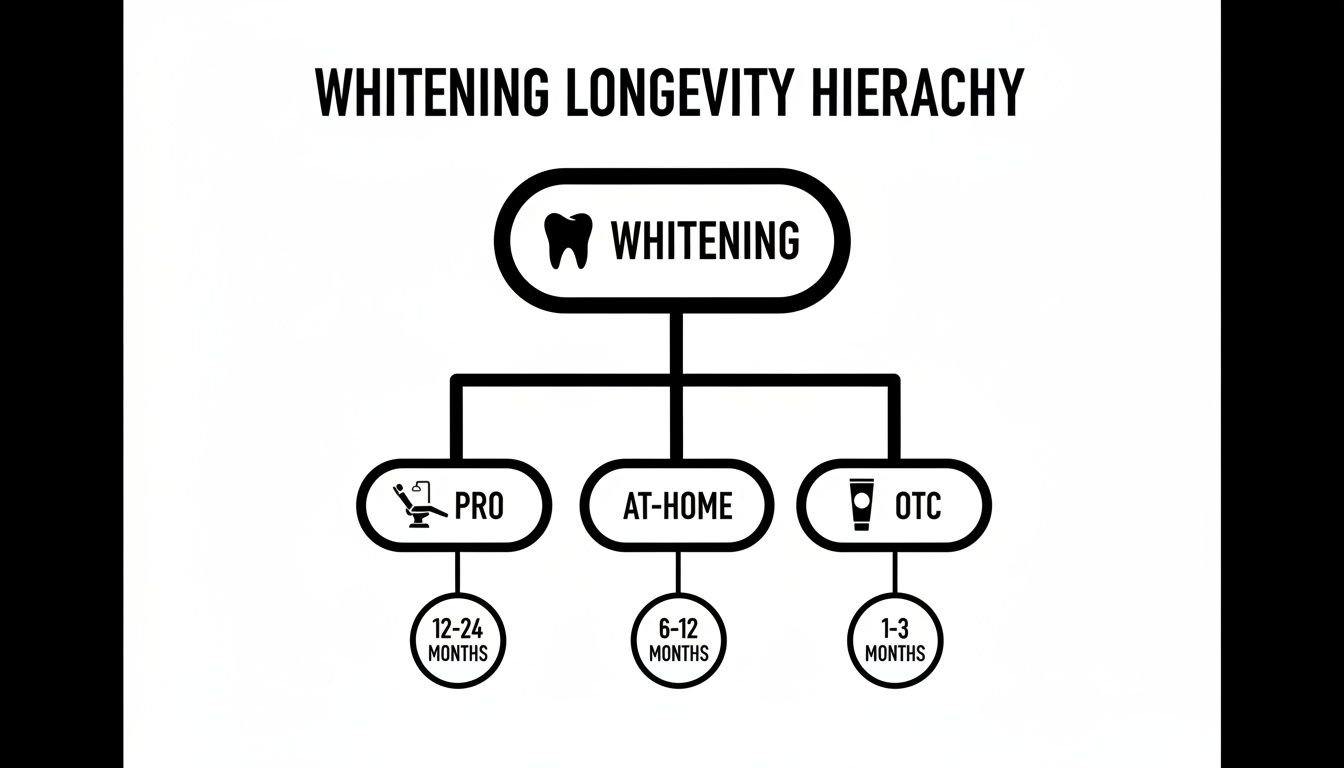
As you can see, there’s a clear trade-off. Professional methods give you the longest-lasting results, while at-home and over-the-counter options provide more accessible but shorter-term brightness.
The Power of Professional-Grade At-Home Kits
The real magic of at-home kits from your dentist or a trusted source like DentalHealth.com is their sustainability. While an in-office treatment gives you a fantastic head start, at-home kits empower you to keep that peak whiteness going indefinitely.
Think of it like getting your car detailed. The professional job makes it look showroom-new, but it’s the regular washes at home that keep it that way. At-home trays offer the unique advantage of easy and affordable touch-ups. When you notice new coffee or wine stains creeping in months down the line, there’s no need for another expensive dental visit. You just pop in your trays for a night or two, and that initial brilliance is back.
The ability to perform periodic touch-ups is arguably the greatest advantage of at-home tray systems. It bridges the gap between a one-time treatment and a continuously bright smile, putting long-term maintenance directly in your hands.
This level of control is a game-changer. It shifts the question from "How long will my whitening last?" to "How long do I want it to last?"
Comparing Core Differences
So, what are the key distinctions between the sprint of in-office whitening and the marathon of professional at-home kits? Let's break it down.
- Mechanism and Strength: In-office treatments use a powerful 25-40% hydrogen peroxide gel for rapid, deep bleaching. At-home kits typically use 10-35% carbamide peroxide, which is gentler on enamel and perfect for gradual, controlled whitening over time.
- Convenience: In-office whitening is a one-and-done appointment. At-home kits require you to consistently wear the trays for 30-60 minutes daily over one to two weeks, but you can do it while watching TV or reading a book.
- Cost: A single professional session can be a pretty significant investment. At-home kits are considerably more affordable, especially when you factor in the low cost of simply buying refill gels for future touch-ups.
- Sensitivity: The high-strength gels used in-office are more likely to cause some temporary sensitivity. The slower, more gradual approach of at-home kits is often a much more comfortable experience, especially for those with sensitive teeth. You can learn more about how to get great results with professional teeth whitening at home in our detailed guide.
Long-Term Results and Maintenance
This is where professional at-home kits truly shine. When you use at-home whitening trays with a dentist-approved carbamide peroxide gel—like the 10-35% strengths found in brands like PolaNight or Opalescence—your results can easily last 1 year or longer, as long as you keep up with good oral hygiene.
You'll start seeing noticeable changes in about a week, with peak brightness hitting around two to four weeks, depending on the gel’s concentration and how long you wear the trays. These custom-fit trays easily outperform over-the-counter strips by getting the gel into every nook and cranny, lightening teeth by one to two shades per treatment cycle.
Ultimately, the best choice really depends on your goals and lifestyle. For a complete overview of the different methods out there, including both pro and at-home solutions, check out Your Guide to Teeth Whitening Options. But for sustained, controllable brightness, a professional at-home system offers an unbeatable combination of effectiveness, convenience, and long-term value.
The Role of Daily Maintenance Products
If you think of professional whitening as the major overhaul for your smile, then daily maintenance products are the crew that keeps it looking pristine. Whitening toothpastes, rinses, and even some over-the-counter strips aren't designed to take you ten shades lighter. Instead, their job is to play a vital supporting role, preserving the beautiful results you’ve already worked so hard to get.
These products are your first line of defense against the daily flood of staining culprits like coffee, tea, and red wine. They get to work on new surface stains before they can really settle in, which is a simple but incredibly effective way to extend the life of your main whitening treatment and protect your investment.
How Whitening Toothpastes and Rinses Work
The way these daily products work is totally different from professional-strength gels. Instead of deep bleaching, they're all about surface-level upkeep.
- Whitening Toothpastes: Most of these formulas contain very mild abrasives, like hydrated silica. Think of them as tiny, gentle polishers that scrub away the film left behind by your morning coffee or that bowl of berries. Some even have a low dose of peroxide to provide a subtle brightening boost over time.
- Whitening Rinses: These mouthwashes often have ingredients that prevent new stains from sticking to your enamel in the first place. Some also contain a little hydrogen peroxide to help maintain your current shade. They essentially create a shield that makes it tougher for stain molecules to grab hold.
It's crucial to understand that these products are only effective as long as you use them. They're built for consistency. They'll keep your smile bright, but if you stop using them, stains will eventually start to creep back in. Their main purpose is fighting off daily discoloration, not tackling deep, old stains.
Setting Realistic Expectations for Longevity
So, what can you realistically expect from these daily defenders? Whitening toothpastes and rinses offer a maintenance window of about three to four months. This makes them a fantastic option for managing sensitivity between treatments or as a touch-up tool alongside more powerful kits from DentalHealth.com.
Research has shown that using a whitening toothpaste twice a day can produce visible results in two to six weeks, mainly by polishing away surface stains, with those effects lasting up to four months. Similarly, rinses with hydrogen peroxide might lighten teeth by one or two shades after about three months of consistent, twice-daily use. You can find a great in-depth analysis of whitening longevity that explores this further.
Integrating Maintenance into Your Routine
Consistency is everything. These products are meant to be a seamless part of your daily oral hygiene, not a one-off whitening fix.
Think of it like washing a white car. A professional detailing (in-office whitening) gets it looking perfect, but it’s the regular washes (whitening toothpaste) that keep it from getting grimy again. One without the other leads to lackluster results over time.
For the best possible upkeep, try this simple approach:
- Start with a Clean Slate: Begin using maintenance products after you’ve completed a primary whitening treatment, whether it was at the dentist's office or with an at-home kit.
- Brush with Purpose: Use a quality whitening toothpaste twice a day, every single day. This is your best bet for removing that daily film of stains before it builds up.
- Rinse and Protect: Follow up with a whitening rinse, especially after you've had something known to stain, like tea or red sauce.
This daily defense is powerful, but it's even more effective when your enamel is strong and healthy to begin with. Strong enamel is your natural barrier against both stains and sensitivity. For some actionable tips, check out our guide on ways to strengthen tooth enamel. When you pair a smart maintenance routine with strong enamel, you’re creating the perfect environment to keep that smile brighter for much, much longer.
Key Factors That Cause Whitening to Fade
So you’ve got a brighter smile—now the real work begins: keeping it that way. Think of your newly whitened teeth like a brand-new white shirt. It looks amazing, but it's also a magnet for every potential stain it comes across. Understanding what causes that brightness to fade is the first step in defending your investment.
The main culprits are powerful color molecules called chromogens. These compounds are hiding in many of the foods and drinks we enjoy every day, and they are experts at latching onto tooth enamel and slowly dulling your smile.
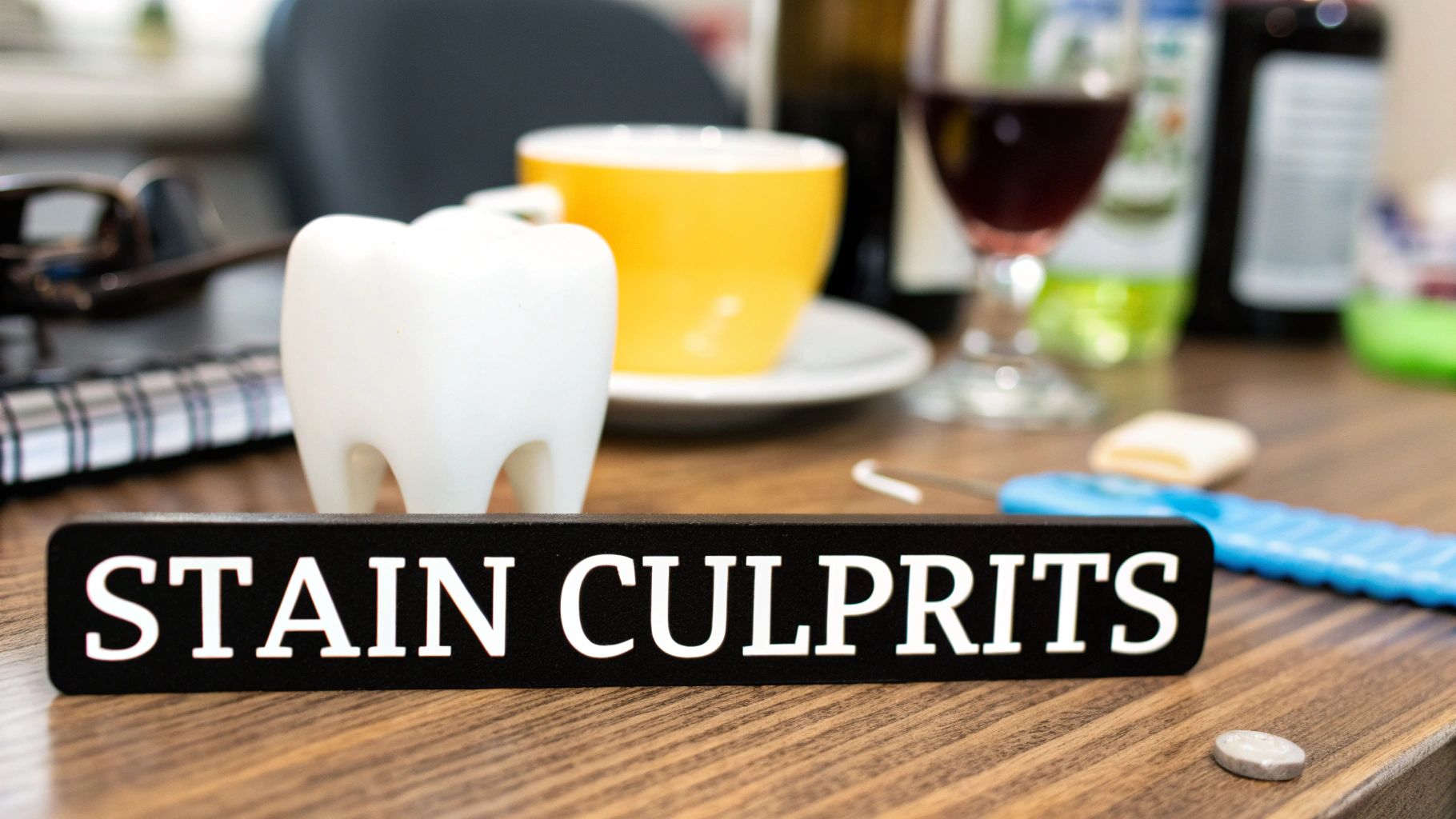
This isn’t an overnight disaster. It's a slow creep, the result of daily habits that chip away at your whitening progress. By getting to know these "enemies" of a white smile, you can stay one step ahead and keep your teeth looking fantastic for much longer.
Dietary Habits: The Biggest Contributor
What you eat and drink is, without a doubt, the single most important factor in how long your whitening results last. Some items are notorious for causing discoloration and can start to reverse the effects of a treatment surprisingly quickly.
It's not just about dark pigments. Many of these offenders also contain acids and tannins, which actually etch the surface of your enamel, making it rougher and even easier for stains to grab hold.
Here are the top dietary culprits to watch out for:
- Coffee and Tea: These daily rituals are probably the most common source of tooth stains. Their dark color and high tannin content create the perfect recipe for stubborn discoloration that builds up with every cup.
- Red Wine: Famous for its deep red pigments and tannins, red wine can stain teeth almost instantly. That purplish hue you see after a glass isn't your imagination.
- Dark Sodas and Juices: Colas, grape juice, and cranberry juice deliver a one-two punch of acids and dark coloring agents that can both erode enamel and leave stains behind.
- Colorful Sauces: Think soy sauce, balsamic vinegar, and rich tomato sauces. They're highly pigmented and acidic, making them major contributors to staining over time.
- Berries and Dark Fruits: While they're great for your health, vibrant fruits like blueberries, blackberries, and pomegranates pack a colorful punch that can cling to your enamel.
This doesn't mean you have to give up your favorite foods. It’s about being mindful. Simply rinsing your mouth with water after you indulge can go a long way in minimizing their staining power.
Lifestyle Choices That Reverse Your Results
Beyond what’s on your plate, a few key habits can put the fading process into overdrive. These choices can undo your whitening progress faster than anything else.
Smoking is at the top of the list. The tar and nicotine from tobacco products are incredibly invasive, seeping into the microscopic pores of your tooth enamel. This creates deep, stubborn yellow or brown stains that are a nightmare to remove and can ruin months of whitening work in a matter of weeks.
Your daily oral hygiene routine is your primary defense against new stains. Failing to brush and floss regularly allows plaque to build up on your teeth, creating a sticky surface that stains love to cling to.
Think of plaque as a magnet for discoloration. When it’s not removed, the chromogens from your food have the perfect place to settle in and get comfortable. Consistent brushing and flossing don’t just protect your health; they physically scrub away the daily buildup that causes your bright smile to fade.
The Natural Structure of Your Teeth
Finally, the way your teeth are built plays a role, too. Your unique dental anatomy, especially the thickness and porosity of your enamel, is a key factor that's mostly down to genetics.
Some people just naturally have more porous enamel, meaning it has more tiny openings where stain molecules can get trapped. If your enamel is on the thinner side, the naturally yellowish layer of dentin underneath can show through more easily, impacting the overall shade of your smile.
On top of that, our enamel naturally thins as we get older, and teeth tend to accumulate more stains over the years. It’s a normal part of aging, but it highlights just how important a solid maintenance routine is for combating these natural changes and keeping your smile looking its best.
How to Make Your Teeth Whitening Last Longer
Getting that brilliantly white smile feels fantastic, but the real trick is making it last. Think of your initial whitening treatment as just the first step. To keep that brightness from fading, you need a smart defensive strategy to protect your investment.
The key is shifting your mindset from a one-time fix to simple, ongoing maintenance. With a few easy tweaks to your daily routine and a good touch-up plan, you can turn that temporary boost into a permanent feature of your smile.
Protect Your Smile Immediately After Treatment
The first 48 hours after any whitening treatment are absolutely crucial. During this short window, your tooth enamel is temporarily more porous, almost like a sponge, making it incredibly easy for new stains to set in. This is your single best opportunity to lock in those fresh, bright results.
This is where the famous "white diet" comes in. For just two days, stick to light-colored foods and drinks that won’t leave behind any pigments on your newly whitened enamel.
Here are a few safe bets for your post-whitening menu:
- Proteins: Grilled chicken breast, turkey, white fish, tofu, and egg whites.
- Carbohydrates: White rice, pasta with a white sauce (like Alfredo), potatoes, and plain bread.
- Fruits and Veggies: Bananas, apples, pears, cauliflower, and onions.
- Dairy: Plain yogurt, milk, and white cheeses.
By avoiding colorful culprits like coffee, red wine, and berries for a couple of days, you give your enamel the time it needs to remineralize and become less porous again, creating a much stronger shield against future staining.
Adopt Smart Daily Habits
Long-term success really comes down to the small choices you make every day. You don't have to give up your morning coffee or that glass of red wine forever, but a few simple hacks can dramatically reduce their staining power.
A couple of game-changing habits can make all the difference.
When you drink staining beverages like coffee, dark tea, or soda, use a straw. This simple trick lets the liquid bypass your front teeth, minimizing direct contact and significantly reducing its impact on your smile's brightness.
Another powerful yet simple habit is to rinse your mouth with water right after eating or drinking anything that could stain. A quick swish helps wash away acidic residues and staining compounds before they have a chance to settle in. It’s a tiny action that delivers big long-term rewards.
Here’s a simple checklist to keep your maintenance on track.
Your Smile Maintenance Checklist
| Action Item | Frequency | Why It Works |
|---|---|---|
| Brush with whitening toothpaste | 2x Daily | Gently polishes away new surface stains before they can set. |
| Use a straw for dark drinks | Always | Minimizes direct contact between staining liquids and your front teeth. |
| Rinse with water after meals | After eating/drinking | Washes away staining particles and acids immediately. |
| Floss daily | 1x Daily | Removes plaque buildup between teeth, where stains often hide. |
| Schedule regular dental cleanings | Every 6 months | Professional cleanings remove tartar and stubborn stains that brushing misses. |
| Perform touch-up treatments | Every 3-6 months | Lifts accumulated stains to restore your initial whitening results. |
Following these simple steps will help you stay on defense and keep your smile looking its best for much, much longer.
Master the Art of the Touch-Up
Even with the best habits, some gradual fading over time is completely normal. That’s where touch-up treatments become your secret weapon for maintaining that peak brightness. A well-timed touch-up can erase new surface stains and bring your smile right back to its "just-whitened" glory.
Using a professional-grade at-home kit from a trusted source like DentalHealth.com makes this process incredibly easy and affordable. Instead of scheduling another full dental visit, you can simply use your custom trays and whitening gel for a night or two.
How often should you touch up? It really depends on your lifestyle:
- For most people: A quick touch-up session every 4 to 6 months is perfect for erasing minor discoloration.
- If you regularly consume staining items: You might want to do a brief touch-up every 3 months to stay ahead of new stains.
This simple maintenance plan turns teeth whitening from a one-off event into a sustainable routine. To learn even more about maximizing your results, check out these strategies on how to maintain white teeth for a permanently bright smile. By combining smart daily habits with periodic touch-ups, you gain complete control over how long your bright smile lasts.
Managing Whitening Sensitivity and Planning Your Next Steps
Feeling a bit of tooth sensitivity after whitening is completely normal and, thankfully, almost always temporary. So, what's going on in there? Think of your tooth enamel as having tiny, microscopic pores. The whitening gel needs to get into these pores to break down the deep-set stains that have built up over the years.
This process can temporarily dehydrate the inner part of your tooth, the dentin, making the nerves inside a little more reactive to hot and cold. It’s a good sign that the treatment is working, but it can definitely be uncomfortable. The great news is this sensitivity usually fades within 24 to 48 hours as your teeth naturally rehydrate.
Even better, you don't just have to ride it out. There are some simple, highly effective ways to soothe your teeth so you can focus on enjoying your brilliant new results.
Simple Strategies for Soothing Sensitivity
Getting ahead of post-whitening sensitivity is all about calming those overactive nerves and helping your enamel get back to normal. A few key products can make all the difference.
- Use a Desensitizing Toothpaste: Look for formulas with potassium nitrate or stannous fluoride. These ingredients are fantastic because they work by blocking the tiny pathways from the tooth surface to the inner nerve, essentially dialing down the sensitivity.
- Apply a Remineralizing Paste: Products like MI Paste are loaded with calcium and phosphate, which are the natural building blocks of your enamel. A small application can help replenish these minerals and get you feeling better, faster.
- Avoid Temperature Extremes: For the first day or two after whitening, stick to lukewarm foods and drinks. This gives your teeth a much-needed break from the shock of anything too hot or too cold.
For a deeper dive, check out our guide on how to reduce teeth sensitivity after whitening. Taking these proactive steps will make your journey to a brighter smile that much more comfortable.
Choosing Your Next Whitening Step
Once you've got any sensitivity under control, you can start thinking about how to keep that bright smile going. The real answer to "how long does teeth whitening last?" really comes down to the choices you make from here on out. Let’s quickly go over your best options.
Your whitening journey doesn't end after the first treatment. It just evolves into a simple maintenance plan where you have complete control over keeping your smile bright and radiant for years to come.
Whether you’re just starting, touching up, or simply maintaining, there’s a clear path forward for you.
- For a Major Transformation: If you're tackling deep, stubborn stains for the first time, nothing beats the one-two punch of an initial professional treatment followed by an at-home kit for maintenance. This combo delivers the most dramatic and long-lasting results.
- For Consistent Brightness: An at-home professional kit from DentalHealth.com is your secret weapon for long-term success. It gives you the power to achieve a fantastic result and then perform quick, easy touch-ups every few months to keep it that way.
- For Daily Upkeep: Weaving a quality whitening toothpaste and rinse into your daily routine is the easiest way to fend off new surface stains from coffee, tea, and food. This simple habit can really extend the time between your main touch-up treatments.
Now that you understand your options and how to handle any potential side effects, you’re fully equipped to get—and keep—a dazzling smile that lasts.
Got Questions About Your Whitening Results? We've Got Answers.
Even after you've mapped out your path to a brighter smile, a few questions can pop up. Let's walk through some of the most common ones so you can feel completely confident about keeping your teeth white for the long haul.
Does Teeth Whitening Permanently Damage Enamel?
Absolutely not. When you use professional-grade whitening products as directed, they are proven to be perfectly safe and won't harm your tooth enamel. Think of it this way: the active ingredients are just lifting stains out of the microscopic pores in your teeth, not stripping away the enamel itself.
You might feel some temporary sensitivity, which is normal. It happens because the inner tubules of the tooth are briefly exposed during the process, but this usually fades within a few days. Using a remineralizing paste after whitening can help your enamel feel strong and comfortable again.
Can I Whiten Crowns Or Veneers?
This is a big one. Whitening treatments only work on your natural tooth enamel. They simply won't change the color of any dental work you have, like crowns, veneers, fillings, or bonding.
If you whiten your natural teeth, your existing dental work might suddenly look mismatched and out of place. It's super important to talk with your dentist before you start whitening. They can help you time everything correctly to ensure you get a consistent, beautiful result across your entire smile.
Key Takeaway: Always plan your whitening journey with existing dental work in mind. Whitening agents won't alter the color of restorations, so timing is essential for a seamless smile.
How Often Should I Do A Whitening Touch-Up?
How often you'll need a touch-up really comes down to your lifestyle and how bright you want to keep your smile. For most people using at-home kits with whitening gel, a quick session of one to three applications every 4 to 6 months is more than enough to keep new stains at bay.
Now, if you're a big fan of coffee, tea, or red wine, you might want to bump that up to a touch-up every 3 months. The key is to avoid over-whitening. This helps prevent unnecessary sensitivity and keeps your teeth in great health.
Ready to maintain that brilliant smile with professional-grade products? Explore our complete collection of whitening gels, sensitivity treatments, and maintenance essentials at DentalHealth.com. Find the perfect touch-up kit for your needs and enjoy free shipping on all USA orders at https://dentalhealth.com.