
How to Keep Teeth White After Whitening: Habits That Work
In a 2025 survey published in The Open Dentistry Journal, 434 of 500 respondents (86.8%) said smoking and tea or coffee should be avoided after teeth whitening (The Open Dentistry Journal). Nearly nine in ten people, in other words, believe the secret is a longer list of forbidden things. The clinical evidence says the secret is smaller than that: frequency and timing.
Two patients can leave the same chair with the same shade and look different eight months later. The one who sips iced coffee from a tumbler between 9 a.m. and 4 p.m. picks up more pigment than the one who drinks a single cup at breakfast and rinses afterward, even if the second person orders red wine at dinner twice a week. Duration of contact beats quantity consumed.
So the practical answer to how to keep teeth white after whitening is a plan that targets repeated, prolonged exposure and badly spaced touch-ups. Everything else, including most of the food rules you've read, matters far less than people assume.
How Long Whitening Results Really Last
1 to 2.5 years is the range for color stability reported by most authors in a systematic review of home dental bleaching, although the long-term evidence was not fully consistent. It is a useful reference, not a guarantee: frequent exposure to staining substances can bring discoloration back sooner.
The review identifies diet and personal habits as major contributors to extrinsic discoloration. Severe intrinsic discoloration, such as tetracycline staining, can also affect how stable the result looks.
| Exposure pattern | Expected result | Evidence basis |
|---|---|---|
| Frequent coffee, red wine or tobacco use | Re-staining may occur sooner | Systematic review of home bleaching |
| Less frequent exposure to staining substances | Color may remain stable longer | Systematic review of home bleaching |
| Low-staining habits with good hygiene | Color stability commonly lasts about 1 to 2.5 years | Systematic review of home bleaching |
| Severe intrinsic discoloration such as tetracycline staining | Greater recurrence and faster fading | Systematic review of home bleaching |
Use the table as a guide to relative risk, not a promise about a specific deadline. Frequent exposure can shorten the result; avoiding every staining food is not a requirement for keeping teeth white. Severe intrinsic discoloration may also fade sooner than surface stain, regardless of routine.
The difference between surface stain and shade drift
Two changes can make teeth look darker over time.
Extrinsic stain is pigment that collects on the tooth surface. Coffee, tea, wine and smoke can contribute to it. Reducing repeated exposure can help limit its buildup.
Shade drift is a gradual change in the tooth's underlying appearance as enamel thins and the naturally yellower dentin beneath it becomes more visible. Whitening does not reverse that change. If your shade shifts steadily despite consistent habits, more frequent bleaching or harder brushing may not address the cause.
A shade schedule you can keep
Bleaching studies commonly assess color stability at 3, 6, 12 and 24 months. Those checkpoints also align with NHS patient guidance on tooth whitening. Use the same light and reference each time, so you can compare like with like.
- Check at 3, 6, 12 and 24 months. Record what you see rather than relying on memory.
- Before the 6-month check, track one week of exposure. Count coffees, teas, wines and cigarettes to see which habits are most frequent.
- Schedule a professional cleaning with a shade check. Surface deposits and calculus can affect the appearance of teeth.
- Touch up only if the shade has dropped noticeably and another cause does not explain the change.
A shade that slips early may reflect frequent staining exposure. A result that remains stable calls for no extra bleaching.
Daily Habits That Slow Re-Staining
You've heard the rule. No coffee, no tea, no red wine, no cola, no berries, no soy sauce, no curry, for 24 to 48 hours and sometimes for weeks.
The strongest synthesis available doesn't back that as a requirement. A systematic review and meta-analysis of dietary restriction around bleaching found no significant improvement in tooth color one month after treatment among patients who restricted their diet (p = 0.90), and concluded a restricted diet isn't necessary for better bleaching outcomes.
That finding doesn't make every food neutral. It separates two things people constantly confuse.
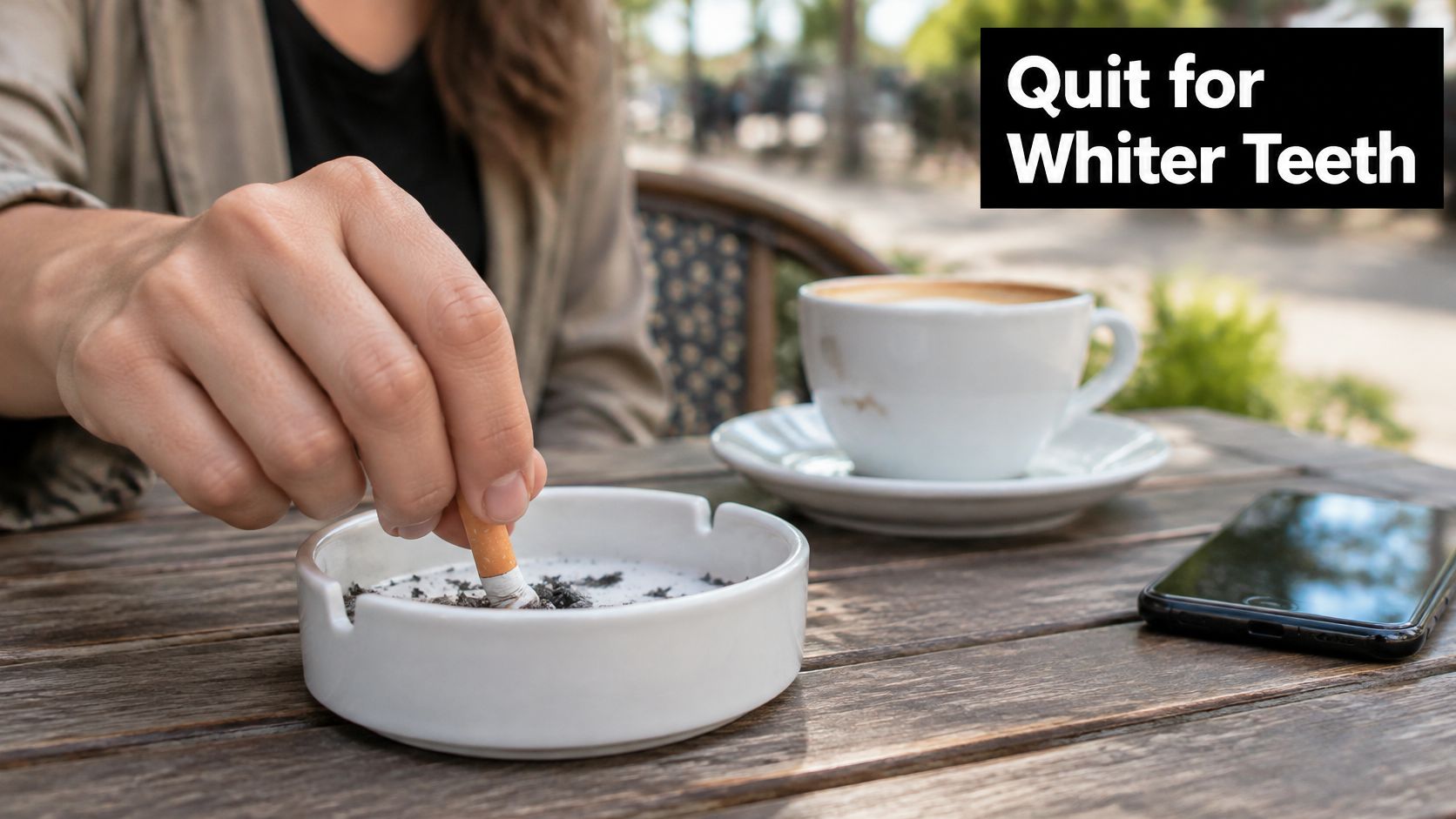
The habit in the picture below matters more than any item on the forbidden list.
Why frequency beats the forbidden list
Short-term whitening result is the lift you just bought. A single flat white doesn't erase it. Long-term extrinsic stain is the slow accumulation of pigment from repeated exposure, and that's where daily habits decide the outcome. Coffee may not undo a fresh bleaching session this week, yet the same cup every morning for a year leaves a visible film.
Tobacco sits in a category of its own. Nicotine and tar deposit stubborn yellow-brown stain, and no toothpaste, whitening or otherwise, offsets a daily habit. Stopping does more for shade than any product on the shelf. If quitting feels out of reach right now, at least stop smoking in the car with a coffee in the cup holder, where you're marinating your front teeth in both at once.
Whitening toothpastes are a reasonable maintenance tool because they lift surface stain before it sets, and formulations differ by market. Japanese whitening toothpaste explained is a useful read if you're comparing ingredients and abrasive levels across products. For the mechanics of how pigment binds to enamel, this guide to preventing teeth staining walks through the chemistry.
Habits that cut contact time
Here's the video walkthrough of the daily habits worth keeping.
- Drink it in one sitting. A coffee finished in ten minutes is a very different exposure from one nursed for two hours.
- Use a straw for dark drinks. Less contact with the front teeth, where you notice stain first.
- Rinse with plain water after a stain-heavy meal. A quick swish clears pigment before it settles, and it costs nothing.
- Count your pigmented items in a typical day. Cut the two most frequent ones instead of eliminating all of them.
One caveat: dental guidance from the ADA and the NHS still advises avoiding strongly colored foods such as curry, red wine and tomato-based sauces during the bleaching period itself, when enamel is most receptive. Your own dentist's instructions outrank a general article, so follow them for those first days, then resume normal eating.
Daily Brushing, Flossing and Rinsing Routine
The routine that maintains a whitening result is boring on purpose. It isn't more bleaching, and it isn't a special paste. It's plaque control plus contact-time management, done on autopilot.
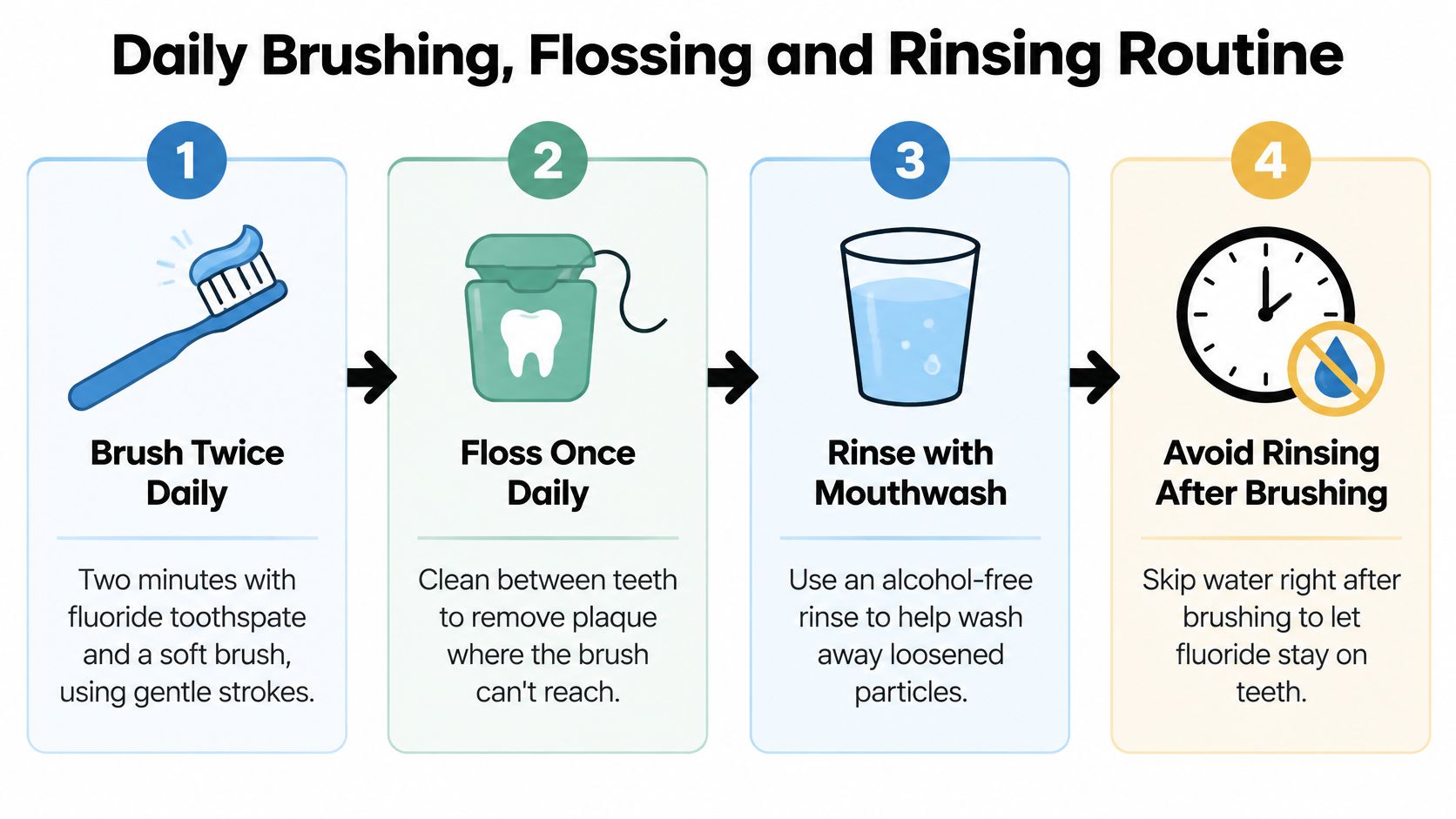
The ADA's guidance on caring for whitened teeth notes that recently whitened teeth may stain more easily, and pairs twice-daily brushing for two minutes, daily flossing and routine professional examinations and cleanings as the baseline. Here's how each step works, and the mistake that usually breaks it.
- Brush twice a day for two minutes with fluoride toothpaste and a soft brush. Gentle, small circles at the gumline do the work. The common slip is scrubbing hard to chase a stain: aggressive brushing wears enamel and irritates gums, and thinner enamel makes the underlying dentin more visible, so you end up looking yellower.
- Floss or use interdental brushes once a day. Surface stain builds between the teeth before anywhere else, and whitening gel reaches those contact points poorly. The common slip is skipping the evening floss when you're tired, which is the one that counts most.
- Rinse with plain water after coffee, tea, wine or any colored meal. This flushes pigment before it binds. Don't rinse with water immediately after brushing, though. You want the fluoride to stay on the teeth, so spit and walk away.
- Wait about 30 minutes before brushing after soda or citrus. Acid softens the enamel surface, and brushing right away scrubs that softened layer. Water first, brush later.
- Keep professional cleanings on the recall interval your dentist sets. Calculus and surface stain that home brushing can't reach come off in the chair, and polishing restores a brightness that no toothpaste replicates. Don't stretch the interval to save a visit.
What a well-maintained mouth looks like at a checkup is unremarkable in the best way: clean margins, very little plaque along the gumline, minimal calculus, and a shade that has moved slowly enough that you can't date the change.
When to Touch Up and How to Do It Safely
A touch-up isn't a scheduled event. It's a response to a specific signal, and the first job is working out which signal you're looking at.
The ADA's whitening guidance for clinicians and patients makes the key point plainly: temporary sensitivity and gingival inflammation are the most common adverse effects of vital whitening, and appropriately managed whitening stays effective for years when it's supervised. Match your situation to the row below before you open a syringe.
| Signal | Likely cause | Action |
|---|---|---|
| Yellowing returns after months of coffee, tea or smoking | Extrinsic surface stain | Plan a dentist-supervised touch-up on the prescribed schedule |
| Dark spots, gray areas or one darkened tooth | Decay, enamel defect, restoration or gum problem | Book a dental exam, since whitening won't correct these |
| Shade drift after 6 to 12 months with no change in habits | Natural aging and baseline shift | Reassess the shade before repeating any bleaching |
| Results fade quickly despite a good routine | Severe intrinsic discoloration | Ask your dentist about options instead of raising concentration |
Then work through the steps in order.
- Confirm the darkening is extrinsic stain. A single dark tooth, a chalky patch or a shadow under a filling is a dental exam, not a whitening problem. Bleaching won't correct decay, enamel defects, gum disease or a failing restoration, and it can make an untreated cavity worse.
- Reassess the shade before treating anything. Baseline color shifts with age, so the shade you're comparing against may no longer be the shade you achieved. If you use in-office Zoom, this breakdown of how often Zoom whitening can be repeated covers the interval question.
- Follow the prescribed tray or strip schedule exactly. Don't compensate for relapse with a higher concentration, longer contact time or extra applications. Professional bleaching is generally limited to about once or twice yearly when clinically appropriate, per guidance cited in the same ADA resource, and back-to-back sessions are the classic route to enamel erosion, increased translucency and a yellower look from exposed dentin.
- Care for the trays after every use. Rinse your mouth with tepid water, brush gently with a mild toothpaste, then rinse the trays and let them dry thoroughly before storing. Trays stored damp pick up odor and harbor bacteria you then press against your gums.
- Don't overload the tray. Pressing gel firmly into the teeth is unnecessary and can irritate gums. Fill each reservoir sparingly and wipe the excess at the margin. With PolaNight 22%, the tray stays in for no more than 45 minutes, which is the number to watch rather than "a bit longer for a better result."
- Pause at the first sign of sensitivity or gum irritation and handle it as described below.
Reassess first, then decide whether a short, supervised touch-up is warranted. That order prevents most of the damage people do to their own enamel.
Managing Sensitivity and Knowing When to See a Dentist
Sensitivity can affect up to two-thirds of users early in whitening treatment, according to the ADA's overview of tooth whitening. It commonly settles within several days after tray- or strip-based whitening. A brief zing is common; persistent or worsening pain needs attention.
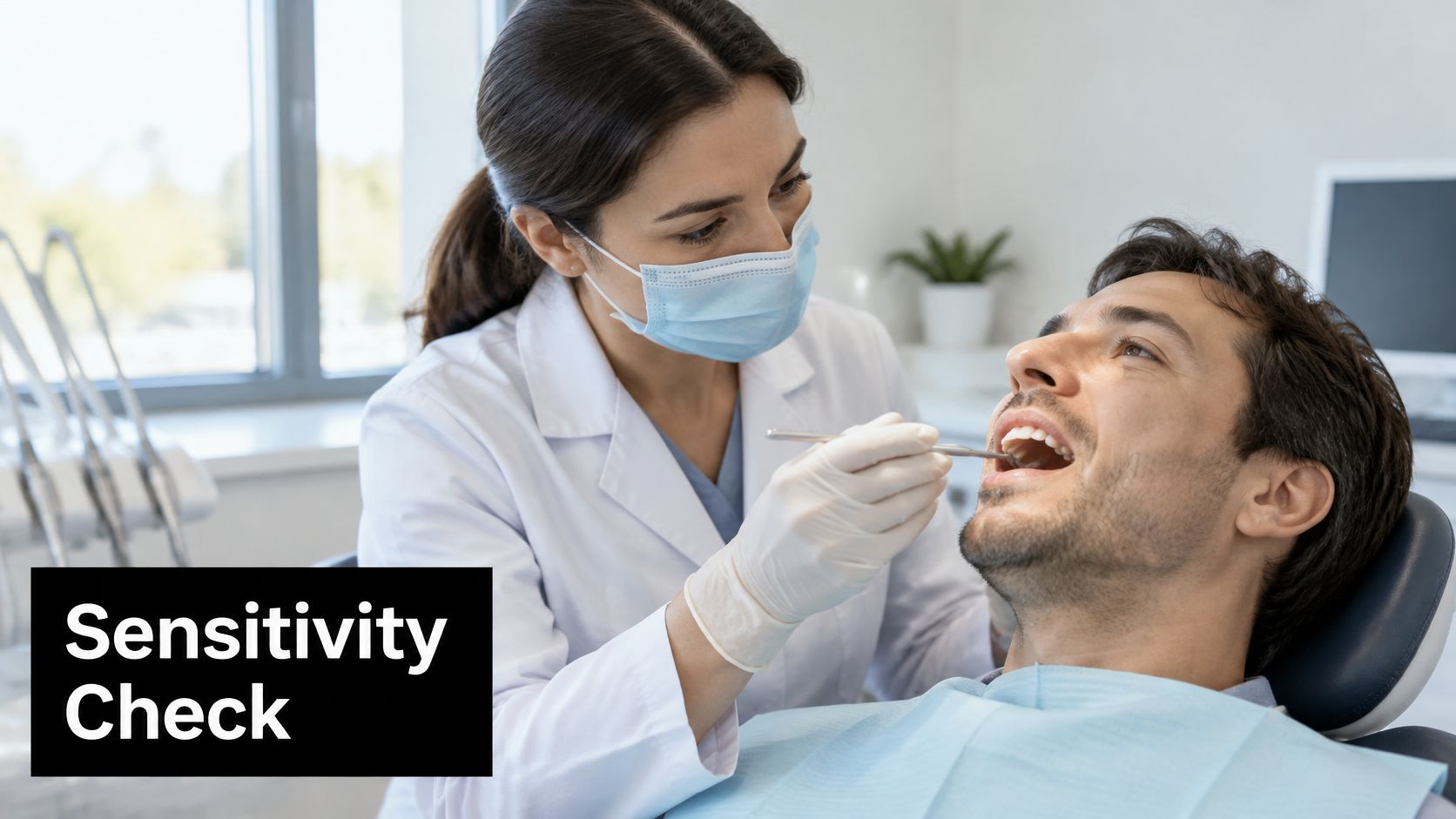
Pause whitening as soon as sensitivity or gum irritation starts. Let the discomfort clear before resuming, and do not make up skipped time by extending a later session. If sensitivity is a recurring problem, ask your dentist whether a lower peroxide concentration is appropriate. A systematic review cited by the ADA found that lower hydrogen-peroxide concentrations caused less sensitivity without reducing objective color improvement.
Use a desensitizing toothpaste or follow your dentist's advice while you wait. This guide to tooth sensitivity after whitening explains ways to manage discomfort. Fluoride, CPP-ACPF, calcium glycerophosphate and hydroxyapatite products may help with comfort after bleaching; treat them as aftercare, not as a way to increase whitening.
Seek dental care for pain that lasts beyond several days, gum sores, suspected cavities, a cracked tooth, or trouble with an existing crown or filling. These problems need assessment rather than a change to your whitening schedule.
If the result seems disappointing, resist the urge to use stronger gel or leave it on longer. Irritation can disrupt your routine without making the shade last longer. DentalHealth.com offers professional-grade at-home dental care products, including Opalescence, Zoom and PolaNight whitening products, as well as Fluoridex and MI Paste. U.S. orders ship free, and customer support is available by phone. Visit DentalHealth.com to browse whitening and sensitivity-care products.