
How to Maintain White Teeth for a Permanently Bright Smile
Keeping your teeth white is a commitment, not a one-time fix. Think of it less as a single treatment and more about building smart, sustainable habits for the long haul.
It all boils down to a consistent routine that blends daily oral hygiene, strategic at-home touch-ups, and a few mindful lifestyle choices. This is the secret to making sure your smile stays bright long after you’ve finished any initial whitening treatment.
Your Game Plan for a Lasting Bright Smile
So, you’ve put in the work to get a whiter smile. Now what? The real magic is in the maintenance. This guide gives you a realistic blueprint for keeping that brightness, moving past the idea of a quick fix. We'll get into how common culprits like coffee, tea, and red wine work against you and introduce a practical approach to fight back.
This is your personal strategy for protecting the results you wanted. Instead of constantly reacting to new stains as they appear, you’ll learn how to stop them from ever really setting in. A proactive approach like this saves you time, money, and the frustration of watching your bright smile fade.
Why a Maintenance Routine Is So Important
The desire for a bright smile has exploded into a massive industry. The global teeth whitening market is expected to jump from USD 8.93 billion in 2025 to a whopping USD 14.31 billion by 2034. That’s a huge indicator of how seriously people are taking their dental aesthetics.
In the U.S. alone, the market is on track to hit USD 2.62 billion by 2032, driven by a big preference for at-home kits that are both effective and affordable. You can discover more insights about this growing market and how it’s shaping consumer choices.
This boom is great news for you—it means you have more tools than ever to maintain your smile right at home. My goal here is to give you an actionable plan that delivers that confident, bright smile without needing constant, pricey trips back to the dentist.
Key Takeaway: A successful whitening maintenance plan isn't about perfection; it's about consistency. Small, daily actions and periodic touch-ups add up to create lasting brightness and protect your investment in your smile.
We’re going to combine a few key elements into one seamless routine:
- Daily Oral Care: Using the right products to lift surface stains and prevent plaque buildup before it starts.
- Strategic Touch-Ups: Applying professional-grade whitening gels like Opalescence and PolaNight on a sensible schedule that works for you.
- Simple Lifestyle Tweaks: Making small adjustments to your diet and habits that make a big difference in minimizing new stains.
Building Your Daily Defense Against Stains
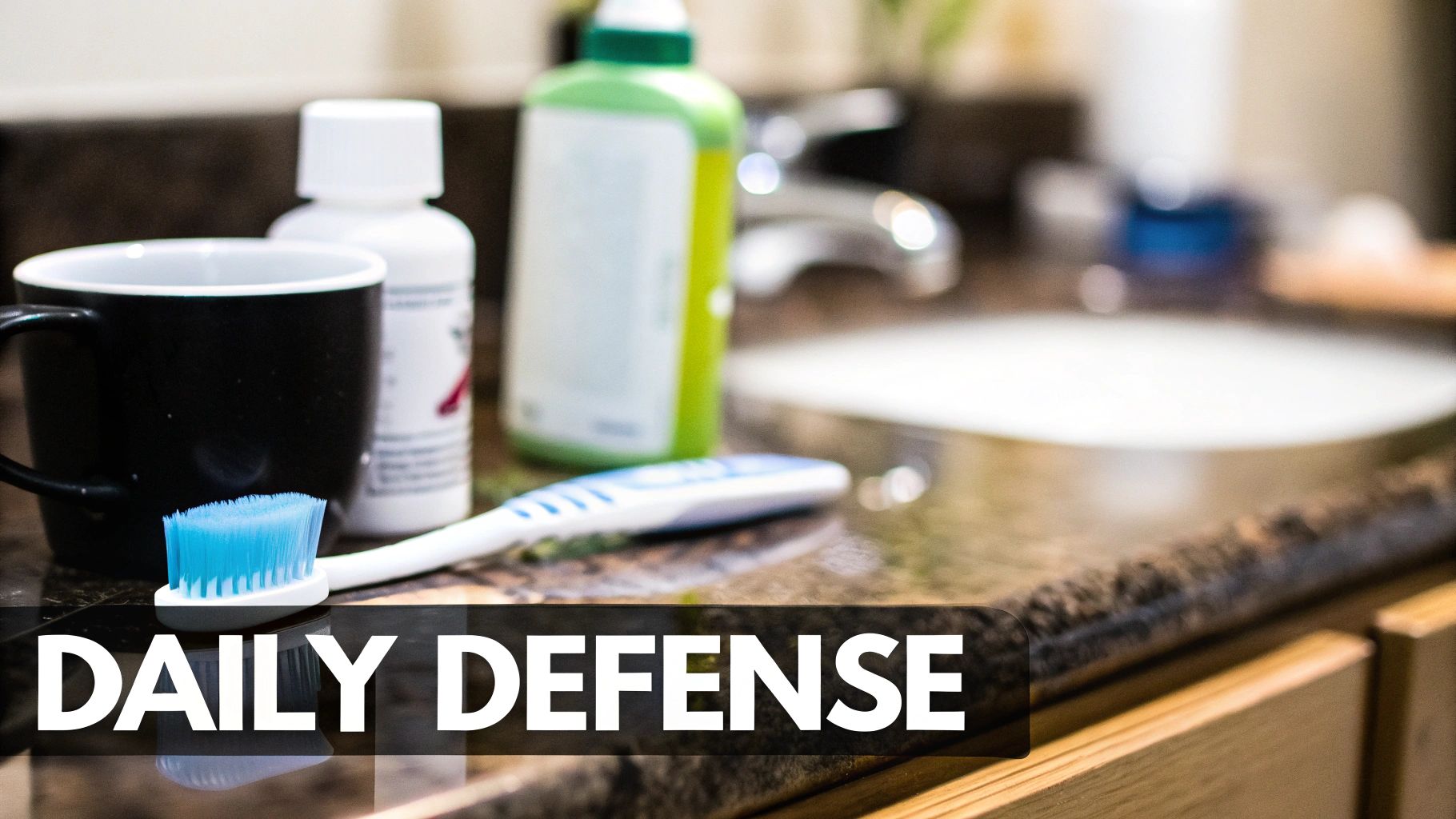
The real secret to keeping your teeth brilliantly white isn't some high-powered, one-off treatment. It’s all about the small, consistent things you do every single day. Think of your daily oral care routine as the foundation of your bright smile—it's your proactive shield against the pigments and acids trying to dull your enamel.
This is more than just a quick brush in the morning and before bed. A truly effective daily defense involves a few key steps that cleanse, protect, and actively lift away new stains before they have a chance to set.
Fine-Tuning Your Brushing Technique
The toothpaste you choose makes a huge difference. You'll want to look for a whitening toothpaste with gentle, polishing abrasives like hydrated silica or calcium carbonate. These ingredients work by physically scrubbing away surface-level stains from things like coffee or tea, but they're not harsh enough to damage your precious enamel.
Think of it like polishing silver—you need something that gently buffs away the tarnish, not a coarse scrub that scratches the surface. An overly aggressive toothpaste can wear down enamel, which ironically makes teeth look more yellow by exposing the darker dentin layer underneath. Pair your chosen paste with a soft-bristled toothbrush and make sure you're brushing for a full two minutes, twice a day, to hit every surface.
Beyond the Brush: Daily Must-Dos
Here's a reality check: brushing alone only cleans about 60% of your tooth surfaces. Those little spaces between your teeth are prime real estate for plaque to build up. Plaque not only causes decay but also acts like a magnet for stains, making daily flossing an absolute must for anyone serious about keeping their teeth white.
By removing that sticky plaque film from between your teeth, you’re getting rid of the very thing that stain-causing pigments cling to. It's one of the simplest and most effective ways to stop those yellow or dark lines from forming between your teeth.
Adding an alcohol-free whitening mouthwash into your routine gives you another layer of defense. A good rinse can help neutralize stain-causing acids and wash away loose particles, which is especially useful right after a meal or your morning coffee.
Here are a few powerful habits you can easily work into your day:
- Rinse Immediately: After you have coffee, red wine, or a dark soda, just swish your mouth with plain water right away. This simple move prevents the staining compounds (called chromogens) from having time to settle onto your enamel.
- Use a Straw: Whenever you can, drink staining beverages through a straw. It minimizes the liquid's direct contact with your front teeth, which significantly cuts down their exposure to pigments.
By building these small steps into your daily life, you create a robust defense system. For a deeper look into how discoloration happens, our guide on how to prevent teeth staining offers even more targeted advice. This consistent, daily effort is what truly preserves the brightness of your smile for the long haul.
Mastering Your At-Home Whitening Touch-Up
Even with the most buttoned-up daily routine, the dazzling brightness from a professional whitening treatment will naturally start to fade. This is totally normal, and it’s where a smart, at-home touch-up strategy becomes your secret weapon for keeping that bright smile long-term. Think of it less as a fix and more as a preventative boost—a scheduled touch-up stops stains from settling in and keeps your teeth consistently vibrant.
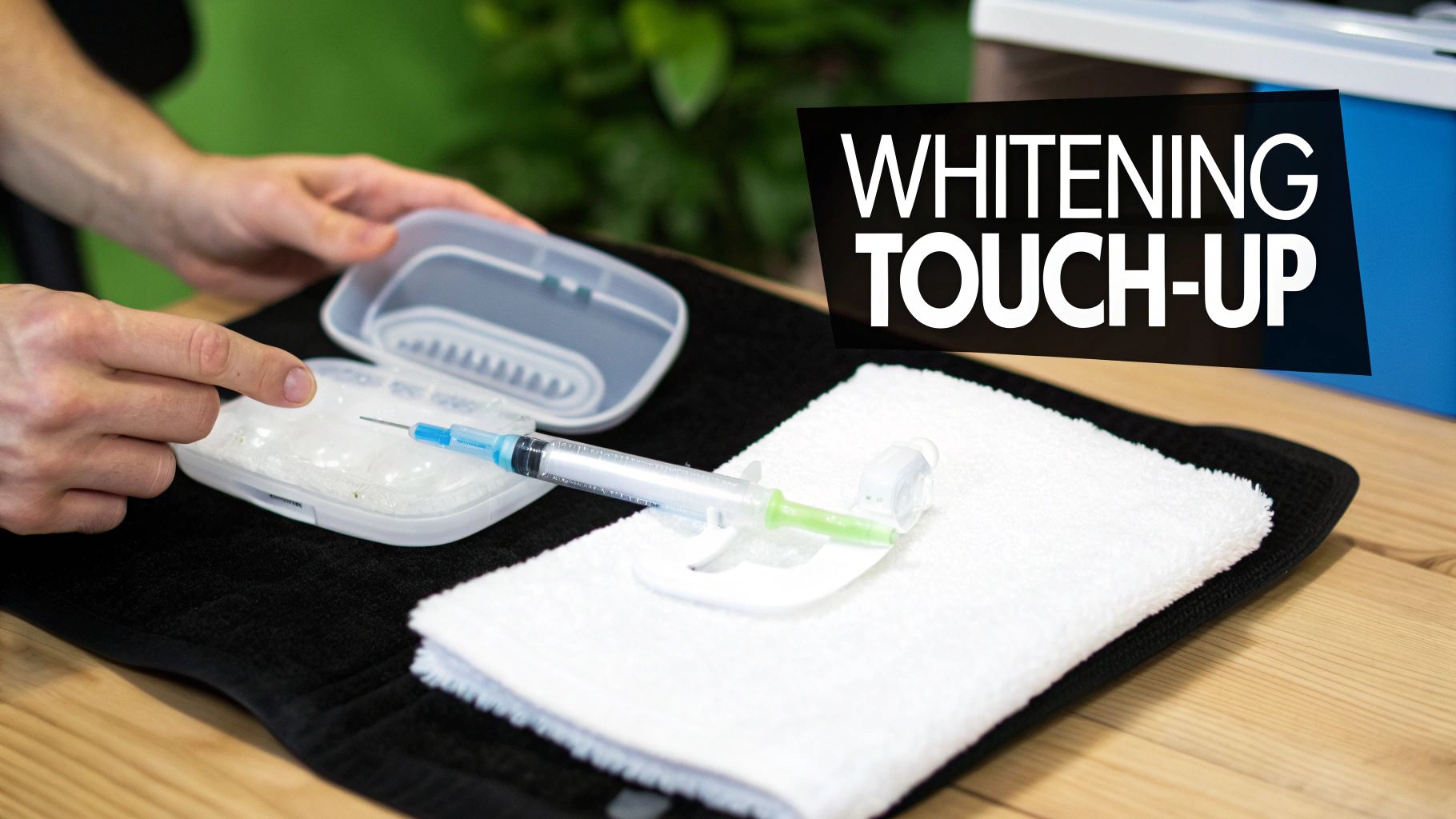
The trick is to make it work for you. There’s no one-size-fits-all schedule. Your ideal frequency—maybe one session a month or a three-day burst every quarter—really depends on your habits. If you're a daily coffee or tea drinker, you'll probably benefit from more frequent, shorter sessions. If you steer clear of the big staining culprits, you can definitely stretch the time between applications.
Choosing Your Professional-Grade Whitening Tools
When it's time for a touch-up, using professional-grade products at home is the way to go. It gives you those dentist-level results safely and effectively. These systems use higher concentrations of active ingredients, like carbamide peroxide, to break down the deep, stubborn stains that your daily toothpaste just can't handle.
You've got a few fantastic options to choose from:
- Custom Tray Systems: Gels like PolaDay CP 35% or Opalescence PF are made to be used with custom-fitted trays you get from your dentist. This is the gold standard because it guarantees the gel makes even contact with every tooth surface and, just as importantly, keeps it off your gums to minimize irritation.
- Whitening Pens: I love these for quick, on-the-go maintenance or for targeting that one pesky spot that seems to stain faster than the rest. Their convenience is hard to beat.
- Advanced LED Kits: Systems such as GLO Science pair a whitening gel with an activating light mouthpiece. The light is designed to speed up the chemical reaction, often giving you more noticeable results in less time.
It's interesting to see how the market is evolving. Slow-release whitening pens are projected to capture 68.6% of their USD 574.6 million market by 2025. This makes sense—they're great for upkeep because they deliver gradual results while keeping sensitivity to a minimum. And let's be honest, cost is a huge factor. Home kits can save consumers up to 70% compared to in-office treatments. For instance, our PolaNight kits deliver clinic-quality results you can do yourself, and many of our customers find their whiteness lasts six months longer than with other methods. You can dive deeper into the professional teeth whitening market trends to see more of the data for yourself.
To help you sift through the choices, here's a quick breakdown of common at-home products.
At-Home Whitening Touch-Up Product Comparison
| Product Type | Best For | Typical Wear Time | Key Benefit | Example Product |
|---|---|---|---|---|
| Custom Tray Gels | Comprehensive, even whitening | 30 minutes to overnight | Professional-level results and even coverage | Opalescence PF |
| Whitening Strips | Convenience and accessibility | 30-60 minutes | Easy to find and use for general whitening | Crest 3D Whitestrips |
| Whitening Pens | Spot treatments and on-the-go | 1-2 minutes application | Portability and precision for specific stains | AuraGlow Whitening Pen |
| LED Light Kits | Faster, more dramatic results | 10-30 minutes | Light-activated technology accelerates whitening | GLO Science |
Choosing the right tool from this list really just depends on your goals, your budget, and how much time you want to put in.
A Real-World Scenario: Prepping for a Big Event
Let's put this into practice. Imagine you have a wedding coming up in a month, and you want your smile to be absolutely radiant for the photos. Your daily care has kept things looking good, but you're after that extra "pop." This is the perfect time for a focused touch-up series.
Your Action Plan: Four weeks out from the event, you could start a touch-up schedule using your PolaNight 22% gel with your custom trays. You might apply it for one hour every other day during the first week. For the next three weeks, you could drop down to twice a week. This gradual approach gives you a powerful whitening boost without risking major sensitivity right before your big day.
This kind of planned, strategic approach is what turns maintenance from a chore into a seamless part of your self-care. When you match the right product with a schedule that fits your life, you can keep your smile brilliant and camera-ready all year round.
How to Manage Sensitivity and Protect Enamel
One of the biggest concerns I hear about teeth whitening is the fear of sensitivity. That temporary “zing” is a real side effect for many, but it’s completely manageable. It definitely shouldn't stop you from getting the brighter smile you want.
So why does it happen? During whitening, the peroxide gel makes your enamel temporarily more porous. This is great for letting the whitening agent reach the discolored molecules deep inside your tooth, but it also briefly exposes microscopic tubules in the dentin layer underneath. This is what can trigger that sharp, sudden sensitivity to hot or cold.
The good news is that this is completely temporary. With the right strategy, you can minimize it or even avoid it altogether. It's all about strengthening your enamel before, during, and after you whiten.
Proactive Steps to Prevent Sensitivity
Your best defense against sensitivity is a good offense. Don’t wait for it to strike—prepare your teeth ahead of time. I always recommend starting a sensitivity-relief toothpaste about a week or two before you plan to do a whitening touch-up.
These toothpastes use ingredients like potassium nitrate or stannous fluoride, which work by blocking those tiny tubules in your dentin. Think of it like putting up a temporary shield that stops temperature changes from reaching the nerve. Using a product like Fluoridex can be a game-changer here.
Expert Tip: A fantastic pro-level trick is to apply a desensitizing gel, like the one that comes in many Opalescence kits, directly to your teeth for 15-30 minutes before you put on the whitening gel. This pre-treatment helps calm the nerves and can dramatically reduce the chance of discomfort.
Another incredibly simple but effective strategy is to tweak your whitening schedule. Instead of whitening on back-to-back days, give yourself "rest days" in between touch-ups. This gives your teeth time to recover and rehydrate, which really helps cut down on sensitivity.
Remineralizing Your Enamel for Strength and Brightness
Protecting your enamel isn't just about preventing pain; it’s also key to keeping your teeth white long-term. Healthy enamel is thick and opaque, which does a great job of masking the naturally yellowish dentin underneath. When enamel gets worn down by acidic foods or drinks, it becomes thinner and more translucent, making your teeth look darker.
This is where remineralizing pastes are your best friend. Products like MI Paste Plus are packed with bio-available calcium and phosphate—the literal building blocks of your enamel. Using a paste like this after a whitening session helps replenish these essential minerals, reinforcing your teeth's natural protective layer.
High sensitivity can affect nearly one in three users during aggressive whitening, but thankfully, therapeutic options are incredibly effective. Prescription-strength products with 5,000 ppm fluoride can reduce dentin exposure by up to 40%. In fact, clinical trials have shown that applying a product like MI Paste nightly after whitening can remineralize enamel two times faster than just using a regular paste.
By weaving these simple, proactive measures into your routine, you can create a whitening experience that's both comfortable and incredibly effective. For more tips on building up your tooth’s natural defense, check out our in-depth article on ways to strengthen tooth enamel. This way, sensitivity won't stand in the way of your whitening goals.
The Anti-Stain Diet Your Smile Will Love
Let's be real: what you eat and drink shows up on your teeth. While your daily brushing and flossing routine is your first line of defense, a smart diet is what truly makes your whitening results last. This isn’t about giving up everything you love; it's about making small, strategic choices that stop stains before they even start.
The biggest culprits are often our daily favorites. Think coffee, red wine, dark sodas, and even healthy things like blueberries and balsamic vinegar. These are loaded with highly pigmented compounds called chromogens, which are notorious for latching onto your tooth enamel and causing discoloration.
Smart Swaps and Simple Habits
You don't have to ditch your morning coffee or that evening glass of merlot. The trick is to minimize their contact with your teeth and neutralize their effects as quickly as possible.
A super simple but effective habit is to drink iced coffee, tea, or soda through a straw. This little trick lets the liquid bypass your front teeth, dramatically cutting down their exposure to staining pigments. Another easy win? Swish your mouth with plain water right after you've had something that could stain. That quick rinse washes away a lot of the chromogens before they get a chance to settle in.
It's a common myth that only dark-colored foods cause stains. The truth is, highly acidic foods and drinks—even clear ones like white wine or citrus fruits—can rough up your enamel. This erosion creates a more porous surface that's prime for picking up stains from other sources.
Another great strategy is to pair staining foods with "cleansing" ones. Crunchy foods like apples, celery, and carrots act like natural toothbrushes, scrubbing your teeth clean as you chew. Think of it as a mini-brushing session right at the dinner table.
The Number One Offender to Avoid
While managing your diet is a huge piece of the puzzle, one habit single-handedly does more to yellow your smile than anything else: tobacco. Whether it's smoked or chewed, tobacco deposits stubborn brown and yellow stains that work their way deep into the enamel, making them incredibly tough to remove.
The discoloration happens faster than you'd think. Studies have shown that coffee can start visibly staining your enamel in just four weeks, with 15% more chromogens building up each year. But tobacco is estimated to be four times worse for staining. On top of that, acidic sodas can erode 30% of your enamel annually with regular consumption. While good whitening products can oxidize and lift these stains, quitting tobacco is the single most impactful thing you can do for your smile's long-term health and brightness. You can explore more research on dental aesthetics and market trends to see the data for yourself.
Understanding how your daily habits impact your smile is the key. If you're looking for more guidance on managing dietary habits that could affect your teeth, a great place to start is learning how to stop sugar cravings. By making these simple, mindful adjustments, you can proactively prevent stains and keep your smile shining brighter for much, much longer.
Your Simple Weekly Maintenance Schedule
Consistency is the real secret to making that bright smile last. I know juggling different products and timings can feel like a full-time job, so let's cut through the confusion and map out a simple routine. Think of this as your personal blueprint for keeping your teeth white, minus all the guesswork.
You can tweak this plan to fit your life, of course, but it provides a really solid foundation. The main goal here is to make these habits feel automatic—just another part of your routine, not some big chore.
Daily Habits for a Bright Foundation
These are your non-negotiables. They're the small, consistent actions you take every day to stop new stains from ever getting a foothold.
- Morning & Night: This one's obvious but crucial. Brush for a full two minutes with a whitening toothpaste and get in there with floss.
- Post-Coffee/Tea: As soon as you finish your drink, swish with plain water for 30 seconds. This simple step works wonders to rinse away staining compounds before they can settle in.
- Retainer/Aligner Care: If you wear any kind of dental appliance, it needs daily cleaning, too. Using a specialized cleaner like Retainer Brite is a must to stop it from yellowing and building up bacteria that can transfer to your teeth.
This flow chart gives you a great visual for handling staining foods and drinks as you go about your day.
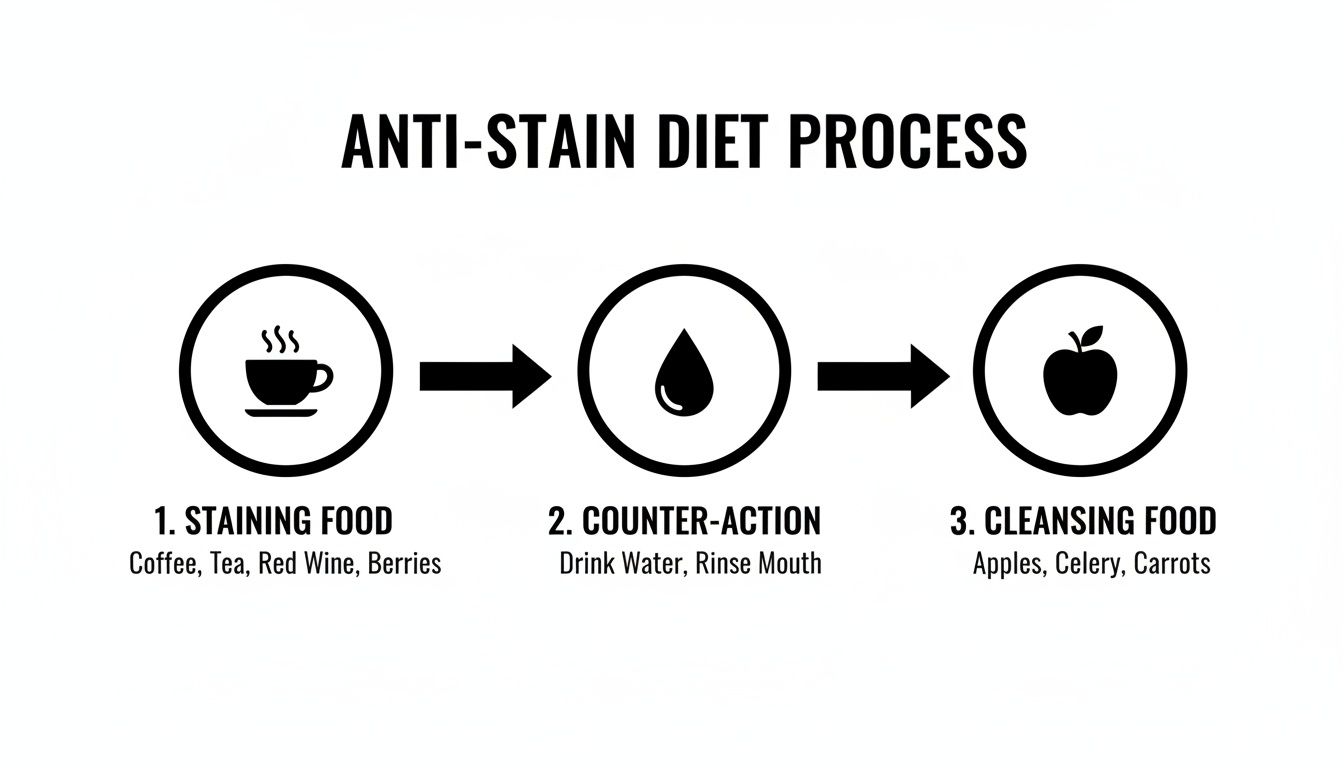
It really just boils down to this: after something staining, take a quick counter-action like rinsing. Then, try to follow it up later with cleansing foods that help scrub your teeth naturally.
Your Weekly and Monthly Touch-Up Plan
This is where you'll actively fight back against deeper stains and give your smile that noticeable boost. It's all about maintenance.
My Pro Tip: Pick a dedicated time for your whitening touch-up and stick to it. Sunday evenings are perfect for a lot of my clients. You get to start the week with a brighter smile, and it helps lock in the habit.
To make things even clearer, I've put together a sample schedule. You can copy it directly or just use it as a starting point to build your own.
Sample Weekly Teeth Whitening Maintenance Plan
Here’s a straightforward schedule that combines daily prevention with periodic boosts to keep your teeth consistently white.
| Frequency | Action Item | Recommended Product(s) |
|---|---|---|
| Weekly | Perform one whitening session to maintain your current shade. | GLO Science LED Kit |
| Monthly | Use a sensitivity relief gel for a day to keep enamel strong. | MI Paste Plus |
| Quarterly | Complete a 3-day whitening series for a noticeable boost. | PolaNight 22% with custom trays |
By mapping out your routine like this, maintaining that bright, white smile stops being a mystery and becomes a predictable part of your self-care. It's truly this combination of daily defense and regular touch-ups that delivers those lasting, professional-level results you can get right at home.
Common Questions About Whiting Maintenance
Even with a solid plan in place, some practical questions always pop up when you're getting into the swing of a new routine. Let's go through some of the most common ones I hear, so you can fine-tune your approach and keep that smile consistently bright.
How Long Should I Wait to Eat After a Whitening Touch-Up?
This is a big one. For the best possible results, you’ll want to steer clear of highly pigmented foods and drinks for at least 24 to 48 hours after a touch-up session. Why? Because during this window, your enamel is more porous and can soak up new stains from things like coffee, red wine, or berries like a sponge.
Try sticking to a "white diet" for a day or two. Think things like chicken, rice, pasta, and lots of water. This little sacrifice allows the shade to fully stabilize and really helps you get the most lasting outcome from your efforts.
Can I Still Drink Coffee and Maintain White Teeth?
Absolutely. Let's be realistic—you don't have to give up your morning coffee. The trick is to be smart about how you drink it. Simply minimize its contact with your front teeth and don't let it linger.
A great habit is to drink iced coffee through a straw. And no matter what, always swish your mouth with plain water as soon as you're done. When you combine these small habits with your daily care and periodic touch-ups, you can easily manage and prevent those stubborn coffee stains from settling in.
Key Insight: Consistency trumps perfection every time. You don't need a flawless diet to maintain white teeth. Smart daily habits—like rinsing after staining drinks and doing regular touch-ups—are far more impactful than trying to avoid every single thing that could cause a stain.
Are Whitening Toothpastes Safe for Long-Term Use?
Yes, whitening toothpastes from reputable brands are designed to be safe for daily, long-term use. They work by using gentle abrasives to polish away new surface stains, not by chemically bleaching the tooth structure itself.
Here's a pro tip: a great strategy for optimal enamel health is to alternate your whitening toothpaste with a remineralizing one. This gives you the best of both worlds—you're polishing away stains while also replenishing essential minerals to keep your teeth strong.
For a deeper dive into how long your results can last and what impacts them, our article on how long teeth whitening lasts offers some more helpful information.
At DentalHealth.com, we provide the professional-grade products you need to build a successful maintenance routine. From powerful touch-up gels to enamel-strengthening pastes, we make it simple to get dentist-quality care delivered to your door. Explore our complete collection at https://dentalhealth.com.