
How to remineralize teeth at home: Simple steps for stronger enamel
Yes, you can absolutely remineralize your teeth at home. The key is to consistently use the right products—like a good fluoride toothpaste—eat a mineral-rich diet, and keep your mouth's pH level in a healthy, balanced state. This whole process is about helping your body redeposit essential minerals like calcium and phosphate back into your enamel, which can stop the earliest signs of tooth decay in their tracks, long before a real cavity forms.
Understanding How Tooth Remineralization Works
Your teeth are constantly in a microscopic tug-of-war. On one side is demineralization, where acids from food and plaque bacteria strip vital minerals away from your tooth enamel. On the other side is remineralization, which is your body’s incredible, natural repair process.
This ongoing cycle is your mouth's first line of defense against cavities. When remineralization is winning, it strengthens your enamel, making it tougher and more resilient against daily wear and tear.
The Role of Saliva in Rebuilding Enamel
Saliva is the unsung hero of your oral health. It’s not just water; it's a super-powered delivery system that constantly bathes your teeth in the exact minerals they need for repair, specifically calcium and phosphate ions.
A healthy flow of saliva is critical. It:
- Neutralizes Acids: It quickly brings the pH in your mouth back to a neutral level after you eat, stopping the acid attacks that leach minerals from your teeth.
- Delivers Minerals: Your saliva is packed with calcium and phosphate, the raw building blocks for rebuilding weakened enamel.
- Washes Away Debris: It helps rinse away food particles and harmful bacteria before they can contribute to plaque and acid.
When saliva flow is low or the acid attacks from sugary snacks and drinks are too frequent, the balance tips toward demineralization. That’s when you might start seeing early warning signs, like those little white spots on your teeth.
Key Players in the Remineralization Process
While your body does an amazing job on its own, a few key ingredients can really supercharge the remineralization process. Knowing what they are helps you pick the right products and build an effective at-home routine.
The goal is to shift your perspective from simply cleaning your teeth to actively supporting your body's natural repair system. When you create the right environment for remineralization, a stronger, healthier smile is the result.
Fluoride is one of the most effective and well-researched agents out there. When fluoride is present in your saliva, it gets incorporated directly into your enamel. This creates a new, more durable mineral called fluorapatite, which makes your teeth significantly tougher against future acid attacks.
Specialized ingredients also make a huge difference. For instance, products containing CPP-ACP (Casein Phosphopeptide-Amorphous Calcium Phosphate)—often found in pastes like MI Paste—deliver a concentrated, bio-available dose of calcium and phosphate right where it's needed. This technology helps stabilize these minerals, making them much easier for your enamel to absorb.
It's no surprise that the consumer focus on proactive dental care has exploded. The global remineralizing toothpaste market, valued at around USD 1.8 billion, is expected to nearly double by 2033. You can explore more insights on this preventive care trend from DataHorizzon Research.
By understanding how these elements work together, you can build a powerful daily routine. For a deeper dive, check out our guide on the different ways to strengthen tooth enamel.
Spotting the Signs of Enamel Demineralization
Before you can start rebuilding your enamel at home, you need to know what to look for. Think of yourself as a detective for your own smile. Catching the earliest warning signs of mineral loss is your absolute best shot at reversing the damage before it turns into a cavity.
These first clues are often subtle, but they tell a critical story about the health of your enamel. Demineralization isn't an overnight event; it's what happens when the natural balance between losing minerals and regaining them tips in the wrong direction, usually after too much acid exposure.
The First Visual Clue: White Spots
One of the earliest and most common signs you can actually see is the appearance of chalky white spots on your teeth. These aren't just natural color variations. They look like dull, matte, or opaque patches on the otherwise smooth, glossy surface of your enamel.
These spots are areas where essential minerals like calcium and phosphate have been stripped away, making the enamel more porous. Imagine a clear piece of glass getting a small, frosted patch—it's still there, but its internal structure has changed.
Finding these white spot lesions early is a game-changer. At this stage, the surface of the enamel is usually still intact, which means you can often reverse the process with the right home care routine.
That Sudden Twinge: Increased Tooth Sensitivity
Do you find yourself wincing when you sip an iced coffee or a hot tea? A new or worsening sensitivity is a huge red flag that your enamel is in trouble.
As enamel thins out from mineral loss, it provides less of a protective barrier for the layer underneath, known as dentin. Dentin is filled with thousands of tiny, microscopic tubes that lead straight to the tooth's nerve. When those tubes are exposed, things like temperature changes can shoot a sharp, sudden pain signal right to the nerve.
This sensitivity isn't just an annoyance; it's your body's alarm system. It's telling you that your enamel's defenses are down, leaving the sensitive inner parts of your tooth exposed.
This isn't a rare problem. Globally, research shows that dental decay impacts about 35% of the world's population. Here in the United States, it's even more common, with studies indicating that a staggering 91% of adults between 20 and 64 have dealt with tooth decay. You can dig deeper into evidence-based strategies for boosting remineralization to see just how widespread this is.
Beyond Candy Bars: Everyday Causes of Demineralization
It’s easy to point the finger at soda and sweets, but many seemingly innocent daily habits can create the perfect acidic storm for mineral loss. Knowing these hidden culprits is the key to protecting your teeth.
Common causes include:
- Constant Snacking: Every time you eat or drink something sugary or acidic, the pH in your mouth drops for about 20-30 minutes. If you're snacking all day long, your enamel is under a relentless acid attack, never giving your saliva a chance to neutralize things and start making repairs.
- "Healthy" Acidic Drinks: That sparkling water, kombucha, sports drink, or even 100% fruit juice you're sipping all day? They're often highly acidic. This habit literally bathes your teeth in acid, speeding up enamel erosion even if the drinks are sugar-free.
- Dry Mouth (Xerostomia): Saliva is your body’s built-in remineralization fluid. If you suffer from a dry mouth—whether from medications, a medical condition, or just not drinking enough water—you lose that crucial protective flow. This allows acids to hang around and do some serious damage.
By learning to recognize these signs, from the faint white spots to the everyday habits behind them, you can start taking targeted action. The next step is to build a daily routine that doesn't just halt demineralization in its tracks but actively helps repair and strengthen your enamel.
Your Daily Remineralization Action Plan
Knowing what to do is one thing, but putting it into practice is what really makes a difference. Creating a solid daily routine to remineralize your teeth doesn't have to feel like a chore. It's all about making small, smart adjustments that create the perfect environment for your enamel to constantly repair and strengthen itself.
This isn't just a simple to-do list. It's a strategic approach that combines foundational habits with specialized products to get you the best possible results. Let’s build a routine that actually fits into your life.
Mastering Your Brushing Technique
The cornerstone of any remineralization plan is how you use your fluoride toothpaste. Here’s a shocker: most people brush and immediately rinse with water, washing away the very ingredient that needs to stay on your teeth to work. You can get so much more out of your toothpaste by changing this one simple habit.
After brushing for a full two minutes, spit out the excess toothpaste but do not rinse your mouth with water. This is a game-changer. It leaves a thin film of fluoride on your teeth, giving it the extended contact time it needs to absorb into the enamel and kickstart the repair process. It feels a little weird at first, but it’s probably the most effective free upgrade you can make to your oral hygiene routine.
To truly get ahead, it's helpful to understand the science behind how to optimize your oral health, which includes knowing the pros and cons of different ingredients like fluoride and hydroxyapatite.
The image below shows just how demineralization progresses, highlighting why catching it early is so important.
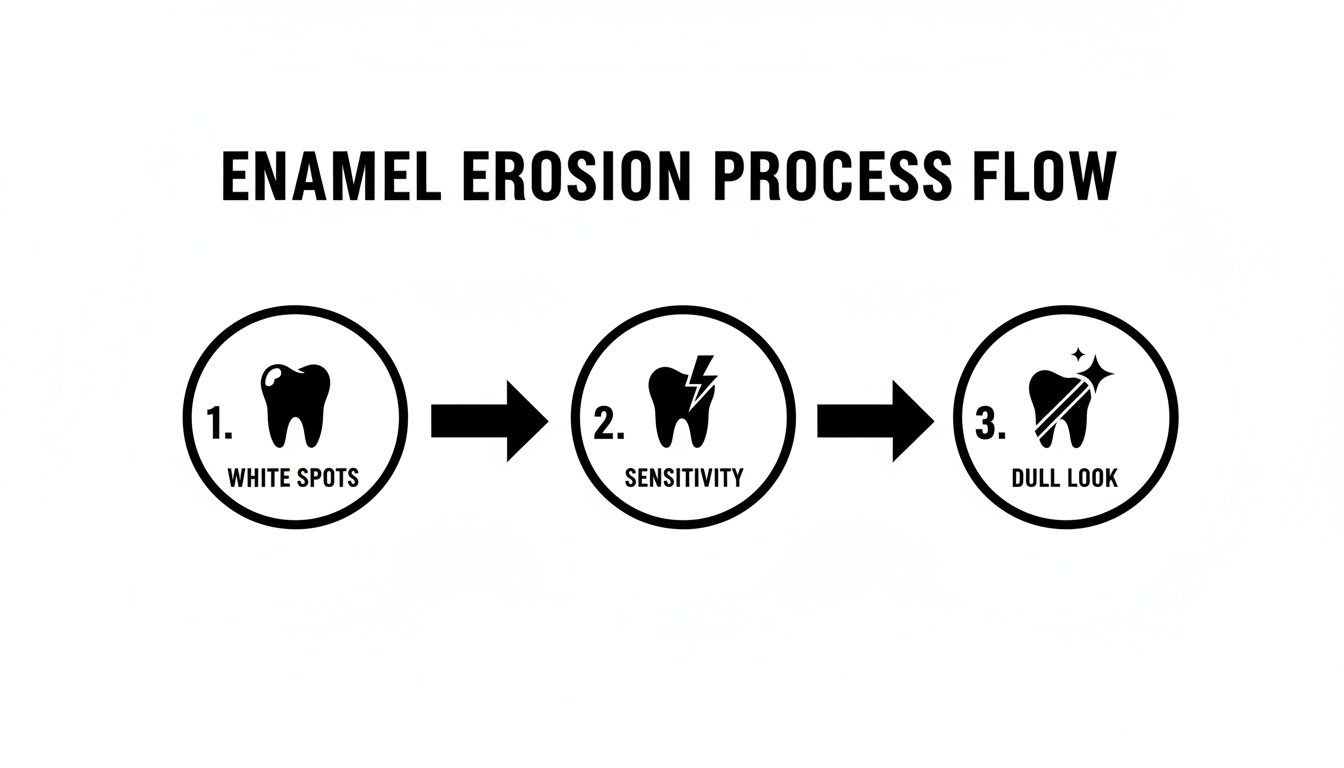
As you can see, what starts as a harmless-looking white spot can quickly turn into frustrating sensitivity and a dull look if mineral loss isn't addressed head-on.
Supercharge Your Efforts With Specialty Pastes
For those who need an extra boost—especially if you're dealing with visible white spots, high sensitivity, or are just prone to cavities—specialty remineralizing pastes are fantastic. Products like MI Paste are specifically formulated to deliver a highly concentrated dose of the building blocks your enamel is crying out for.
MI Paste uses a unique technology called RECALDENT™ (CPP-ACP), which is derived from milk protein. This ingredient is incredible because it delivers bio-available calcium and phosphate directly to the tooth surface, making it much easier for your enamel to soak up the minerals and start rebuilding.
Think of your daily fluoride toothpaste as the foundation of your house. MI Paste is the specialized repair crew that comes in to patch up weak spots. They work together as a powerful team for maximum protection.
The proof is in the research. One study showed that over three months, a group using MI Paste Plus saw a 65% reduction in the area of their white spot lesions. For comparison, another group using a similar product saw a 60% reduction, while the control group saw only a 7% improvement.
Using it couldn't be easier. After your nightly brushing (remember: spit, don't rinse!), just apply a pea-sized amount of the paste to your teeth with a clean finger or a cotton swab. Let it sit for at least three minutes, then spit out any excess. Avoid eating or drinking for 30 minutes afterward to give it maximum time to work its magic. For more detailed steps, check out our guide on how to use MI Paste Plus.
Leverage The Power of Xylitol
Another simple yet powerful tool for your routine is xylitol. This natural sugar substitute does more than just avoid feeding bad bacteria; it actively makes your mouth a less hostile environment for your teeth.
When you chew xylitol gum or use xylitol mints after a meal or snack, you're accomplishing two key things at once:
- Stimulating Saliva Flow: Chewing naturally gets your saliva going. And as we've covered, saliva is your body's best defense—it neutralizes acids and carries minerals back to your teeth.
- Fighting Harmful Bacteria: The main cavity-causing bacteria, Streptococcus mutans, can't digest xylitol. By using it, you effectively starve them out, reducing their numbers and cutting down on the acid they produce.
For the best results, aim for about 5-10 grams of xylitol per day, spread out over a few uses. Popping a piece of xylitol gum for 5-10 minutes right after eating is an easy way to make this a habit.
Control Your Oral pH With Strategic Rinsing
Finally, none of this works if your mouth is an acidic warzone. Your enamel can only absorb minerals when your mouth is at a neutral or slightly alkaline pH (around 7.0 or higher). If it's acidic, you're losing minerals, not gaining them.
Your saliva is great at balancing pH, but you can give it a helping hand, especially after having something acidic like coffee, soda, or a citrusy drink. Simply rinsing your mouth with a pH-balancing mouth rinse or even just plain water right after can immediately neutralize the acid attack and stop demineralization in its tracks.
Pro Tip: Never brush your teeth for at least 30 minutes after consuming something acidic. Your enamel is temporarily softened in that acidic environment, and brushing can literally scrub away the weakened surface. A quick rinse is a much safer and more effective first response.
To see how this all fits together, here's a sample daily schedule.
Sample Daily Remineralization Routine
Seeing it all laid out can help you integrate these habits into your day without feeling overwhelmed. This is just an example—feel free to adjust it to your own schedule.
| Time of Day | Action | Key Product or Tip | Purpose |
|---|---|---|---|
| Morning | Brush with fluoride toothpaste | Spit, don't rinse | Maximize fluoride contact and enamel repair |
| After Lunch | Chew xylitol gum or have a xylitol mint | 1-2 pieces of gum for 5-10 minutes | Stimulate saliva and reduce harmful bacteria |
| After Snack | Rinse mouth with water or pH-balancing rinse | Quick 30-second swish | Neutralize acids immediately to prevent mineral loss |
| Evening | Brush with fluoride toothpaste | Spit, don't rinse | Prepare teeth for overnight repair |
| Before Bed | Apply a specialty remineralizing paste | Pea-sized amount of MI Paste | Deliver a concentrated dose of calcium and phosphate |
This routine shows how a few small, intentional actions throughout the day can create a powerful, cumulative effect. By combining these four strategies, you build a robust daily action plan that doesn't just prevent further damage—it actively supports your body’s natural ability to heal your teeth.
Eating For Enamel Health And Boosting Saliva
While fluoride toothpastes and specialty pastes are your frontline defense, long-lasting oral health is truly built from the inside out. Your diet provides the essential building blocks your body needs to fortify enamel. Making a conscious shift from just avoiding bad foods to actively including beneficial ones can make a massive difference in your efforts.
Think about it this way: your body needs a steady supply of the minerals that make up your enamel. When these are readily available, your saliva can do its job far more effectively, delivering them right to your tooth surfaces for repair.
Fueling Your Enamel With Mineral-Rich Foods
Your diet is basically the supply chain for your smile. To strengthen enamel, you have to stock it with foods naturally rich in calcium and phosphorus—the two primary minerals that form your tooth structure.
Great sources of these enamel-building nutrients include:
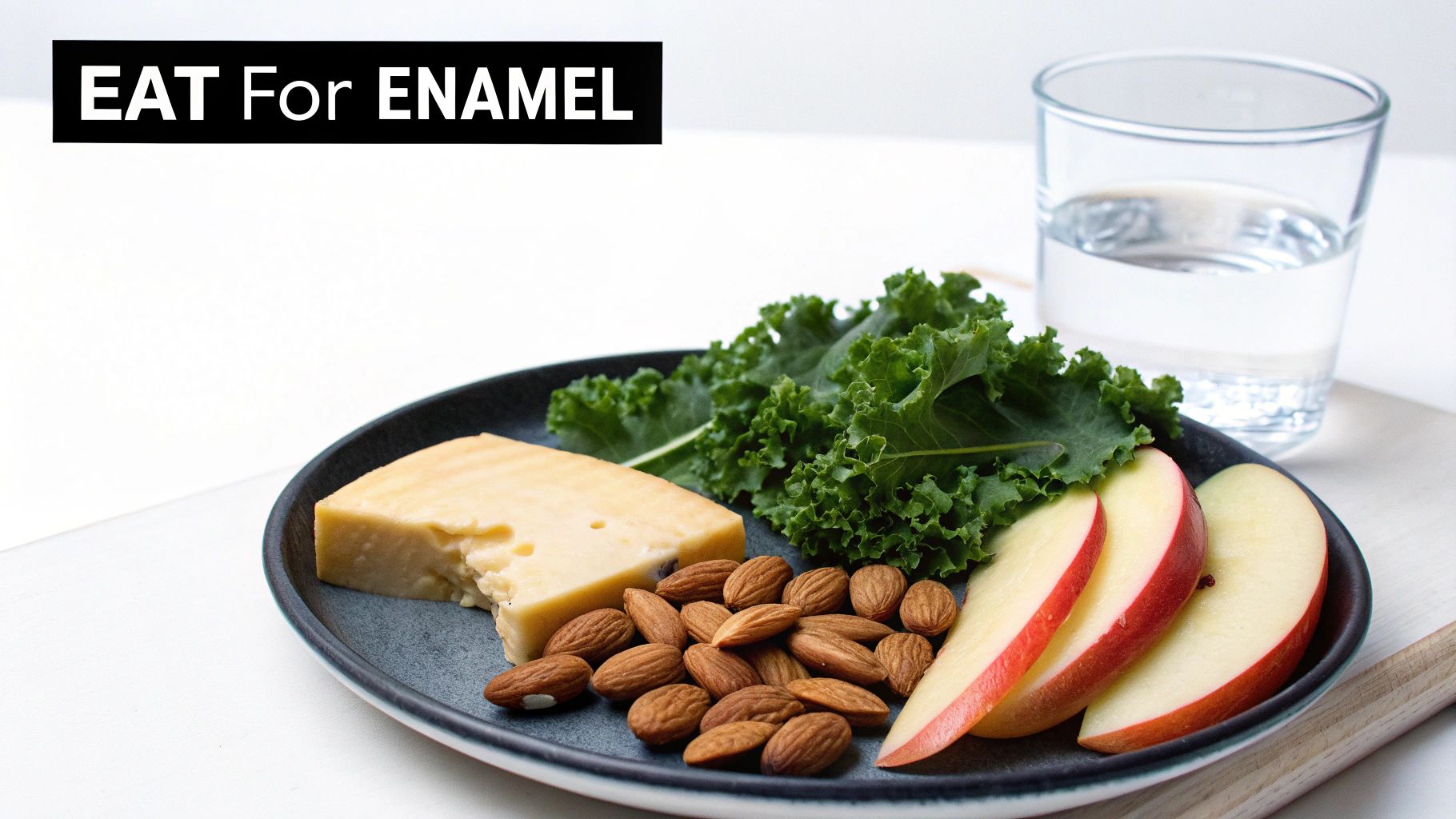
- Dairy Products: Cheese, milk, and plain yogurt are loaded with calcium and phosphates. Cheese is a real standout because it also helps raise the pH in your mouth, creating a less acidic environment.
- Leafy Greens: Veggies like kale, spinach, and collard greens are excellent sources of calcium, plus other essential vitamins that support healthy gums.
- Nuts and Seeds: Almonds are a fantastic choice. They provide a good dose of both calcium and protein while being low in sugar.
Including these foods in your daily meals gives your body a consistent reserve of minerals to pull from. To give this process a boost, you might consider supplements like the Chlorella Food Supplement for Mineral Replenishment, which can help ensure your body is never short on these crucial building blocks.
Saliva: Your Body’s Natural Enamel Repair System
If your diet is the supply chain, then saliva is the delivery truck. It’s your body's unsung hero in the fight against tooth decay, constantly working to neutralize acids and bathe your teeth in the minerals they need to rebuild. A healthy, robust flow of saliva is non-negotiable for effective remineralization.
When your mouth is dry, acids from food and bacteria hang around much longer, fast-tracking mineral loss. Keeping your saliva flowing is one of the most practical things you can do to protect your teeth all day long.
Saliva isn't just water; it's a complex, mineral-rich fluid designed specifically to protect and repair your teeth. By stimulating its flow, you're activating your body's own powerful, built-in system for remineralization.
The good news is that boosting saliva production is simple and easy to work into your daily routine.
Practical Ways to Stimulate Saliva Flow
- Stay Hydrated. This is the most fundamental step. Dehydration thickens your saliva and reduces its flow. Sipping water consistently throughout the day ensures your body has what it needs to produce this vital protective liquid.
- Chew Sugar-Free Gum. The physical act of chewing is a powerful saliva stimulant. Choosing a gum sweetened with xylitol offers a double benefit, as it also helps inhibit the growth of cavity-causing bacteria. You can see how this works in tandem with a toothpaste with xylitol and fluoride.
- Eat Crunchy Foods. Firm, fibrous foods like apples, carrots, and celery require more chewing, which naturally ramps up saliva production. As a bonus, their texture can help gently scrub plaque from your teeth.
Maintaining A Tooth-Friendly Oral pH
The final piece of the dietary puzzle is managing the pH level in your mouth. Your enamel can only absorb minerals and repair itself when your oral environment is neutral or slightly alkaline (a pH of around 7.0 or higher). Once it drops into the acidic range (below 5.5), demineralization kicks in.
Many of our favorite foods and drinks are highly acidic, creating an environment where teeth are constantly under attack. The goal is to limit these acid assaults and help your saliva bring the pH back to a healthy balance as quickly as possible.
To make things easier, here's a straightforward comparison to help you make smarter choices.
Enamel-Friendly Foods vs Enamel-Damaging Foods
| Foods That Promote Remineralization | Foods That Cause Demineralization |
|---|---|
| Cheese, milk, plain yogurt | Soda, sports drinks, energy drinks |
| Almonds, leafy greens, tofu | Citrus fruits and juices (in excess) |
| Crunchy vegetables like carrots and celery | Sticky candies and sugary snacks |
| Lean proteins like chicken and fish | Processed starches (crackers, white bread) |
By consciously incorporating more of the "good" foods and taking simple steps to boost saliva, you create a powerful internal support system for your teeth. This dietary approach, combined with the topical treatments we've discussed, gives you a well-rounded and effective strategy for remineralizing your teeth at home.
Knowing When to See Your Dentist
Learning how to remineralize your teeth at home is a huge step in taking control of your oral health. But it's just as important to know the limits of what you can do on your own. Home care is fantastic for catching and reversing the very first signs of mineral loss, but some situations signal that the problem needs a professional eye.
Recognizing these red flags isn’t about failure—it’s about being smart. Your dentist is a partner in your oral health journey, armed with tools and treatments that can stop a small issue from becoming a big, expensive one.
Red Flags That Need a Professional
While you can often reverse those early white spots at home, certain symptoms mean the demineralization has progressed to actual structural damage. Once the enamel surface is physically broken, you have a cavity. No amount of specialty paste or diet changes can regrow that lost tooth structure.
It’s definitely time to book a dental appointment if you notice:
- Visible Pits or Holes: If you can see or feel an actual hole or chip in your tooth, decay has officially breached the enamel. This requires a filling to clean out the decay and restore your tooth.
- Dark Brown or Black Spots: White spots are the early warning system. Dark spots often mean the decay has been around for a while and is more advanced.
- A Persistent Toothache: A little sensitivity to hot and cold can be a sign of thinning enamel. But a constant, dull ache or a sharp, random pain usually means the problem has reached deeper, possibly affecting the tooth's nerve.
Think of your dentist as a collaborator. They're not just there to fix problems after they happen. They can provide professional-grade treatments that supercharge your at-home efforts, building a comprehensive plan for strong, healthy enamel.
How Professional Treatments Boost Your Home Routine
Even if you don't have a full-blown cavity, your dentist has access to powerful treatments that can give your remineralization efforts a massive leg up. Think of them as professional-strength versions of the products you're already using.
For instance, your dentist can apply a professional fluoride varnish. This is a highly concentrated treatment they paint directly onto your teeth, delivering a much more potent dose of fluoride than anything you can buy over the counter. It acts like a powerful shield against acid attacks that lasts for months.
They can also provide prescription-strength pastes. If you're at high risk for cavities, your dentist might prescribe a toothpaste with 5,000 ppm (parts per million) of fluoride—that’s over four times stronger than typical store-bought options. These professional tools work hand-in-hand with your daily habits to give your smile the ultimate defense. Never hesitate to ask for their expert help.
Have Questions About Remineralizing Your Teeth? We Have Answers.
As you start your journey to remineralize your teeth at home, it's totally normal for questions to pop up. Getting clear, honest answers is what helps you set realistic expectations and stick with a new routine long enough to see genuine, lasting results.
So let’s tackle some of the most common questions head-on. Understanding the timeline, the potential, and the limits of at-home care will empower you to make the smartest decisions for your smile.
How Long Does It Take to See Results?
This is easily the most frequent question we get, and the honest answer is: remineralization is a marathon, not a sprint. While you can feel some benefits pretty quickly, others require more time and dedication. The timeline really hinges on what you're hoping to achieve.
For instance, many people notice a drop in tooth sensitivity within just a few weeks of consistently using fluoride and adjusting their diet. That's a fantastic early sign that your enamel is getting stronger.
Visible improvements to those chalky white spots, however, take longer. You'll likely need to follow your daily action plan diligently for several months before you see a noticeable reduction in their appearance. The key is unwavering consistency; every single day you stick to your routine, you're giving your enamel exactly what it needs to repair itself.
Can You Really Reverse a Cavity at Home?
It's absolutely crucial to understand the distinction here, because this is where a lot of bad information gets spread around. The answer is yes—but only if you catch it at the very earliest stage.
This initial stage is the demineralization that shows up as a "white spot lesion," which we've been talking about. At this point, the enamel surface is still intact. It's just become porous and weak from mineral loss. A dedicated at-home remineralization plan can help your body redeposit calcium and phosphate, effectively healing that weakened area.
The moment that weakened area breaks through the enamel surface and creates a physical hole or pit, it has become a true cavity. At that stage, it cannot be reversed at home. A dentist must step in with a filling to physically remove the decay and restore the tooth's structure.
Catching demineralization early is everything. This is why recognizing those initial white spots is so important—it’s your window of opportunity for at-home repair.
Is MI Paste a Replacement for Fluoride Toothpaste?
Think of these two products as a powerful team, not as competitors. Your daily fluoride toothpaste is the non-negotiable foundation of your entire oral health routine. It provides that essential, low-dose fluoride exposure your teeth need for everyday protection and repair.
A specialty product like MI Paste is a targeted booster. Its whole purpose is to deliver a high concentration of bio-available calcium and phosphate directly to your teeth. It’s an ideal add-on for anyone with specific challenges, like:
- A higher risk of decay due to genetics, dry mouth, or diet.
- Significant tooth sensitivity that a regular toothpaste just can't seem to solve.
- Existing white spot lesions that you're actively trying to reverse.
Using both gives you the best of both worlds. Your fluoride toothpaste strengthens your enamel's defenses day in and day out, while MI Paste provides the extra raw materials needed for intensive repair work. They work together beautifully to create a comprehensive system that maximizes your ability to remineralize your teeth at home.
Ready to build your complete remineralization toolkit? At DentalHealth.com, we stock the professional-grade products dentists recommend, from specialty pastes to sensitivity-relief toothpastes, all delivered right to your door.
Shop our full collection of remineralizing products at DentalHealth.com today!