
How to Treat Sensitive Teeth Naturally At Home
That sharp, sudden “zing” of pain when you sip a hot coffee or bite into something cold is more than just annoying—it’s your body’s alarm system. It’s a clear signal that the protective outer layer of your teeth, the enamel, has worn thin, exposing the sensitive layer underneath called dentin. This is where most tooth sensitivity comes from.
Why Your Teeth Are Suddenly So Sensitive

If you're trying to figure out how to treat your sensitive teeth naturally, you first have to understand why the pain showed up. It’s rarely an overnight problem. More often than not, sensitivity is the result of gradual changes, turning things you used to enjoy into painful experiences.
Think of your enamel as a hard, protective shell. Just beneath it lies the dentin, a softer, porous layer full of thousands of microscopic tubules. These tiny channels lead straight to the tooth’s nerve center, the pulp. When your enamel wears away or your gums recede, these tubules are left exposed.
Suddenly, things like temperature changes, acidic foods, or even a gust of cold air can rush through these channels and hit the nerve directly. The result? That characteristic sharp, short burst of pain we all dread.
Common Culprits Behind Exposed Dentin
Several common habits and conditions are known to break down your teeth's natural defenses. Pinpointing what's causing your specific issue is the first real step toward finding relief.
- Aggressive Brushing: Using a toothbrush with hard bristles or just scrubbing way too hard can literally wear away your enamel. Over time, it can also cause your gums to pull back.
- Acidic Diet: If you frequently consume things like citrus fruits, sodas, and wine, the acid can chemically erode tooth enamel, leaving the dentin completely vulnerable.
- Gum Recession: Gums can pull away from the teeth for various reasons, including gum disease or simply the aging process. This exposes the sensitive root surfaces, which have no enamel to protect them.
- Teeth Grinding (Bruxism): Many of us clench or grind our teeth, often while we sleep. This puts a massive amount of pressure on the enamel, causing it to wear down much faster than it should.
The Whitening Connection
Teeth whitening treatments are another huge reason people experience temporary, but often intense, sensitivity. Many whitening products use high concentrations of peroxide, which can penetrate the enamel and directly irritate the tooth's nerve.
You're not alone if you've felt that post-whitening zing. It's a widespread issue. In fact, some studies show that up to 78% of patients experience sensitivity when using whitening treatments that have high peroxide concentrations.
This common experience is why so many people are looking for natural ways to manage tooth sensitivity. The great news is that once you understand these causes, you can start making smarter choices and finding gentle remedies that actually work. By addressing the root problem—whether it’s your brushing technique or your diet—you can build a foundation for lasting comfort. To dive deeper, you can explore our detailed guide on the causes of tooth sensitivity.
Did you know that dentin hypersensitivity is one of the most common dental complaints in the world? It affects an estimated 10-30% of the worldwide population, with about 15% of adults dealing with it regularly. The condition is a direct result of those dentin tubules becoming exposed, creating a direct pathway for painful stimuli to reach the nerves inside your teeth. You can read the full research on dentin hypersensitivity to learn more.
Natural Remedies for Immediate Pain Relief
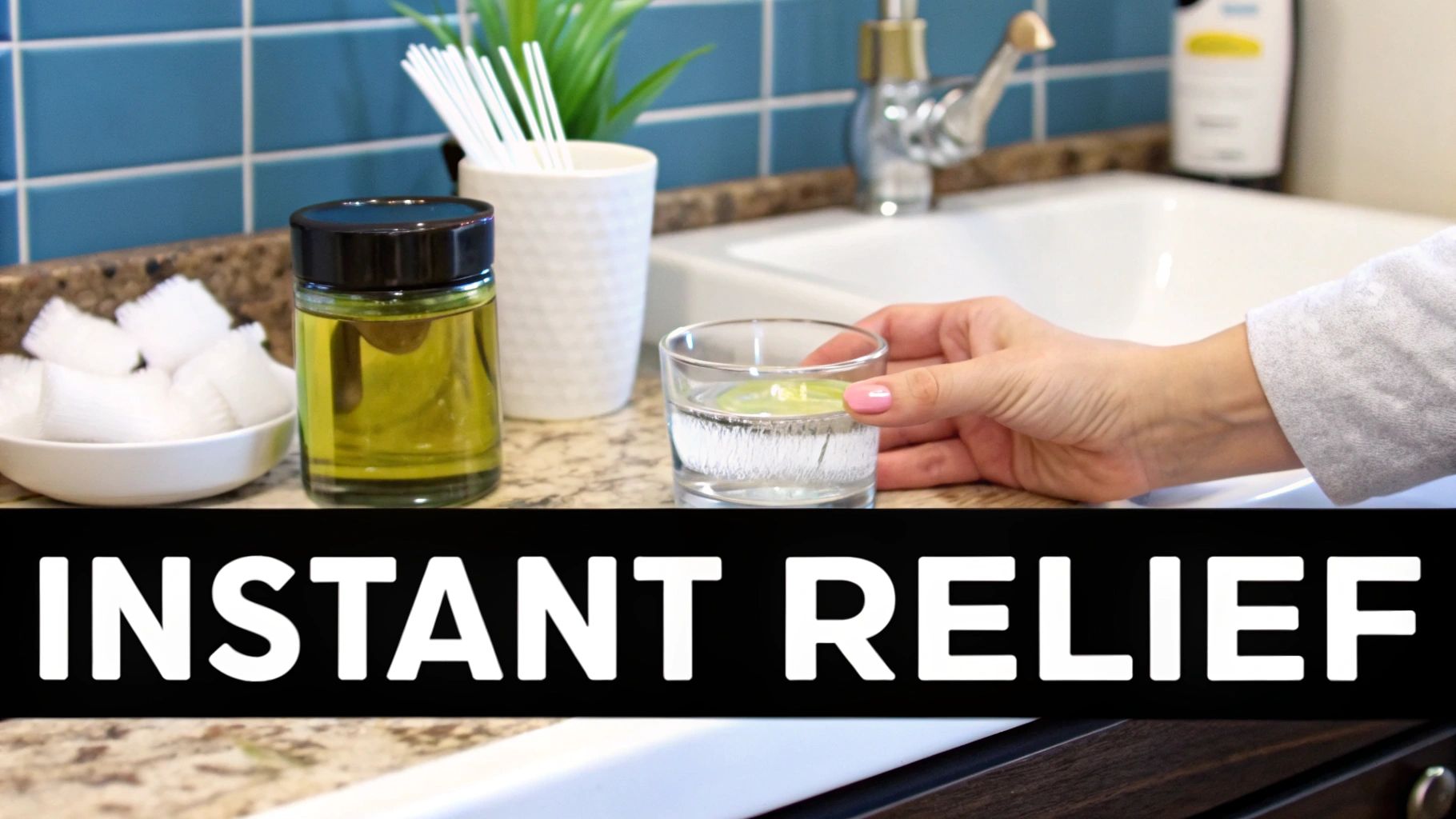
When that sudden, sharp jolt of tooth pain hits, you need relief, and you need it now. The good news is you probably have some effective, natural remedies sitting right in your kitchen pantry. These simple solutions can provide immediate comfort by calming down those agitated nerve endings and reducing inflammation around the tooth.
Harness the Power of a Saltwater Rinse
A simple saltwater rinse is one of the oldest and most reliable tricks in the book for any kind of oral discomfort. Why? Salt is a natural antiseptic that helps reduce inflammation in your gum tissue. This is a huge help, especially if your sensitivity is being made worse by irritated gums.
It couldn't be easier to make. Just dissolve half a teaspoon of salt in a glass of warm water. Swish it around your mouth for about 30 seconds, making sure to get it around the most sensitive spots. Spit, but don't rinse with plain water afterward—you want to let the salt continue its soothing work.
Soothe Nerves with Coconut Oil Pulling
Oil pulling is an ancient Ayurvedic practice with real modern-day benefits. The idea is to swish oil in your mouth to pull out bacteria and improve oral hygiene. Coconut oil is a fantastic choice for this because of its natural anti-inflammatory properties, which can help calm down irritated gums and overactive tooth nerves.
To give it a try, just take a tablespoon of organic coconut oil and swish it gently through your teeth for 10 to 20 minutes. The oil will mix with your saliva and turn into a thin, milky liquid. When you're done, be sure to spit it into the trash, not the sink, as it can clog your pipes over time. Then, just rinse your mouth with warm water. It might feel a bit strange at first, but many people find it becomes a relaxing part of their daily routine.
Pro Tip: Don't have a spare 20 minutes? Don't sweat it. Even five minutes of oil pulling can make a difference. The real key is consistency. Try tacking it onto your morning routine right before you brush to help cleanse your mouth and keep sensitivity flare-ups at bay.
Try a Targeted Toothpaste Application
Sometimes you need to go right to the source of the pain. This is where your desensitizing toothpaste can do more than just clean your teeth—it can work as a spot treatment for immediate relief. Most of these toothpastes have ingredients like potassium nitrate or stannous fluoride that work by blocking the tiny tunnels (tubules) in your dentin that lead to the nerve.
Here's a great little trick for fast relief:
- Squeeze a small, pea-sized dab of desensitizing toothpaste onto a clean fingertip or a cotton swab.
- Gently rub the paste directly onto the specific tooth or area that's screaming at you.
- Let it sit for a few minutes without rinsing. This gives the active ingredients time to sink in and calm the nerve.
This method delivers a concentrated dose of the desensitizing agent right where you need it most, creating a fast-acting shield against whatever is triggering the pain. It’s a fantastic move before a meal if you know a certain food or drink is likely to cause a problem.
And to help manage the issue from the inside out, you might also look into natural anti-inflammatory supplements to help reduce underlying irritation throughout your body.
Building a Gentle Daily Oral Care Routine
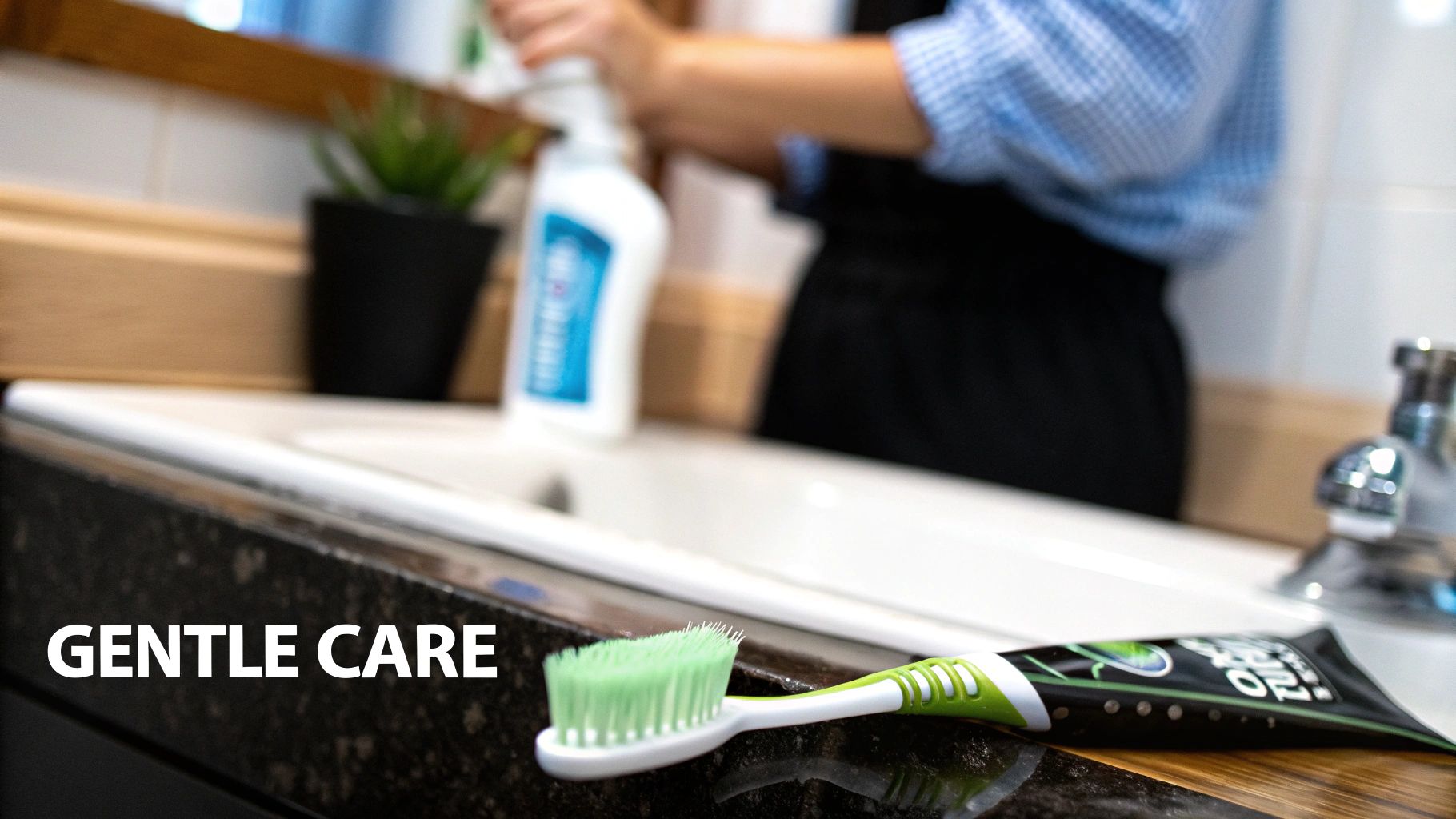
While quick fixes can offer some much-needed comfort, the real key to lasting freedom from tooth sensitivity is building a daily routine that consistently protects your teeth. Think of it less like a chore and more like a defensive strategy against enamel wear and gum recession. This is where you can truly learn how to treat sensitive teeth naturally and for good.
This all starts with the tools you use every single day. If you’re still using a toothbrush with medium or hard bristles, it’s time to make a change. Those stiff bristles can act like a scouring pad on your delicate enamel and gum line, contributing to the very problems that cause sensitivity in the first place.
Choosing Your Tools Wisely
Honestly, the single most impactful switch you can make is to an ultra-soft-bristled toothbrush. These brushes are designed to be firm enough to sweep away plaque but gentle enough to prevent damage. When you pair a soft brush with the right technique, you’ve got a powerful combination for an effective clean without the harmful side effects.
Your technique is just as important as your tools. Instead of aggressive back-and-forth scrubbing, use small, gentle, circular motions and hold the brush at a 45-degree angle to your gum line. This method cleans thoroughly along the base of the teeth where plaque loves to hide, all while massaging the gums instead of pushing them away.
A Gentle Reminder: The goal of brushing is to dislodge plaque, not to scour your enamel. Plaque is soft and sticky, so a methodical, gentle approach is far more effective—and safer for your teeth—than forceful scrubbing.
The Power of Natural and Herbal Toothpastes
The toothpaste you choose plays a massive role in managing sensitivity. Many natural and herbal-based toothpastes contain ingredients specifically aimed at soothing nerves and strengthening enamel, often without the harsh chemicals found in some conventional pastes. These formulas leverage the power of botanicals and minerals to provide gentle yet effective relief.
Don't just take our word for it. One rigorous efficacy study showed incredible results with a natural extract toothpaste. In a group of 30 patients with sensitive teeth, participants experienced a 74.6% reduction in thermal sensitivity and a 66.3% drop in air sensitivity in just 30 days. This highlights the powerful dual action of certain natural ingredients—they desensitize nerves while also improving overall gum health.
When shopping for a new toothpaste, look for key ingredients known to combat sensitivity:
- Potassium Nitrate: This is a naturally occurring mineral salt that works by calming the tooth's nerve activity. It essentially interrupts the pain signal before it can reach your brain.
- Arginine: An amino acid that helps to plug and seal the exposed dentin tubules, creating a physical barrier against sensitivity triggers like cold air or sweet foods.
- Hydroxyapatite: This is the main mineral your own enamel is made of. Toothpastes containing hydroxyapatite can help to "rebuild" and strengthen weakened enamel from the outside in.
- Herbal Extracts: Ingredients like clove oil, green tea extract, and miswak have natural anti-inflammatory and antimicrobial properties that support healthy gums.
If you want to dive deeper into the different options out there, check out our guide on choosing the best toothpaste for sensitive teeth for more in-depth comparisons.
Comparing Key Natural Ingredients for Sensitive Teeth
To help you make an informed choice, this table breaks down some of the most common active ingredients in toothpastes designed for sensitivity, explaining how they work and what they're best for.
| Ingredient | How It Works (Mechanism) | Primary Benefit | Found In Products Like |
|---|---|---|---|
| Potassium Nitrate | Calms nerve activity inside the tooth, preventing pain signals from reaching the brain. | Nerve desensitization for quick pain relief. | Fluoridex, Sensodyne |
| Arginine | Binds to the tooth surface to plug and seal exposed dentin tubules. | Forms a physical barrier against triggers. | Colgate Sensitive Pro-Relief |
| Hydroxyapatite | Bonds with and remineralizes weakened enamel, filling in microscopic cracks. | Rebuilds and strengthens the tooth's surface. | Apagard, Boka |
| Stannous Fluoride | Creates a protective layer over exposed dentin tubules while also strengthening enamel. | Dual action: blocks triggers and fights cavities. | Crest Pro-Health, MI Paste One |
Understanding these ingredients helps you select a product that targets the specific cause of your sensitivity, whether it’s nerve-related pain or weakened enamel.
Integrating Remineralizing Products and Practices
Beyond brushing, you can add other practices to your routine to really fortify your teeth. Remineralization is the natural process of restoring minerals to your tooth enamel, and you can support it with specific products and habits. Products like MI Paste, which uses a milk-derived protein, deliver bio-available calcium and phosphate directly to your teeth, helping to patch up microscopic weak spots in your enamel.
Oil pulling is another ancient practice that fits perfectly into a gentle oral care routine. As we touched on earlier, swishing with coconut oil helps reduce bacteria and inflammation. For anyone interested in incorporating traditional practices into their oral care, a natural coconut oil pulling kit can be a fantastic addition. It complements your brushing and flossing by creating a healthier oral environment where gums are less likely to become irritated.
By combining the right tools, a gentle technique, and supportive products, you transform your daily routine from a potential cause of sensitivity into your most powerful solution for lasting relief.
Change Your Diet, Change Your Sensitivity
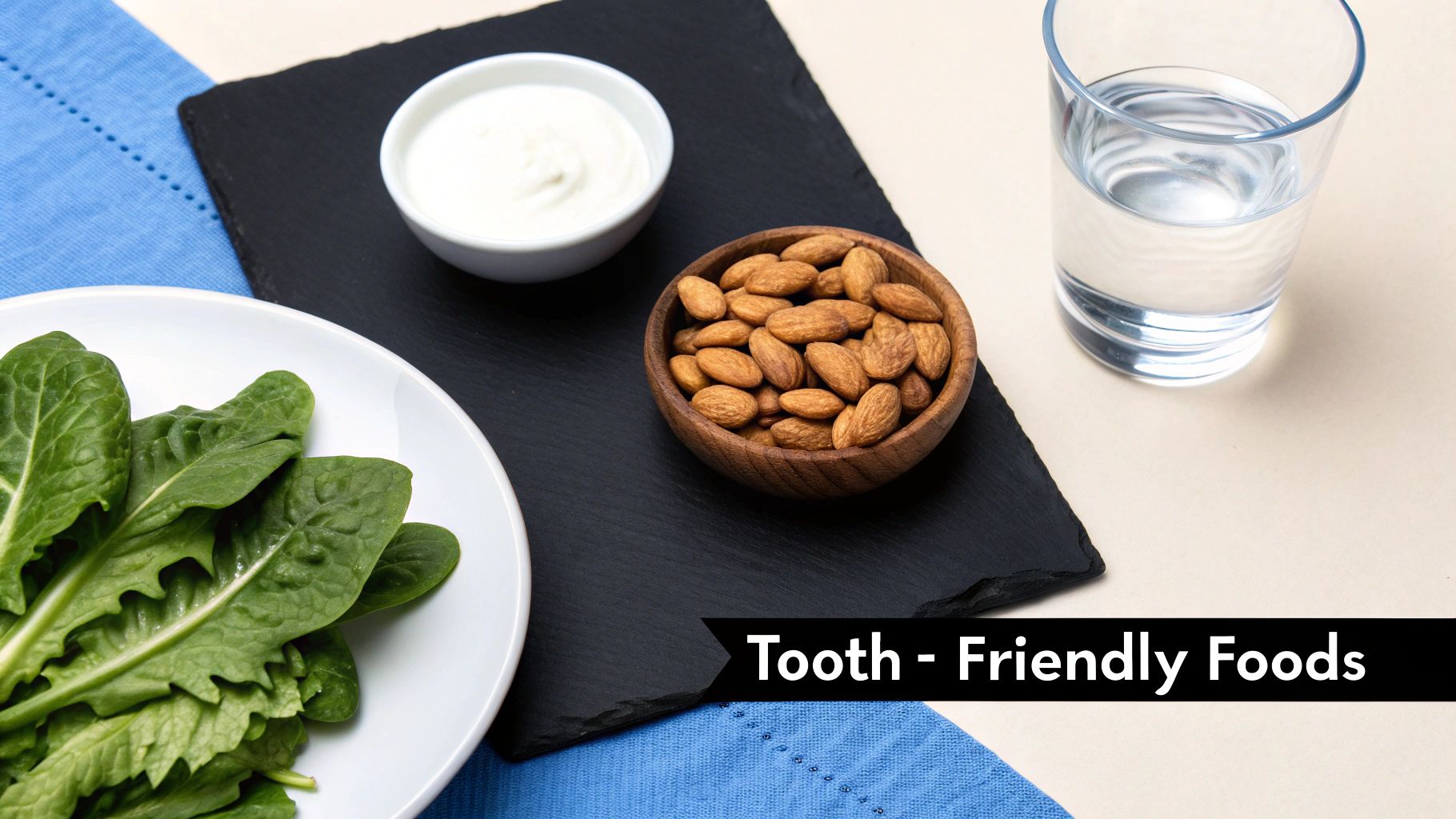
It’s easy to focus on what you’re doing to your teeth, like brushing and rinsing. But what you put in your body has a direct and powerful impact on tooth sensitivity. Think of it this way: your diet works from the inside out, building a stronger defense against the very things that make you wince.
Your tooth enamel is like a shield. Some foods and drinks chip away at it, while others provide the raw materials to repair and strengthen it. Shifting what you eat is a non-negotiable step in any plan for how to treat sensitive teeth naturally.
Dodge the Acid Attack
Acid is public enemy number one for tooth enamel. When you eat or drink something acidic, it temporarily softens your enamel, making it incredibly vulnerable to wear and tear. The goal isn’t to banish these foods completely, but to be strategic about how and when you enjoy them.
Keep an eye out for these common acidic culprits:
- Citrus Fruits: Lemons, oranges, and grapefruit are vitamin C powerhouses but also intensely acidic.
- Tomatoes: Fresh, in sauces, or as paste, they contribute to an acidic oral environment.
- Soda & Sports Drinks: A brutal one-two punch of high acid and sugar content.
- Wine: Both red and white wine can erode enamel over time.
- Coffee: That daily cup of joe adds to the acid load your teeth face.
You don’t have to give up your morning OJ. Just be smarter about it.
A Pro Tip From Experience: Never, ever brush your teeth right after consuming something acidic. Your enamel is softened and you’ll literally scrub it away. Instead, swish your mouth with plain water to neutralize the acid, then wait at least 30 to 60 minutes before you even think about brushing.
Feed Your Enamel What It Needs
Just as some foods weaken enamel, others are fantastic for rebuilding it. This is where your diet becomes a powerful tool. Your body is always trying to repair your teeth through a natural process called remineralization, and you can give it a major boost by eating the right things.
Make sure your diet is rich in these tooth-building nutrients:
-
Calcium: The main building block of your teeth. Without enough calcium, your enamel becomes weak and porous. Load up on dairy (milk, cheese, yogurt), leafy greens (spinach, kale), and fortified non-dairy milks.
-
Vitamin D: Calcium is useless if your body can't absorb it. That’s where Vitamin D comes in. You can get it from sunshine, but also make sure you’re eating fatty fish like salmon, egg yolks, and other fortified foods.
-
Phosphorus: This mineral is calcium’s partner in crime for building strong enamel. You'll find it in protein-rich foods like fish, lean meat, eggs, and dairy.
-
Vitamin K2: This is the unsung hero of dental health. Vitamin K2 acts like a traffic cop, directing calcium to your bones and teeth where it belongs. Find it in grass-fed butter, egg yolks, and fermented foods.
Understanding this process is a game-changer for your dental health. For a deeper dive, check out our complete guide on how to remineralize teeth at home to really get into the science of rebuilding your smile.
Master Your Snacking and Sipping Habits
It's not just what you eat, but how you eat. Constantly grazing, especially on sugary or acidic snacks, keeps your mouth in a state of acid attack. This prevents your saliva from doing its crucial job of neutralizing threats and strengthening your enamel.
Try to give your teeth a break between meals. If you must snack, make it a smart one. Cheese, nuts, or crunchy veggies like carrots and celery are great choices because they help scrub your teeth and kickstart saliva production.
Finally, make water your best friend. Staying hydrated is essential for producing saliva, your body’s built-in defense system against acid and bacteria. Sipping water all day long is one of the simplest and most effective things you can do to rinse away debris and keep your mouth healthy and balanced.
Beyond Brushing: Lifestyle Habits That Can Make or Break Tooth Sensitivity
What you do when you're not eating can have a massive impact on tooth sensitivity. Some of the most common triggers are daily habits we don't even think about—things that silently wear down enamel and leave our teeth vulnerable. If you really want to get to the root of your tooth pain, looking at these habits is a non-negotiable step.
Many of these issues are things we do when we’re stressed out, concentrating hard, or even fast asleep. By becoming more aware of them, you can finally break the cycle of damage and give your teeth a chance to heal.
Are You Grinding Your Teeth Away?
One of the biggest culprits behind widespread sensitivity is bruxism—the clinical term for grinding or clenching your teeth. Millions of us do it, often in our sleep, completely unaware of the incredible force we're putting on our teeth. This constant pressure can literally grind away your enamel, exposing the sensitive layers beneath.
If you often wake up with a sore jaw, a dull headache, or you’ve noticed your teeth looking a bit shorter or flatter, there's a good chance you're a grinder. The key to stopping it is often managing the root cause: stress.
Try working some of these stress-busters into your routine:
- Mindfulness & Meditation: Just 10 minutes of guided meditation before bed can do wonders for calming your nervous system and helping those jaw muscles relax.
- Get Moving: Regular exercise is one of the best ways to burn off stress hormones. It releases tension you might otherwise be holding in your jaw all night long.
- Cut Back on Stimulants: Caffeine and alcohol can seriously mess with your sleep quality, which may make grinding even more likely.
While you work on the stress, you have to protect your teeth now. The most effective solution is a custom-fitted night guard from your dentist. It acts as a cushion, absorbing the force and saving your enamel from any more damage.
Your Teeth Aren't Tools
We've all been there—using our teeth to rip open a bag of chips, tear a piece of tape, or even hold a bobby pin. It feels harmless, but it's a fast track to creating tiny chips and micro-fractures in your enamel. Every time you do this, you risk creating a new weak spot for sensitivity to flare up.
The fix here is simple, but it takes a little mindfulness. Stash scissors or a small multi-tool where you can easily reach them. The more you remind yourself that your teeth are for chewing and smiling—not for acting as a third hand—the quicker you'll break this damaging habit.
Keeping Up with the Science of Sensitivity Relief
Making these small but powerful lifestyle shifts creates the perfect foundation for your other sensitivity treatments to work their magic. It's also good to know that the science behind treating sensitivity is always getting better, moving beyond old-school ingredients to more advanced, naturally derived options.
For instance, back in the 1980s, a major study made 5% potassium nitrate the gold standard for sensitivity relief. But things have come a long way since then. A 2019 study, for example, found that a toothpaste containing 8% arginine (an amino acid) was even more effective at tackling dentin hypersensitivity than the old potassium nitrate formulas.
This just shows that both professional and natural options are constantly improving, giving you more powerful tools than ever. You can read up on more of these sensitivity relief findings and bring them up with your dentist at your next visit.
When to See a Dentist About Tooth Sensitivity
While learning how to manage sensitive teeth naturally can bring incredible relief for that everyday zing, it's critical to know that not all sensitivity is the same. At-home strategies are fantastic for dealing with things like general enamel wear or minor gum irritation. But sometimes, that sharp, jolting pain is your body's alarm system, warning you of a more serious issue that needs a professional.
Ignoring these signals can allow a small, fixable problem to snowball into something much more complex and painful. Knowing when to put down the clove oil and pick up the phone to call your dentist is one of the most important parts of taking charge of your oral health. Your dentist has the tools to see what’s really going on and can offer treatments that natural remedies just aren't designed to handle.
Red Flags That Demand a Dental Visit
If your sensitivity graduates from a mild, widespread annoyance to something more specific, it’s time to listen closely. Certain symptoms are your mouth’s way of crying out for professional help. If you're experiencing any of the following, don't just hope it goes away—schedule an appointment right away.
These aren't issues you want to self-diagnose.
- Severe, Lingering Pain: If that jolt from a cold drink is intense and hangs around for more than 30-60 seconds after the trigger is gone, that's a major red flag. This could point to deep decay or nerve inflammation.
- Sensitivity in a Single Tooth: When the pain is laser-focused on just one tooth, it’s often a sign of a localized problem like a cavity, a crack, or a brewing abscess.
- Pain with Pressure: Does biting down on a sandwich send a shooting pain through your tooth? That could mean a cracked tooth or a failing filling that's no longer doing its job.
- Swollen or Bleeding Gums: Sensitivity paired with red, puffy, or bleeding gums is a classic calling card of gum disease (gingivitis or the more advanced periodontitis), which requires professional intervention.
- Visible Damage: If you can actually see a chip, a crack, or a dark spot on the tooth that's bothering you, that’s a clear sign its structure is compromised.
Think of it like this: Widespread, mild sensitivity is like a low tire pressure warning—you can often manage it. But sharp, localized pain is like the check engine light flashing on your dashboard. It’s signaling a specific problem that needs an expert to diagnose and fix.
What Your Dentist Will Look For
When you go to the dentist with these symptoms, they’ll be looking for problems that go far beyond simple enamel erosion. Getting a professional diagnosis is non-negotiable here, because the fixes for these conditions are entirely different from at-home care.
Your dentist will investigate for common culprits, including:
- Dental Cavities: A cavity is essentially a hole in your tooth's armor, giving hot, cold, and sweet things a direct pathway to the sensitive inner layers (the dentin and pulp).
- Cracked or Chipped Teeth: Even a hairline fracture, invisible to the naked eye, can create a superhighway for stimuli to reach the tooth’s nerve and cause blinding pain.
- Gum Disease: As gum disease gets worse, it causes your gums to pull away from your teeth. This exposes the sensitive root surfaces and can even damage the bone that holds your teeth in place.
- Worn-Down Fillings: Old fillings don't last forever. They can break down or develop tiny gaps around the edges, allowing bacteria and food particles to seep in and irritate the nerve.
- Abscess or Infection: This is a pocket of pus that forms at the root of a tooth. It can cause severe, throbbing pain and is a serious infection that requires immediate dental care to prevent it from spreading.
Deciding to see a dentist isn’t admitting defeat for your natural approach; it's a smart, proactive move. It ensures you’re treating the real root of the problem, protecting your health, and preventing a minor issue from becoming a major dental emergency.
Answering Your Questions About Natural Sensitivity Relief
When you start exploring natural ways to manage tooth sensitivity, it's normal to have a few questions. How long will this take? Am I doing the right thing? Let's clear up some of the most common questions we hear, giving you straightforward answers so you can feel confident in your new routine.
Getting these details right helps you set realistic expectations and fine-tune your approach for the best possible results. This is all about making smart choices that lead to lasting comfort.
How Long Does It Take for Natural Remedies to Work?
This is the big one, and honestly, it depends on what you're doing. The timeline for feeling better can range from almost instant relief to a more gradual, foundational change over several weeks.
For that immediate, "I need relief now" moment, a simple saltwater rinse can calm down irritated tissues and offer comfort within minutes. Think of it as oral first-aid for when a sudden jolt of pain hits.
For lasting change, though, you'll need a bit more patience. If you're consistently using a desensitizing toothpaste or trying something like oil pulling every day, most people start to notice a real difference in their sensitivity within about two to four weeks. Strengthening your enamel from the inside out with dietary changes is a slower burn, but it builds a long-term defense against future problems.
The key is consistency. A single saltwater rinse won't fix the underlying issue, just like one healthy meal won't rebuild your enamel overnight. Committing to a gentle, supportive routine is what creates real, lasting change.
Can Teeth Whitening Cause Permanent Sensitivity?
That post-whitening "zing" is a real thing, so it's a valid concern. The good news? For the vast majority of people, any sensitivity you feel from teeth whitening is completely temporary and usually fades within a few days.
What's happening is that the whitening agent temporarily opens up the microscopic pores, or tubules, in your enamel, letting cold air and other stimuli get closer to the nerve. It’s a side effect of the process, not a sign of permanent damage.
You can do a few things to keep this discomfort to a minimum:
- Go with a lower concentration gel: Look for whitening products with a lower percentage of carbamide or hydrogen peroxide.
- Space out your sessions: Give your teeth more time to recover between treatments.
- Use a remineralizing product: Applying a paste like MI Paste before and after you whiten can help protect your enamel and dial down the sensitivity.
If the pain sticks around long after you’ve stopped whitening, it might point to a pre-existing issue that the treatment aggravated. In that rare case, it's definitely smart to schedule a check-up with your dentist.
What Is the Single Best Change I Can Make?
If you could only do one thing, the most impactful change you can make is switching to an ultra-soft-bristled toothbrush and using a gentle brushing technique. It’s that simple, but it’s a total game-changer.
The two biggest culprits behind sensitivity are enamel erosion and gum recession. And what often causes or worsens both? Aggressive brushing with hard bristles. Making this one small switch immediately stops the physical damage you might be unknowingly causing twice a day.
It gives your teeth and gums a chance to heal and makes all the other remedies you're trying—from special toothpastes to rinses—work that much more effectively.
Are There Dentist-Recommended Natural Products?
Absolutely. Many dentists now recommend products that use natural or bio-available ingredients to bridge the gap between purely herbal remedies and prescription treatments. These products are often backed by solid research and deliver proven results.
A great example is MI Paste. It’s a go-to recommendation for many professionals. It uses a milk-derived protein to deliver a concentrated dose of calcium and phosphate directly to your tooth's surface, which helps naturally remineralize and strengthen weakened spots.
Similarly, many professional-grade sensitivity toothpastes, like Fluoridex, rely on potassium nitrate. This is a naturally occurring mineral salt that works by calming the tooth's nerve, essentially blocking the pain signal from ever reaching your brain. They offer a clinically proven, effective path that aligns perfectly with a more natural approach to oral health.
At DentalHealth.com, we make it easy to find these trusted, dentist-recommended brands. You can get professional-grade products like MI Paste and Fluoridex, designed for effective, targeted relief from tooth sensitivity, delivered right to your door. Explore our curated selection of sensitivity solutions and take the next step toward lasting comfort.