
A Practical Guide on How to Use MI Paste Effectively
Applying MI Paste is a straightforward process you can do right at home. You just need a pea-sized amount on your finger or in a custom dental tray. Spread it over your teeth after brushing and let it sit for at least three minutes before spitting out any extra.
Understanding MI Paste and How It Strengthens Your Teeth
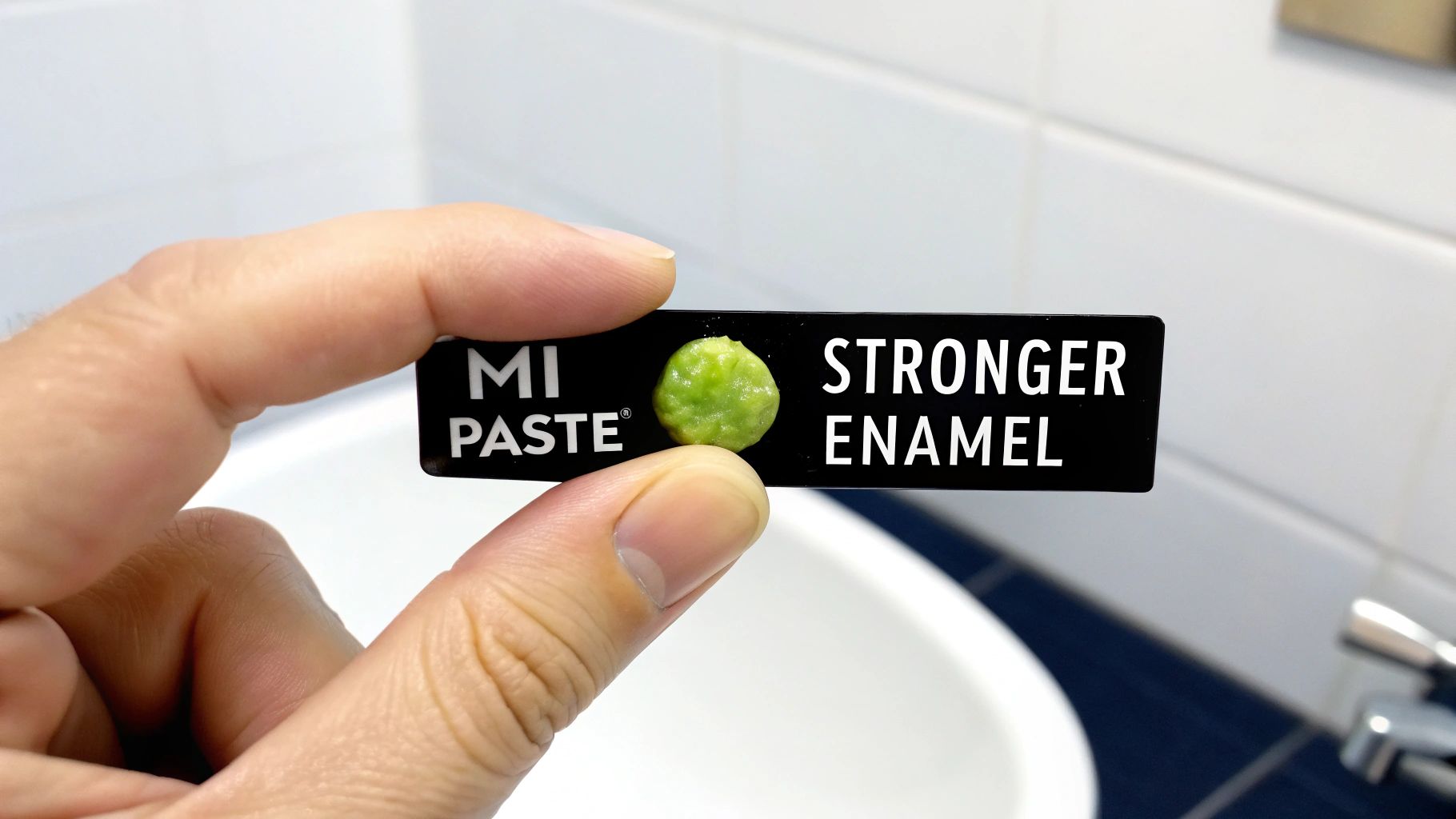
Before you start using it, it helps to know what makes MI Paste so effective. This isn’t your standard toothpaste; think of it as a topical treatment cream that delivers a concentrated dose of minerals directly where your teeth need them most—the enamel.
Its secret weapon is a unique, milk-derived protein called Recaldent (CPP-ACP). This powerful ingredient carries bio-available calcium and phosphate, which are the essential building blocks of your teeth.
When you apply MI Paste, these minerals get to work fortifying and repairing your enamel from the inside out. This process, known as remineralization, is a game-changer for several common dental issues:
- Soothing Tooth Sensitivity: It helps plug the microscopic tubules in your enamel that expose nerve endings, which is fantastic for calming sensitivity from whitening treatments or gum recession.
- Reversing Early Damage: It can help reverse "white spot lesions"—those early signs of decay that often show up after braces come off.
- Strengthening Enamel: Using it regularly makes teeth more resistant to acid attacks from plaque and sugary foods, essentially stopping cavities before they even have a chance to start.
The Key Difference: MI Paste vs MI Paste Plus
One of the biggest questions we get is about the two different versions. The choice is actually pretty simple and comes down to your fluoride needs.
To make it easy to see the difference, here's a quick side-by-side comparison.
MI Paste vs MI Paste Plus at a Glance
| Feature | MI Paste (Standard) | MI Paste Plus |
|---|---|---|
| Primary Ingredient | Recaldent (CPP-ACP) | Recaldent (CPP-ACP) |
| Fluoride Content | Fluoride-Free | 900 ppm Sodium Fluoride |
| Best For | Sensitivity, remineralization, users who already get enough fluoride (e.g., kids), or those with fluoride sensitivity. | Higher cavity risk, enhanced enamel strengthening, sensitivity relief, and remineralization. |
| Common Use Cases | Post-whitening sensitivity, white spot lesions, dry mouth relief. | Patients in orthodontic treatment, individuals with a history of decay, or as recommended by a dentist for extra protection. |
The standard MI Paste is completely fluoride-free, making it the perfect choice for anyone who already gets plenty of fluoride or for young children.
On the other hand, MI Paste Plus is boosted with fluoride (900 ppm). This fluoride works hand-in-hand with the calcium and phosphate to build an even stronger, more acid-resistant enamel structure. Dentists often recommend this version if you're at a higher risk for cavities.
Since its U.S. launch back in 2005, MI Paste has become a go-to for at-home dental care, especially for fighting enamel erosion. Studies have shown it can increase enamel hardness by up to 59% after just 10 days of twice-daily use—a clear advantage over standard fluoride pastes alone.
You can learn more about its applications in our guide on what MI Paste is used for. This incredible effectiveness is exactly why so many dental professionals consider it a powerful addition to a regular oral hygiene routine.
The Best Ways to Apply MI Paste for Maximum Results
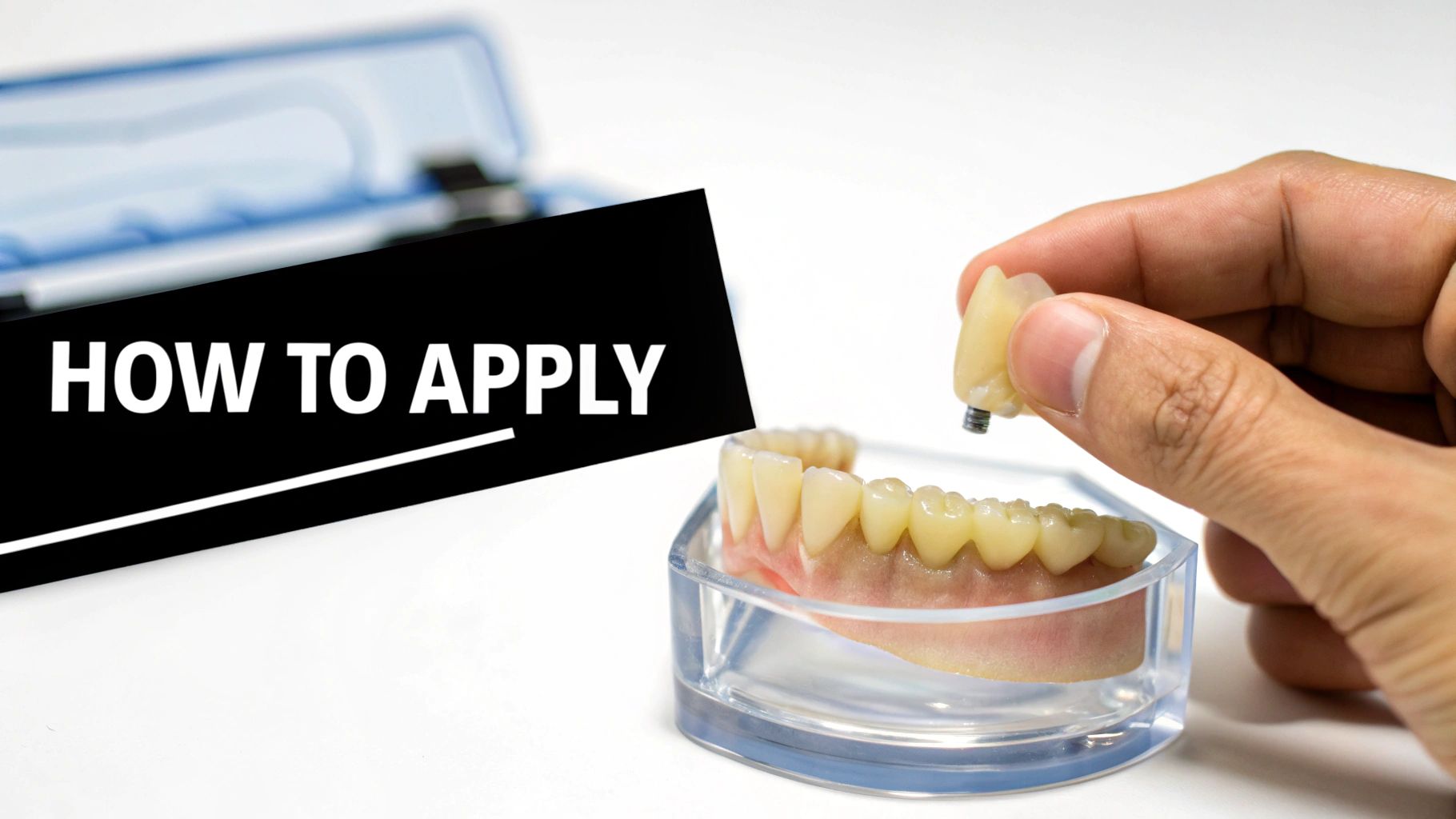
Alright, you understand the science, so let's get into the practical side of things. Using MI Paste correctly is the key to getting its full benefits, and the good news is, it's incredibly simple. There are two main methods that can fit into just about any daily routine.
No matter which way you go, the goal is always the same: get a good, concentrated layer of those amazing calcium and phosphate minerals onto your enamel and give them time to work their magic. Let's break down how to do that with a fingertip and with a custom dental tray.
The Quick Fingertip Method
This is by far the most common and straightforward way to use MI Paste. It’s perfect for daily use right after you brush and floss because it takes less than a minute and you don't need any special gear.
First up, brush your teeth thoroughly like you normally would and give your mouth a good rinse. A helpful little tip is to gently pat your teeth dry with a clean cloth or tissue. The paste just seems to stick a bit better to a drier surface.
Next, squeeze a pea-sized amount of MI Paste onto your clean, dry fingertip. You’ll then want to massage this paste directly onto your teeth, making sure to hit any problem areas.
- For Sensitivity: Really focus on the gumline, where enamel is often thinner or roots might be exposed.
- For White Spots: Gently rub the paste right over any white spot lesions, ensuring they get a solid coating.
- For General Protection: Make sure you cover the front and back surfaces of all your teeth.
Once it's on, just use your tongue to spread the paste around your mouth. It'll mix with your saliva and create a nice therapeutic coating. Now for the most important part: letting it sit.
Using a Custom Tray for Immersive Treatment
If you're looking for a more intensive and prolonged treatment, using a custom dental tray is a fantastic option. This method keeps the paste in direct, undisturbed contact with your teeth, which is a game-changer for tackling significant sensitivity or those stubborn white spots.
You’ve got a few options for trays, and you might already have what you need:
- Custom whitening trays from your dentist
- Orthodontic retainers (like Essix retainers)
- Clear aligners
The process is just as easy, just a little different. After brushing, squeeze a small ribbon or a few little beads of MI Paste into the tray compartments for each tooth. You don’t need to overdo it; a thin layer is all you need to coat your teeth when you pop the tray in.
Pro Tip: If you wear a retainer or aligner, this is a brilliant way to turn that wear time into a powerful remineralization session. Many people apply it in their trays right before bed for an overnight treatment.
The Golden Rules for MI Paste Success
Whichever method you choose, two universal rules are non-negotiable if you want the minerals to have enough time to do their job.
- Leave It Undisturbed: After applying the paste, let it sit on your teeth for a minimum of three minutes. Try not to talk or move your mouth around too much during this time.
- Wait Before Eating or Drinking: After those first three minutes, you can spit out any excess paste, but do not rinse with water. This is critical. You then need to avoid eating or drinking anything for at least 30 minutes.
That waiting period is what allows your enamel to fully absorb the calcium and phosphate. If you rinse too soon, you’re just washing the active ingredients away before they can do any good. The longer the paste stays in contact with your teeth, the better the results will be.
Using MI Paste with Whitening and Orthodontics
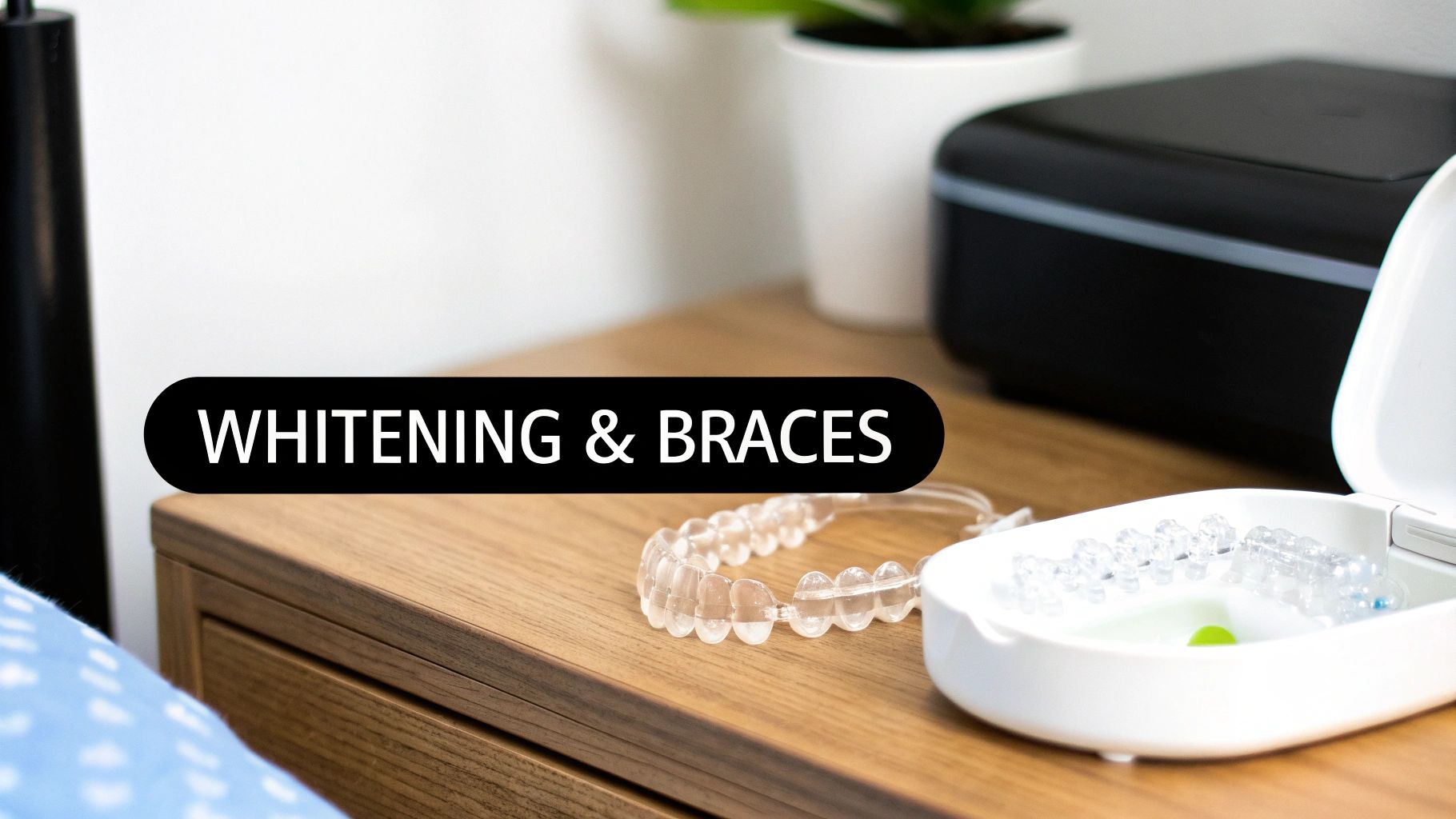
If you're in the middle of a teeth whitening journey or wearing orthodontics like braces or clear aligners, MI Paste can be a fantastic ally. While these treatments are incredibly effective, they can bring on some unique challenges, from sensitivity to a higher risk of demineralization. Integrating MI Paste into your routine gives your teeth targeted support right where it's needed most.
For anyone who has ever whitened their teeth, that dreaded "zing" of sensitivity is probably a familiar feeling. The good news is, MI Paste offers a powerful one-two punch to manage and even prevent this discomfort.
Managing Whitening Sensitivity
A simple but effective trick is to apply a layer of MI Paste to your teeth for about five minutes before you start your whitening session. Think of it as a protective barrier. It helps to preemptively block the tiny pores in your enamel, which can reduce the chances of the whitening agent irritating the nerve inside your tooth.
After you've finished whitening, applying the paste again does two things. First, it helps soothe any sensitivity that still managed to creep in. More importantly, it gets to work replenishing the calcium and phosphate that can be temporarily stripped away during the whitening process, helping your enamel bounce back faster.
If you find yourself struggling with this common side effect, you might find our guide on how to reduce teeth sensitivity after whitening helpful.
Preventing White Spots with Braces and Aligners
Orthodontic treatment is a huge commitment. The last thing you want is to finally get those brackets off and discover chalky white spots on your teeth. These spots, called white spot lesions, are areas where the enamel has demineralized, often because it's so tricky to brush effectively around brackets and wires.
This is where a consistent MI Paste routine becomes a total game-changer. By applying it daily, you're constantly bathing the enamel around your brackets with the exact minerals it needs to fight off acid attacks from plaque.
A fantastic and super-efficient way to use MI Paste with orthodontics is to turn your device into a custom delivery system. Just squeeze a thin ribbon of the paste into your clear aligner or retainer before you go to bed. This simple step ensures the paste stays in direct, prolonged contact with your teeth, transforming your appliance into an overnight remineralization treatment.
This isn't just anecdotal advice; the science backs it up. For patients dealing with white spot lesions from braces or the earliest signs of decay, research shows some really impressive results. One study noted a 90% regression of these lesions in orthodontic patients after just four weeks. The same data revealed that mineral restoration beneath the surface of the tooth increased by 44%.
By making MI Paste a part of your daily routine, you aren't just treating symptoms. You're actively protecting your investment in a healthier, straighter smile and making sure the final result is as bright and beautiful as it can be.
Insider Tips to Get More from Every Tube
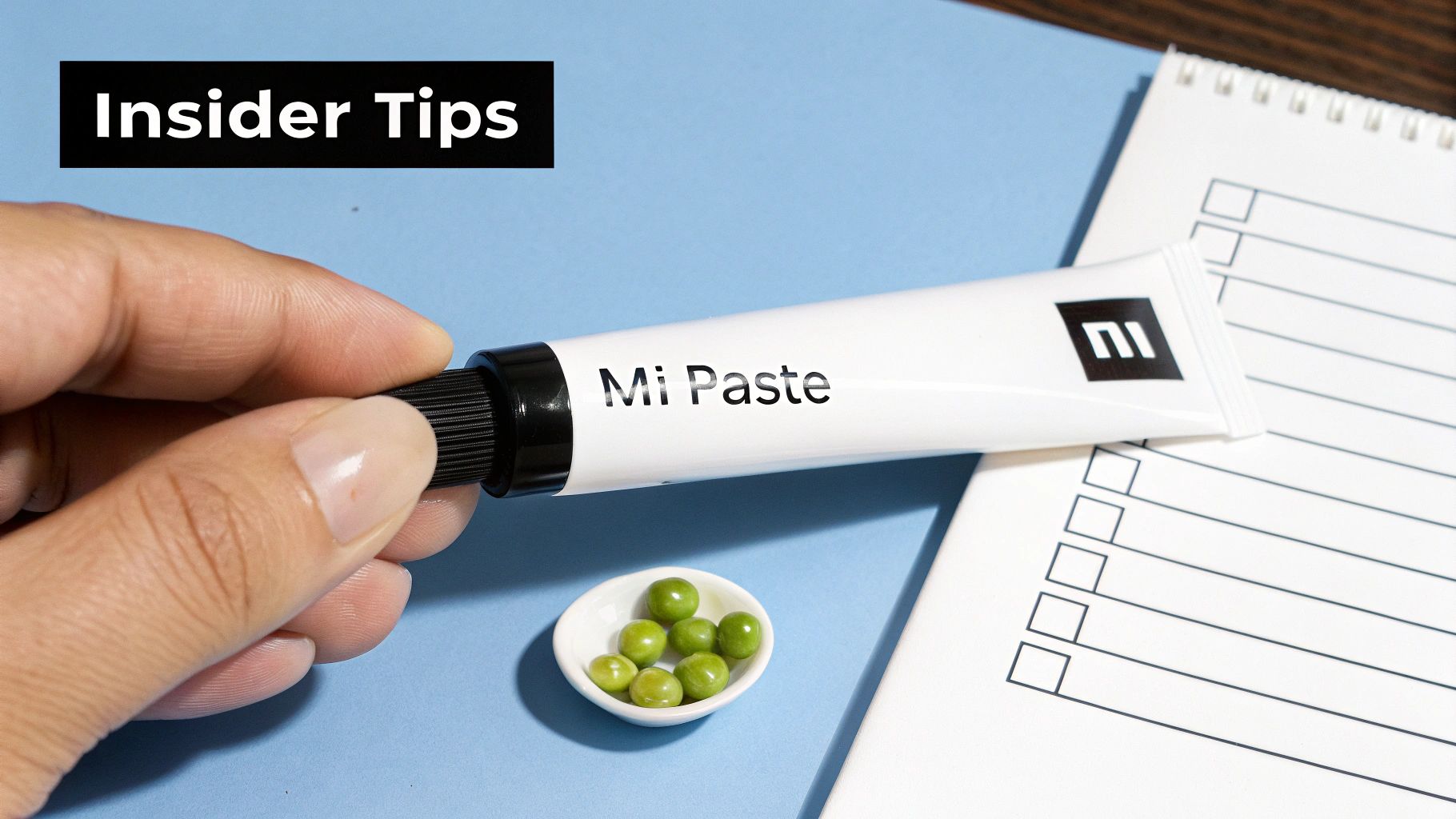
Okay, so you've got the basic application down. Now, let's talk about the little adjustments that can make a huge difference in your results. Think of these as the professional secrets that ensure you get the maximum therapeutic benefit from every single tube.
One of the most common questions I hear is about frequency—how often should you really be using it? There isn't a single right answer. The best schedule is the one that's tailored to what your teeth need right now.
Tailoring Your Application Frequency
Your ideal MI Paste routine will change depending on your specific dental concerns. The key is to be proactive and adjust as needed for the best outcome.
- For Chronic Sensitivity or Dry Mouth: If you're dealing with constant discomfort, a twice-daily application is your best bet. Using it after brushing in the morning and evening creates a steady supply of minerals to soothe and protect your enamel.
- After a Whitening Treatment: Post-whitening sensitivity usually doesn't last long. You'll likely only need to use it once or twice a day for about a week after your treatment to calm everything down and remineralize your enamel.
- For General Maintenance: If your goal is simply to keep your enamel strong, applying it once daily before bed is perfect. This gives your teeth an overnight protective boost while you sleep.
Simple Habits That Boost Effectiveness
Beyond how often you use it, a couple of easy habits will dramatically improve how well the paste works. Honestly, these are the details that separate good results from great ones.
First, always apply the paste to relatively dry teeth. After brushing and rinsing, just take a moment to gently pat your teeth with a clean tissue or soft cloth. This tiny step helps the paste stick directly to the enamel instead of getting immediately diluted by saliva.
The second critical habit is what you do after applying it. Once the paste has been on for at least three minutes and you've spit out the excess, do not rinse your mouth with water. This is the single biggest mistake people make. Rinsing washes away all the active ingredients before they have a chance to do their job.
Key Takeaway: You want to leave a thin film of the paste on your teeth for as long as possible. Avoid eating or drinking for 30 minutes after you apply it. This gives the calcium and phosphate an uninterrupted window to work their magic.
Common Mistakes to Avoid
Finally, let’s go over a few common pitfalls that can waste product and make it less effective.
The number one error is using way too much paste. You only need a pea-sized amount for your entire mouth. Seriously, that's it. Anything more just gets spit out and wasted.
Proper storage is also crucial. Keep your MI Paste in a cool, dry place and out of direct sunlight. Extreme heat or cold can mess with the consistency and stability of the active ingredients, which you definitely don't want. Following these simple tips ensures every application counts toward a stronger, healthier smile.
Important Safety Information You Should Know
MI Paste is an incredible tool for strengthening teeth, but it’s crucial to know that it isn't the right fit for everyone. Taking a moment to understand the safety guidelines ensures you get all the benefits without any of the risks. The most important thing to know is directly related to its core ingredient.
The technology that makes MI Paste so effective, Recaldent (CPP-ACP), is derived from milk protein.
This means that if you have a known or suspected milk protein allergy (specifically to casein), you must not use this product. An allergic reaction is a serious risk, so this is the most critical safety rule to follow.
It's important to distinguish this from lactose intolerance, which is a digestive issue. A true milk allergy involves an immune system response to the proteins themselves.
Other Important Considerations
Beyond the main milk allergy warning, there are a couple of other situations where you'll want to be cautious. It's always a good idea to chat with your dentist before starting any new oral care product, but especially if any of the following apply to you.
- Benzoate Preservative Sensitivity: MI Paste contains benzoates as preservatives. If you know you're sensitive to these ingredients, you should avoid using the product to prevent any potential irritation.
- Use During Pregnancy or Nursing: While the ingredients are generally considered safe, the best practice is always to consult with your dentist or doctor before introducing new products during pregnancy or while breastfeeding.
- Existing Health Conditions: If you have complex medical conditions, running MI Paste by your healthcare provider ensures it fits safely into your overall health plan.
Guidance for Children
MI Paste is frequently recommended for children, but the specific version you choose is very important.
The standard, fluoride-free MI Paste is generally safe for children of all ages, making it a great option for tackling issues like white spot lesions or tooth sensitivity.
However, MI Paste Plus, which contains fluoride, is typically recommended only for children six years and older. This is for kids who can reliably spit out the excess paste after use, which helps prevent them from swallowing too much fluoride.
Your dentist is always the best person to ask about what's right for you or your child and can help you select the perfect formula for your needs. For a deeper dive into managing tooth sensitivity, take a look at our guide on choosing the right tooth desensitizing gel.
Your Common MI Paste Questions, Answered
Even after you get the hang of a new dental product, a few specific questions always seem to pop up. We get it. To help you feel completely confident in your routine, we've put together answers to the most common questions we hear about MI Paste.
Think of this as your quick-reference guide for all those little "what ifs" and "how comes."
Can I Use MI Paste Instead of My Regular Toothpaste?
No, MI Paste is not a replacement for your regular toothpaste. It's a common point of confusion, but they do two totally different jobs for your teeth.
MI Paste is a topical treatment cream, kind of like a leave-on conditioner for your teeth. Its whole purpose is to deliver a concentrated dose of calcium and phosphate minerals directly to your enamel. What it doesn't have are the cleaning agents (surfactants and mild abrasives) needed to scrub away plaque, food debris, and surface stains.
Always start by brushing thoroughly with your regular fluoride toothpaste and rinsing well. Applying MI Paste is the final step in your routine—it’s there to nourish and strengthen, not to clean.
How Long Does It Take to See Results from MI Paste?
The timeline really hinges on what you’re trying to accomplish. For some issues, you'll feel a difference pretty quickly. For others, it's more of a long game where consistency is everything.
- For tooth sensitivity: Many people feel a noticeable drop in discomfort within just a few days to two weeks of consistent, twice-daily use.
- For white spot lesions: Remineralizing these spots is a slower process. You're looking at several weeks or even a few months of daily application before you'll see visible improvements.
The single most important factor is sticking with it. Following the routine your dentist recommended is your best bet for getting great, lasting results.
What Does MI Paste Taste Like? Is It Safe to Swallow?
One of the great things about MI Paste is that it comes in several mild, pleasant flavors like mint, strawberry, and vanilla. It has a smooth, creamy texture that makes it easy to spread over your teeth without feeling gritty or unpleasant.
The instructions say to spit out the excess after the initial three minutes, but it's completely harmless to swallow the small amount that remains mixed with your saliva. In fact, that's exactly what you want—for that residue to stay on your teeth and continue its work.
So, while you shouldn't intentionally swallow the whole pea-sized dollop, don't worry about the little bit that's left behind.
Is MI Paste Plus Better Than the Regular Version?
One isn't "better" than the other—they're just formulated for different jobs. The right one for you depends entirely on your specific dental needs and how much fluoride you're getting from other sources.
MI Paste Plus is the regular formula fortified with 900 ppm of fluoride. Your dentist will likely recommend this version if you have a moderate to high risk for cavities. The added fluoride works hand-in-hand with the calcium and phosphate to build a much stronger, more acid-resistant tooth surface.
The standard MI Paste is completely fluoride-free. This makes it the perfect choice for anyone who already gets plenty of fluoride from their toothpaste and water, has a known sensitivity to fluoride, or for very young children where swallowing fluoride is a concern.
Ultimately, your dentist is the best person to help you decide. They can take a look at your cavity risk and overall oral health to point you toward the perfect formula. The effectiveness of these treatments is well-documented. For instance, clinical data shows a 67% reduction in dentin hypersensitivity after just two weeks. Meanwhile, enamel remineralization can boost surface microhardness by 48% compared to controls, a testament to the growing dental fluoride treatment market. You can explore more research and find insights on the global dental fluoride treatment market's growth here.
Ready to give your teeth the extra protection they deserve? Find both MI Paste and MI Paste Plus at DentalHealth.com and get professional-grade dental care delivered right to your door. Shop now at https://dentalhealth.com.