
Sorbitol Free Toothpaste: What It Is and What Matters
Sorbitol is a humectant, a water-binding ingredient that keeps toothpaste moist, spreadable and stable inside the tube, so a sorbitol free label changes texture, sweetness and how the paste holds up on the shelf, not how well it protects enamel. The ingredient that protects enamel is fluoride, and the number worth reading first is its concentration on the active ingredients panel.
The most repeated advice on this topic says something else. It tells you to drop sorbitol because xylitol is better, because sugar alcohols feed bacteria, because a shorter ingredient list must be a cleaner one. Each of those claims traces back to a real study, and each one gets stretched well past what the study measured. The trials compared sugar substitutes with ordinary sucrose in gum, candies and pastes. None of them took a fluoride toothpaste, removed the sorbitol, and showed better cavity outcomes.
That gap between what was tested and what gets marketed is the whole story here. A paste without sorbitol can be excellent or useless, and the label claim on the front of the box won't tell you which. The active ingredients panel will.
What Sorbitol Does in Toothpaste
Sorbitol earns its place in a tube for a physical reason, not a medical one. It's a humectant, meaning it binds water and holds it inside the paste so the product stays soft from the first squeeze to the last. The American Dental Association's overview of toothpaste ingredients names sorbitol alongside glycerol and propylene glycol as the humectants formulators use to minimize water loss.
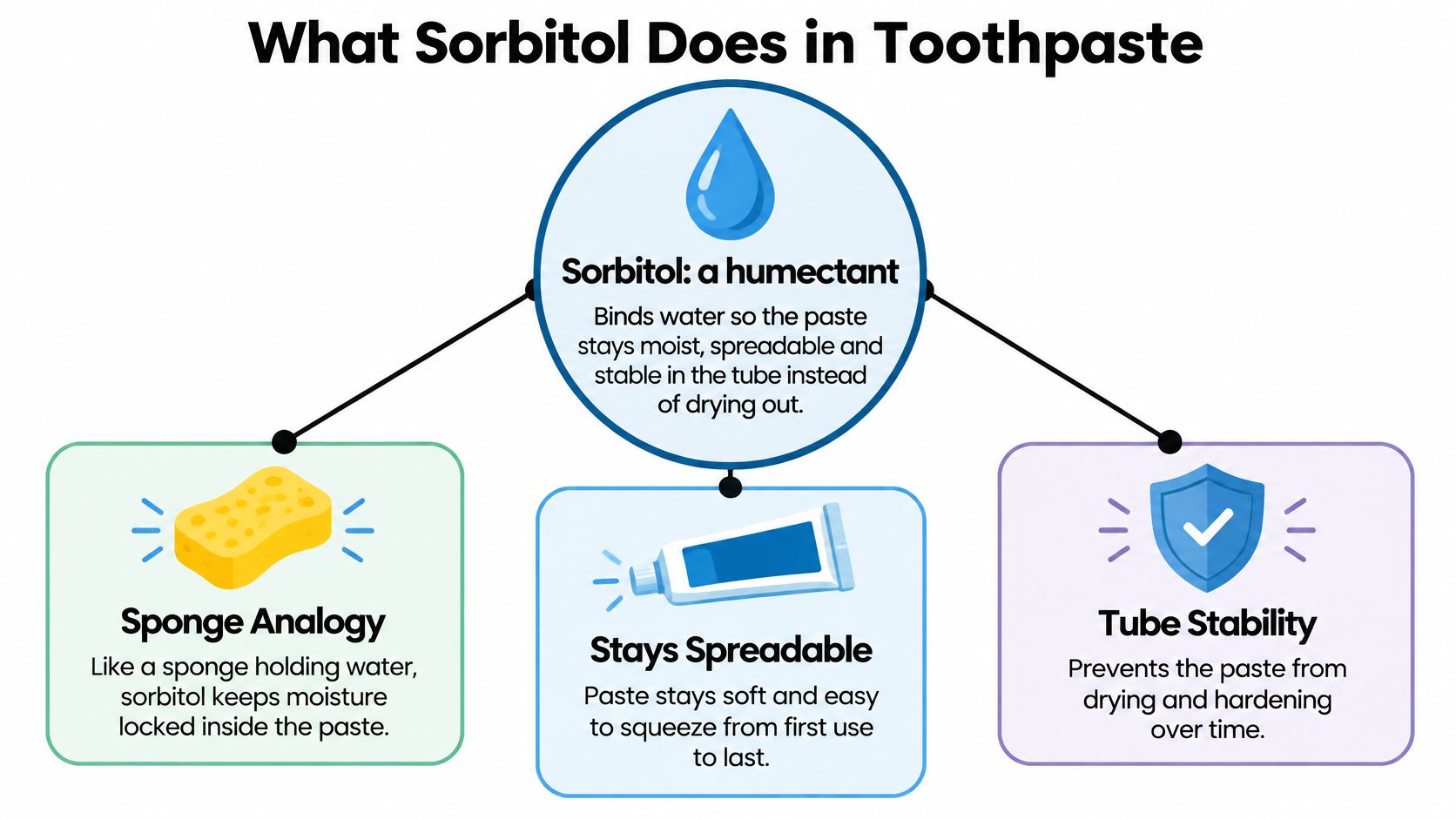
A sponge in the tube
Picture the paste as a sponge with water locked into its structure. Take the sponge out and the water drains, the abrasive settles, the binder stiffens. Toothpaste behaves the same way. Without a water-holding agent, the paste dries at the cap first, because that's where air gets in, and a tube left in a cabinet for a year would squeeze out grit and liquid instead of a ribbon.
So sorbitol's primary job is boring and essential. It doesn't neutralize acid. It doesn't release fluoride. It doesn't rebuild enamel. It keeps the formula physically usable, which matters because a paste nobody wants to squeeze is a paste nobody uses twice a day.
The second job, sweetness
Sorbitol is a sugar alcohol with a mild sweetness, and it rounds off the chalky abrasive and the detergent bite that would otherwise make brushing unpleasant. That sensory work is why it often sits near the top of the inactive ingredients list. It is also where the confusion starts, because a sweetener that carries the word "sugar" in its chemistry gets treated as sugar. It isn't fermentable dietary sugar, and the ADA notes that a product containing sorbitol can remain clinically useful.
Label check: if sorbitol shows up among the first few inactive ingredients, you're looking at moisture retention and flavour, not a cavity risk to hunt down.
Manufacturers can swap it out cleanly. Glycerin, propylene glycol and other humectant systems do the same water-holding work, and a separate sweetener or flavour system covers the taste. What the swap does not do is change the protective power of the paste, because humectants were never providing it. As the ADA puts it, the absence of sorbitol does not by itself indicate a toothpaste is safer, more effective, or fluoride-free.
That last point deserves a second read. A sorbitol-free product can still contain fluoride, abrasives, detergents and flavourings, and it can also contain none of the ingredients that matter. Check the list for sorbitol if you care about it, then keep reading for the ingredient that defends the tooth.
Why Sorbitol-Free Does Not Mean Cavity-Proof
Here's the assumption worth testing: sorbitol feeds cavity bacteria, so a paste without it must protect better. The evidence behind that assumption comes from trials with a different design than the claim suggests.
A 2001 review published in the Journal of Dental Education examined 14 clinical studies evaluating sorbitol, xylitol, or combinations of the two, including gum and toothpaste studies. Caries reductions across the reviewed studies ranged from 30% to 60% against control groups. The comparison, though, was replacing sucrose with a sugar substitute. Nobody in those trials removed sorbitol from a fluoride toothpaste and measured what happened.
| Intervention | Average preventive fraction | 95% confidence interval |
|---|---|---|
| Xylitol | 58.66% | 35.42% to 81.90% |
| Xylitol-sorbitol blend | 52.82% | 39.64% to 66.00% |
| Sorbitol alone | 20.01% | 12.74% to 27.27% |
What those percentages actually measure
The same review quantified the difference between sugar alcohol interventions using a preventive fraction, which is the share of expected cavities avoided. Sorbitol alone comes in at 20.01%, xylitol at 58.66%, and blends at 52.82%. Xylitol's confidence interval starts above sorbitol's ceiling, so as a sucrose replacement xylitol looks stronger.
Read the table for what it is. It compares sugar alcohols against sucrose in sweets, gum and paste studies. It is not a ranking of finished toothpastes, and it cannot grade a sorbitol-free tube sitting on a shelf today.
The 2024 evidence cuts the other way
If the older data left any doubt about sorbitol's direction, a 2024 systematic review indexed on PubMed settled the question for children and adolescents. Fifteen controlled studies covering 6,325 participants found that both xylitol and sorbitol were associated with statistically significant caries-preventive effects versus no treatment or placebo. The same review found no clinical evidence that high-intensity sweeteners prevent caries.
A sorbitol-free claim describes the carrier, not the active ingredient. It tells you what the paste is missing, never what it does.
That's the inversion most shoppers never hear. Sorbitol has been studied as a non-cariogenic sweetener, not as a contaminant to be excluded. Removing it isn't a therapeutic step. What determines whether a paste reduces decay is the anticaries active and the concentration it delivers, which is why the fluoride versus hydroxyapatite comparison is the more useful question to research before you buy.
Replacement Ingredients and Their Trade-Offs
Sorbitol does two jobs in a tube: it holds water as a humectant and it sweetens the paste. Replacing it means two separate swaps, and marketing copy often bundles them as one "cleaner" formula even though the two replacements carry different evidence.
| Ingredient | Main role | Evidence for caries protection |
|---|---|---|
| Glycerin | Humectant that keeps the paste moist | Not an anticaries agent |
| Propylene glycol | Humectant that keeps the paste moist | Not an anticaries agent |
| Polyethylene glycol | Humectant | No anticaries evidence of its own |
| Xylitol | Sweetener with low fermentability | Mixed results; supports fluoride rather than replacing it |
Glycerin and propylene glycol do most of this work. Both retain moisture, both keep the paste spreadable, and neither touches the enamel chemistry that prevents decay. Polyethylene glycol sits in the same functional bucket, with even less oral-health literature behind it.
A paste that swaps sorbitol for one of these has changed its texture and shelf stability. That is the whole story.
What xylitol does and doesn't buy you
Xylitol is the ingredient most sorbitol-free products are built around, and the only replacement with a caries story of its own. The difference is fermentability. Sorbitol is generally considered non-cariogenic, yet cariogenic bacteria can ferment it to a limited extent. Xylitol is substantially less fermentable, which is why it attracts the research attention.
The clinical picture is messier than the packaging suggests. A systematic review of xylitol comparisons found mixed results: several datasets favoured xylitol, while others showed no difference from sorbitol. Formulation, dose, exposure frequency, fluoride use and the study population all move the outcome.
Some short-term studies have reported added remineralizing benefit when xylitol is combined with fluoride. Those results belong to specific formulations and doses, and they do not show that every xylitol toothpaste outperforms a sorbitol-free alternative. They also leave fluoride as the ingredient doing the measured work.
Practical rule: buy the fluoride level first, then treat xylitol as a bonus ingredient that may add something, rather than the mechanism doing the protecting.
For a closer look at how the two ingredients combine in real products, this breakdown of toothpaste with xylitol and fluoride covers where xylitol helps and where it stays decorative.
Who Actually Needs Sorbitol-Free Toothpaste
Three kinds of readers end up searching this term, and the right answer differs for each.
The reader cutting sugar alcohols from the whole diet. Some people avoid sorbitol, maltitol and similar compounds across food, gum and personal care because of a low-fermentable-carbohydrate protocol or a broader elimination plan. For them, a sorbitol-free toothpaste is a consistency choice, not a dental one. The check beyond the label is simple: confirm the replacement humectant (usually glycerin or propylene glycol) and confirm fluoride still appears in the active panel.
The reader who reacts to sorbitol. Digestive discomfort from sugar alcohols is dose-dependent, and the amount swallowed from toothpaste is small for an adult who spits. It's a different calculation for a child who swallows a portion of every brush, so if a young child has unexplained gas or loose stools, reviewing the toothpaste ingredient list is a reasonable step. Anyone with a diagnosed sensitivity should treat sorbitol-free as a comfort decision and expect no change in cavity risk.
The reader who dislikes it. Maybe the paste feels tacky, maybe the sweetness tastes flat, maybe a previous tube dried out and left a hard plug at the nozzle. Texture and taste are legitimate reasons to switch. They're just not health reasons, and nobody should pay a premium believing otherwise.
Decide the reason first: comfort, diet, or health. Only the diet reason makes sorbitol-free close to mandatory, and none of the three changes how much you need fluoride.
The choice rests on personal tolerance and preference. There's no proven cavity advantage waiting on the other side of the swap, which means the sensible move is to protect the fluoride level while you change the mouthfeel.
How to Check the Label for Fluoride
Sorbitol-free gets printed in large type on the front of the carton. Fluoride concentration gets printed in small type on the back. That asymmetry is the entire reason shoppers end up buying a paste that tastes pleasant and protects nothing.
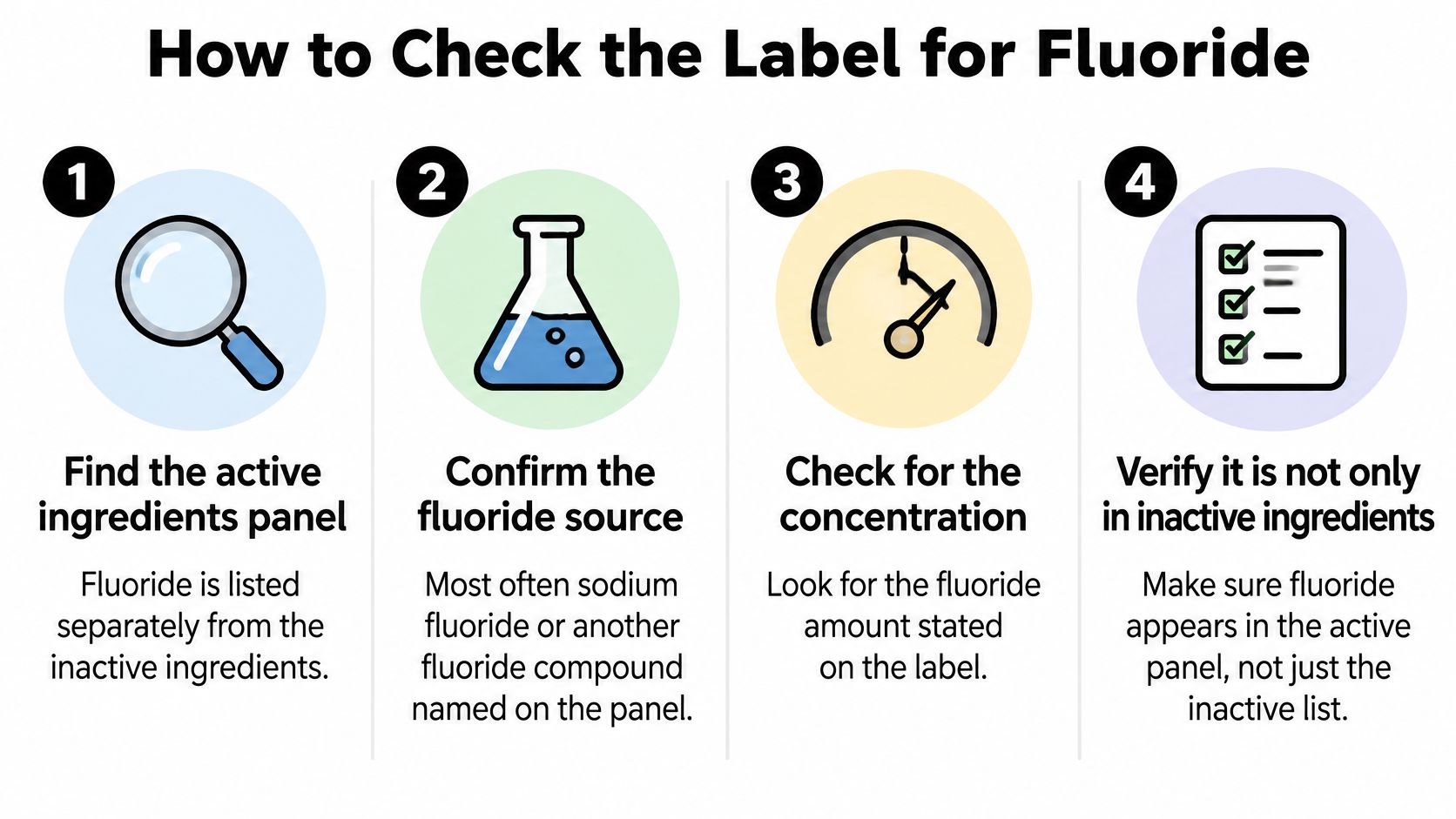
Six checks, in order:
- Find the active ingredients panel. Toothpaste labels separate actives from inactives, and fluoride belongs on the active side. If fluoride appears only in the inactive list, or nowhere at all, the product makes no anticaries claim and should not be bought for prevention.
- Confirm the fluoride compound. Sodium fluoride and stannous fluoride are the common entries, with sodium monofluorophosphate in some formulations. The compound name matters less than the number beside it, but its presence on the active panel tells you the paste was formulated as a therapeutic product rather than flavoured chalk.
- Read the concentration in ppm. Adult pastes are formulated to a fluoride level printed in ppm on the pack, so compare that figure against the age guidance on the box and your dentist's advice rather than a fixed number. Higher-concentration products exist for people a dentist has identified as high risk, and children should follow the age band printed on the pack rather than adult assumptions.
- Scan for sorbitol and whatever replaced it. Note whether sorbitol appears and, where it does not, which humectant took its place. This step tells you about texture and moisture retention. It says nothing about decay protection, so a sorbitol-free paste with no fluoride on the active panel fails the check no matter how elegant the replacement is.
- Check whether xylitol is listed. If it is, treat it as a supporting ingredient. It sits below fluoride in importance and never above it.
- Look for an accepted anticaries statement or seal. Where a product carries one, it confirms the formula was reviewed for the claim. Where it does not, the concentration figure is your only guide.
The same routine runs on video, useful if you have never turned a tube over and hunted for the active panel.
Historical clinical evidence doesn't support treating sorbitol-free toothpaste as superior for caries prevention, and the older trials that get quoted concerned sugar substitution rather than sorbitol removal. The label check does the work the marketing won't.
A good label reads as unremarkable: a clear fluoride figure on the active panel, a named sweetener and humectant among the inactives, and no claim that swaps the two. Products that state their fluoride up front, such as Ben Anna fluoride toothpaste, make step one easy because the active ingredient sits in the product name instead of the fine print.
Choose a Toothpaste Based on the Full Label
The decision runs in a fixed order. First, confirm the tube lists an evidence-based fluoride level on its active panel. Then, and only then, decide whether sorbitol matters to you.
If sorbitol is a personal concern, for diet, tolerance or texture, pick a sorbitol-free product that still lists fluoride and names glycerin or propylene glycol as its humectant. If sorbitol isn't a concern, a sorbitol-containing fluoride toothpaste is a sound choice, and sorbitol is no reason to pay more. A sorbitol-free paste without fluoride fails at the first step regardless of what replaced the sorbitol. For a full walk through what else belongs in a formula, this guide to fluoride toothpaste ingredients covers the abrasives, binders and actives worth knowing.
Read the entire ingredient list rather than the front-of-pack claim. Words like sorbitol-free, natural and clean describe what a product avoids, never what it protects against. Our tooth sensitivity range, including Fluoridex and MI Paste, lists the active ingredient on each product page so you can compare concentrations before ordering. And if you have sensitivity, gum problems or a history of decay, ask your dentist which fluoride level suits your risk, because that answer is personal and the box never knows it.
Before you buy anything, read the fluoride figure on the active ingredients panel, then read the sorbitol line. In that order.
Sorbitol-free formulas, high-fluoride pastes, and the whitening and sensitivity products that pair with them are what we stock at DentalHealth.com, and every listing states the active ingredient so you can run the label check before checkout. If you're weighing a switch, start with the fluoride concentration that fits your risk and work backwards to the flavour and texture you'll use twice a day. Browse the full range at DentalHealth.com and read the panel on each product page rather than the claim on the front.