
Xylitol and fluoride toothpaste: Boost Your Smile and Prevent Cavities
Ever feel like your oral care routine is missing something? Imagine giving it a one-two punch against tooth decay. That's the real power behind combining xylitol and fluoride in your toothpaste. This isn't just about mixing two good ingredients; it's about creating a smarter, more complete defense system for your teeth.
Unlocking a Superior Defense for Your Teeth
Here’s the simple breakdown: Fluoride acts like a shield, constantly rebuilding and strengthening your tooth enamel. At the same time, xylitol goes on the offense, targeting and neutralizing the harmful bacteria that cause cavities in the first place.
Think of it like this: You're not just reinforcing your castle walls (fluoride), you're also disarming the invaders before they can even attack (xylitol). It’s a proactive strategy that turns your daily brushing into a powerful tool for a healthier, brighter smile.
Why This Combination Matters
The secret to xylitol and fluoride toothpaste is its dual-action approach. While a lot of products focus only on strengthening teeth, this formula also gets to the root cause of decay—those pesky, acid-producing bacteria. It's a powerful team-up that helps you understand and prevent cavity risks, especially for kids who might be more prone to them.
By targeting both enamel strength and bacterial activity, this toothpaste offers a more complete form of protection than using either ingredient alone. It’s a smarter approach to maintaining long-term oral health.
This formula isn't just a game-changer for general use; it's incredibly helpful for a wide range of people with specific dental needs. The benefits go far beyond basic cavity prevention.
- For Children and Teens: It provides an extra layer of defense during those cavity-prone years.
- For Orthodontic Patients: It helps fight the plaque that loves to build up around brackets and wires.
- For Those with Sensitivity: It works to strengthen enamel, which can reduce that sharp discomfort from hot or cold foods.
This well-rounded approach makes it an ideal choice for anyone looking to step up their oral hygiene game. By the time you finish this guide, you’ll see exactly how these two ingredients work together and know how to pick the right product for your smile.
How Fluoride Rebuilds and Protects Your Enamel
Think of fluoride as your enamel’s personal bodyguard and repair specialist, all rolled into one. Every day, the sugars and starches you eat feed plaque bacteria, which then produce acids that attack your teeth. Fluoride jumps into action with a two-pronged defense to keep your smile strong and healthy.
First, it literally becomes part of your tooth’s surface. Fluoride integrates into the enamel’s crystal structure, creating a brand-new, super-tough material called fluorapatite. This new surface is much more resistant to acid attacks. It’s like upgrading a wooden shield to one made of solid steel—it’s just plain harder for anything to break through.
The Science of Remineralization
Beyond just fortifying your teeth, fluoride's most amazing trick is its ability to actively rebuild enamel that's already been weakened. We call this process remineralization. When acid starts stripping minerals from your teeth, it creates tiny weak spots, which is the very first step toward a cavity forming.
Fluoride acts like a powerful magnet, pulling calcium and phosphate ions—the natural building blocks of your teeth—right out of your saliva. It then helps pack these minerals back into the weakened areas, essentially patching up the damage before it has a chance to become a full-blown cavity. This constant cycle of damage and repair is one of the pillars of modern preventive dental care.
This ongoing reinforcement is why fluoride is so crucial for preventing cavities and reducing tooth sensitivity. Stronger, fully mineralized enamel is far less vulnerable to decay and irritation from temperature changes.
It’s no surprise that the oral care industry has grown around these benefits. The global fluoride toothpaste market was valued at a whopping $816.5 million back in 2021 and is expected to hit $1,091.4 million by 2025. This huge demand shows why products like high-strength Fluoridex are such popular choices on DentalHealth.com for people who need professional-grade protection at home.
Your Daily Enamel Guardian
When you use a xylitol and fluoride toothpaste, you’re making sure this protective mineral gets delivered exactly where it needs to go. This targeted application helps keep a steady supply of fluoride on your teeth, giving you a continuous defense system that works all day long. If you want to dig a little deeper into how this works, you can explore the key benefits of fluoride.
This dual-action mechanism of strengthening existing enamel and rebuilding weakened spots makes fluoride a non-negotiable part of any solid oral health routine. To find the right formula for your own needs, check out our guide on the best fluoride toothpaste for adults and keep your enamel shield in top-notch condition.
Xylitol's Role: Going on Offense Against Harmful Bacteria
If fluoride is the shield that strengthens your enamel, think of xylitol as the sword that actively fights the root cause of cavities: harmful bacteria.
Xylitol is a natural sugar alcohol, often sourced from plants like birch trees. It has a uniquely clever trick up its sleeve that makes it a fantastic partner in your oral care routine. It tastes sweet to us, but for the bacteria that want to destroy your teeth, it's a trap.
The main villain in the story of tooth decay is a bacterium called Streptococcus mutans. These tiny microbes love to feast on the sugars from your food and drinks, and when they do, they produce acids that eat away at your precious enamel.
When you brush with a xylitol and fluoride toothpaste, these bacteria get excited and gobble up the xylitol, mistaking it for a sugary meal.
Starving the Enemy
Here’s where things get interesting. The bacteria can’t actually digest xylitol. They take it in, expend energy trying to break it down, and get absolutely nothing back. It's like putting a dud coin into a vending machine—it takes the payment but never drops the snack.
This clever deception literally starves them. They're too busy trying to process the xylitol to produce any enamel-eroding acid, stopping the decay process dead in its tracks. By consistently cutting off their food supply, xylitol helps shrink the population of these bad guys in your mouth.
Xylitol doesn't just block bacteria from making acid; it actively reduces their numbers by preventing them from feeding and reproducing. This creates a much friendlier, less hostile environment for your teeth.
There's a reason this ingredient is becoming so popular. The xylitol market, valued at $1.01 billion in 2024, is expected to jump to $1.47 billion by 2033. This growth is almost entirely thanks to its proven ability to bust up plaque and support healthier gums. You can read more about the rising popularity of this dental superstar and check out the key findings on its market growth.
More Than Just a Bacterial Blocker
Xylitol’s benefits don’t stop there. Its presence also encourages your mouth to produce more saliva, which is your body's built-in defense system.
This extra saliva flow is a huge plus for two reasons:
- It Neutralizes Acids: Saliva is naturally alkaline, so it helps cancel out the plaque acids that attack your teeth after you eat.
- It Washes Away Debris: A healthy flow of saliva constantly rinses your teeth, washing away stray food particles and bacteria before they have a chance to stick around and form plaque.
On top of that, xylitol makes it harder for plaque to get a good grip on your tooth surfaces. This anti-adhesive quality means bacteria struggle to build colonies, leaving your teeth feeling cleaner and smoother between brushings. This is a game-changer for anyone with braces or a tendency toward dry mouth, where plaque can build up much more quickly.
Why This Combination Is Better Than Using Either Alone
So, why is a xylitol and fluoride toothpaste such a powerful choice for your oral health? The secret is in its dual-action strategy, which tackles tooth decay from two completely different angles.
Think of it as a complete security system for your mouth. Each ingredient plays a unique but perfectly complementary role.
Fluoride is your defensive line. It works right on the surface of your teeth, fortifying your enamel and actively rebuilding areas that have been weakened. It’s like a dedicated repair crew that’s constantly reinforcing your smile’s outer defenses, making them far more resilient against acid attacks.
Xylitol, on the other hand, plays offense. It goes after the root cause of the problem—the harmful bacteria (Streptococcus mutans) that produce that enamel-eroding acid in the first place. By neutralizing these troublemakers, xylitol essentially disarms the attack before it can even begin.
Creating a Powerful Synergy
When you use a toothpaste with just one of these ingredients, you’re only getting half of the solution. A fluoride-only toothpaste is great at repairing damage, but it doesn't do anything to stop the bacteria from relentlessly producing more acid. Conversely, a xylitol-only product reduces the bacterial threat but doesn't actively help rebuild and strengthen the enamel structure itself.
The magic really happens when they work together. This handy graphic breaks down exactly what xylitol brings to the team.
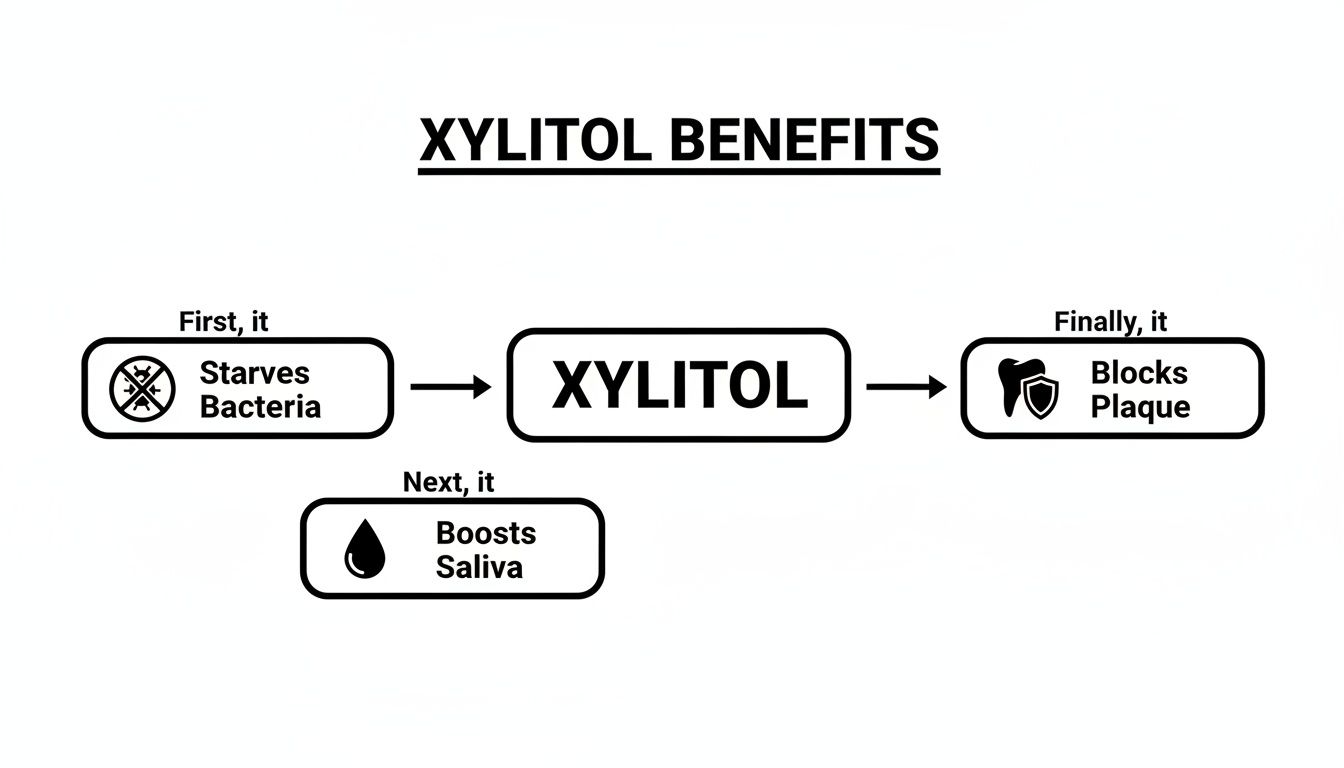
As you can see, xylitol’s three-pronged approach—starving bacteria, boosting saliva, and blocking plaque—creates an environment where decay just can't get a foothold. This perfectly complements fluoride’s defensive work.
When you combine them, you create a synergy that delivers far superior results. You get fewer acid attacks hitting your teeth and a stronger, more resilient enamel shield ready to defend against them when they do. This dual-action approach means you're not just constantly patching up damage; you're actively preventing it from happening in the first place.
By teaming up, xylitol and fluoride offer a more complete form of protection. You’re simultaneously weakening the attackers and strengthening your defenses, giving your teeth the best possible chance to stay healthy and cavity-free.
To put it simply, here's how these two oral health champions work together.
Xylitol vs Fluoride: A Team Approach to Oral Health
This table breaks down the primary jobs of both xylitol and fluoride, showing how they join forces to give you superior protection against cavities.
| Feature | Fluoride | Xylitol |
|---|---|---|
| Primary Function | Defense: Strengthens tooth enamel and helps rebuild weakened areas (remineralization). | Offense: Targets and neutralizes the harmful bacteria that cause cavities. |
| Mechanism | Integrates into the tooth's crystal structure, creating a more acid-resistant surface (fluorapatite). | Starves acid-producing bacteria (S. mutans) because they can't metabolize it, stopping acid production. |
| Key Benefit | Actively repairs early-stage tooth decay and makes teeth more resilient to future acid attacks. | Reduces the amount of plaque and makes it less sticky, making it easier to remove from teeth. |
| Additional Action | Enhances the natural remineralization process that occurs in your mouth. | Stimulates saliva flow, which helps neutralize acids and naturally wash away food particles and bacteria. |
By working in tandem, fluoride strengthens your enamel's defenses while xylitol actively reduces the threats, creating a much healthier environment inside your mouth.
A Clinically Supported Partnership
This powerful partnership isn’t just a good idea in theory; it's backed by solid research. Studies have shown that combining these ingredients significantly boosts cavity prevention.
For instance, research has found that adding 10% xylitol to a standard fluoridated toothpaste can reduce caries incidence by inhibiting harmful bacteria while the fluoride gets to work on remineralization. If you're interested in the data, you can discover more insights about fluoride toothpaste market trends.
This combined formula provides a much more robust defense system, making it an excellent choice for anyone serious about their long-term oral health. You truly get the best of both worlds in a single, effective toothpaste.
Who Really Needs This Toothpaste Formula?
While a xylitol and fluoride toothpaste is a fantastic upgrade for just about anyone's daily routine, some people will find this powerhouse combination is a total game-changer. It’s designed to tackle specific dental challenges that your average toothpaste just can't handle, giving you targeted support right where you need it.
For kids and teenagers, this duo is a lifesaver. Let's be honest, these years are notorious for cavities, thanks to sugary snacks and brushing habits that are still a work in progress. Xylitol steps in to neutralize the harmful bacteria that cause decay, clearing the way for fluoride to do its job of strengthening and protecting that young enamel.
Ideal for Specific Dental Needs
If you've got braces or aligners, you know the daily struggle against plaque is real. All those brackets, wires, and trays create tiny hiding spots for bacteria to throw a party, making it tough to get a truly deep clean. Xylitol helps by making plaque less sticky, so it’s harder for bacteria to set up camp in those hard-to-reach places, seriously cutting down the risk of cavities and those dreaded white spots.
Another group that sees huge benefits are people dealing with dry mouth, also known as xerostomia. When you don't have enough saliva, your teeth are left defenseless against acid attacks. Xylitol not only fights off bacteria but also gives your natural saliva production a gentle nudge, helping to restore your mouth’s own defense system while providing some much-needed relief.
If your dentist has ever told you that you're at high risk for cavities, you should consider this formula your new best friend. It’s a proactive, multi-pronged attack that goes way beyond standard brushing.
A Growing Demand for Better Protection
It's clear that people are looking for more effective oral care, especially for their kids. The children's toothpaste market was valued at a whopping $1.3 billion in 2023 and is expected to nearly double by 2032. While fluoride has always been the star, adding xylitol is quickly becoming the feature savvy parents are looking for. Clinical studies back this up, showing that adding just 10% xylitol to a fluoride toothpaste can make a significant difference in preventing cavities. You can see more details about the growing children's toothpaste market at Dataintelo.com.
For anyone managing a high cavity risk or sensitivity, this toothpaste is a perfect piece of a larger puzzle. It works beautifully alongside other specialized treatments your dentist might recommend. For example, you might want to learn how to use MI Paste Plus along with your daily brushing to give your teeth an extra boost of remineralization and protection. It's all about layering your defenses to give your teeth the best possible support against whatever the day throws at them.
How to Get the Most Out of Your Toothpaste
Picking the right toothpaste is just the first step. To really unlock its power, you need to combine a great product with the right daily habits. Let's make sure you're getting the full benefit from your xylitol and fluoride toothpaste.
First thing's first: check the label for potency. For fluoride, you want to see a concentration of at least 1000 parts per million (PPM). This is the level needed to effectively get to work remineralizing your enamel. For xylitol, a concentration around 10% is widely recognized as the sweet spot for delivering its anti-bacterial punch.
Brushing Technique is Everything
When you brush, you really only need a pea-sized dab of toothpaste. The goal is to brush for a full two minutes, making sure you gently clean every single surface—the fronts, the backs, and the tops where you chew. Giving the ingredients that much contact time is crucial for them to work their magic.
Want a simple trick that dentists often share with their patients to boost results?
Once you're done brushing, spit out the extra foam but don't rinse with water right away. By leaving that thin coating on your teeth, you give the fluoride and xylitol more time to do their job strengthening and protecting your smile.
It's a small tweak to your routine, but it can make a surprisingly big difference in your long-term oral health. When you combine this technique with the right product, you're empowering the formula to deliver the best possible results. You can dive deeper into this topic in our blog post about ways to strengthen tooth enamel.
Common Questions About Xylitol + Fluoride Toothpaste
Even after seeing all the benefits, it's natural to have a few more questions before trying a new toothpaste. Let's tackle some of the most common ones we hear from our customers, so you can feel totally confident about your choice.
Is This Toothpaste Safe for Daily Brushing?
Absolutely. Toothpastes that combine xylitol and fluoride are formulated specifically for everyday use. They're perfectly safe for the long haul, giving you a consistent defense against both cavity-causing bacteria and enamel wear. Think of it as your smile's daily guardian.
The combination is not only powerful but also gentle enough for your regular morning and night routine, working around the clock to keep your teeth protected.
How Much Xylitol Should I Look For?
To really get the bacteria-fighting benefits, the concentration matters. You'll want to look for a toothpaste that contains at least 10% xylitol. Dental professionals recognize this amount as the effective threshold for stopping harmful, acid-producing bacteria in their tracks.
Will This Help If I Have Sensitive Teeth?
Yes, this duo can be a game-changer for sensitivity. The two ingredients come at the problem from different angles, which is what makes them so effective together.
- Fluoride strengthens enamel: It helps rebuild weakened spots, creating a stronger shield against hot and cold temperatures that trigger pain.
- Xylitol reduces bacteria: It does this gently, without the harshness of some ingredients that can make sensitive teeth feel even worse.
Is Toothpaste With Xylitol Safe for My Pets?
This is a critically important warning for every pet owner. Xylitol is extremely toxic to dogs, even in very small amounts. It can cause a dangerous and rapid drop in their blood sugar, and potentially lead to liver failure.
Always store your toothpaste where your pets can't possibly get to it. And never, ever use human toothpaste to brush your pet's teeth—stick to formulas made specifically for them.
Ready to give your teeth the dual-action protection they deserve? At DentalHealth.com, we've curated a selection of professional-grade oral care products that dentists trust. Explore our range of toothpastes designed to fortify enamel, fight off bad bacteria, and help you achieve your healthiest smile yet.